An Offer You Can’t Refuse #1: The Public Enemy (dir by William Wellman)


For this month, I’ve decided to review movies about mobsters.

There’s no specific reason for that, beyond the fact that I just happen to love mobster movies.  Of course, a good gangster film is rarely just about crime.  Anyone who has ever seen The Godfather can tell you that.  At their best, American gangster films are about the American dream and the lengths that some will go to achieve it.

Plus, they’re just a lot of fun to watch.  Some of the greatest actors of all time made their mark in gangster films.

Take 1931’s The Public Enemy, for instance.

Produced during the final days of prohibition and the early years of the Great Depression, The Public Enemy tells the story of three boys who grew up poor.  Tom Powers (James Cagney) and his friend, Matt Doyle (Edward Woods) pursued a life of crime, rising through the ranks of organized crime before eventually meeting a tragic end.  The third, Mike Powers (Donald Cook), stayed on the straight-and-narrow path.  He went into the Marines and he rebuked his brother, Tom, when he discovered that Tom’s money was due to “blood and beer.”

The film opens and closes with a title card that basically tells us that Mike Powers has the right idea but, when you watch the film, you can’t help but wonder if maybe Tom had a point about his brother being kind of a sap.  Mike might be a decent citizen and he might have a chestful of medals as the result of his wartime heroics but what else does he have?  Tom Powers, meanwhile, has no education and, it would appear, no conscience, no real friends, and no one that he really loves and yet he becomes a rich man who is acquainted with powerful figures.  While Mike stays at home with their mother, Tom lives in an ornate penthouse.  When his first girlfriend (Mae Clarke) gets on his nerves, Tom shoves a grapefruit in her face and then gets an even more glamorous girlfriend, Gwen (Jean Harlow).  (Meanwhile, even dumb old Matt is doing okay for himself, marrying a woman played by Joan Blondell.)  It’s hard not to imagine that the film’s original audience — who were still reeling from the Stock Market Crash of 1929 — looked at Mike and Tom Powers and quickly decided that they’d much rather be a part of Tom’s life than Mike’s.  Even if Tom is destined for an early grave or a lifetime behind bars, at least he appears to be having fun.  Speaking for myself, I’d much rather go out with the guy who has nice clothe and his own luxury apartment than with the self-righteous dud who is still living at home with his mother.

Of course, another reason why we gravitate towards Tom Powers is because he’s played by James Cagney, who was one of the most charismatic of the stars of Hollywood’s Golden Age and whose performance still holds up today.  Cagney gives a ferocious performance, snarling out his lines and always moving like a caged animal, even when he’s just preparing to have breakfast.  He’s full of an energy that’s both dangerous and exciting to watch.  Cagney also brings a very powerful anger to the role of Tom Powers.  As played Cagney, Tom Power is not just a criminal because he’s greedy.  He’s also a criminal because he has no use for a society that he feels has rejected him since birth and which has never given him a fair chance.  He becomes wealthy not just because he wants money but because he wants to taunt everyone who ever said that he wouldn’t amount to anything.  He’s every crime is more than act of greed.  It’s also an act of rebellion, a joyful to a society that wants to tell people what they’re allowed to believe and do.  He’s the ultimate 1930s rebel, giving the the finger to not only the two Hoovers (Herbert and J. Edgar) but also to the good government leftists would be soon be swept into power with FDR.  Despite the fact that The Public Enemy was made nearly 90 years ago, there’s nothing creaky about Cagney’s performance.  It still feels vital and powerful today and it elevates the entire film.

The Public Enemy holds up surprisingly well.  The film may be close to 90 but Cagney’s ferocious performance still feels fresh and powerfully alive.


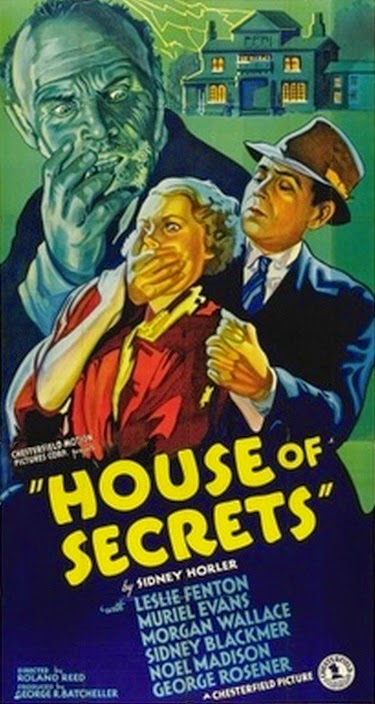
‘B’-ware, My Love: HOUSE OF SECRETS (Chesterfield 1936)


gary loggins's avatarcracked rear viewer


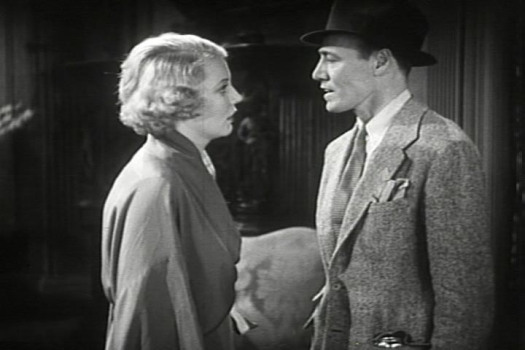
Do you like movies with gloomy old mansions, secret passageways, clutching hands behind curtains, bloodcurdling screams, and the like? How about we throw in some Chicago gangsters and a hidden pirate treasure? Then you may like HOUSE OF SECRETS, a ‘B’ mystery originally sold to audiences as a horror thriller. It’s no classic, to be sure, but it is an enjoyable little low-budget film produced by tiny independent Chesterfield Pictures, who specialized in this sort of thing, and featuring a better than average cast of Familiar Faces.

Aboard a ship bound for London, a young American woman is accosted by a cad who swears he saw her leaving a drug palace in Paris. Globetrotting but near penniless Barry Wilding defends her honor, but the mysterious blonde won’t reveal her name. Barry runs into his old friend Tom while in Jolly Olde England, a detective on the trail of a murderer…

View original post 388 more words

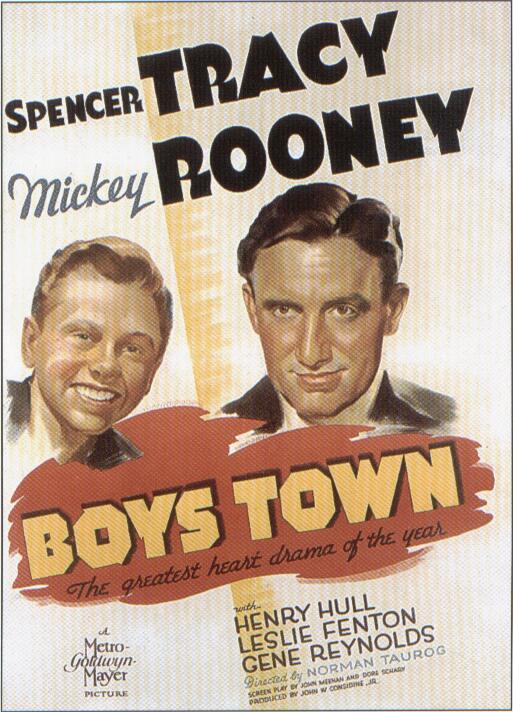
Lisa Reviews An Oscar Nominee: Boys Town (dir by Norman Taurog)


boys_town

Before writing about the 1938 film Boys Town, I want to share a story that might be false but it’s still a nice little story.  Call this an Oscar Urban Legend:

Boys Town is about a real-life community in Nebraska, a home for orphaned and homeless boys that was started by Father Edward Flanagan.  In the film, which was made while Father Flanagan was still very much alive, he was played by Spencer Tracy.  Boys Town was a huge box office success that led to the real Boys Town receiving a lot of favorable publicity.  When Tracy won his Oscar for Boys Town, his entire acceptance speech was devoted to Father Flanagan.

However, a problem arose when an overeager PR person at MGM announced that Spencer Tracy would be donating his Oscar to Boys Town.  Tracy didn’t want to give away his Oscar.  He felt that he had earned it through his acting and that he should be able to keep it.  Tracy, the legend continues, was eventually persuaded to donate his Oscar on the condition that he would get a replacement.

However, when the replacement arrived, the engraving on the award read, “Best Actor — Dick Tracy.”

That’s a fun little story, one that is at least partially true.  (Tracy’s Oscar — or at least one of them — does currently reside at the Boys Town national headquarters.)  It’s also a story that, in many ways, is more interesting than the film itself.

Don’t get me wrong.  Boys Town is not a bad movie.  For me, it was kind of nice to see a movie where a priest was portrayed positively as opposed to being accused of being a pederast.  In a way, Boys Town serves as a nice counterbalance to Spotlight.  But, with all that said, there’s not a surprising moment to be found in Boys Town.  It’s pretty much a standard 1930s juvenile delinquency melodrama.

The movie opens when Father Flanagan giving last rites to a man who is about to be executed.  (Boys Town takes a firm stand against the death penalty, which is one of the more consistent and laudable stands of the modern Church.)  The man says the he never had a chance.  From the time he was a young boy, he was thrown into the reform school system.  Instead of being reformed, he just learned how to be a better criminal.  Father Flanagan is so moved by the doomed man’s words that he starts Boys Town, under the assumption that “there’s no such thing as a bad boy.”

Father Flanagan’s techniques are put to the test when Whitey Marsh (Mickey Rooney ) arrives.  Whitey is angry.  He’s rebellious.  He tries to run away every chance that he gets and, during one such escape attempt, he even gets caught up in a bank robbery.  Can Father Flanagan reach Whitey and prove that there’s no such thing as a bad boy?

Well, you already know the answer to that.  As I said, there’s really nothing surprising to be found in the plot of Boys Town.  It’s just not a very interesting movie, though there is a great shot of a despondent Whitey walking past a several lines of former juvenile delinquents, all kneeling in prayer.  As Father Flanagan, Spencer Tracy is the ideal priest but his role is almost a supporting one.  Believe it or not, the film is dominated by Mickey Rooney, who gives a raw and edgy performance as the angry Whitey Marsh.

(That said, it’s hard to take Whitey seriously as a future gangster when he’s always wearing a bowtie.  Then again, that may have been the height of gangster style in 1938.)

Boys Town was nominated for best picture but lost to You Can’t Take It With You.