The setting is the Korean War. After getting information that American POWs are being tortured and brainwashed in North Korean prisoner-of-war camps, Major Hale (Harry Morgan) assigns Webb Sloane (Ronald Reagan) to go undercover. After parachuting behind enemy lines, Webb spots a group of POWs being marched through the snow and joins the group. From the minute that Webb joins the march, he begins to observe war crimes. The death march itself, with the POWs being forced to move in freezing weather, is itself a war crime. At the POW camp, Webb discovers the presence of an arrogant Soviet interrogator (Oscar Homolka) and a routine designed to break the POWs down until their ready to betray their native country. Some POWS, like Captain Stanton (Steve Forrest), refuse to break. Others, like cowardly Jesse Treadman (Dewey Martin), break all too quickly. Webb sends the information back to Hale and eventually tries to make his escape.
It’s not terrible. That the North Koreans and, later, the North Vietnamese tortured their POWs and forced some of them to denounce America is a matter of the historical record and, for a 1954 film, PrisonerofWar doesn’t shy away from the brutality of the torture that POWs were often subjected too. Of all of Reagan’s film, PrisonerofWar had the strongest anti-communist message, though Reagan himself feels miscast as a hard-boiled secret agent. (Reagan’s affability comes through even in a film set in a POW camp.) Sending someone undercover into a prisoner of war camp and then hoping that they’ll find a way to escape doesn’t sound like the most efficient way to determine if the Geneva Convention is being violated.
The film features a dog who is found by one of the POWs. Don’t get attached.
There’s a few ways in which you can view the 1953 film, Shane.
The more popular view is that it’s a Western about a man named Shane (Alan Ladd) who rides into town and gets a job working for the Starretts, Joe (Van Heflin) and Marian (Jean Arthur). Joe is a farmer who is determined to hold onto his land, despite the efforts of cattle baron Rufus Ryker (Emile Meyer) to force him off of it. While we don’t learn much about Shane’s background, it becomes apparent that he’s a man who can fight. That comes in handy when Ryker brings in a sinister gunfighter named Wilson (Jack Palance).
Another view is that Shane is the story of a man who just wants to settle down but, instead, finds himself continually hounded by an annoying little kid, to the extent that he finally gets involved in a gun battle just so he’ll have an excuse to leave town and get away from the little brat. Little Joey Starrett (Brandon deWilde) idolizes Shane from the minute that he comes riding up. When he hears that Shane refused to get into a fight at the local saloon, Joey demands to know whether it was true. He tells his mom that he loves Shane almost as much as he loves his father. When Shane does get into a brawl with all of Ryker’s men, Joey stands in the corner and eats candy. And then, when Shane tries to leave town, Joey runs behind him shouting, “Come back, Shane! Come back!”
Myself, I think of it as being the story of Frank Torrey (Elisha Cook, Jr.). Frank is the farmer that’s been nicknamed “Stonewall,” due to his status as a former Confederate and his quick temper. Stonewall may be smaller than the other farmers but he’s usually the quickest to take offense. Still, it’s impossible not to like him, largely because he’s played by Elisha Cook, Jr. When Wilson feels the need to put the farmers in their place, he does so by picking a fight with Torrey. Standing on a porch in the rain, looking down on the smaller man, Wilson starts to insult both him and the South. When Torrey finally starts to reach for his gun, Wilson shoots him dead. While Torrey lies in the mud, Wilson smirks. It’s a shocking scene, all the more so for being shown in a long shot. (By forcing those of us in the audience to keep our distance from the shooting, the film makes us feel as powerless as the farmers.) If you didn’t already hate Wilson and Ryker, you certainly will after this scene.
Shane is a deceptively simple film, one in which many of the details are left open for interpretation. We never learn anything about Shane’s background. He’s a man who shows up, tries to make a life for himself, and then leaves. He’s a marksman and an obviously experienced brawler but, unlike Ryker’s men, he never specifically looks for violence. In fact, he often seems to avoid it. Why? The film doesn’t tell us but there are hints that Shane is haunted by his past. Shane seems to want a chance to have a life like the Starretts but, once he’s forced to again draw his gun, he knows that possibility no longer exists.
Is Shane in love with Marian Starrett? It certainly seems so but, again, the film never specifically tells us. Instead, it all depends on how one interprets the often terse dialogue and the occasional glances that Marian and Shane exchance. When Shane and Joe get into a fist fight to determine who will face Ryker and Wilson, is Shane really trying to protect Joe or is it that he knows Marian will be heart-broken if her husband is killed?
One thing’s for sure. Little Joey sure does love Shane. “Come back, Shane!” Little Joey follows Shane everywhere, with a wide-eyed look on his face. To be honest, it didn’t take too long for me to get sick of Little Joey. Whenever director George Stevens needed a reaction shot, he would cut to Joey looking dumb-founded. Brandon deWilde was 11 years when he appeared in Shane and he was nominated for an Oscar but he’s actually pretty annoying in the role. Elisha Cook, Jr. was far more impressive and deserving of a nomination.
I know that many people consider Shane to be a classic. I thought it was good, as long as the action was focused on the adults. Alan Ladd plays Shane like a man who is afraid to get too comfortable in any situation and the film works best when it compares his reticence to Wilson’s cocky confidence. Whenever Joey took center stage, I found myself wanting to cover my ears.
Shane was nominated for Best Picture but lost to From Here To Eternity.
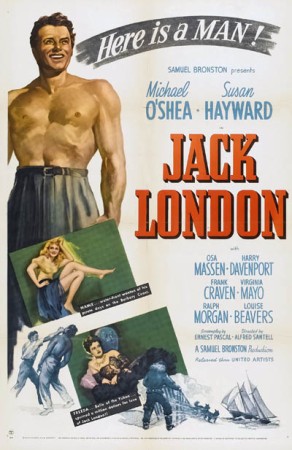
The 28th Film in Mill Creek’s Fabulous Forties box set was a 1943 biopic about the writer, Jack London. Not surprisingly, the title of the film was Jack London.
Now, I should start this review off by mentioning that I know very little about Jack London. I don’t think that I have ever read any of his short stories or his novels. I know that he wrote a novel called White Fang but that’s largely because there’s been so many different film versions of the book. (Long before directing Zombi 2, even Lucio Fulci made a version of White Fang.) Here’s what I do know about Jack London:
He was a prominent writer at the turn of the century.
He was reportedly an alcoholic.
He was a Socialist who even ran for mayor of Oakland, California on the party’s ticket.
He was an atheist.
In 1916, depending on the source, he either committed suicide, died of alcohol poisoning, or simply passed away as the result of 40 years of hard living.
Of those 5 facts, 4 are totally ignored in Jack London. The film does acknowledge that Jack London eventually became a prominent writer, even going so far as to open with stock footage of a U.S. warship being named after him.
As for his alcoholism, we never see London drunk. Indeed, the film’s version of Jack London is so earnest that it’s hard to believe he’s ever had a drink in his life.
As for his Socialism, we are shown that London grew up in a poor family. When, after serving at sea, he takes a writing class, he argues with a professor over London’s desire to write about the poor. However, we never hear London express any specific ideology. We certainly don’t see him running for mayor of Oakland.
As for his atheism — yeah right. This film was made in 1943! There’s no way that Jack London was going to be portrayed as talking about why he didn’t believe in God.
As for his death — well, Jack London ends with the writer very much alive. There’s not even a title card informing us that London eventually died.
Instead, Jack London is much more concerned with Jack (played by Michael O’Shea) dealing with the Japanese. Oh sure, we get some scenes of Jack London watching a shootout and breaking up a bar fight in Alaska. And Susan Hayward shows up as Jack London’s always supportive wife. (For that matter, Louise Beavers also shows up as Jack London’s always supportive house keeper.)
But, in the end, the majority of the film features Jack London as a war correspondent covering the turn of the 20th century war between Russia and Japan. When he’s captured by the Japanese, he observes the harsh way they treat prisoners and is shocked when he witnesses several prisoners being ruthlessly executed. When he talks to a Japanese commandant, he’s outraged as the commandant explains how the Empire of Japan is planning to take over the world. When Jack finally gets back to America, he’s less concerned with writing White Fang and more concerned with warning the American people to remain vigilant…
Jack London is basically wartime propaganda disguised as a biopic. The entire point of the film seems to be that if Jack London was still alive, he would want the men in the audience to enlist and the women to buy war bonds. None of it is subtle and, beyond its value as a time capsule of how Americans viewed the Japanese in 1943, none of it is particularly interesting as well.
In the end, Jack London plays out like one of those earnest but dull educational films that tend to show up on PBS when no one’s watching.
Tonight’s horror on TV is an episode of The Twilight Zone that is entitled The Hitchhiker. A woman (Inger Stevens) is haunted by a mysterious hitchhiker who continually asks her if she’s “Going my way?”
It’s tempting to call this a companion piece to Carnival of Souls but actually, The Hitchhiker was first broadcast on Jan. 22, 1960, two years before the premiere of Carnival of Souls. So, it would perhaps be more appropriate to call Carnival of Souls a companion piece to the Hitchhiker.
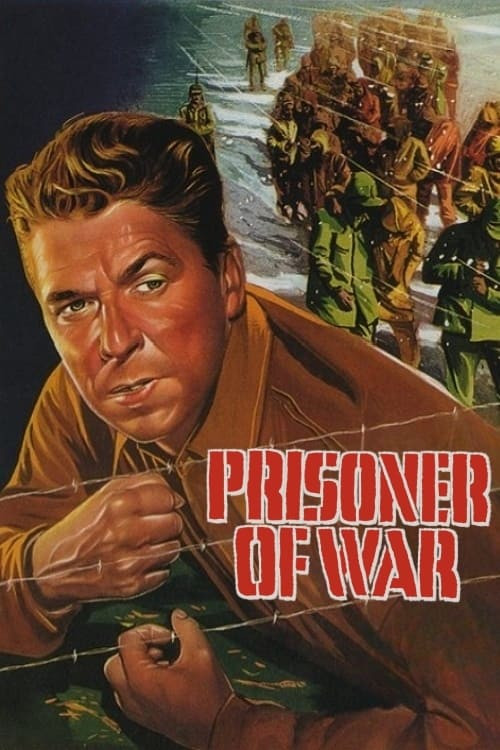 The setting is the Korean War. After getting information that American POWs are being tortured and brainwashed in North Korean prisoner-of-war camps, Major Hale (Harry Morgan) assigns Webb Sloane (Ronald Reagan) to go undercover. After parachuting behind enemy lines, Webb spots a group of POWs being marched through the snow and joins the group. From the minute that Webb joins the march, he begins to observe war crimes. The death march itself, with the POWs being forced to move in freezing weather, is itself a war crime. At the POW camp, Webb discovers the presence of an arrogant Soviet interrogator (Oscar Homolka) and a routine designed to break the POWs down until their ready to betray their native country. Some POWS, like Captain Stanton (Steve Forrest), refuse to break. Others, like cowardly Jesse Treadman (Dewey Martin), break all too quickly. Webb sends the information back to Hale and eventually tries to make his escape.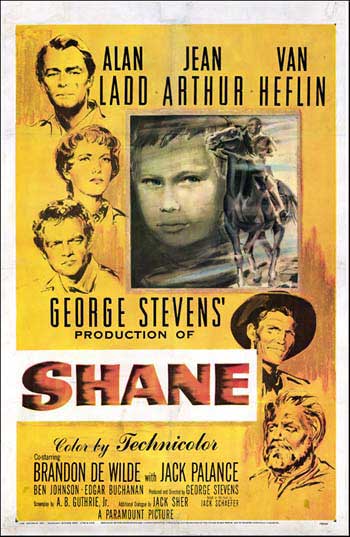

 Through the Shattered Lens