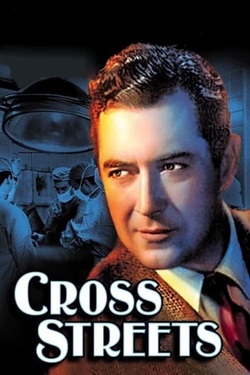
 Having graduated from medical school, Dr. Adam Blythe (Johnny Mack Brown) is finally ready to marry his glamorous fiancée, Ann (Claire Windsor). However, when Ann learns that Adam is going to have to spend years as an lowly paid resident, she ditches him and instead marries Dr. Jerry Clement (Niles Welch). Blythe, heartbroken, becomes an alcoholic and, after a disastrous operation that leaves a patient dead, Blythe ends up on skid row. Twenty years later, Blythe is spotted by his old friend Mort (Kenneth Thomson). A self-made millionaire who dropped out of college, Mort takes Blythe to their 20-year reunion and talks him up as a brilliant surgeon. When Blythe is pressured into performing a delicate piece of surgery, he is offered a position as the head of the college’s new research wing. Blythe, meanwhile, meets and falls in love with June (Anita Louise), a young woman who reminds him of Ann. It turns out that the resemblance is not a coincidence because June is Ann’s daughter! Ann wants Blythe back and, when she discovers that Blythe is in love with June, she threatens to tell everyone that Blythe is actually June’s father! All of the secrets and lies lead to the type of sudden and tragic ending that only a pre-code film could get away with.
Cross Streets is a 65-minute soap opera that features Johnny Mack Brown in a non-western role. Brown gives a likable performance but he’s less convincing when he has to be bitter. One reason why Brown was such a successful B-western star is that he always came across as if he had never had a moment of self-doubt in his entire life. Dr. Adam Blythe is all about self-doubt so he feels miscast in the role. Claire Windsor is more convincing as the vampish Ann. The movie has its slow spots and the plot requires a healthy suspension of disbelief but the ending still packs a punch.
Cross Streets is not easy to find but there is a not-great upload available on YouTube.
 Through the Shattered Lens