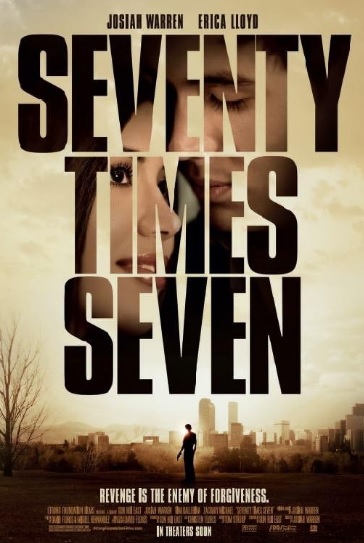
October Positivity: Seventy Time Seven (dir by Josiah David Warren)


After you watch enough independent, low-budget, and semi-amateur films, you really do come to appreciate the value of a good sound crew.

I mean, seriously, film audiences often take clear sound for granted.  They make the mistake of assuming that it’s easy to clearly capture all of the dialogue or to recreate the sound of a gunshot or an explosion.  It’s only when you see a film that doesn’t feature a clear soundtrack that you start to appreciate just how much you take for granted.

Take the 2012 film, Seventy Times Seven.  Now, in the film’s defense, the dialogue is clear in every scene.  You can hear when people are talking and you can understand the words that are coming out of their mouth.  Still, this film features a lot of scenes that were shot outdoors.  Some scenes were shot noticeably close to a highway.  You can hear every bird chirping, every car driving by, every insect buzzing nearby, and every gust of wind that hits the microphone.  On the one hand, one could argue that the film is capturing the authentic sounds of reality.  On the other hand, it does get to a bit distracting.

The film is all about the importance of forgiveness, which is something that I happen to feel pretty strongly about.  I think most of the problems in the world are due to the fact that people have not only forgotten how to forgive but also they’ve forgotten why it was important to forgive in the first place.  So, I can’t complain about the film’s message.  The execution, on the other hand….

David Anderson (Josiah David Warren) appears to have it all.  He’s got a nice house.  He’s got a nice ranch.  He’s got a beautiful new wife, Jacqueline (Tina Ballerina).  And Jacqueline’s pregnant!  David, who hopes to eventually become a father to seven children, is excited!  (It’s easy to say you want seven children when you’re not the one who has to actually give birth to them.)  Everyone’s excited, except for David’s sister-in-law Jenny (Erica Lloyd) and David’s somewhat sketchy best friend, Brayden (Timothy McGrath).  Jenny is upset because she’s been unsuccessfully trying to get pregnant for over a year.  Brayden is upset because he used to date Jacqueline and he’s never really gotten over her.

One day, David comes home to discover that someone has broken into the house and murdered Jacqueline!  Convinced that the police don’t know what they’re doing (and this film does take place in Denver so it’s totally possible that David is right about this), David becomes determined to track down the murderer and get his own revenge.  Even though Jacqueline once touched his heart with a story about how she forgave a man who once mugged her, David is convinced that the time for forgiveness is over.

So, who could the murderer be?  Is it Jenny, who is just upset because she desperately wants to have a child of her own?  Or is it Brayden, who spends his time smirking and talking about how he doesn’t believe in any of that God stuff.  Jenny is the one who is eventually arrested but, from the moment Brayden refuses to take part in a prayer circle, we pretty much know who the guilty party is.

As I said, the film’s execution leaves a lot to be desired.  The performances are stiff, the film is full of slow spots, and the dialogue is often awkwardly didactic.  It’s the type of film where someone notices that David’s father still looks young and healthy and someone else earnestly responds, “He looks that young because of God.”  It doesn’t help that the film makes Brayden’s guilt so obvious that it actually diminishes David as a character when David doesn’t automatically figure that Brayden killed his wife.  Brayden might as well be wearing a scarlet M on his chest.

That said, the film’s overall message isn’t bad.  Embrace forgiveness and refuse to allow hate to dominate your life.  We should all give that a try.
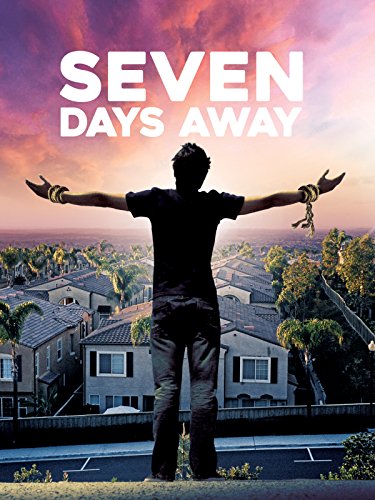
January Positivity: Seven Days Away (dir by Josiah David Warren)


Clayton (Josiah David Warren) is the religious kid who everyone dreads getting in to a conversation with.  He’s the type of kid who accepts a ride from one of his friends and then starts to give everyone a hard time for drinking and driving and….

Actually, wait a minute …. drinking and driving sucks!

So, Clayton is actually totally correct to tell his friends to put down the beer cans while they’re driving.  They, of course, just laugh him off and call him “church boy.”  One accident later, Clayton’s friend is dead and Clayton is more determined than ever to go down to Mexico and do missionary work.  Everyone tells him that it’s dangerous to go down to Mexico.  Everyone knows that Clayton’s father died while serving as a missionary.  But Clayton and another group of friends still head down to Mexico.

Unfortunately, it turns out that Clayton’s other friends may not be drunk drivers but they’re still not all that interested in evangelizing in Mexico.  They especially get angry when Clayton insists that they accompany him to the local church.  Clayton finally gets annoyed with all of them and he decides to wander off on his own.  Of course, that’s always a mistake.  No sooner has Clayton turned down the wrong street than he’s been kidnapped.

Clayton finds himself tied up in an old barn and being held prisoner by a group of human traffickers.  They’re convinced that Clayton is rich and they continually call his mother and demand that she send them some money.  Meanwhile, Clayton soon realizes that he’s not the only person behind held prisoner in the barn.  He also comes to realize that the desert surrounding the barn is full of dead bodies.

Noticing that his kidnappers are always drinking and smoking, Clayton tells them that they shouldn’t.  When they demand to know why not, Clayton quotes Corinthians.  That goes over about as well as you might expect.

Seven Days Away attempts to mix the faith-based genre with the action genre.  When Clayton isn’t preaching or quoting the Bible, he’s running through the desert and trying not to get shot.  Unfortunately, the film doesn’t really work as an action film.  The film uses some hand-held camerawork to try to generate some suspense but, at this point, the whole hand-held thing is such a cliché that it actually inspires more laughs than gasps of terror.  The soundtrack is remarkably muddy and it’s often difficult to understand just what exactly anyone is saying.  Even by the standards of the low-budget faith genre, the acting is amateurish.  As a film, it just doesn’t come together.  The fact that the film’s director also played the lead role was perhaps a bit of the problem.  It’s hard not to feel the film would have had a better chance at success if he had just concentrated on doing one thing as opposed to everything.

I guess the best thing you can say about a film like this is that it was well-intentioned.  Watching it brought back memories of the days leading up to Spring Break, when the campus would be full of stories about students who got drunk while partying in Mexico and subsequently vanished.  I have to admit that I never had a lot of sympathy for the students in those stories.  Sometimes, you just have to use a little common sense.

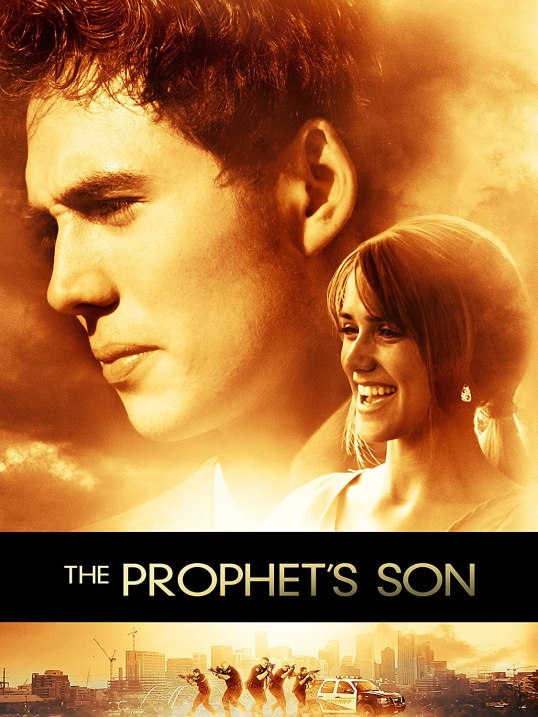
Film Review: The Prophet’s Son (dir by Paul Anthony McClean, Maurice Sparks, and Josiah David Warren)


As I’ve mentioned on this site in the past, I’ve always been fascinated by amateur feature films.  These are films that were made totally outside of the Hollywood system.  For the most part, they’re made by filmmakers with little to no formal training and they feature a cast of nonprofessionals.  Many of these films are passion projects for the people involved.  It’s not uncommon to hear about them being made by an all-volunteer cast and crew.  Sometimes, these films are surprisingly effective and sometimes — well, most times — they’re just really bad.

The 2012 film, The Prophet’s Son, is one of those largely amateur films and sad to say, it’s not a particularly good film.  If Tommy Wiseau decided to follow up The Room with an evangelical film that attempted to deal with almost every single issue facing the world today, the end result might be something like The Prophet’s Son.

It’s an odd film.  I have to admit that one of the main reasons that I watched it was because I had seen the film described as being about the end of the world and I have a weakness for cheaply made apocalypse films.  While The Prophet’s Son does feature a very brief nuclear attack on the city of Denver, it’s not really an apocalypse film because 1) the world doesn’t end, 2) the rapture doesn’t occur, and 3) the Antichrist never makes an appearance.  Instead, the nuclear attack just kind of comes out of nowhere and I will admit that it’s impossible for me not to have just a little admiration for a film that would toss a random nuclear war into an already cluttered storyline.  One minute, writer Juliet Oscar (played by Alexandra Harris) is sitting outside and the next minute, there’s missiles raining down on Denver.  Juliet and her boyfriend, musician and movie star Abel Benjamin (Josiah David Warren), get to safety and pray and the newly elected President of the United States appears on television and announces that America has survived.

Abel, incidentally, is the prophet’s son of the title.  Or, at least, I think he is.  He also has brother named Obadiah (Taurean Cavins-Flores), who I guess could just as easily be the prophet’s son.  Their father is the pastor of a church and he keeps saying that dark times are ahead, which I guess makes him a prophet, though he could just be one of those people who spends too much time on social media.  The film is a bit difficult to follow, to be honest.  At one point, Obadiah foils a robbery at a coffeeshop by telling the thief that he needs to get right with God.  The thief responds by shooting Obadiah in the leg.  Obadiah survives and Abel later learns that the thief loved Abel’s last movie so Abel visits him in jail, forgives him, and then performs an impromptu exorcism on him.  (It’s a super quick exorcism, too.  I’m used to longer exorcisms.)

Meanwhile, Juliet’s brother, Jason (Peter Lugo), says that he’s not going to waste his time with church until he turns 18.  Unfortunately, he then gets caught up in the middle of a surprisingly graphic school shooting rampage.  This leads to Jason’s twin brother, Isaac (Brad Spiotta), running away and getting lost in Denver.  Juliet and Abel search for him with the help of a some gang members.  When Juliet spots Isaac, she runs to him.  Abel, meanwhile, stays behind to give some money to a homeless woman.

Eventually, Abel ends up in Manila, where he witnesses people being kidnapped off the streets.  He tells the maid at his hotel that she needs to pay more.  While this is going on, Juliet is being pursued by Caleb (Jared Haley), who is a loud and proud atheist.  “Get me a beer and hamburger!” he shouts at one point.

What does all of this have to with the nuclear attack on Denver?  It’s hard to say.  The Prophet’s Son covers a lot of ground but the script and the direction are so disjointed that it’s basically impossible to follow the film’s story.  In fact, the film is such a disorganized mess that it becomes oddly fascinating to try to keep track of what’s actually happening.  For whatever reason, it took me forever to figure out that Abel and Obadiah were supposed to be brothers.  When Isaac mentioned that he and Jason were twins, I literally shouted at the TV, “No, you’re not!” because, seriously, there’s nothing about them that would lead you to suspect that they were even related, not to mention twins.  Characters come and go throughout the film.  The school shooters appear out of nowhere.  The coffeeshop bandit disappears after the jailhouse exorcism.  Abel has a manager who appears to be in love with him but who he treat rather coldly.  Despite being the biggest superstar in the world, Abel can wander around Denver without anyone recognizing him.  Denver, itself, is remarkably undamaged after being nuked.  It’s a strange, strange film, even if the world doesn’t actually end.

And you can watch it on Prime if you want!