Having graduated from medical school, Dr. Adam Blythe (Johnny Mack Brown) is finally ready to marry his glamorous fiancée, Ann (Claire Windsor). However, when Ann learns that Adam is going to have to spend years as an lowly paid resident, she ditches him and instead marries Dr. Jerry Clement (Niles Welch). Blythe, heartbroken, becomes an alcoholic and, after a disastrous operation that leaves a patient dead, Blythe ends up on skid row. Twenty years later, Blythe is spotted by his old friend Mort (Kenneth Thomson). A self-made millionaire who dropped out of college, Mort takes Blythe to their 20-year reunion and talks him up as a brilliant surgeon. When Blythe is pressured into performing a delicate piece of surgery, he is offered a position as the head of the college’s new research wing. Blythe, meanwhile, meets and falls in love with June (Anita Louise), a young woman who reminds him of Ann. It turns out that the resemblance is not a coincidence because June is Ann’s daughter! Ann wants Blythe back and, when she discovers that Blythe is in love with June, she threatens to tell everyone that Blythe is actually June’s father! All of the secrets and lies lead to the type of sudden and tragic ending that only a pre-code film could get away with.
CrossStreets is a 65-minute soap opera that features Johnny Mack Brown in a non-western role. Brown gives a likable performance but he’s less convincing when he has to be bitter. One reason why Brown was such a successful B-western star is that he always came across as if he had never had a moment of self-doubt in his entire life. Dr. Adam Blythe is all about self-doubt so he feels miscast in the role. Claire Windsor is more convincing as the vampish Ann. The movie has its slow spots and the plot requires a healthy suspension of disbelief but the ending still packs a punch.
CrossStreets is not easy to find but there is a not-great upload available on YouTube.
(With the Oscars scheduled to be awarded on March 4th, I have decided to review at least one Oscar-nominated film a day. These films could be nominees or they could be winners. They could be from this year’s Oscars or they could be a previous year’s nominee! We’ll see how things play out. Today, I take a look at the 1938 best picture winner, You Can’t Take It With You!)
“You can’t take it with you.”
If there’s any one belief that defines the worldview of Martin Vanderhof (Lionel Barrymore), it’s this. It doesn’t matter how much money you make in your life. It doesn’t matter how successful you are at business or anything else. The fact of the matter is that, when your time is up, you won’t be able to take any of that stuff with you. Instead, Grandpa Vanderhof (as he’s called by his large family) believes that the most important thing to do during your lifetime is to make friends and pursue what you’re truly interested in.
Vanderhof has another belief, one that particularly appealed to be me. He has never paid income tax. He doesn’t see the point of giving money to the government when he doesn’t feel that they’ll make good use of it. When an outraged IRS agent (Charles Lane) stops by Vanderhof’s sprawling house and demands that Vanderhof pay his taxes, Vanderhof refuses. When the IRS man argues that the income tax is necessary to pay for the Presidency, the Congress, and the Supreme Court, Vanderhof offers to give him five dollars. “Hell yeah!” I shouted at the TV. With an attitude like that, Vanderhof should have moved down here to Texas. We would have elected him governor.
Grandpa Vanderhof is the head of a large and cheerfully eccentric family, all of whom live together under the same roof. Penny (Spring Byington) writes novels because, years ago, a typewriter was accidentally delivered to the house. Her husband, Paul (Samuel S. Hinds), has a basement full of fireworks. Essie (Ann Miller) loves to dance and spends almost the entire movie twirling from room to room. Her husband, Ed (Dub Taylor), is a xylophone player.
Of course, it’s not just family living in the Vanderhof House. There’s also Potap Kolenkhov (Mischa Auer), a Russian who is “teaching” Essie how to dance. There’s Rheba the maid (Lillian Yarbo) and Donald (Eddie Anderson) the handyman. Actually, the house appears to be open to just about anyone who wants to stay.
And then there’s Penny’s daughter, Alice (Jean Arthur). Alice is the most “normal” member of the family. She has just become engaged to Tony Kirby (James Stewart) and she is still trying to figure out how to introduce Tony’s stuffy parents (Edward Arnold and Mary Forbes) to her eccentric family. What she and Tony don’t know is that Mr. Kirby is currently trying to buy up all the houses that are near a competitor’s factory. Only one homeowner has refused to sell. The name of that homeowner? Martin “Grandpa” Vanderhof.
It all leads, of course, to one chaotic dinner party, one lively night in jail, and a huge fireworks display. It also leads to true love, which is nice. Jimmy Stewart and Jean Arthur are even more adorable here than they were in Mr. Smith Goes To Washington.
Based on a Pulitzer-winning play by George S. Kaufman, You Can’t Take It With You was the second comedy to win the Oscar for Best Picture. The first comedy to win was 1934’s It Happened One Night. It’s probably not coincidence that both of these films were directed by Frank Capra.
Seen today, You Can’t Take It With You seems a bit slight for an Oscar winner. Grandpa Vanerhof is a lovable eccentric. Tony’s father is a stuffy businessman. Hmmm … I wonder whose philosophy is going to be victorious at the end of the movie? Still, predictability aside, it’s a delightfully enjoyable film. While it never quite escape its stage origins, it features wonderful performances from all the usual members of the Capra stock company. James Stewart and Jean Arthur are a charming couple while Lionel Barrymore gives a performance that is so warmly likable that it’s hard to imagine that, just 9 years later, he would be so perfectly cast as the heartless Mr. Potter in It’s A Wonderful Life. Of course, my favorite member of the member was Essie, mostly because I also like to dance from room to room. While it’s hard to justify awarding it Best Picture over The Adventures of Robin Hood and Grand Illusion, You Can’t Take It With You is still a wonderfully fun movie.
It’ll make you smile and laugh. Who can’t appreciate that?
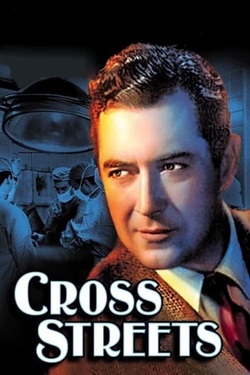 Having graduated from medical school, Dr. Adam Blythe (Johnny Mack Brown) is finally ready to marry his glamorous fiancée, Ann (Claire Windsor). However, when Ann learns that Adam is going to have to spend years as an lowly paid resident, she ditches him and instead marries Dr. Jerry Clement (Niles Welch). Blythe, heartbroken, becomes an alcoholic and, after a disastrous operation that leaves a patient dead, Blythe ends up on skid row. Twenty years later, Blythe is spotted by his old friend Mort (Kenneth Thomson). A self-made millionaire who dropped out of college, Mort takes Blythe to their 20-year reunion and talks him up as a brilliant surgeon. When Blythe is pressured into performing a delicate piece of surgery, he is offered a position as the head of the college’s new research wing. Blythe, meanwhile, meets and falls in love with June (Anita Louise), a young woman who reminds him of Ann. It turns out that the resemblance is not a coincidence because June is Ann’s daughter! Ann wants Blythe back and, when she discovers that Blythe is in love with June, she threatens to tell everyone that Blythe is actually June’s father! All of the secrets and lies lead to the type of sudden and tragic ending that only a pre-code film could get away with.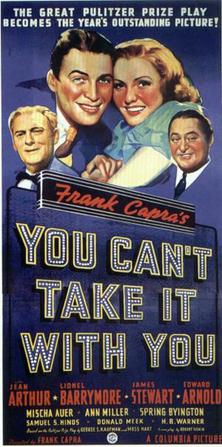
 Through the Shattered Lens