Retro Television Reviews: The Secret Life of John Chapman (dir by David Lowell Rich)


Welcome to Retro Television Reviews, a feature where we review some of our favorite and least favorite shows of the past!  On Sundays, I will be reviewing the made-for-television movies that used to be a primetime mainstay.  Today’s film is 1976’s The Secret Life of John Chapman!  It  can be viewed on Tubi.
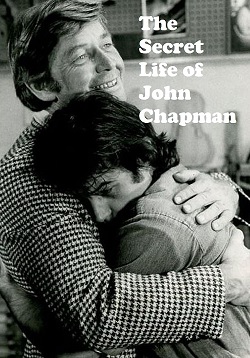
John Chapman (Ralph Waite) is a mild-mannered college president and a recent widower.  Everyone tends to assume that John grew up wealthy but John is actually the son of a bricklayer.  As he puts it, his father literally helped to build the college of which John is now president.  John has felt lost and directionless ever since the passing of his wife.  When his rebellious son (Brad Davis) announces that he’s going to drop out of college and pursue a career as a laborer, John is at first outraged but soon, he’s wondering if perhaps his son has a point.  Has John spent so much time cocooned in his college that he’s lost touch with the rest of the world?

John takes a sabbatical and pursues a career as a blue collar worker.  He discovers that it’s not as easy as he assumed.  Because John doesn’t want to reveal that he’s an academic, John doesn’t really have any references to offer up to potential employers.  Because he’s nearly 50, John is continually told that he’s too old for most of the jobs that he applies for.  When he goes into a bar and attempts to order a dry martini, he quickly realizes that he has no idea what it’s like to be blue collar.

John eventually does get a job, helping to lay water pipes.  His boss is the gruff Gus Reed (Pat Hingle), who John eventually discovers is not quite as fearsome a figure as he originally appears.  Once the pipe job is done, John gets a job in a diner and even pursues a tentative romance with a waitress (Susan Anspach) who, as she points out,  comes from a totally different world than him.  And yet, despite John’s efforts, his son remains unimpressed.  According to his son, John is just slumming.  He has the freedom to quit and return to the college whenever he wants.

Yikes!  John’s son is a bit judgmental and it doesn’t help that he’s played by Brad Davis, who was never a particularly likable actor.  (Davis later starred in Midnight Express, in which director Alan Parker used his lack of likability to good effect.)  Yet, watching the film, you can’t help but feel that John’s son has a point.  At times, it seems like John wants a lot of credit for spending a week working in the type of job that most people take because they don’t have any other option.  Indeed, you could argue that John’s project is basically keeping someone who really needs the money from finding a job.  It’s not like John gives up any of his money when he goes to work.  It doesn’t help that John Chapman narrates his story and his voice-over often feels like a parody of liberal noblesse oblige.

Fortunately, Ralph Waite was a likable actor and he plays John Chapman as being well-intentioned if occasionally a bit condescending.  The made-for-TV movie plays like a pilot and it’s easy to imagine a series in which John Chapman would have worked a different job every week.  It’s a slight but pleasant-enough made-for-TV movie.  Seen today, it works best as a time capsule, a portrait of a society still trying to find its identity in the wake of the turbulence of the 60s.

The Films of 2020: The Way Back (dir by Gavin O’Connor)


Jack Cunningham (Ben Affleck) used to be a star.  When he was in high school, he was a brilliant basketball player.  He led his high school, Bishop Hayes, to multiple championships.  Everyone expected Jack to have a bright figure but …. well, times change.

Decades later, Jack is a construction worker.  He spends every night at the neighborhood bar.  He wakes up every morning with a hangover.  He starts his day by drinking and he ends it by passing out.  He’s separated from his wife, Angela (Janina Gavankar), and he can’t even enjoy a nice Thanksgiving dinner without everyone getting on his back about his drinking.

When he gets a phone call from his old high school, he’s shocked to learn that he’s being offered a job.  The school’s basketball coach has had a heart attack.  Father Devine (John Aylward) wants to know if Jack would be interested in filling in for the rest of the school year.  Though at first reluctant and perhaps not wanting to be reminded of the future he once had, Jack eventually agrees.

The team, it turns out, is not particularly impressive.  The school hasn’t gone to the playoffs since Jack graduated and basketball is such a low priority that the team only has 6 players.  When Jack takes over, the team that has only won a single game.  The team is undisciplined and so used to being losers that they can’t even imagine what it’s like to be a winner.  You know what type of team I’m talking about because, even if you weren’t an athlete in school, you’ve probably seen a movie or two about underestimated high school teams that, under the leadership of a new coach, ended up shocking everyone by making it to the playoffs.

Working with assistant coach Dan (Al Madrigal), Jack struggles to turn the team into winners.  He’s a strict coach and, at first, the students resent him and his methods.  When he kicks one of the best players off the team for showing up late to practice, everyone thinks that Jack’s gone too far.  However, when the team actually starts to show signs of improvement, the team and the school rallies around their new head coach….

Of course, Jack still has his problems.  He’s too quick to lose his temper.  He curses a bit too often.  Despite caring about the team, he’s still weary about getting too close to them.  He’s emotionally damaged as the result of an abusive childhood and the death of his son.  A winning season isn’t going to magically change that.  However, Jack’s main problem is that he’s still an alcoholic.  To the film’s credit, it doesn’t try to sugarcoat Jack’s addictions.  Jack doesn’t magically become sober just because he’s found a purpose in life.  Even when he briefly cuts back on his drinking, the temptation is still there.  And when Jack finally does end up returning to his neighborhood bar and has too much to drink, the film is honest about the consequences of his actions.

The Way Back took me by surprise.  It started out as a well-made but rather predictable underdog sports story but it takes a turn during the third act and reveals that it’s actually a character study of a well-meaning but immature man who cannot escape his demons.  The film is honest about Jack’s problems and, to its credit, it doesn’t pretend like there are any easy solutions.  It’s going to take more than just coaching his team to the playoffs for Jack to make peace with himself and his past.  The film ends on a note that’s hopeful yet ambiguous.  Jack has a long way to go and you’re not totally convinced that he’s ever going to truly complete his journey.  But, at the same time, you’re happy that he finally got a chance to do something good with his life.

Ben Affleck was the perfect choice to play Jack and he gives the best performance that I’ve ever seen him give.  Affleck has been open about his own struggles with alcoholism but beyond that, it’s easy to see Jack’s struggles as a metaphor for Affleck’s own up-and-down career.  Like Jack, Affleck won a championship when Argo won the Oscar for Best Picture but it sometimes seems as if he’s struggled since then.  His directorial follow-up, Live By Night, was a critical and commercial failure.  His turn as Batman was appreciated by some but ridiculed by others.  When he stepped down from directing The Batman, he was the subject of the same type of uncharitable gossip that follows Jack as he coaches his team.  In the role of Jack, Ben Affleck gives a poignant, vulnerable, and honest performance.  He’s willing to be unsympathetic.  He doesn’t shy away from showing us that Jack, even at his best, can be a massive fuckup.  And yet, he holds onto our sympathy even while Jack does some very stupid things.  It’s Affleck’s performance that elevates The Way Back from being just another sports film to being something far more touching.

The Way Back may not be quite strong enough to be called a great film (though it’s certainly a good one) but Ben Affleck gives a great performance.