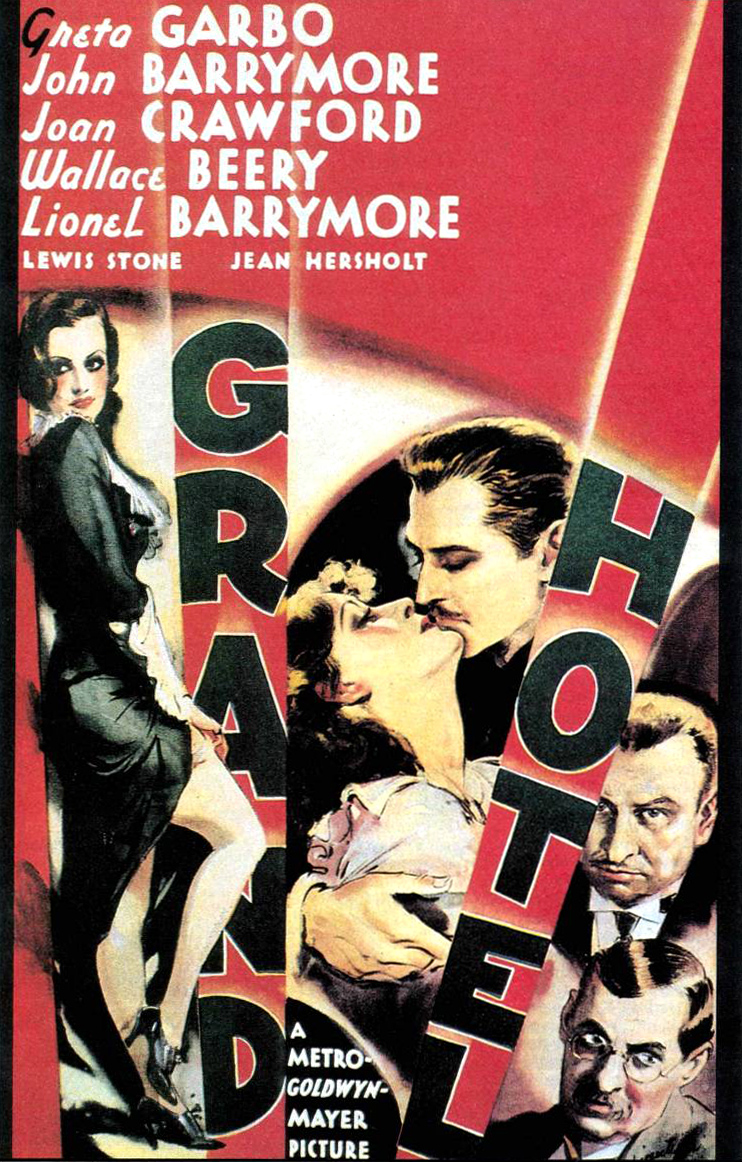
Embracing the Melodrama #6: Grand Hotel (dir by Edmund Goulding)


Poster - Grand Hotel_03

Today, we continue to chronologically embrace the melodrama by taking a look at one of the earliest examples of what would become a Hollywood mainstay, the big budget, all-start soap opera.  Today, we start things off by considering the 1932 best picture winner, Grand Hotel.

Grand Hotel follows five separate people as they all check into Berlin’s Grand Hotel.  They all have their own lives, their own secrets, and their own dreams.  As the film plays out, these five people will wander in and out of each other’s stories.  Seeing as how this was an MGM film and MGM always promoted itself as being the most glamorous studio in 1930s Hollywood, it’s not surprising that these five characters are played by five of the biggest stars that the studio had under contract.

There’s Flaemmchen (played by Joan Crawford), an aspiring actress who, when we first meet her, appears to be willing to do anything in order to advance her career.  Whenever I watch Grand Hotel, I’m also surprised by how good Joan Crawford is here.  Crawford has become such an iconic character of camp that we tend to forget that she actually was a pretty good actress.  In Grand Hotel, she is perfectly cast as someone who is not quite as amoral as she wants the world to believe.

There’s Preysing (played by Wallace Beery), a greedy industrialist who hires Flaemmchen to be both his administrative assistant and his mistress as well.  Considering that the film is set in Germany, its’ easy to view Preysing as a symbol of the fascism that was sweeping across Europe in the 30s.  I don’t know if that was the intention of the filmmakers but it’s impossible to deny that Preysing is a pretty unlikable character, the type of greedy brute who inspires otherwise intelligent people to do things like run off and join Occupy Wall Street.
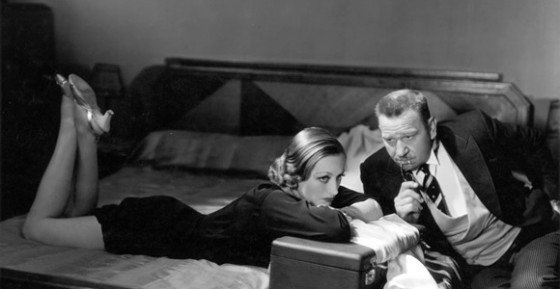
Crawford and Beery

Far more likable is Otto Kringelein (Lionel Barrymore), a meek accountant who used to work for Preysing.  Kringelein is terminally ill and has basically come to the Grand Hotel so that he can at least enjoy a little bit of luxury before he dies.  At the hotel, he meets and falls in love with Flaemmchen.  Lionel Barrymore is so likable here that it’s hard to believe that he would later be best known for playing evil Mr. Potter in It’s A Wonderful Life. 
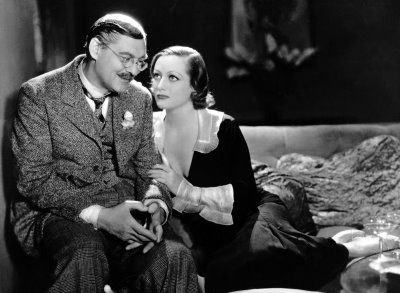
Barrymore and Crawford

Otto also meets Baron von Giegern (John Barrymore), a penniless nobleman who supports himself as a gambler and an occasional jewel thief.  If you needed proof that this film was made before the enforcement of the strict Production Code began, just consider that the Baron, despite being a criminal, is also the moral center of the film.  John Barrymore gives a charismatic and wonderfully theatrical performance.  The scenes where he and his brother Lionel play off of each other are some of the best in Grand Hotel.

And finally, there’s my favorite of all the characters — Grusinskaya (Greta Garbo), the Russian ballerina who famously says, “I want to be alone.”  She checks into the hotel to try to escape the world and during her stay, she meets and falls in love with the Baron.  Grusinskaya is the character that I most related to, because we’re both dancers and I sometimes want to be left alone as well.
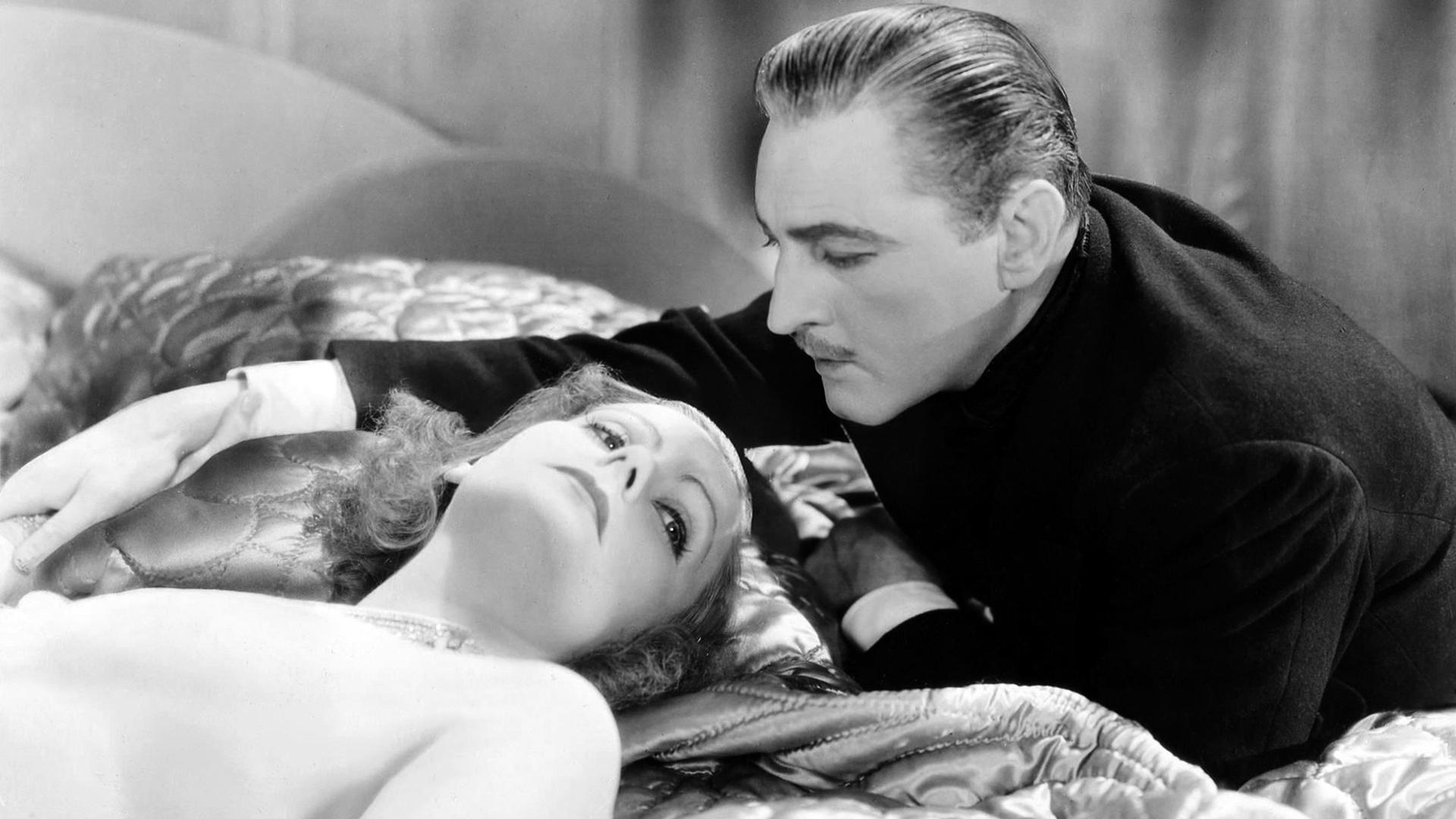
Barrymore and Garbo

I love Grand Hotel!  How couldn’t I?  The costumes, the sets, the actors, the glamour, the melodrama … what’s not to love!?  Incidentally, compared to a lot of other film melodramas from the early 30s, Grand Hotel actually holds up as pure entertainment.  The film moves quickly, much of the dialogue is still sharp and witty, and all of the actors are perfectly cast.  Curiously, Grand Hotel only received one Oscar nomination, for best picture.  However, it’s not surprising that it also won the only award that it was nominated for.

Grand Hotel has been described as being the first ensemble film.  I don’t quite agree with that because, even though it features a large cast and several intersecting storylines, you never forget the fact that you’re essentially watching a bunch of film stars sharing scenes with other film stars.  Eight decades after the film was made, the star power of Garbo, the Barrymores, Joan Crawford, and even Wallace Beery still continues to shine through and, to a large extent, your reaction to the film’s characters is pretty much the same reaction that audiences in the 1930s had to the public personas of the actors playing them.  But, and here’s the thing — it doesn’t really matter.  MGM made Grand Hotel to celebrate star power and, when you’ve got stars like these, can you blame them?
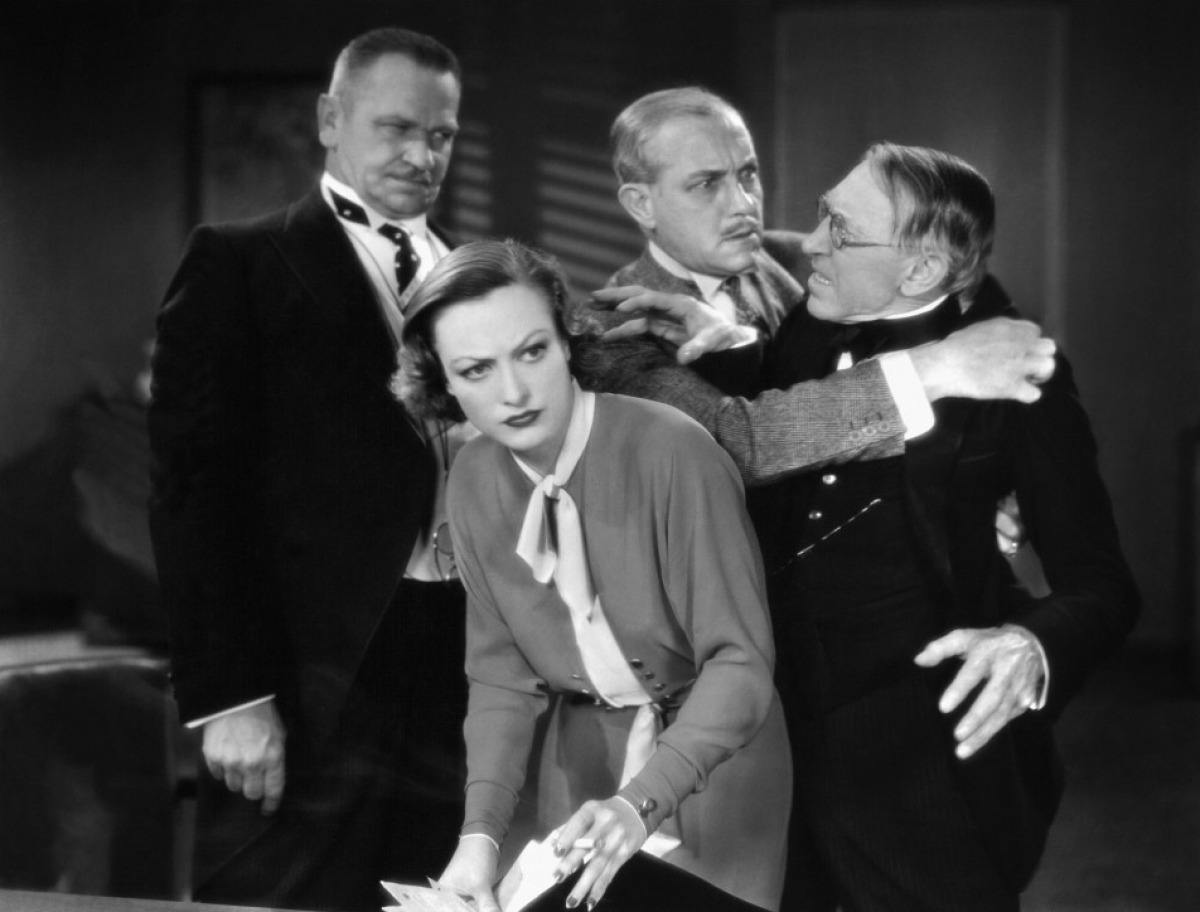
Grand-Hotel-4

Lisa Marie Goes Down On Mildred Pierce (dir. by Michael Curtiz)


A quick note: By titling this post “Lisa Marie Goes Down On Mildred Pierce” I have now not only proven that there’s no dare I will not accept but I’ve also won a small but useful sum of cash.  Never let them tell you that blogging doesn’t pay off.

Like a lot of people, I was looking forward to HBO’s remake of Mildred Pierce, featuring Kate Winslet in the role made famous by Joan Crawford.  And I hate to say it but, as hard as I’ve tried, I simply can not get into this remake.  Maybe it’s because the remake’s director, Todd Haynes, has apparently decided to use five hours to tell the exact same story that the original film told in less than two.  All I know is that the HBO version has, so far, been slow, ponderous, and ultimately a rather dull affair.

As I attempted to stay awake through the remake, I found myself wondering how the original 1945 film compared to the remake.  Fortunately, I just happened to have the original on DVD.  As well, by watching the original Mildred Pierce, I could continue my current mission to see every single film ever nominated for best picture.  (Joan Crawford won the Oscar for Best Actress for her performance as Mildred but the film itself lost Best Picture to Billy Wilder’s The Lost Weekend.)

 Mildred Pierce opens with the murder of sleazy playboy Monty Beragon (Zachary Scott).  Monty’s wife, Mildred (Joan Crawford), responds to the murder by attempting to frame her ex-business partner, the equally sleazy Wally Fay (Jack Carson).  However, the police arrest Mildred’s 1st husband, the well-meaning but really, really dull Bert (Bruce Bennett).  This leads to Mildred going to the police in an attempt to clear Bert’s name.  As the police interrogate Mildred, she tells them (and the film uses flashbacks to show us)  how she went from being a dissatisfied housewife to a succesful businesswoman to finally becoming Monty’s wife.  Through it all, Mildred is motivated by the need to take care of and spoil her manipulative daughter Veda (Ann Blyth).

Seen now, Mildred Pierce is an artifact of different time but, as a secret history nerd, I happen to love studying artifacts.  Like many of the films of the late 40s, Mildred Pierce‘s melodramatic plot serves as a reflection of a culture that, in the wake of World War II, was no longer as smugly complacent about how the world worked.  As I watched Mildred Pierce, the thing I immediately noticed was just how much the film seemed to be suspended between pre-War and post-War culture.  It’s the type of film that goes out of it’s way to acknowledge Mildred’s role as a “new woman” but, at the same time, still finds time to include numerous “comedic” scenes of various men leering at Mildred’s ankles. 

(Actually, I guess they were supposed to be staring at her legs but, since this was the 40s, this could only be represented by an occasional flash of ankle.  Personally, my ankles are okay but I like my legs better.)

Mildred Pierce is often cited as being a forerunner to feminist cinema and I have to admit I have some issues with that.  Yes, the film does acknowledge that a woman can be tough and that a woman can be a succesful businesswoman.  However, the film’s message ultimately seems to be that mothers who work will ultimately raise daughters who will become burlesque dancers and potential killers.  Mildred Pierce doesn’t so much celebrate female independence as much as it fears it.  If only Mildred had remained married to boring and predictable Bert than Veda would never have ended up as a murder suspect.

The question of ideology aside, the original Mildred Pierce remains an entertaining example of old school melodrama.  Director Michael Curtiz was one of those “craftsmen” who, in the 30s and 40s, seemed to direct hundreds of films without ever really establishing any sort of unique style of their own.  Instead, they simply used whichever style that would be most efficient towards dramatizing the script.  For Mildred Pierce, Curtiz imitated the style of a B-movie film noir.  It’s a good approach for this story even if Curtiz doesn’t seem to understand  the shadows of noir quite as well as his contemporaries Billy Wilder or Robert Siodmak.

Of course, Mildred Pierce is best known as the film that won Joan Crawford an Oscar.  I haven’t seen many of Crawford’s films (though I have seen Faye Dunaway playing her in Mommie Dearest) and I’ve got an unapologetic girlcrush on Kate Winslet but I honestly have to say that I prefer Crawford’s version of Mildred to Winslet’s.  Because, as much as I idolize Kate Winslet, she doesn’t seem to so much be playing Mildred Pierce as much as she’s observing her.  Crawford, meanwhile, sank her perfectly manicured nails into the role and pretty much refused to let go until she got her Oscar.  Crawford plays Mildred as a woman so obsessed with survival that she seems to be perfectly willing to destroy the rest of the world if that’s what it takes.  To be honest, it’s really not a great acting job but it certainly is fun to watch. Technically, Winslet gives the better performance but Crawford is a lot more entertaining.

(That said, I still love Kate and I actually would probably fall at her feet and say, “Thank you,” if I ever met her in real life because she’s really one of my heroes.  Physically, I developed early and I had to deal, at way too early an age, with a combination of a physical maturity and emotional immaturity.  By the time I was 13, I was so totally overwhelmed by the insecurity and uncertainty but then I read an interview with Kate Winslet in which she said, “I like having tits and an ass.”  And that, to be honest, was the first time I had ever come across anyone saying that it was okay to like your body.  So, anyway, the point of all that is that I love Kate Winslet.)

Crawford pretty much dominates the entire film but a few of the other performers do manage to make an impression.  As Mildred’s ex-husband, Bruce Bennett is pretty boring but the other men in Mildred’s life are well-played by Jack Carson and Zachary Scott.  Scott especially was well-cast as the type of guy that we always says we’re done with just to end up hooking up with them whenever we’re at our weakest.  As Veda, Anne Blyth gives such a driven and intense performance that you actually believe that she could be the daughter of Mildred Pierce.

In the end, Mildred Pierce isn’t really a great film but it is a lot of fun and that’s a definite improvement on the current remake.