Eager to get away from her abusive father (Sig Ruman), Connie Heath (Jane Bryan) keeps making the mistake of hanging out with the ultimate bad friend, Hilda Engstrom (Sheila Bromley). Hilda steals a dress from where they work and when the dress is torn, Hilda lets Connie take the blame. When the dress’s owner (Susan Hayward, making her film debut) insists on pressing charges, insurance investigator Neil Dillon (Ronald Reagan) helps Connie get off the hook and out of jail.
Having not learned her lesson, Connie continues to hang out with Hilda and her new boyfriend, Tony Rand (Anthony Averill). This time, Connie gets caught up in a bank robbery. Will Neil be able to get her out of another jam?
63-minutes long, Girl on Probation is a Warner Bros. B-movie. Ronald Reagan is surprisingly mellow as someone falling in love with a woman who keeps getting framed for his crimes she didn’t commit. Sheila Bromley steals the show as the out-of-control dangerous blonde who tells a priest, “I’m about to meet your boss.” The main problem with the film is that Connie is incredibly stupid. How many times can one person be framed? Jane Bryan, who played Connie, ended her acting career when she got married but she and her millionaire husband later helped to bankroll Reagan’s first political campaign and both of them were members of his unofficial “kitchen cabinet” when he was governor of California.
The movie has never been released on DVD and is hard to find. It plays on TCM occasionally, which is where I saw it. Online, the only place it appears to be streaming, ironically enough, is on a Russian site.
Eric Gregg (Ronald Reagan) is an insurance claims adjuster who works hard, always has a cheerful attitude, and is inexplicably married to a greedy, dishonest woman named Nona (Sheila Gregg). When Nona, sick of not being able to afford to live like a rich person, starts claiming to be a witness to accidents that didn’t really happen, it leads to Eric losing his job. Eric is also dumped by Nona, who heads off to Reno. Luckily, Patricia (Gloria Blondell), who works as the candy counter clerk at Eric’s office building, is just as eager to hook up with Eric and he is with her.
But what’s this? Soon, Eric and Patricia are running insurance scams of their own and Eric is being recruited into a gang of fraudsters that’s led by Blair Thurston (Addison Richards). Has Eric gone bad or does he have something else up his sleeve?
Accident Will Happen is one of the many B-movies that Ronald Reagan made before he briefly became a star as the result of Knute Rockne — All American and Kings Row. It’s only 62 minutes long and the story moves quickly. The plot features a pretty obvious twist and it ends with some courtroom theatrics that I doubt anyone could have gotten away with in real life. As with most of his B-performances, Reagan is likable even if there’s not much depth to his character. Watching him hit bottom and then climb back up is satisfying because Reagan is so affable in the role. AccidentsWillHappen also stands out for its portrayal of an unhappy marriage, with Eric not realizing how miserable and greedy Nona is until she leaves him when he needs her the most. Luckily, Gloria Blondell (who was the sister of Joan Blondell) is cute and perky and a far better match for our Reagan. In the end, Ronald Reagan defeats insurance fraud as surely as he defeated the Soviets in the Cold War.
We started out this day by taking a look at Bette Davis in Of Human Bondage so it seems only appropriate that today’s final entry in Embracing the Melodrama should be another film in which Bette Davis plays a potentially unlikable character who is redeemed by being the most interesting person in the film.
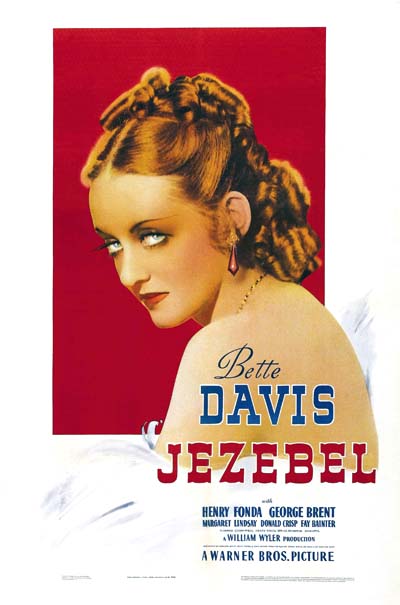
The 1938 best picture nominee Jezebel stars Bette Davis as Julie Marsden, a strong-willed Southern belle who lives in pre-Civil War New Orleans. Julie is looking forward to an upcoming ball but is frustrated when her fiancée, boring old Pres (Henry Fonda), says that he has to work and declines to go shopping for a dress with her. Impulsively, Julie does exactly what I would do. She buys the most flamboyant red dress that she can find.
Back in the old South, unmarried women were expected to wear white to formal balls, the better to let everyone know that they were pure and innocent and waiting for the right man. When Julie shows up in her red gown, it’s a scandal and, upon seeing the looks of shock and disdain on everyone’s faces, Julie wants to leave the ball. However, Pres insists that Julie dance with him and he continues to dance with her, even after the orchestra attempts to stop playing music.
And then he leaves her. At first, Julie insists to all who will listen that Pres is going to return to her but it soon becomes obvious that Pres has abandoned both Julie and Southern society. Julie locks herself away in her house and becomes a recluse.
Until, a year later, Pres returns. At first, Julie is overjoyed to see that Pres is back and she’s prepared to finally humble herself if that means winning back his love. But then she discovers that the only reason that he’s returned to New Orleans is to warn people about the dangers of Yellow Fever.
Oh, and he’s also married.
To a yankee.
For the most part, Jezebel is a showcase for another fierce and determined Bette Davis performance. It’s easy to be judgmental of a character like Julie Marsden but honestly, who doesn’t wish that they could be just as outspoken and determined? It helps, of course, that the film surrounds Julie with a collection of boring and self-righteous characters, the type of people who you love to see scandalized. Henry Fonda gives one of his more boring performances in the role of Pres while Margaret Lindsay, in the role of Pres’s Northern wife, is so saintly that she reminds you of the extremely religious girl in high school who would get offended whenever you came to school wearing a short skirt. In a society as rigid, moralistic, and judgmental as the one portrayed in Jezebel, it’s impossible not to cheer for someone like Julie Marsden.
Add to that, I totally would have worn that red dress too! In a world that insisted that all women had to act a certain way or look a certain way and think a certain way, Julie went her own way and, regardless of what boring old Pres may have thought, there’s a lesson there for us all.
When watching Jezebel, it helps to know a little about film history. Bette Davis very much wanted to play Scarlett O’Hara in Gone With The Wind and was reportedly very disappointed when the role went to Vivien Leigh. Depending on the source, Jezebel is often described as either being Davis’s audition for the role of Scarlett or as being a consolation gift for losing out on the role. Either way, Jezebel is as close as we will ever get to seeing Bette Davis play Scarlett. Judging from the film, Davis would not have been an ideal Scarlett. (Whereas Gone With The Wind works because Leigh’s Scarlett grows stronger over the course of the film, Davis would have started the film as strong and had nowhere left to go with the character.) However, Davis was a perfect Julie Marsden.
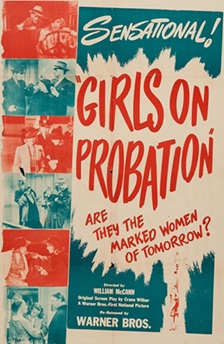 Eager to get away from her abusive father (Sig Ruman), Connie Heath (Jane Bryan) keeps making the mistake of hanging out with the ultimate bad friend, Hilda Engstrom (Sheila Bromley). Hilda steals a dress from where they work and when the dress is torn, Hilda lets Connie take the blame. When the dress’s owner (Susan Hayward, making her film debut) insists on pressing charges, insurance investigator Neil Dillon (Ronald Reagan) helps Connie get off the hook and out of jail.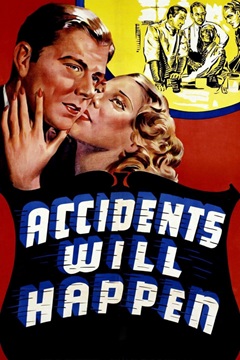
 Through the Shattered Lens