As you slide down
the banister of
life, may the
splinters never point
in the wrong direction
— Old Irish Toast
Happy St. Patrick’s Day From the Shattered Lens!
By Charles Kaiser
As you slide down
the banister of
life, may the
splinters never point
in the wrong direction
— Old Irish Toast
Happy St. Patrick’s Day From the Shattered Lens!
By Charles Kaiser
Decade of last.fm scrobbling countdown:
23. The Tossers (1,222 plays)
Top track (57 plays): The Crock of Gold, from The Valley of the Shadow of Death (2005)
My introduction to Irish punk was about as random as they come. I had “Come On Eileen” by Dexys Midnight Runners stuck in my head, and I could not for the life of me remember what it was called or who wrote it. I made a forum post asking “who wrote that song that goes too-ra-loo-rai-a?”, and someone–much to my persistent bewilderment today–responded with “Aye Sir” by The Tossers. It was through this cluttered back door that I first came to discover legends like The Pogues, The Dubliners, Dropkick Murphys, and Flogging Molly, and I owe a world of thanks to that forgotten forum poster for it.
A lot of my love for The Tossers is definitely nostalgia, because they introduced me to a world of music that has influenced my life tremendously ever since. But more significantly, I love The Tossers because they manifest an earthy side of Irish folk that bigger and brighter rock stars can never, by consequence of their fame, present quite so intimately. The drunken camaraderie, the sense of belonging, the singing and the dancing, all of the glory that one of the most persistently vibrant folk traditions in the world can bring–you certainly feel them all at a Dropkick concert, but with The Tossers it comes before an audience of a few hundred, most of whom know the songs by heart. They’re probably the best punk-minded Irish folk band drifting around America to have never made it big, and their live show is a blast every time.
“Tuatha Dé Danann” refers to mythological pre-Christian inhabitants of Ireland, and contestedly translates as “peoples of the goddess Danu”. If an entirely appropriate name for an Irish folk metal band, what makes Tuatha de Danann especially odd is that they hail from Varginha, Brazil. The band can, moreover, claim to be one of the earliest-formed acts to perform folk metal, dating back to 1995 (though they quite recently broke up.)
Tuatha de Danann are fundamentally power metal–the definitive metal genre of Central and Southern America (I was in Costa Rica when Iron Maiden played there in 2009 and you’d have thought it was a national holiday). I’ve never been a big power metal enthusiast, so I never had much of a desire to explore Tuatha de Danann’s albums further, but the opening track to Tingaralatingadun, released in 2001, does a delightful (and historically, exceptionally early) job of flawlessly merging power and folk metal in a manner somewhat similar to Elvenking during their finer years. It is a bit more earthy than Elvenking, much to its advantage, and the effect of the constant guitar solo doodling, whistle, and generally airy production creates a lighthearted, mischievous vibe that I would describe as more fantasy than folk–or at least, it invokes a more fairytale superstition of early morning magic. Follow these guys into a cave and you might find a few hundred years have passed on your way back out.
The biggest selling point for me in this song is the tone of the whistle. I cannot sufficiently emphasize my love for whistles. There is no instrument I enjoy more, either to listen to or to play (banjos get a close second, though I’d be kidding myself if I claimed I could play one). “The Dance of the Little Ones” is especially successful in generating a sort of ‘through the fog’ whistle tone which I’ve heard employed by such diverse musicians as Belarusian folk band Stary Olsa (Стары Ольса) and Japanese video game composer Miki Higashino, and which I desperately wish I knew how to reproduce.
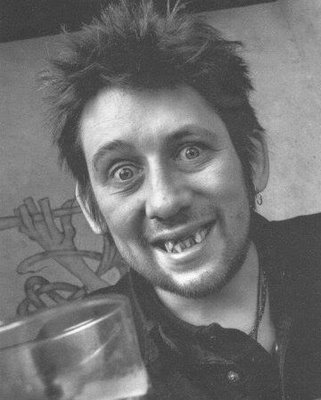
Sure, Patrick was a Catholic saint and Ostara, Easter’s namesake, was a pagan goddess, but it’s what you do on a holiday that really marks its significance. So let pious men paint crosses on long-impotent eggs; the damned still have their days. For me, spring begins with a pint of Guinness bright and early on March 17th.
For a few years now I’ve started out Paddy’s Day with the goal in mind of researching and recounting the history of some of my favorite Irish songs, and the spirits of the season have always gotten the better of me. But inebriation brings its own cryptic wisdoms, and this year, as I searched and fumbled through disjointed google results, it was the chronology of the music that really stood out to me. Ireland writes its history in song.
1984: Streams of Whiskey
Every song has an author–a source of origin. Though it may evolve into something entirely unrecognizable, it has to start somewhere, and even when its most distinguishable features are additions, someone has to add them. What distinguishes a traditional song from a cover has a lot to do with the mentality of the individuals copying it, which is in turn dictated in part by the DNA of the song itself. Covers acknowledge authorship–both of the original performer and of the artists performing the new rendition. Traditional songs do not. They are for the masses, and belong to everyone equally. Shane MacGowan and The Pogues authored many traditional songs. Streams of Whiskey, off of their 1984 debut album, can be considered one of their first. Its subject, Irish nationalist, poet, and playwright Brendan Behan, died of alcoholism twenty years prior, but the song is by no means “tragic”.
Last night as I slept I dreamt I met with Behan. I shook him by the hand and we passed the time of day. When questioned on his views–on the crux of life’s philosophies–he had but these few clear and simple words to say: I am going, I am going any which way the wind may be blowing. I am going, I am going where streams of whiskey are flowing.
I have cursed, bled, and sworn, jumped bail and landed up in jail. Life has often tried to stretch me, but the rope always was slack. And now that I’ve a pile, I’ll go down to the Chelsea. I’ll walk in on my feet, but I’ll leave there on my back.
Oh the words that he spoke seemed the wisest of philosophies. There’s nothing ever gained by a wet thing called a tear. When the world is too dark, and I need the light inside of me, I’ll go into a bar and drink fifteen pints of beer.
~1960: Come Out Ye Black and Tans
The Behans were themselves a source of Irish tradition. Brendan’s brother, Dominic, composed two particularly lasting staples: Come Out Ye Black and Tans and The Auld Triangle. Black and Tans recounts their father Stephen’s active role in the Irish War of Independence (1919-1921), and as best I can gather was written by Dominic after his own release from prison for political dissent.
I was born on a Dublin street where the Royal drums did beat, and the loving English feet walked all over us. And every single night, when me dad would come home tight, he’d invite the neighbors outside with this chorus: Come out ye Black and Tans, come out and fight me like a man. Show your wife how you won medals down in Flanders. Tell her how the I.R.A. made you run like hell away from the green and lovely lanes in Killeshandra. Come, tell us how you slew those brave Arabs two by two; like the Zulus, they had spears and bows and arrows. How you bravely faced each one with your sixteen pounder gun, and you frightened them poor natives to their marrow.
1919: Foggy Dew
Stephen Behan’s war officially began in 1919–the same year in which Canon Charles O’Neill wrote Foggy Dew. His song was a reflection on the 1916 Easter Uprising, and a sign of future struggles. The Allies of the First World War’s promise of independence to small nations created previously non-existent nationalist identities around the world, but Ireland’s exclusion from the deal reinvigorated sentiments which had existed for generations. Foggy Dew, and the many songs that appeared alongside it, revitalized a lyrical tradition which, while separated by the 19th century’s period of emigration, was never fully forgotten.
As down the glen one Easter morn to a city fair rode I, there armed lines of marching men in squadrons passed me by. No pipe did hum, no battle drum did sound its dread tattoo. But the Angelus bells o’er the Liffey’s swell rang out through the foggy dew.
Right proudly high over Dublin Town they hung out the flag of war. ‘Twas better to die beneath an Irish sky than at Suvla or Sud-El-Bar. And from the plains of Royal Meath strong men came hurrying through, while Britannia’s Huns, with their long range guns, sailed in through the foggy dew.
Oh the bravest fell, and the requiem bell rang mournfully and clear for those who died that Eastertide in the spring time of the year. And the world did gaze, in deep amaze, at those fearless men, but few, who bore the fight, that freedom’s light might shine through the foggy dew.
As back through the glen I rode again, my heart with grief was sore. For I parted then with valiant men whom I never shall see more. But to and fro in my dreams I go and I kneel and pray for you, for slavery fled, o glorious dead, when you fell in the foggy dew.
~1870: Spancil Hill
Michael Considine was an Irish immigrant to Boston, who moved to California in his early 20s and died shortly thereafter. The history of his song is steeped in myth. It supposedly made its way back to Ireland through family connections and came into the possession of Michael’s six year old nephew, John Considine, who kept it safe for 70 years and confirmed its authenticity upon hearing it performed by a stranger in 1953. Whatever its true story, it preserves a memory of departure after the fact, shedding any semblance of optimism about a land of opportunity.
Last night as I lay dreaming of pleasant days gone by, my mind being bent on rambling. To Ireland I did fly. I stepped on board a vision and I followed with the wind, and I shortly came to anchor at the cross of Spancil Hill.
It was on the 23rd of June, the day before the fair, when lreland’s sons and daughters in crowds assembled there, the young and the old, the brave and the bold, their journey to fulfill. There were jovial conversations at the fair of Spancil Hill.
I went to see my neighbors, to hear what they might say. The old ones were all dead and gone, and the young one’s turning grey. I met with the tailor Quigley, he’s a bold as ever still. He used to make my britches when I lived in Spancil Hill.
I paid a flying visit to my first and only love. She’s as white as any lily and as gentle as a dove. She threw her arms around me saying “Johnny I love you still.” She’s Ned the farmer’s daughter and the flower of Spancil Hill.
I dreamt I held and kissed her as in the days of yore. She said, “Johnny you’re only joking like many’s the time before.” The cock he crew in the morning; he crew both loud and shrill. I awoke in California, many miles from Spancil Hill.
~1850-1860: The Rocky Road to Dublin
D. K. Gavan’s mid-19th century depiction of emigration was a bit more optimistic. It remains persistently playful, presenting an Irish youth’s boastful account of his relocation from Galway to Liverpool as an adventure rather than a loss. Perhaps of some significance towards this end is that it was written by an Irishman who does not appear to have ever left for good or entered into the working class.
In the merry month of May, from me home I started. Left the girls of Tuam so nearly broken-hearted. Saluted father dear, kissed me darling mother, drank a pint of beer, me grief and tears to smother. Then off to reap the corn, leave where I was born, cut a stout black thorn to banish ghosts and goblins. Bought a pair of brogues to rattle o’er the bogs and frighten all the dogs on the rocky road to Dublin.
In Mullingar that night I rested limbs so weary. Started by daylight next morning bright and early. Took a drop of pure to keep me heart from sinking. That’s a Paddy’s cure whenever he’s on the drinking. See the lassies smile, laughing all the while at me darling style, ‘twould leave your heart a bubblin’. Asked me was I hired, wages I required, till I almost tired of the rocky road to Dublin.
In Dublin next arrived, I thought it such a pity to be soon deprived a view of that fine city. Then I took a stroll, all among the quality. Me bundle, it was stole, all in a neat locality. Something crossed me mind, when I looked behind. No bundle could I find upon me stick a wobblin’. Inquiring for the rogue, they said me Connaught brogue wasn’t much in vogue on the rocky road to Dublin.
From there I got away, me spirits never falling. Landed on the quay, just as the ship was sailing. Captain at me roared, said that no room had he. When I jumped aboard, a cabin found for Paddy down among the pigs, played some hearty rigs, danced some hearty jigs, the water round me bubbling. Then off Holyhead. I wished meself was dead, or better far instead on the rocky road to Dublin.
The boys of Liverpool, when we safely landed, called meself a fool. I could no longer stand it. Blood began to boil, temper I was losing. Poor old Erin’s Isle they began abusing. “Hurrah me soul” says I, let the Shillelagh I fly, some Galway boys were nigh and saw I was a hobblin’ in. With a load “hurray” joining in the fray, till we cleared the way on the rocky road to Dublin.
~1820: The Wild Rover
The mere existence of The Wild Rover as a drinking song is a testament to Ireland’s independent spirit, and it marks, perhaps, the tail end of another era in nationalist-themed music. It was originally composed as a temperance song, and the lyrics indeed tell of a repentant alcoholic prepared to give up the drink for good. But with a nuance difference. Early printings of the lyrics (at least, one I read dated between 1813 and 1838) have the subject of the song testing the landlady with money to see if she will sell him whiskey and then refusing to actually drink it, extolling the virtues of sobriety. In the popular, surviving version, the wild rover slips into his old ways just one last time.
I’ve been a wild rover for many a year, and I spent all my money on whiskey and beer. Now I’m returning with gold in great store, and I never will play the wild rover no more. And it’s no, nay, never, no nay never no more, will I play the wild rover. No never, no more. I went to an ale-house I used to frequent, and I told the landlady me money was spent. I asked her for credit, she answered me “nay, such a custom as yours I could have any day.” I took from my pocket ten sovereigns bright, and the landlady’s eyes opened wide with delight. She said “I have whiskey and wines of the best, and the words that I told you were only in jest.” I’ll go home to my parents, confess what I’ve done, and I’ll ask them to pardon their prodigal son. And if they forgive me as ofttimes before, I never will play the wild rover no more.
~1800: Johnny I Hardly Knew Ye
My personal favorite Irish traditional song, Johnny I Hardly Knew Ye, is best known in the United States in its bastardized American Civil War form: When Johnny Comes Marching Home Again. The American version welcomes home a brave warrior, who fought with valor and served his cause dutifully. Life was a bit more realistic in Ireland. This song first appeared some time after the 1798 Irish Rebellion–a movement sparked by the recent American and French Revolutions–at a time when the British Empire was shipping Irishmen off to Sri Lanka to fight their senseless colonial wars. It is a brutally honest depiction of the reality of war that surpasses any modern attempt.
While goin’ the road to sweet Athy, hurrah, hurrah
While goin’ the road to sweet Athy, hurrah, hurrah
While goin’ the road to sweet Athy with a stick in me hand and a drop in me eye
Well don’t you laugh now, don’t you cry
Johnny, I hardly knew ye.
With your guns and drums and drums and guns, hurrah, hurrah
With your guns and drums and drums and guns, hurrah, hurrah
With your guns and drums and drums and guns, the enemy nearly slew ye
Why darling dear, you look so queer
Johnny, I hardly knew ye.
Where are the eyes that looked so mild? hurrah, hurrah
Where are the eyes that looked so mild? hurrah, hurrah
Where are the eyes that looked so mild when you at first me heart beguiled?
What have you done to me and the child?
Johnny, I hardly knew ye.
Where are your legs that used to run? hurrah, hurrah
Where are your legs that used to run? hurrah, hurrah
Where are your legs that used to run when first you went to carry a gun?
Indeed you dancing days are done
Johnny, I hardly knew ye.
Well you haven’t an arm and you haven’t a leg, hurrah, hurrah
You haven’t an arm and you haven’t a leg, hurrah, hurrah
You haven’t an arm and you haven’t a leg. You’re an armless, legless, boneless egg.
You ought to ‘ve been born with a bowl to beg
Johnny, I hardly knew ye.
I’m happy for to see you home, hurrah, hurrah
Back from the island of Ceylon, hurrah, hurrah
I’m happy for to see you home, though indeed you cannot see your home.
Why on earth were you inclined to roam?
Johnny, I hardly knew ye.
~1500s: The Parting Glass
There’s something profoundly assertive in the lot of these songs. They aren’t the mindless jingles for which America is only one of many guilty parties. Even the most seemingly mundane, say, The Wild Rover, carries with it a hidden rejection of artificial restrictions on human nature. Perhaps that’s why they bear such a strong cross-cultural appeal. St. Patrick’s Day isn’t a celebration of Irish tradition; it’s a celebration of what Irish tradition understands best–the human experience. One of my favorite lines in any song comes packaged in the oldest Irish song I know. It could be a simple statement of fact, but I fancy it a tongue-in-cheek play on words. Because Irish tradition understands that loss is not a thing experienced prior to the fact. Preemptive expressions of sorrow are bullshit, and our recognition of that fact in the moment is part of the experience. So, since it falls unto my lot that I should rise and you should not, I gently rise and softly call, good night and joy be with you all.
Continuing my ongoing survey of classic exploitation and grindhouse film trailers, here’s six more.
1) Simon, King of the Witches — I’ve never seen this film but I caught this trailer on one of the 42nd Street compilation DVDs. It doesn’t really make me want to see the film but I love the trailer because it is just so totally and utterly shameless. Seriously, could this thing be more early 70s? As well, I’ve always wondered — would witches actually have a king? I mean, seriously, get with the times.
The film, by the way, stars Andrew Prine who apparently had a really promising film career until his girlfriend, Karyn Kupicent, died mysteriously in 1964. A lot of people believed that Prine killed her though he always denied any guilt and there’s really no evidence to connect him to the crime. Interestingly, even more people seem to think that Kupicent was murdered because she knew something about John F. Kennedy’s assassination. Finally, true crime author Steve Hodel has suggested that Kupicent was actually murdered by his father, Dr. George Hodel. (Steve also claims that George was the Black Dahlia killer, the Zodiac killer, Chicago’s lipstick killer, and that George was responsible for just about every unsolved murder in history. Oedipus much?)
2) The Town That Dreaded Sundown — Though I didn’t consider this while selecting this trailer, this is another film that features the unfortunate Robert Prine. I’ve seen this film exactly one time when it showed up on late night television once. Unfortunately, considering that it was 4 in the morning and the movie was obviously heavily edited for television (not to mention that constant commercial interruptions), I didn’t really get to experience the film under ideal circumstances. As a result, I’ve been trying to track this movie down on DVD ever since. It’s not an easy film to find.
One of the reasons this movie fascinates me is because it’s not only based on a true unsolved crime but it actually follows the facts of the case fairly closely. In the late 40s, Texarkana was stalked by a masked gunman known as the Phantom Killer. The case was never solved and its gone on to become a bit of a local legend in the rural Southwest. Part of my interest in this case comes from the fact that I grew up in the rural Southwest. It’s the part of the country I know best and this film was actually filmed in the southwest as opposed to just an arid part of Canada. Interestingly enough, the Phantom Killer had a lot of similarities to the later Zodiac Killer. However, as far as I know, Steve Hodel has yet to accuse his father of haunting Texarkana.
The film itself was made by Charles B. Pierce, a filmmaker who was based in Arkansas and made several independent films in that state. Perhaps this explains why the trailer refers to “Texarkana, Arkansas” even though everyone knows that the only part of Texarkana that matters is the part that’s in Texas.
3) Nightmares in a Damaged Brain — This is one of the infamous “video nasties” (trust the English to not only ban movies but to come up with a stupid and annoying label for those movies). Like many of those films, this is a gory Italian film that seems to bathe in the sordid.
It’s also fairly difficult film to find. The DVD I own is actually a copy of the severely cut version that was eventually released in England, of all places.
(Another thing about the English — why is it that a culture that obsessively uses the word “cunt” in casual conversation seems so driven to distraction by a little fake blood? It’s as if someone told them that banning movies would somehow make up for the attempted genocide of Catholics in Northern Ireland.)
However, even in cut form, this is a disturbingly dark and frequently depressing film. Evil seemed to radiate through my entire apartment the whole time I was watching it and that atmosphere is captured in the movie’s trailer.
As a sidenote, the gore effects in this film are credited to Tom Savini. At the time of the film’s release, Savini announced that he actually had nothing to do with this movie.
4) To the Devil a Daughter — I recently read a biography of Christopher Lee in which he cited this movie, along with the original Whicker Man, as one of his personal favorites. It was also the film debut of Natassia Kinski, the daughter of Klaus Kinski. Considering Klaus’s reputation, the title is ironic.
5) Vampire Circus — This is another movie that I’ve never seen but I’ve heard great things about it. Supposedly, its one of the last great Hammer vampire films. Reportedly, it was controversial at the time of its release because it featured vampires attacking English children. (Which, if nothing else, at least prevented from growing up to kill little Irish children.) Seeing the trailer leaves me even more frustrated that it has yet to be released, in the States, on DVD.
6) Dr. Butcher, M.D. — This is actually a rather odd zombie/cannibal film hybrid from Italy. It was originally titled Zombie Holocaust but the American distributors retitled it Dr. Butcher. I love this trailer for much the same reason I love the Simon, King of the Witches trailer. It is just pure and shameless exploitation. Plus, it features some of the best moments of the great Donal O’Brien’s performance as the “title” character. I recently forced my sister Erin to watch Zombie Holocaust. Ever since, whenever I start to ramble too much, she simply looks at me and says, “Lisa’s annoying me. About to perform removal of vocal chords…” She actually does a fairly good impersonation. Consider this just more proof that the Grindhouse brings families closer together.
 Through the Shattered Lens