Since today is Adrian Lyne’s birthday, it only seems appropriate that today’s song of the day should come from his best film.
Tag Archives: Irene Cara
Film Review: City Heat (dir by Richard Benjamin)
In 1984’s City Heat, Clint Eastwood plays Lt. Speer, a tough and taciturn policeman who carries a big gun, throws a mean punch, and only speaks when he absolutely has to.
Burt Reynolds plays Mike Murphy, a private investigator who has a mustache, a wealthy girlfriend (Madeleine Kahn), and a habit of turning everything into a joke.
Together, they solve crimes!
I’m not being sarcastic here. The two of them actually do team up to solve a crime, despite having a not quite friendly relationship. (Speer has never forgiven Murphy for quitting the force and Murphy has never forgiven Speer for being better at everything than Murphy is.) That said, I would be hard-pressed to give you the exact details of the crime. City Heat has a plot that can be difficult to follow, not because it’s complicated but because the film itself is so poorly paced and edited that the viewer’s mind tends to wander. The main impression that I came away with is that Speer and Murphy like to beat people up. In theory, there’s nothing wrong with that. Eastwood is legendary tough guy. Most people who watch an Eastwood film do so because they’re looking forward to him putting the bad guys in their place, whether it’s with a gun, his fists, or a devastating one-liner. Reynolds also played a lot of tough characters, though they tended to be more verbose than Eastwood’s.
That said, the violence in City Heat really does get repetitive. There’s only so many times you can watch Clint punching Burt while various extras get gunned down in the background before it starts to feel a little bit boring. The fact that the film tries to sell itself as a comedy while gleefully mowing down the majority of the supporting cast doesn’t help. Eastwood snarls like a pro and Reynolds flashes his devil-may-care smile but, meanwhile, Richard Roundtree is getting tossed out a window, Irene Cara is getting hit by a car, and both Kahn and Jane Alexander are being taken hostage. Tonally, the film is all over the place. Director Richard Benjamin was a last-minute replacement for Blake Edwards and he directs without any sort of clear vision of just what exactly this film is supposed to be.
On the plus side, City Heat takes place in Kansas City in 1933 and the production design and the majority of the costumes are gorgeous. (Unfortunately, the film itself is often so underlit that you may have to strain your eyes to really appreciate it.) And the film also features two fine character actors, Rip Torn and Tony Lo Bianco, are the main villains. For that matter, Robert Davi shows up as a low-level gangster and he brings an actual sense of menace to his character. There are some good things about City Heat but overall, the film is just too messy and the script is a bit too glib for its own good.
Burt Reynolds and Clint Eastwood had apparently been friends since the early days of their careers. This was the only film that they made together. Interestingly enough, Reynolds gets the majority of the screentime. Eastwood may be top-billed but his role really is a supporting one. Unfortunately, Reynolds seems to be kind of bored with the whole thing. As for Clint, he snarls with the best of them but the film really doesn’t give him much to do.
A disappointing film, City Heat. Watching a film like this, it’s easy to see why Eastwood ended up directing himself in the majority of his films.
Music Video of the Day: Flashdance (What a Feeling) by Irene Cara (1983, directed by Adrian Lyne)
Back in the 70s, Hollywood finally figured out that a good soundtrack was a good way to convince people to come see your movie.
In the 80s, Hollywood figured out that a good music video was an even more effective way to draw in audiences than a good soundtrack.
The video for What A Feeling is entirely made up of scenes from Flashdance. It probably wasn’t difficult to put it together and it probably played a huge role in the film becoming a hit and this song eventually wining an Oscar. It was a lesson that Flashdance producers Don Simpson and Jerry Bruckheimer would remember when they went on to produce other feature-length music videos, like Top Gun, Days of Thunder, and Dangerous Minds.
Enjoy!
Music Video of the Day: Ghostbusters by Ray Parker Jr. (1984, dir. Ivan Reitman)
I wish the literal video for this was still up. Oh, well.

All these years later, I still don’t have any idea why she goes into that house. I guess we are supposed to believe she lives there with these two kids that miss their cue?

These other kids nail it.

Despite finding lists of all the celebrities in this video, I have no idea who this guy is that Ray Parker Jr. becomes for this bit.

I also wonder why she didn’t see him while turning away from the moving table to go to the window.
In the window is footage of the movie that has aged horribly. Parker Jr. is blue screened in there for this famous shot.

He ain’t afraid of no ghost. A lawsuit on the other the hand, that’s a different matter. I hope this music video doesn’t remind me of a Huey Lewis & The News video as well.
Now Ray Parker Jr. stands creepily outside of her window.

This is looking familiar.
Chevy Chase can call Ghostbusters if he has a ghost problem…

but what about if he gets stuck in Benji again?

Who can he call then?
I knew this looked familiar.


Do You Believe In Love by Huey Lewis & The News (1982)

Do You Believe In Love by Huey Lewis & The News (1982)
sound like the same riff from Johnny And Mary by Robert Palmer?
Or is it just me?
What a feeling. Thanks for making that one easy, Irene Cara.
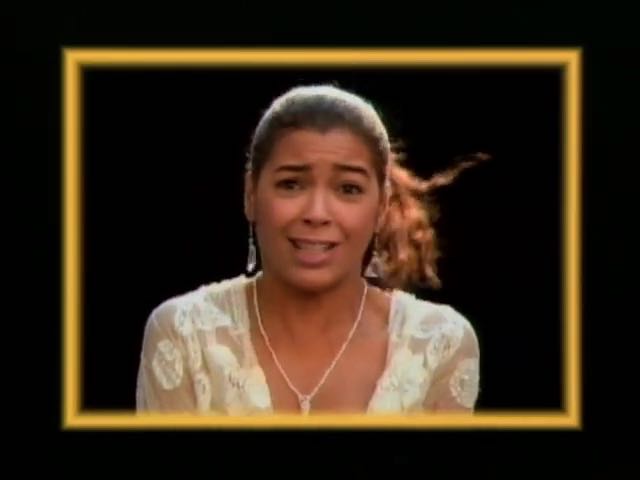
Something tells me that Cindy Harrell was hired by someone who saw the movie Model Behavior (1982), which she was in.


Model Behavior (1982, dir. Bud Gardner)

Model Behavior (1982, dir. Bud Gardner)
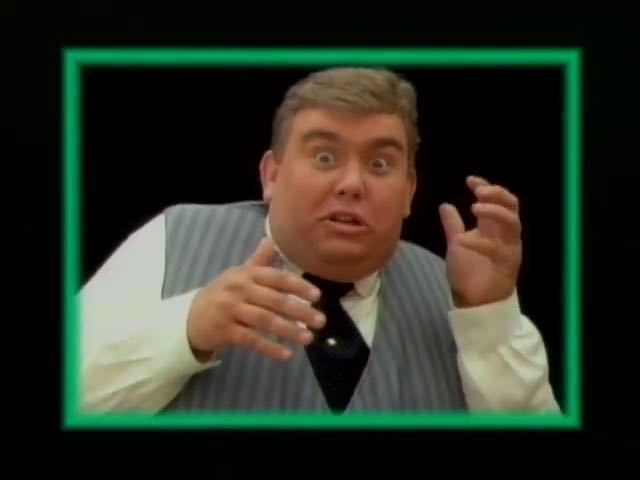
Ray Parker Jr. rising from the top of the stairs like he’s Michael Myers come to kill her. Why?

Or at least scare her. It’s probably a reference to Gozer.

Melissa Gilbert. I have no idea what she’s doing here. I’ve only seen an episode or two of Little House On The Prairie, so I guess there could have been some episodes with ghosts. Some of these cameos feel like they happened because the celebrities were involved with NBC.

Speaking of cameos I can’t explain, it’s former baseball player Ollie Brown.

Boundaries!
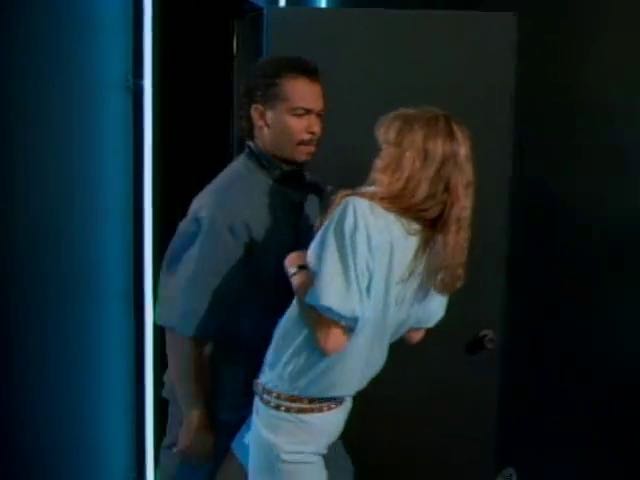
I do like that for the majority of the shot it looks like she should be falling over but isn’t.
More people that Parker can summon for some reason.

Don’t worry about them.

Pose for the featured image of this post.

Thank you.
Jeffrey Tambor.

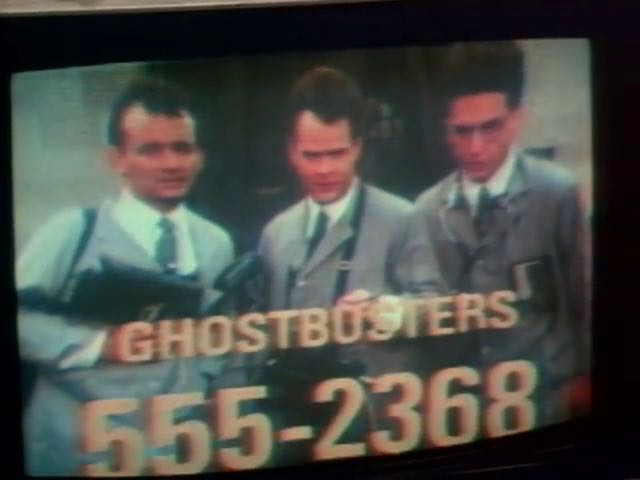
Is it 555-5555…

or 555-2368 as you showed earlier?
George Wendt apparently got in trouble with the Screen Actors Guild for his appearance in this video. I’ll link to the article with that information at the end.

Senator Al Franken.

Now we get a series of confusing cameos.
Danny DeVito. I think this is only the second music video he has ever been in. The other one was for the song Billy Ocean did for The Jewel Of The Nile (1985).

Carly Simon for some reason. She would go on to do the theme song to Working Girl (1988) with Sigourney Weaver. Maybe they were friends. I don’t know.

Umm…one more thing. Have you tried calling the Ghostbusters? No clue as to why Peter Falk is here.

The breakdancing was improvised. So was Parker Jr. pushing Bill Murray around.

I think Teri Garr has one of the best cameos.

Don’t swallow that cigarette, Chevy.
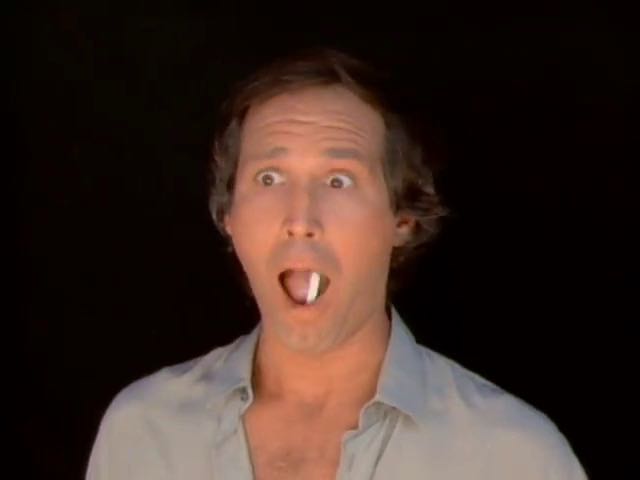
Fun fact: In European and other non-US markets, the “no” sign was flipped.

If you want to read some more information about the video, then follow this link over to ScreenCrush where they have a write-up on the video with information from people who worked on the video.
According to mvdbase, Ivan Reitman directed, Keith Williams wrote the script, Jeff Abelson produced it, Daniel Pearl shot it, and Peter Lippman was the production manager.
If you ever get a chance to watch the literal music video for this, then do so. I doubt it will surface again though seeing as this music video almost didn’t get an official release because of the issues surrounding all the cameos.
Enjoy!
Back to School #23: Fame (dir by Alan Parker)
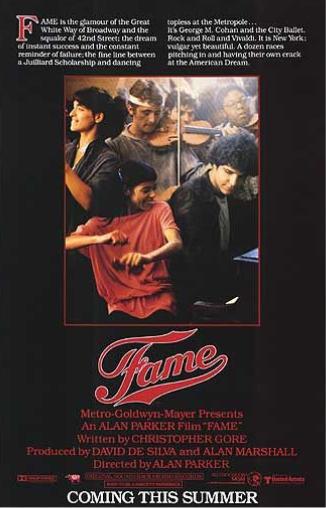
“Fuck it, if I can’t dance I’ll change to the drama department.” — Lisa (Laura Dean) in Fame (1980)
For nearly a week now, we’ve been taking a chronological look at some of the best and some of the worst films ever made about teenagers and high school. Yesterday, we finished off the 70s with Rock ‘n’ Roll High School. Today, we start the 80s by looking at yet another musical set in a high school. That musical is 1980’s Fame.
Taking place at the High School For Performing Arts in New York City, Fame follows a group of students from the beginning of their freshman year to graduation four years later. Among those students are Bruno (Lee Curreri), a musical prodigy, Coco (Irene Cara), who thinks that she’s the most talented student at the school, insecure Doris (Maureen Teefy), gay actor Montgomery (Paul McCrane), talented but functionally illiterate dancer Leroy (Gene Anthony Ray), and self-destructive comedian Ralph Garcia (Barry Miller, giving the best performance in the film). Over the course of four years, they fight, love, sing, and dance. They especially do a lot of dancing, which is basically the main reason why I enjoyed the film.
Fame is the perfect film to transition into the 80s with because, in many ways, it’s a perfect combination of the 70s and the 80s. In its use of ensemble and its emphasis on the gritty lives that the kids live outside of the school, the film is truly product of the 70s. However, whenever the film follows the students inside of the school, it becomes very much an 80s film, the type where the emphasis is on stylistically hyper editing and emotions are just as likely to be expressed through a musical montage as through dialogue. With its combination of the kids dreaming in the school and then facing the harsh realities outside, Fame feels like a collision of 70s pessimism and 80s optimism.
(Needless to say, pessimism usually makes for a more realistic film but optimism is a lot more fun to watch.)
Not surprisingly, for a film that made and released 34 years ago, a lot of Fame feels very dated. (What is surprising is that the 2009 remake feels even more dated.) It’s difficult not to cringe at the sight of all the leg warmers and big hair on display. The same can be said for the synthesizer-heavy soundtrack but, to be honest, I like 80s music. It may be cheesy but you can dance to it and really, what more can you ask from music? If nothing else, Fame serves as a valuable time capsule of the time that it was made and yes, I know that I’ve been saying that about a lot of movies lately but hey, it’s true! And I happen to love time capsules. So there.
And besides, dated as the film may be, Fame does get the big things right. It captures that feeling that we all had in high school, that feeling that you are destined for greater things and that, as long as you believe in yourself, good things will automatically happen to you. It captures the wonderful feeling of not only being creative and talented but also knowing that you are talented and creative..
The film is full of hints that the majority of the students at the high school will probably eventually be forced to give up on their dreams. A popular and handsome student is first seen graduating and full of confidence, just to pop up again an hour later, working as a waiter and looking desperate. Haughty Coco goes to an audition and ends up in tears after a sleazy producer tells her to undress. Ralph performs his stand-up comedy and, exhausted after going for days without sleep, ends up bombing. Leroy is offered a chance to dance professionally but first he has to try to talk his English teacher into giving him a passing grade while she mourns for her husband, who died just a few hours earlier. It’s actually a pretty dark movie but it’s hopeful too because, by the end of it, you realize that not all of the characters are going to make it but at least they’re going to have a chance to try.
 Through the Shattered Lens