Film Review: The Cassandra Crossing (dir by George Pan Cosmatos)


1976’s The Cassandra Crossing opens with a shot of the headquarters of the World Health Organization in Geneva, Switzerland.  Though the film (and the shot) may be from the 70s, one look at the ugly brutalism of the WHO’s headquarters is all it takes to understand the mentality that, nearly 50 years later, would lead to the organization serving as China’s mouthpiece during the COVID pandemic.

Three Swedish terrorists attack the American mission at the WHO.  One of them is killed by a guard.  Another immediately falls victims to an unidentified disease that is apparently a new form of the Bubonic plague.  The third (Lou Castel) escapes and boards a train that is heading for Sweden.  Two Americans, Col. MacKenzie (Burt Lancaster) and Major Stack (John Phillip Law), and Swedish doctor Elena Stadner (Ingrid Thulin), try to figure out how to stop the spread of the infection.

While the infected terrorist lurches around the train, the passengers go through their own personal dramas.  Renowned neurologist Jonathan Chamberlain (Richard Harris) flirts with his ex-wife, writer Jennifer Rispoli (Sophia Loren).  Wealthy Nicole Dressler (Ava Gardner, whose voice sounds like a cigarette ad) boards the train with her heroin-addicted younger boyfriend, Robby Navarro (a long-haired, dark glasses-wearing Martin Sheen, acting up a storm and apparently having a lot of fun for once).  Herman Kaplan (Lee Strasberg) is a regular on the train, a Holocaust survivor who enjoys a good chess game with the conductor, Max (Lionel Stander).  Haley (OJ Simpson) is a narcotics agent who is disguised as a priest.  Susan (Ann Turkel) is the hippie who just wants to have sex with her boyfriend (Ray Lovelock) but who keeps getting interrupted by other passengers.  When she complains about already having had to already deal with one “sweaty pervert” during the day, Chamberlain replies, “Which sweaty pervert?”  By this point, Chamberlain knows about the infected man and is trying to track him down before he can infect anyone else on the train.

The Cassandra Crossing is several films in one.  It’s an all-star disaster film.  It’s medical thriller.  Once Col. MacKenzie decides that the best way to deal with the train (and to cover-up the fact that America was researching germ warfare) would be to send the train over the infamous Cassandra Crossing, an unstable bridge that is on the verge of collapse, it becomes a conspiracy thriller.  It’s all a bit ludicrous, though in this post-pandemic age, there is definitely a renewed power to the images of Hazmat suit-wearing soldiers carrying submachine guns and threatening to kill anyone who resists going into quarantine.  When it comes to films that make Hazmat suits look menacing, The Cassandra Crossing can proudly stand with George Romero’s The Crazies and Zombi 3.

Of course, with any disaster film, the real purpose of the movie is to gather together a collection of familiar faces and then allow the viewer to spend two hours trying to guess who will survive and who will not.  The cast is full of actors who all probably deserved a better script.  Richard Harris, Burt Lancaster, and Ingrid Thulin all look somewhat embarrassed.  Ava Gardner and Martin Sheen fully embrace the melodrama.  In fact, it’s hard for me to think of any other movie where Sheen actually seemed to be having as much fun as he does while playing the drug-addicted, prone-to-histrionics mountain climber in The Cassandra Crossing.  As was typical of his film career, O.J. Simpson gives a very earnest performance.  He’s not exactly good but it’s obvious that he’s trying really hard and it would make him likable if not for the fact that he’s O.J. Simpson, just 20 years away from getting away with murder.  Out of the ensemble cast, Lionel Stander, Lee Strasberg, and Sophia Loren are the one who probably come the closest to actually giving good performances.  Loren’s husband, Carlo Ponti, produced the film with Sir Lew Grade and Loren gives a performance that is blessed with the confidence of knowing her career had survived far worse than The Cassandra Crossing.

The Cassandra Crossing is the epitome of a film that’s not necessarily good but which is definitely entertaining.  Between the drama-stuffed plot and the overwritten dialogue and the performances of Gardner and Sheen, it’s campy in the way that only an overproduced 70s disaster film can be.  For certain viewers, there’s undoubtedly a lot of joy to be found in the scenes in which the passengers finally start to stand up to the authoritarians trying to force them into quarantine.  That said, this is one of those films where we’re not meant to get particularly upset about hundreds of innocent people dying just because the main characters managed to come through unscathed.  The film’s ending is right up there with Man of Steel as far as needless destruction is concerned.  Fortunately, the ending also features some terrible miniature shots, all of which remind us not to take it all too seriously.

To paraphrase another 70s film: “Forget it, Jake.  It’s The Cassandra Crossing.

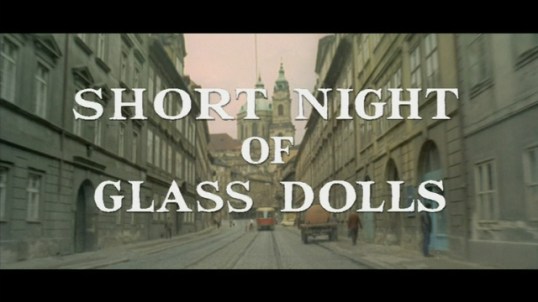
International Horror: Short Night of Glass Dolls (dir by Aldo Lado)


Short Night of Glass Dolls, an Italian thriller from 1971, opens with the discovery of a body in Prague.  American journalist Gregory Moore (Jean Sorel) is found lying in a plaza, his blank eyes staring up at the sky.  When he is examined by a doctor, we can hear a heartbeat pounding faintly on the soundtrack but Gregory is still declared dead.  At the hospital, he is taken down to morgue and left on a slab until a coroner can get around to opening him up….

The only problem is that, as the heartbeat indicated, Gregory Moore is not dead!  Instead, he’s paralyzed.  He can’t move or speak but he is alive and he can think.  As he waits to be dissected, Moore tries to figure out how he came to be in the situation.  He searches through his mind and we search with him.  He remembers his lover, Mira (Barbara Bach), who begged him to help her defect.  He remembers how she mysteriously vanished and how he worked with Jessica (Ingrid Thulin) and Jacques (Mario Adorf) to investigate her disappearance.  Moore’s mind is full of disturbing and surreal images but, as he remembers, it slowly starts to make sense.  And yet, even if Moore does eventually figure out what happened to Mira and how he came to be paralyzed, the coroner is still making his way over to Moore’s body….

Because it’s an Italian thriller from the 70s, Short Night of Glass Dolls is often mistakenly referred to as being a giallo.  Actually, it’s not.  Though the film does have the type of convoluted plot and the stylish imagery that is typically associated with the giallo genre, the film also lacks a black-gloved killer and really, it can’t be a giallo unless you have the unknown killer wearing black gloves.  Instead, Short Night of Glass Dolls is a deliberately paced paranoia thriller, one in which Moore uncovers not just a single crazed killer but instead a shadowy conspiracy.  It’s also an effective horror film, one that makes good use of Prague’s gothic atmosphere and which is full of haunting imagery.  Whether it’s the leering gargoyles that seem to be present on every building or the mysterious chandelier that continually shows up randomly in Moore’s mind, Short Night of Glass Dolls plays out like a cinematic dream.  Moore finds himself trapped, both physically and mentally.  His body is trapped in the morgue while his mind is trapped in the past.

Director Aldo Lado was always one of the more political of the Italian thriller directors and, not surprisingly, there’s a heavy political subtext to Short Night of Glass Dolls.  It’s probably not a coincidence that the journalist, who starts out as being cocky just to eventually discover that he doesn’t understand the world as much as he thinks he does, is an American.  It’s also not a coincidence that the film takes place in Prague, which was, at that time, a Communist-ruled city.  Prague is portrayed as being a city that is controlled by secret police and secret societies, where no one is allowed to fly free.  In the end, Short Night of Glass Dolls is full of secrets.

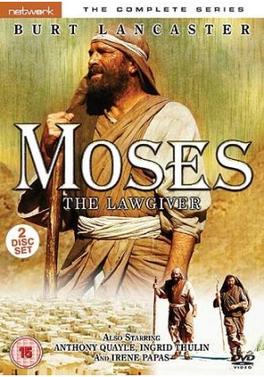
Film Review: Moses, The Law-Giver (dir by Gianfranco De Bosio)


I should probably start this review by admitting that there’s a legitimate question concerning whether or not 1974’s Moses, the Law-Giver should be considered a film or a miniseries.  Though there was an edited version of Moses that ran for 141 minutes and which was apparently released in theaters, the unedited version of Moses is 300 minutes long and was broadcast on television over a period of 6 nights.  The long, unedited version is the one that I watched on Prime for five hours on Friday.  Having watched the entire thing in one sitting, I personally consider Moses, the Law-Giver to be a film, albeit a very long one.

Moses, The Law-Giver tells the story of Moses and how he was exiled from Egypt, just to return years later to demand that Pharaoh set his people free.  The first two and a half hours deal with Moses and Egypt.  The second half of the film follows Moses and the Israelites as they seek the Promised Land.  Moses covers the same basic ground as The Ten Commandments, just in a far less flamboyant manner.

For instance, Charlton Heston was a powerful and fearsome Moses in The Ten Commandments.  In Moses, the Law-Giver, Burt Lancaster is a bit more subdued in the lead role.  Even though Lancaster was far too old to play the role, he still gives a convincing performance.  He plays Moses as a man who starts out unsure of himself but who grows more confident as the journey continues.  He’s also a man who is constantly struggling to control his emotions because he knows that he doesn’t have the luxury of showing any sign of weakness.  Whereas Heston bellowed in rage at the sight of the Golden Calf, Lancaster comes across more like a very disappointed father who is about to ground his children.  Lancaster’s low-key performance pays when, towards the end of the film, Moses is told that he will see the Promised Land but that he will not enter it.  The sudden look of pain on Moses’s face is powerful specifically because we’ve gotten so used to him holding it all back.  For a brief moment, he drops his mask and we realize the toll that the years have taken on him.

In The Ten Commandments, Yul Brynner was a determined and arrogant Pharaoh.  In Moses, the Pharaoh (who is played by Laurent Terzieff) is far more neurotic.  He’s portrayed as being Moses’s younger cousin and he seems to be personally hurt but Moses’s demand that the slaves be granted freedom.  It creates an interesting dynamic between the two characters, though it also robs the film of a credible villain.  Whereas Brynner’s Pharaoh was a fearsome opponent, Terzieff plays the character as being weak and indecisive.  Even if one didn’t already know the story, it’s till impossible to be surprised when Terzieff finally relents and allows the Israelites to leave Egypt.

Most importantly, Moses, The Law-Giver devotes more time to the relationship between Aaron and Moses than The Ten Commandments does.  In The Ten Commandments, John Carradine’s Aaron was an often forgotten bystander.  In Moses, Anthony Quayle plays Aaron and he’s pretty much a co-lead with Lancaster.  The film is as much about Aaron as it is about Moses and it actually takes the time to try to logically develop how Aaron could have been duped into creating the Golden Calf.  Quayle gives the best and most compelling performance in Moses, playing Aaron as a well-meaning and loyal sibling who, unfortunately, is often too worried about keeping everyone happy.  For all of his loyalty to Moses, Aaron still struggles with feelings of envy and Quayle does a wonderful job portraying him and turning him into a relatable character.

As a film, Moses, The Law-Giver is never as much as fun as The Ten Commandments.  It’s almost too subdued for its own good.  On the one hand, it’s possible to appreciate Moses for taking a somewhat realistic approach to the story but …. well, is that really what we want?  Or do we want the spectacle of decadent Egypt and the excitement of the red sea crashing down on Pharaoh’s army?  You can probably guess where I come down on that.

Of note to fans of Italian cinema, the film’s score — which is pretty good — was composed by Ennio Morricone.  The film’s special effects are credited to none other than Mario Bava!  This was one of Bava’s final credits.  Unfortunately, the special effects are never really that spectacular and there’s a few scenes where it’s obvious that stock footage has rather awkwardly been utilized.  But, no matter!  It still made me happy to see Bava’s name listed in the end credits.

Moses, The Law-Giver has its moments but, ultimately, The Ten Commandments remains the Moses film to watch.

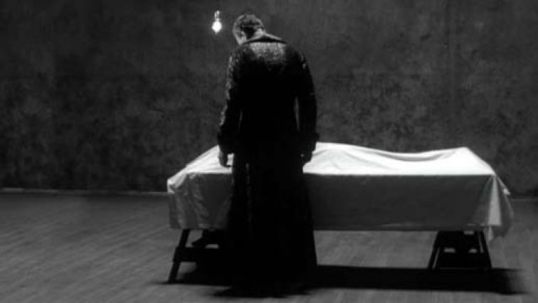
International Horror Film Review: Hour of the Wolf (dir by Ingmar Bergman)


An Ingmar Bergman horror film?

Indeed.  Despite the fact that Bergman’s bleak imagery and existential themes undoubtedly influenced any number of horror filmmakers (Wes Craven’s Last House On The Left was essentially a remake of Bergman’s The Virgin Spring), the 1968 film, Hour Of The Wolf was Ingmar Bergman’s only official horror film.

Of course, it’s also an Ingmar Bergman film, which means that it’s also a meditation on relationships, regret, the difficult of ever knowing what’s truly going on inside someone else’s head, and the artificiality of the artistic process.  It tells the story of a painter named Johan Borg (Max Von Sydow) and his pregnant wife, Alma (Liv Ullman) and their life on an isolated island.  Alma is worried about Johan’s feelings towards his former muse and ex-lover, Veronica Vogler.  Johan is haunted by nightmarish visions of menacing figures and the feelings that demons are pursuing him.

The film opens with a title card, informing us that the story that we’re about to see is true and that it’s an attempt to reconstruct the final days of Johan’s life before his mysterious disappearance.  Of course, as anyone who has seen enough found footage films can tell you, the title card is a lie and there never was a painter named Johan Borg, or at least not one who mysteriously vanished while living in an isolated house on an island.  Instead of being meant to convince us that we’re about to see a true story, the title card instead establishes that what we’re about to see can be considered to almost be a dark fairy tale.  The title card is the film’s way of saying, “Once Upon A Time…..”  It’s also a reminder that most fairy tales are considerably more grim than what those of us raised on Disney might expect.

(No coincidentally, the title Hour of the Wolf came from Swedish folk lore.  The Hour of the Wolf is the time between 3 and 5 in the morning, during which it is said that most births and deaths occur.)

While the opening credits flash by on a dark screen, we hear the sounds of men working and anyone who has any experience in theater will immediately realize that we’re listening to a set being built.  As the opening credits come to an end, we hear Bergman shouting out, “Action!”  Our next shot is Alma standing outside of the house that she shared with Johan.  Alma looks straight at the camera as she tells us that she still doesn’t know what happened to Johan.  She tells the unseen Bergman that she’s revealed to him everything that she knows.

It’s an interesting opening, one that reminds the audience that what they’re seeing is merely a recreation of what might have happened on Johan and Alma.  When Alma speaks to Bergman, there’s an interesting subtext to her words and her tone and one gets the feeling that Alma and the director are meant to have a history of their own.  It’s almost as if the film is saying that the story’s meaning can only be found in what we can’t see, in what’s going on behind the camera.  That seems especially true when you consider that, when Hour of the Wolf was filmed, Liv Ullman, who played the pregnant Alma, actually was pregnant with Bergman’s child and that Bergman himself later said that Johan Borg’s nightmares were recreations of Bergman’s own nightmares.  It’s perhaps a little too easy to imagine that the demons that inspire Johan’s art are the same demons that inspired Bergman’s films and that this film is both an apology to Ullman for his own neurotic tendencies and a tribute to her willingness to put up with him.

Hour of the Wolf is a bleakly effective film, one that works as both a dissection of an unstable relationship and a portrait of a man who may be losing his mind.  Von Sydow plays the haunted Johan as a charismatic but introverted artist, a troubled individual who can only truly express what’s happening in his mind through his art.  Indeed, Johan’s tragedy seems to be that the joy he gets from creating can only come from the pain that he suffers from imagining and dreaming.  Ullman is heart-breaking as she tries to keep her husband from succumbing to his own darkness while, at the same time, trying not to get sucked into the darkness herself.  About halfway through the film, Johan confesses to committing a shocking crime and, like Alma, you don’t know whether to believe him or to believe that he’s reached the point where he can’t tell the difference between reality and his nightmares.  Ullman plays the scene with the perfect combination of fear and sadness, sympathy and revulsion.  As for Von Sydow, he brings to life both the natural arrogance of an artist and the terror of someone who suspects that he has no control over his own existence.

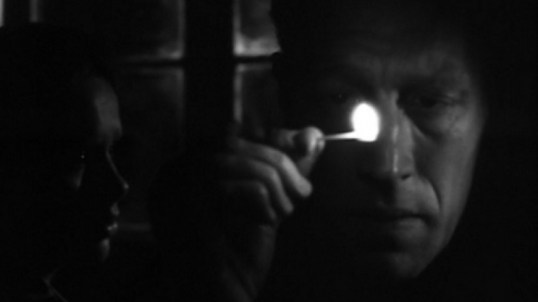
Visually, this film is bleak by even the standards of Bergman.  The black-and-white cinematography plays up not just the shadows of the night but also the brutal desolation of Johan and Alma’s life on the island.  It reminds us that Johan is an artist living in a world without color.  Bergman views Johan and Alma through a detached lens, recording the collapse of their lives but, at the same time, keeping his distance as if to protect the audience from getting trapped inside of Johan’s madness.

Hour of the Wolf may have been Ingmar Bergman’s only official horror film but it’s definitely an effective thriller, one that manages to explore both Bergman’s signature themes while also keeping the audience off-balance and wondering what might be lurking in the darkness.  It may not be one of Bergman’s “best-known” films but it’s definitely one for which to keep an eye out.

Cleaning Out The DVR #24: Cries and Whispers (dir by Ingmar Bergman)


Cries-and-Whispers-31

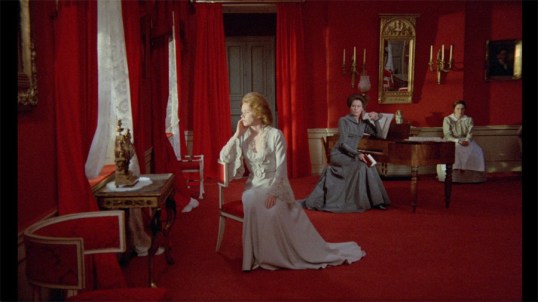
The time is the 19th century.  The country is Sweden.  The setting is a mansion that is decorated with red carpet, red walls, and almost blindly white statues.  But beyond that setting, the 1973 film Cries and Whispers is really set in the hearts and minds of four women.  One of them is selfless.  Two of them are bitter and uncaring.  And one of them is slowly dying.

Agnes (Harriet Andersson) is the one who is dying.  She spends her time laying in bed and screaming in pain.  A doctor (Erland Josephson) provides her with no hope and can only promise that the end will come soon and a priest (Anders Ek) coldly goes about planning for her funeral and offering up empty promises of a final reward.  Occasionally, through her diary and flashbacks to her youth, we get glimpses of who Agnes was before her life become dominating by her impending death.

Agnes’s sisters have come to the house to wait out her death.  Though they’ve arrived to provide comfort, neither is capable of it.  The youngest sister, Maria (Liv Ullman), was her mother’s favorite and has grown up to be coldly self-centered.  Through flashbacks, we see the details of her affair with Agnes’s doctor.  When Maria’s husband (Henning Moritzen) reacts to her infidelity by stabbing himself, Maria can only dispassionately watch.  Meanwhile, the oldest sister, Karin (Ingrid Thulin) has grown up to be bitter and sexually repressed.  In a truly shocking scene, Karin mutilates her vagina with a shard of glass and, after smearing the blood on her face, lies in bed and smirks at her husband.

In the end, only Anna (Kari Sylwan) can provide Agnes with any comfort.  Anna is Agnes’s maid.  Deeply religious and mourning the loss of her own daughter, only Anna is willing to reach out and hold Agnes while Agnes is in pain.  And, after Agnes dies, Anna seems to be the only one who shows any real grief.

There are depressing movies and then there’s Cries and Whispers.  Cries and Whispers is such an emotionally raw and dark movie that it was difficult for me to watch.  It’s also difficult to review because just thinking about the movie brings up so many emotions.  It’s just such a well-made and extremely painful movie.

It’s also an Ingmar Bergman film and that’s fortunate because Bergman somehow had an instinct for how to keep audiences watching even when the images on screen were amazingly painful.  Visually, Cries and Whispers is as beautiful as it is thematically cold.  By emphasizing the color red (not only is the entire house decorated in red but scenes often end by fading to red as opposed to black), Bergman makes the audience feel as if they truly have been transported into the human soul.  Red, after all, is the color of blood and life.

And really, Cries and Whispers is one of those films that makes you wonder what exactly the point of life is.  While the dream-like flashbacks give us clues as to how the three sisters became who they are, they also suggest that it really doesn’t matter.  In the end, regardless of whether they’re in love or alone or happy or sad, they’re all going to die and that’s going to be it.  All stories and issues will be left unresolved.

And, in the end, the best we can hope for is that someone like Anna will mourn us.

Cries and Whispers is one of the few foreign language films to be nominated for best picture.  It’s also the only Ingmar Bergman film to be so nominated (though Bergman had more success in the Best Foreign Language Film category).  It lost to The Sting, a far happier film.

http://www.youtube.com/watch?v=6Pw7FYex5pQ