AMV of the Day: The Breath of Spring (Bakemonogatari)


bakemonogatari

Harem anime tend to be very popular with fans of anime and manga. One such series that has become a huge favorite with anime fans has been the Monogatari anime series. It’s from this that we get the latest “AMV of the Day”.

“The Breath of Spring” by VovanKoperativ uses the first installment in this series, Bakemonogatari, to help highlight why this series is an great example of a harem anime. The video take the song “Opportunity Nox” by Roxette and shows the series protagonist, Koyomi Araragi, in different situations with the many girls of Bakemonogatari. It doesn’t matter whether it’s Hitagi Senjougahara, Suruga Kanbaru or Tsubasa Hanekawa, our male lead will become enamored with all of them at some point during the series. While he inevitably will pick just one girl in the end it doesn’t stop him from becoming the perv that fans have grown to love.

Fellow site and anime contributor pantsukudasai will agree that this is also one of his favorite anime series of recent times though will mostly likely say that this particular video is lacking in Mayoi.

Anime: Bakemonogatari

Song: “Opportunity Nox” by Roxette

Creator: VovanKoperativ

Past AMVs of the Day

Anime You Should Be Watching: Bakemonogatari


Honestly, I try to keep this column a surprise to Arleigh.  I hate when the owner of this site knows exactly what I’m going to post.  However, with the recent announcement from Aniplex USA that they will be releasing this title on BluRay, I can’t very well ignore this awesome title any longer.

The problem with this title is, it’s very hard to talk about without spoiling things.  Every girl here has a very important story to tell.  The overarching story here is how our protagonist, Koyomi Araragi, interacts with the various girls in the series.  The thing is, every girl has her own problem that he must solve.  Since I hate spoilers as much as the next guy or girl I’ll refrain from going too in depth to what everyone has to overcome.  The best parts would have to be Mayoi Hachikuji and Suruga Kanbaru.  Luckily for all, the BluRay of this series will be available later on this year from Aniplex America.  Really, nothing else could do this series justice than a BluRay release, so I cannot help but be thrilled for this.  What I can say about this is that you need to be prepared to do a lot of reading.  People say that this is a very wordy title, and while I don’t necessarily agree with them in the fact that they think the dialog comes fast and furious, I do agree that the dialog is the most important aspect of the show.  There is a lot of Japanese puns and wordplay involved, and this title is not for the newly initiated to the anime scene.  Those that are used to reading subtitles won’t have too much trouble keeping up, but this is certainly not a title one can passively watch and expect to fully understand.

The thing to keep in mind is that if this show seems strange, by anime standards, it probably has a lot to do with the director.  It’s directed by Akiyuki Shinbo, who also directed the very unconventional Puella Magi Madoka Magica, and his influence is easily seen in both.  There’s not a lot of action in Bakemonogatari but the visual imagery is classic Shinbo.  He makes full use of a lot of surreal backgrounds during long conversations, so instead of letting things get stale with long stretches of just the characters standing around talking, which as I said before they do a lot, he’ll at least have the background flashing by and changing often during those times.  On one hand, it’s certainly a cost saving measure since they didn’t have to animate the characters, but more importantly it makes it seem like something is actually happening, even when it’s really not.  In a visual medium like anime, nothing bores people more than just staring at the same thing for long periods of time, so this helps keep any feelings of boredom from setting in.  For a show without a lot of action, to be able to keep it from feeling dull is where you need a talented director, and Shinbo truly shines in this case.

So what worked with this anime?  Well, it has attractive and interesting characters.  Each story draws you in and makes you want to see what happens next.  While you assume that each girl will have her problem solved, this is a Shinbo show, so there are no guarantees that the problem will be solved, or even if it is that it won’t create further problems.  And that’s part of the fun of this series, expecting the unexpected.

What didn’t work?  Well, if you want lots of action and explosions in your anime, you’ll find little to none of that here.  This is a very character driven show, so if you find you dislike or don’t care about some or even all of the characters, then you won’t find much here of value.

All in all this was a pleasant surprise to me when I watched it.  The light novels it was based on have been very popular, but since I don’t follow the light novel scene very closely, this was unexpectedly good.  If you want an anime that draws you in and keeps you hooked with a compelling story, then look no further than Bakemonogatari.

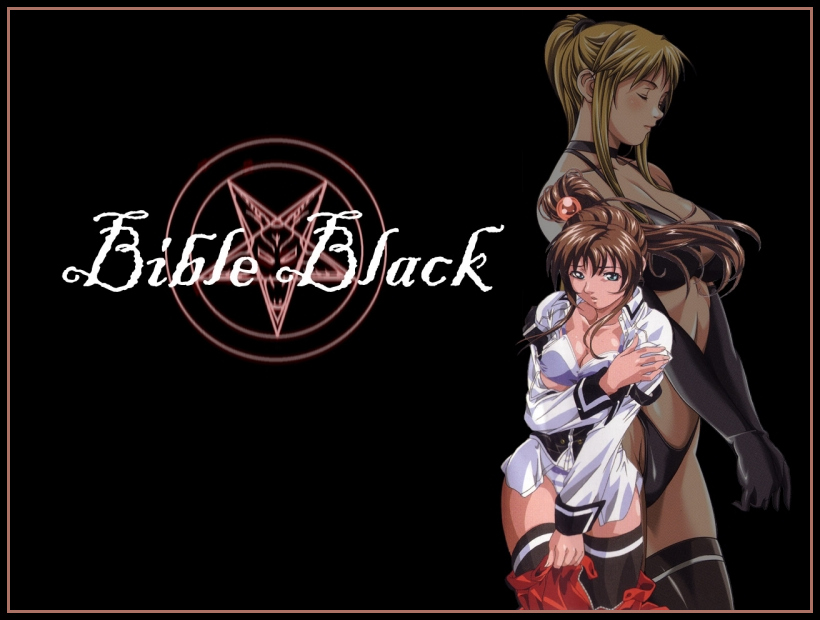
Anime You Should Be Watching: Bible Black (Baiburu Burakku)


eroge: is a portmanteau of erotic game. It is a Japanese video or computer game that featured erotic content (usually pornographic in nature) and used anime-style artwork in a visual novel format.

Hentai as a genre first reached wide recognition through the notorious Chōjin Densetsu Urotsukidōji, a 1980s OVA that fused graphic sexual imagery with apocalyptic horror and violent fantasy. That work established many of the conventions that would define adult anime for decades—its blend of mythology, grotesque excess, and surreal eroticism pushing the boundaries of animation’s narrative potential. Bible Black represents a later evolution of that tradition, taking the transgressive energy of Urotsukidōji and refining it through a more contained setting, structured storytelling, and psychological tension. Where its predecessor reveled in grandiose chaos, Bible Black turned inward, exploring horror through ritual, secrecy, and moral decay within familiar, everyday environments.

Originally developed as an eroge visual novel, Bible Black featured the artwork of its creator, Shoujo Sei. The game’s popularity within Japan’s adult gaming market grew rapidly, fueled by its striking blend of erotic storytelling, occult imagery, and a sinister undercurrent that set it apart from typical romantic visual novels of its time. Its success inevitably drew the attention of Milky Studio, an animation company already known for adapting adult-oriented games into OVAs. Within a few years, Milky Studio produced the first Bible Black anime series—a six-episode OVA that closely followed the storylines and choices from the original game.

The anime adaptation centers on a high school caught in a web of witchcraft and forbidden rituals. While the premise may sound familiar to fans of the supernatural or occult genres, Bible Black distinguished itself by merging sexual and mystical elements in a way that felt both deliberate and unsettling. The first OVA mirrors the game’s basic storyline, introducing viewers to a world where innocent facades collapse under the weight of temptation and corruption. Later sequels and prequels expanded on this mythology, delving into the origins of the dark book that drives the narrative and introducing new characters entangled in its influence. In doing so, the series built a continuity resembling a twisted mythos—an interconnected body of stories that deepened its immoral mystique.

To describe Bible Black merely as “popular” within its niche would be an understatement. Its reputation extends far beyond its target audience, circulated through anime forums, recommendation threads, and cultural commentary as a kind of benchmark for erotic horror. It is the title almost universally cited when discussing adult-oriented anime, whether out of reverence for its artistic boldness or infamy for its transgressive imagery. For many viewers—particularly Western audiences in the early 2000s—it represented their first exposure to Japanese erotic animation beyond parody or rumor, granting it a strange, almost legendary status within the genre’s history.

What separates Bible Black from lesser works is the precision with which it fuses its erotic and occult motifs. The narrative’s backbone—the pursuit and misuse of a magical grimoire—offers an allegory for unchecked desire and the cost of power. Rituals blend seamlessly with acts of seduction, and the visual motifs of pentagrams, candles, and bloodstained rites serve as metaphors for obsession and spiritual decay. This combination gives the anime an intensity uncharacteristic of typical adult fare, as every encounter is charged not only with physical desire but also with moral and supernatural consequence. Rather than treat sexuality as isolated spectacle, the series enfolds it within its darkly coherent world, ensuring that sin and pleasure remain inseparable.

The “harem” narrative structure, common to many eroge and visual novels, is used here with a more perverse edge. The typical male protagonist surrounded by female admirers becomes a focal point not of romantic fulfillment, but of temptation and corruption. In Bible Black, that dynamic is steeped in manipulation and control—sex as both a weapon and a spiritual act. This inversion of a familiar trope contributes to the series’ enduring fascination, as it refuses to comfort the viewer with the conventions of fantasy romance. Instead, it constructs an atmosphere of moral ambiguity and psychological pressure, leaving few characters untainted.

The setting amplifies the discomfort. By situating its story within the environment of a high school—a space symbolically associated with innocence and growth—Bible Black subverts expectations. The classrooms and corridors that should represent order and safety become arenas for forbidden rites and hidden depravity. This juxtaposition between the mundane and the macabre intensifies the sense of violation that defines the series. It’s not only a story of erotic ambition but of how institutional and moral structures collapse when confronted by unchecked desire and occult power.

Visually, the anime reflects its early-2000s production values with surprising sophistication. Milky Studio preserved the visual style of Shoujo Sei’s original artwork—marked by angular features, bold contrasts, and expressive eyes—while enriching the material with atmospheric lighting and strong sense of color. The palette alternates between the sterile brightness of school life and the dim, saturated tones of ritualistic scenes, crafting a visual rhythm that heightens tension between two worlds. Despite the limited resources typical of an OVA, the series achieved a memorable aesthetic identity, merging the glossy surfaces of contemporary anime with the raw suggestiveness of eroge art.

As Bible Black expanded into sequels like Bible Black: New Testament and various side stories, its universe deepened both narratively and tonally. The newer installments explored different perspectives and timeframes, revealing the long shadow of the original events. This serial approach—rare for hentai productions—allowed the franchise to form a loose continuity, almost like a dark fantasy saga built around erotic and esoteric principles. The cumulative effect was that Bible Black ceased to be a one-off novelty and became a defining thread in the history of animated erotic horror.

Its cultural impact extends further still. Bible Black served as one of the first major adult anime titles to gain substantial attention outside Japan during the rise of online fan communities. Through fan distribution and unofficial translations, it became many Western viewers’ first encounter with themes such as futanari—depictions involving gender transformation or dual sexual anatomy—which had previously remained obscure outside Japan. The OVA thus became not only a product of its domestic industry but also a cultural export that introduced global audiences to the specialized lexicon and aesthetics of Japanese hentai.

Critically, Bible Black remains an object of contention. Its explicitness renders it indefensible to some, yet others recognize within it a degree of thematic intent that surpasses mere sexual provocation. It approaches the occult not with romantic mysticism, but as an allegory for moral erosion and human vulnerability. Erotic acts in the series often parallel spiritual corruption, suggesting that the boundary between pleasure and damnation is perilously thin. The result is an anime that provokes both physical and intellectual reactions—equally discomforting in its carnality and symbolism.

Even after more than two decades, Bible Black maintains relevance and recognition. Later works have tried to replicate its formula—mixing fetishes with supernatural dread—but few possess its coherence or audacity. Its imagery, tone, and structure continue to influence adult creators seeking to merge explicit content with narrative ambition. Moreover, the series exemplifies a moment in anime history when the medium’s adult side dared to pursue storytelling complexity rather than rely solely on erotic novelty.

Viewed today, Bible Black endures as both time capsule and touchstone. It captures an era when the boundaries between mainstream anime and adult experimentation briefly blurred, and when eroge culture translated successfully to animation with both narrative depth and artistic conviction. Whether judged as an expression of taboo horror, a stylistic artifact of its generation, or a benchmark for the fusion of sex and the supernatural, Bible Black stands as one of the most distinctive and controversial works in anime’s underground lineage. Its lasting infamy, like its allure, lies in its refusal to separate desire from darkness—a union as seductive as it is terrifying.
Anime You Should Be Watching: School Days


For our latest Anime of the Day I have chosen the very controversial title School Days which aired from July through to September of 2007.

The series was adapted by anime studio TNK from the visual novel and eroge of the same title published by the company Overflow. School Days was your typical “harem” visual novel eroge where the main protagonist (most of the time male though there’s a few where it’s reversed and it’s a female) becomes involved with several of the female characters in the game. The goal of these eroge was to try and navigate through the many relationships between the protagonists and the many female characters around him (usualy in a sexual nature) and get the perfect ending which always ends up being the so-called “good ending”.

With School Days the main protagonist is one Makoto Ito who starts off as being a mild-mannered and polite high school student. This doesn’t last long as he become embroiled with the many female classmates he’s known for years and those he recently met. To say that the character of Makoto becomes addicted to having sex with his female classmates would be an understatement.

While there are several female characters in School Days who become involved with Makoto in one way or another it’s the duo of Kotonoha Katsura and Sekai Saionji who become rivals for Makoto’s affection. Just like the visual novel the anime series was adapted from (the visual novel was also adapted as a manga series) the complex and increasingly malicious attitudes by some of the leads in the series would lead to more than one tragedy for all involved. This is a series which starts off as a light-hearted harem title but as the series progresses towards its climactic finale it somehow takes a huge turn into the darkside that by the time it does make that turn the viewer has become so invested in the characters and the story that it becomes a major shock to the system.

School Days has become controversial since its release due to a real-life killing where a young high school girl kills her father with an axe which some thought as being too similar in tone to a sequence in the series. The controversy from such a real-life event caused the tv station broadcasting the series to replace almost half the running time of the final episode with an image of a nice boat and classical music playing in the background. This became such a major internet meme that saying “Nice Boat” has become the comment of choice when discussing controversial scenes and plot developments of any series that’d be ripe for studio censorship.

The series in all its form also emphasizes the character stereotype of yandere. School Days definitely has its major share of yandere characters and the many different endings to the visual novel shows how some of the yandere characters in the story deal with the callous way Makoto has dealt when dealing with their affections towards him. It gets bloody, violent and more than just a tad crazy-insane.

School Days is definitely one of the more seriously twisted anime offerings out there which doesn’t involved hentai in its description whatsoever. It’s a series that if it was a live-action series would be similar in tone and scope to many of filmmaker Ken Park’s films which deal with teenage highschool relationships, sex and the consequence which can come from it.

AMV of the Day: Have You Got It In You?


This AMV (anime music video) was one of the better ones shown during this past Anime Expo 2010 in Los Angeles. It was one of the nominees for best Drama AMV. While it didn’t win either Best Drama AMV or Best in Show (the top prize), the video was a fan-favorite for the great use of the music and matching it seamlessly with the anime of choice which happened to be the harem/shonen series, Negima.

I’m not that big of a fan of Imogen Heap, but this AMV definitely gets the theme of the song with the scenes lifted from Negima and expertly edited to match not just the lyrics, but the tempo of the song. It’s well-done work like this one which makes me wish I had a better  grasp of editing software so I could take a try at doing my own AMV. Until that happens I’ll sit back and enjoy the great ones made by some very talented people.

Creator: HagarenViper

Song: Have You Got It In You – Imogen Heap

Anime: Mahō Sensei Negima!