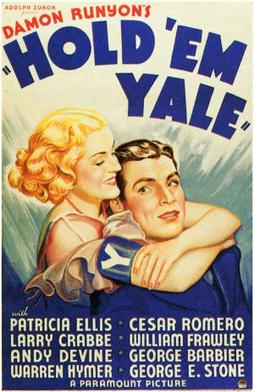
 Georgie, the Chaser (Cesar Romero) is a con artist who works for a low-level gangster named Sunshine Joe (William Frawley). When Georgie reads about an heiress named Clarice van Cleve (Patricia Ellis) who impulsively falls in love with any man wearing a uniform, Georgie pretends to be a member of the Foreign Legion and tracks her down. Georgie thinks that Clarice’s father will pay him off, just as he’s paid off all of her other suitors. Instead, Clarice’s father disinherits her and Clarice ends up living at Georgie’s place, along with his other criminal associates (Andy Devine, Warren Hymer, and George E. Stone).
Georgie reacts by getting out of town, leaving Clarice behind with his good-natured gang. However, even the gang gets tired of Clarice insisting that they dress up for dinner and that they all get a good night’s sleep. After Sunshine Joe cheats them out of their money, the remaining criminals head to the Yale-Harvard football game, hoping to win some bets and to set Clarice up with the player that her father wants her to marry, studious benchwarmer Hector Wilmot (Buster Crabbe).
Just a little over an hour long, Hold ‘Em Yale is actually a pretty amusing movie. It was based on a short story by Damon Runyon and all of the characters are familiar Runyon types, streetwise but good-natured criminals who enjoy drinking and gambling and the film gets a lot of laughs out of their reactions to Clarice’s attempts to civilize them. Patricia Ellis is great as the ditzy Clarice and this film provides a chance to see Buster Crabbe playing a character who isn’t a natural-born athlete for once. It’s a minor film but worth watching for the cast and the snappy dialogue. Who would have guessed a good movie could be built around Ivy League football?

 Through the Shattered Lens