Retro Television Review: Fantasy Island 6.9 “Naughty Marietta/The Winning Ticket”


Welcome to Retro Television Reviews, a feature where we review some of our favorite and least favorite shows of the past!  On Tuesdays, I will be reviewing the original Fantasy Island, which ran on ABC from 1977 to 1984.  Unfortunately, the show has been removed from most streaming sites.  Fortunately, I’ve got nearly every episode on my DVR.
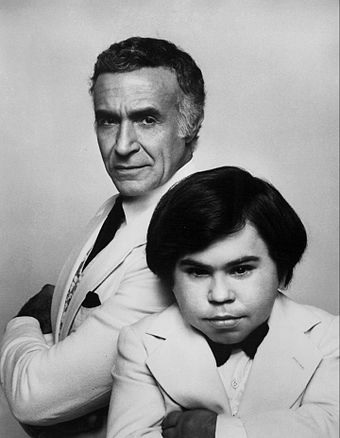
This week, Tattoo’s rich!

Episode 6.9 “Naughty Marietta/The Winning Ticket”

(Dir by Don Weis, originally aired January 8th, 1983)

Let’s get the boring storyline out of the way first.

Overbearing Beatrice Solomon (Jayne Meadows) wants her daughter, Alison (Dorothy Hamill) to become an actress.  Beatrice’s husband (David Doyle) wishes that Beatrice would just back off.  Mr. Roarke sends Alison into the past, where Alison finds herself transformed into Marietta, the subject of the operetta Naughty Marietta.  Lorenzo Lamas plays Captain Richard Warrington, who is trying to track down a notorious pirate on behalf of the Governor of Louisiana (James Doohan).  There’s a lot of singing and the costumes are nice but it’s also kind of boring because ice skater Dorothy Hamill was a terrible actress and she has next to no chemistry with Lorenzo Lamas.  The fantasy ends with everyone brought back to the present, including Lamas who, it turns out, was actually just a guest having a fantasy of his own.  It’s nothing we haven’t seen before and I don’t want to talk to much about it because the other story is …. A TATTOO STORY!

After years of being the sidekick and Mr. Roarke’s enigmatic frenemy, Tattoo finally gets a story of his own.  When Margaret Stanton (Hope Lange) comes to the Island to award a check to an employee who won the Irish Sweepstakes, Roarke is saddened to inform her that the man, a groundskeeper named Ambrose, passed away shortly after winning.  Roarke assigns Tattoo to find out who Ambrose’s closest friend was on the Island.  Tattoo takes his job seriously.  Afterall, Tattoo was one of the few people who regularly checked on the curmudgeonly old man, always stopping by to talk and to make sure that he was feeling okay.  As a matter of fact, you could even say that Tattoo was a true friend to the old man.  In the end, he was truly the old man’s best friend….

OH MY GOD, TATTOO’S RICH!

After reading the deceased man’s diary, Roarke and Tattoo realize that Ambrose would have wanted Tattoo to have the money.  Tattoo now has a million dollars and Roarke decides that this means that Tattoo is now a guest at Fantasy Island.  Tattoo moves into the most spectacular guest bungalow.  Tattoo orders a fancy meal and leaves a huge tip.  Tattoo is having a wonderful time until Mr. Roarke informs him that guests are not allowed to live on the Island….

WAIT, WHAT!?

Okay, first off, it wasn’t Tattoo’s idea to be a guest.  It was Roarke’s idea.  Roarke also mentions that Tattoo is the one who came up with the idea of not allowing guests to live on the Island but, over the past few seasons, we’ve seen many guests decide to never leave the Island and Roarke has never had a problem with it!  Seriously, I thought Tattoo and Mr. Roarke were finally getting along.  Suddenly, it seems like Mr. Roarke has decided to kick him out.  “I will miss you,” Mr. Roarke says.  Well, then don’t make him leave!  Can’t Mr. Roarke do whatever he feels like doing?

Tattoo, for his part, says that he will miss being on the Island.  He’ll miss Mr. Roarke.  He’ll miss the rest of the staff.  He’ll miss everything.  Tattoo decides that rather than leave the Island, he’ll donate the money to build a retirement home in England.  And that’s nice and all but I still don’t understand why Tattoo would have had to leave in the first place.  Maybe Mr. Roarke just wanted to teach Tattoo about generosity but Tattoo is already extremely generous.

As the show ends, Mr. Roarke mentions that Tattoo still needs to pay for his stay in the bungalow and for all the food he ordered.  DON’T START, MR. ROARKE!

This was a weird episode but it was still nice to see Tattoo get his moment in the spotlight.  I still think he should have allowed to keep the money and stay on the Island.  I mean, seriously, this Island is full of eccentric rich people living in haunted mansions.  Why should Tattoo miss out on all the fun?
Shattered Politics #38: Nashville (dir by Robert Altman)


Nashville-Cover

“Oh we must be doin’ somethin right to last 200 years…”

— Haven Hamilton (Henry Gibson) in Nashville (1975)

The 1975 Best Picture nominee Nashville is the epitome of an ensemble film.  It follows 24 characters as they spend five days wandering around Nashville, Tennessee.  Some of them are country music superstars, some of them are groupies, some of them are singers looking for a first break, and at least one of them is an assassin.  The one thing that they all have in common is that they’re lost in America.  Released barely a year after the resignation of Richard Nixon and at a time when Americans were still struggling to come to terms with the turmoil of the 60s, Nashville is a film that asks whether or not America’s best days are behind it and seems to be saying that they may very well be.  (That’s a question that’s still being asked today in 2015.)  It’s appropriate, therefore, that Nashville both takes place in and is named after a city that everyone associates with perhaps the most stereotypically American genre of music that there is.

Nashville follows 24 characters, some of whom are more interesting than others.  For five days, these characters wander around town, occasionally noticing each other but far more often failing to make any sort of connection.

Haven Hamilton (Henry Gibson) is a veteran star, a somewhat comical character who sings vapid songs about home and family and who smiles for the public while privately revealing himself to be petty and vain.  His son, Bud (Dave Peel), is a Harvard graduate who acts as his father’s business manager.  Oddly enough, Haven is an unlikable character until the end of the film when he suddenly reveals himself to be one of the few characters strong enough to keep Nashville for descending into chaos.  Meanwhile, Bud seems to be a nice and modest guy until he takes part in humiliating another character.

Haven’s lover is Lady Pearl (Barbara Baxley), who owns a nightclub and spends most of the film drinking.  Much like Haven, she starts out as a vaguely comical character until she finally gets a chance to reveal her true self.  In Pearl’s case, it comes when she delivers a bitter monologue about volunteering for Bobby Kennedy’s presidential campaign.

Haven’s lawyer is Delbert Reece (Ned Beatty), an obsequies good old boy who is married to gospel singer Linnea (Lily Tomlin).  They have two deaf children.  Linnea has learned sign language.  Delbert has not.  Over the course of the film, both Delbert and Linnea will be tempted to cheat.  Only one of them actually will.

And then there’s Barbara Jean (Ronee Blakley), a mentally unstable singer who has come to Nashville with her manipulative husband/manager, Barnett (Allen Garfield).  Almost every character in the film wants something from Barbara Jean.  A mostly silent Vietnam veteran named Kelly (Scott Glenn) claims that his mother knows Barbara Jean.  A nerdy guy named Kenny (David Hayward) comes to Nashville just to see her perform.

Both Kelly and Kenny end up getting to know Mr. Green (Keenan Wynn), a rare Nashville resident who doesn’t seem to care about music.  However, Mr. Green’s spacey niece, L.A. Joan (Shelly Duvall), is obsessed with having sex with as many musicians as possible.

Among those being targeted by L.A. Joan is Tom Frank (Keith Carradine), one-third of the folk trio Bill, Mary, and Tom.  Unknown to Bill (Allan F. Nicholls), Tom is sleeping with Bill’s wife, Mary (Cristina Raines).  Unknown to Mary, Tom is sleeping with almost every other woman in Nashville as well.  When Tom takes to the stage at Pearl’s nightclub and sings a song called I’m Easy, the audience is full of women who think that he’s specifically singing to them.

http://www.youtube.com/watch?v=Fj6bvtylW9I

Another one of Tom’s songs, the appropriately titled “It Don’t Worry Me,” is frequently sung by Albuquerque (Barbara Harris), who spend the entire film trying to get discovered while hiding out from her much older husband, Star (Bert Remsen).

Another aspiring star is Sulleen Grey (Gwen Welles), who is a tone deaf waitress who suffers the film’s greatest humiliation when she agrees to perform at a political fund raiser without understanding that she’s expected to strip while singing.  Trying to look after Sulleen is Wade (Robert DoQui), who has just been released from prison.

And then there’s the loners, the characters who tend to pop up almost randomly.  Norman (David Arkin) is a limo driver who, like everyone else in Nashville, wants to be a star.  The hilariously bitchy Connie White (Karen Black) and the bland Tommy Brown (Timothy Brown) already are stars.  (The character of Tommy Brown is one of Nashville’s oddities.  He’s listed, in the credits, as being a major character but he only appears in a few scenes and never really gets a storyline of his own.)  There’s the Tricycle Man (Jeff Goldblum), a silent magician who mysteriously appears and disappears throughout the film.

And, finally, there’s Opal (Geraldine Chaplin), an apparently crazed woman who is wandering around Nashville and pretending to be a reporter for the BBC.  (It’s never specifically stated that Opal is a fake but it’s fairly obvious that she is.)  How you feel about the character of Opal will probably determine how you feel about Nashville as a whole.  If you find Opal to be a heavy-handed caricature, you’ll probably feel the same way about the rest of the film.  If you find the character of Opal to be genuinely amusing with her increasingly pretentious musings, you’ll probably enjoy Nashville.

There is one more very important character in Nashville.  He’s the character who literally holds the film together.  He’s also the reason why I’m including Nashville in this series of reviews about political films.  That character is named Hal Phillip Walker and, though he’s never actually seen in the film, he’s still the driving force behind most of what happens.  Walker is a third-party presidential candidate, a man who seems to be universally admired despite the fact that his campaign appears to just be a collection of vapid platitudes.  Walker’s campaign manager, John Triplette (Michael Murphy), comes to Nashville and sets up the Walker For President rally.  That’s where Nashville reaches its violent and not-all-together optimistic climax.

Reportedly, Nashville is a favorite film of Paul Thomas Anderson’s and you can see the influence of Nashville in many of Anderson’s films, from the large ensemble to the moments of bizarre humor to the refusal to pass judgement on any of the characters to the inevitable violence that ends the film.  Also, much like Anderson’s films, Nashville seems to be a film that was specifically made to divide audiences.  You’re either going to think that Nashville is a brilliantly satirical piece of Americana or you’re going to think it’s a self-indulgent and self-important mess.

As for me, I think it’s great and I think that, after you watch it, you should track down and read Jan Stuart’s The Nashville Chronicles: The Making of Robert Altman’s Masterpiece.  It’s the perfect companion for a great film.