The Fabulous Forties #11: The Strange Woman (dir Edgar G. Ulmer)


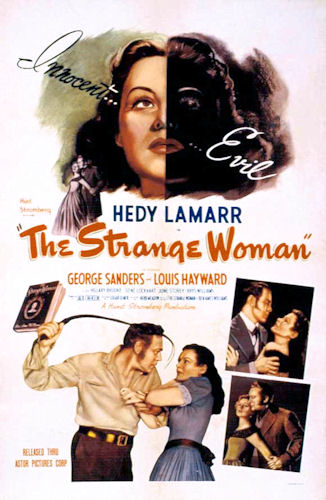
The_Strange_Woman_1946_poster

The eleventh film in Mill Creek’s Fabulous Forties box set was 1946’s The Strange Woman.  The Strange Woman is one of those film noir/small town melodrama hybrids that seem to have been something of a cinematic mainstay in the mid to late 40s.

The Strange Woman of the title is Jenny Hager (Hedy Lamarr) and she’s not just strange because she’s got an Eastern European accent despite having grown up in Bangor, Maine.  The film opens in 1824 and we watch as tween Jenny pushes one her classmates into a river, despite the fact that he can’t swim.  At first, she seems content to let him drown.  However, once she realizes that an adult is watching, Jenny jumps into the river and saves his life.

Ten years later, Jenny has grown up to be the most beautiful woman in Maine.  However, her father is abusive and regularly whips her as punishment for being too flirtatious.  Jenny has plans, though.  She wants to marry the richest man in town, a store owner and civic leader named Isaiah Poster (Gene Lockahrt).  Isaiah also happens to be the father of Ephraim (Louis Hayward), the young man who Jenny tried to drown at the beginning of the film.

And eventually, Jenny’s dream does come true.  She marries Isaiah, even though she doesn’t love him.  She just wants his money and is frustrated when the sickly Isaiah keeps recovering from his frequent illnesses.  She starts to flirt with the weak-willed Ephraim, trying to manipulate him into killing his father.

Of course, even as she’s manipulating Ephraim, she’s also flirting with John Everd (George Sanders), despite the fact that John is already engaged to the daughter of the local judge.  Though Everd is a good and decent guy, he still finds himself tempted by Jenny.

What makes all of this interesting is that Jenny isn’t just a heartless femme fatale.  Throughout the film, there are several instances when she wants to do good but can’t overcome her essentially heartless nature.  She gives money to charity and, whenever she listens to one of the local fire-and-brimstone preachers, she finds herself tempted to give up her manipulative ways.

The Strange Woman was directed by Edgar G. Ulmer, who is probably best known for directing the ultimate indie film noir, Detour.  He was a childhood friend of Hedy Lamarr’s and she specifically asked that he direct her in The Strange Woman.  As a result, this film represents one of the few times that Ulmer was given a budget that was equal to his talents.  What makes The Strange Woman stand out from other 40s melodramas — like Guest In The House, for example — is that, even with the larger budget, Ulmer’s direction retains the same deep cynicism and dream-like intensity that distinguished his work in Detour.  The film remains sympathetic to Jenny, even as she often suffers the punishments that were demanded by the production code.

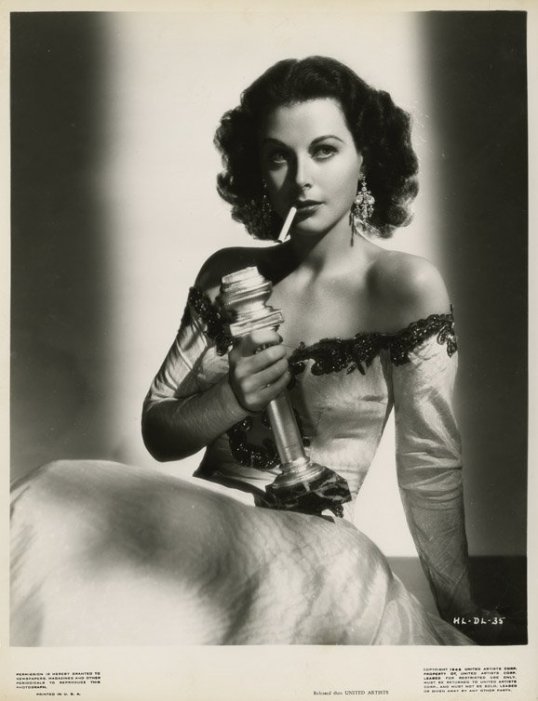
In the role of Jenny , Hedy Lamarr is a force of a nature.  She is so intense and determined that watching her as Jenny is a bit like seeing what Gone With The Wind would have been like if Scarlet O’Hara had been a total sociopath.  Even the fact that Lamarr’s accent is definitely not a Maine accent seems appropriate.  It sets Jenny apart from the boring people around her.

It reminds us that, even if she is “strange,” there is no one else like Jenny Hager.
6320831_3_l

Lisa Reviews An Oscar Nominee: Foreign Correspondent (dir by Alfred Hitchcock)


ForeignCorrespondent

Before watching a film like 1940’s Foreign Correspondent, it helps to know a little something about history.

Nowadays, when we think about World War II, there’s a tendency to assume that, from the minute that Hitler came to power in Germany and started to invade the rest of Europe, the entire world united against the Nazis.  The truth is actually far more complex.  The world was still recovering from World War I and throughout the 1930s, even as the Axis powers were growing more and more aggressive, respected intellectual leaders and politicians continued to argue that peace must be maintained at all costs.  Pacifism was such a popular concept that otherwise intelligent people were perfectly willing to make excuses for Hitler and Mussolini.  For five years, the UK followed a policy of appeasement towards Nazi Germany.  Even after war broke out between Britain and Germany, the U.S. remained officially neutral.  In the 1940 presidential election, President Franklin D. Roosevelt — running on a platform of neutrality — was overwhelmingly reelected over internationalist Wendell Willkie.

Foreign Correspondent, an American film made by a British director, opens before the start of World War II.  An American newspaper editor, Mr. Powers (Harry Davenport), is frustrated because none of his foreign correspondents seem to be able to understand the truth of the situation in Europe.  They all claim that there is going to be no war in Europe but Mr. Powers feels differently.  He also feels that the newspaper’s most celebrated and respected foreign correspondents are just a bunch of out-of-touch elitists.  Instead of sending another upper class academic, Mr. Powers decides to send a hard-boiled crime reporter to cover the situation in Europe.  Johnny Jones (Joel McCrea) has never been to Europe and that’s exactly why Mr. Powers decides to send him.  In one of the film’s more clever moments, he does, however, insist that Johnny write under the more distinguished sounding name of “Huntley Haverstock.”

(Foreign Correspondent‘s pointed criticism of out-of-touch elitists repeating the establishment line remains just as relevant today as it was in 1940.)

From the minute the brash and tough Johnny arrives in Europe, he finds himself caught up in a huge conspiracy.  He’s been assigned to report on a group known as the Universal Peace Party and, since this film was directed by Alfred Hitchcock, we automatically know that any organization with the word “Peace” in its name has to be up to something shady.  The Universal Peace Party has been founded by Stephen Fisher (Herbert Marshall), who appears to sincere in his desire to avoid war.  Johnny meets and falls in love with Fisher’s daughter, Carol (Laraine Day).

From the minute that Johnny witnesses the assassination of distinguished Dutch diplomat Von Meer (Albert Bassermann), he suspects that things are not how they seem.  Working with Carol and a British journalist named Scott ffolliot* (delightfully played by the great George Sanders), Johnny discovers that Von Meer was not killed at all.  Instead, a double was assassinated and Von Meer was kidnapped by a group of spies.

But who are the spies?  After nearly getting killed by one of Fisher’s bodyguards, Johnny starts to suspect that Stephen Fisher might not be as into world peace as was originally assumed.  Complicating matters, however, is the fact that Johnny is now engaged to marry Carol…

Foreign Correspondent is a wonderfully witty thriller, one that has a very serious message.  While the film is distinguished by Hitchcock’s typically droll sense of humor (eccentric characters abound and the scene where Edmund Gwenn keeps getting interrupted before he can attempt to push Joel McCrea off of a tower is both funny and suspenseful), the film’s message was that America could not afford to stay neutral as war broke out across Europe.  As the all-American Johnny Jones says at the end of the film:

“All that noise you hear isn’t static – it’s death, coming to London. Yes, they’re coming here now. You can hear the bombs falling on the streets and the homes. Don’t tune me out, hang on a while – this is a big story, and you’re part of it. It’s too late to do anything here now except stand in the dark and let them come… as if the lights were all out everywhere, except in America. Keep those lights burning, cover them with steel, ring them with guns, build a canopy of battleships and bombing planes around them. Hello, America, hang on to your lights: they’re the only lights left in the world!”

Foreign Correspondent was nominated for best picture of 1940 but it lost to another far different Hitchcock-directed film, Rebecca.

http://www.youtube.com/watch?v=LMDJnTKotxo

——

* Yes, that is how he spells his last name.  As he explains, his family dropped the capital name in his surname after an ancestor was executed by Henry II.  Since it was George Sanders doing the explaining, it somehow made perfect sense.

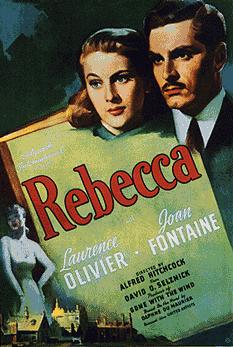
Embracing the Melodrama Part II #13: Rebecca (dir by Alfred Hitchcock)


Rebecca_1940_film_poster

Well, here we are, less than a week into Embracing the Melodrama, Part II, and I’m already running behind!  The plan, as I mentioned back on Monday, is to review 128 melodramatic films over the next three weeks.  And, even though I know that sounds a like a lot, I had it all planned out so that I’d be able to get all that done in just 21 days.  All I had to do was make sure that I reviewed 6 films a day.

And …

Well, life happened.

But no matter!  It may now take me 3 and a half weeks to review 128 films but that’s no great tragedy.  And besides, regardless of how long it takes, I’ve got some pretty good films scheduled.

Take, for instance, the 1940 best picture winner Rebecca.

Rebecca is a film that all women can relate to.  The heroine is played by Joan Fontaine.  I say “heroine” because we never actually learn the character’s name, nor do we learn much about her background.  When we first see her, she’s defined by her job, which is to basically be a paid companion to a wealthy woman.  Later, she’s defined by her whirlwind romance with the brooding and aristocratic widower Maxim de Winter (Laurence Olivier).  When, after two weeks, they get married, she becomes known  as the second Mrs. de Winter.  She becomes defined by both who she married and who she is not.

She’s not Rebecca, the first Mrs. de Winter.

As soon as Maxim takes his new wife to his estate, the second Mrs. de Winter discovers that she’ll always live in the shadow of the deceased Rebecca.  Everyone she meets describes Rebecca as being a vibrant, lively figure — in other words, the complete opposite of the meek second Mrs. de Winter.  The coldly imperious housekeeper, Mrs. Danvers (Judith Anderson), has perfectly preserved Rebecca’s room and makes little attempt to hide the scorn that she feels for the second Mrs. de Winter.  Even worse, once they return to the estate, Maxim reveals himself to be moody and tempermental.  With the help of the manipulative Mrs. Danvers, the second Mrs. de Winter becomes convinced that Maxim will never love her as much as he loved Rebecca.

Making things even more complicated, a man claiming to be Rebecca’s cousin comes by the house when Maxim is away.  Jack Flavell (played by George Sanders, at his most serpent-like) suggests that there may have been more to Rebecca’s death than the second Mrs. de Winter was originally told…

Rebecca is a classic film, for many reasons.  It’s well-acted, with Fontaine, Olivier, Anderson, and Sanders all bringing their characters to vibrant life.  It’s a gothic romance.  It’s a thriller.  It’s a mystery.  It is the epitome of old Hollywood style.  But, for me, the main reason that Rebecca is a classic is because it tells a story to which almost everyone can relate.  Every relationship that I’ve ever had, I’ve always been curious and occasionally even jealous of who came before me.  There’s nothing more intimidating than living in the shadow of someone who you will never get a chance to meet personally.  The second Mrs. de Winter’s insecurities are everyone’s insecurities and, in some fashion or another, we’ve all had a Mrs. Danvers in our life.  The second Mrs. de Winter’s struggles are our struggles and, as she grows stronger, the viewer grows stronger with her.

Alfred Hitchcock is one of the most influential and acclaimed filmmakers of all time but he never won a directing Oscar.  Rebecca was the only one of his films to win Best Picture.  Producer David O. Selznick brought Hitchcock over from England to direct Rebecca and it’s been reported that Hitchcock resented Selznick’s interference.  (And, while Rebecca is undoubtedly a good film that was directed by Alfred Hitchcock, it’s not exactly a Hitchcock film in the way that Shadow of a Doubt, Rear Window, or Vertigo are Hitchcock films.)  As a result, Hitchcock subsequently made it a point to edit future pictures in camera so that the studios would not be able to re-edit his films.

But, whether you consider it to be a Hitchcock picture or a Selznick production, Rebecca remains a wonderfully watchable melodrama.

Embracing the Melodrama #11: All About Eve (dir by Joseph L. Mankiewicz)


Bette Davis

“Fasten your seat belts, it’s gonna be a bumpy night!” — Margo Channing (Bette Davis) in All About Eve (1950)

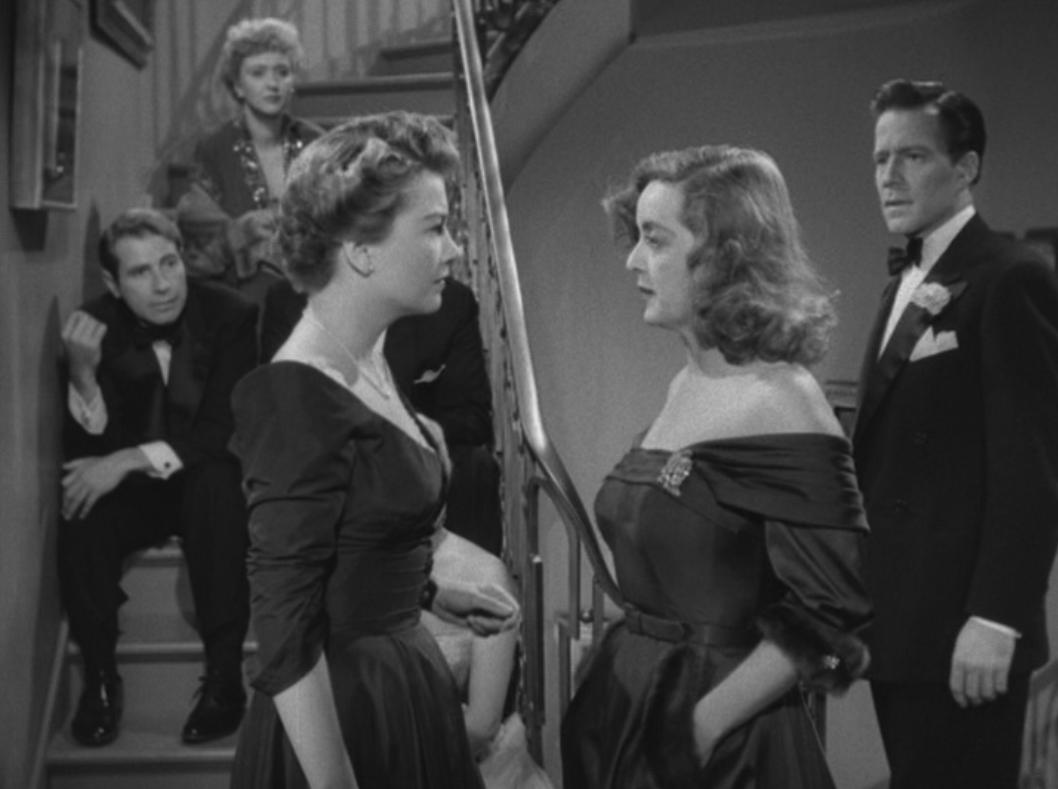
If you’re a lover of classic films or even if you’re just someone who occasionally watches TCM, chances are that you already know All About Eve.  It’s one of those films that is endlessly quoted and it features at least two performances — Bette Davis’s turn as aging Broadway diva Margo Channing and George Sanders’ acidic theater critic Addison DeWitt — that serve as frequent inspiration for professional impersonators.  It’s the film that was named best picture of 1950 and it continues to hold the record for both the most Oscar nominations overall and it’s the only film in Oscar history to receive four female acting nominations.

Even more importantly, it’s a film that everyone already knows it great.

So, that brings up the question that every film blogger dreads: how do you review a classic film that everyone already knows about?  I’ve often said that it’s easier to review a bad film than a great one.  It’s easy to pinpoint why a film fails but when it comes time to explain why a film is great, it’s often difficult to put to words the intangible qualities that elevate it.

Eve and Margo

For instance, I could tell you that the film has a fascinating plot but that barely only begins to scratch the surface of everything that’s going on underneath the glossy and melodramatic surface of All About Eve.  The movie tells the story of how scheming young actress Eve Harrington (Anne Baxter) becomes a star with the help of Addison DeWitt and at the expense of the talented but aging Margo Channing.  In telling Eve and Margo’s stories, All About Eve explores issues of female friendship and competition, sexuality, and why older men are celebrated while older women are constantly at risk of being pushed to the side for a newer model.  The complexity and power of All About Eve’s storyline can be summed up by the fact that right now, when I watch the film, I relate to Eve but I imagine that  twenty years from now, I’ll rewatch and I’ll relate to Margo.

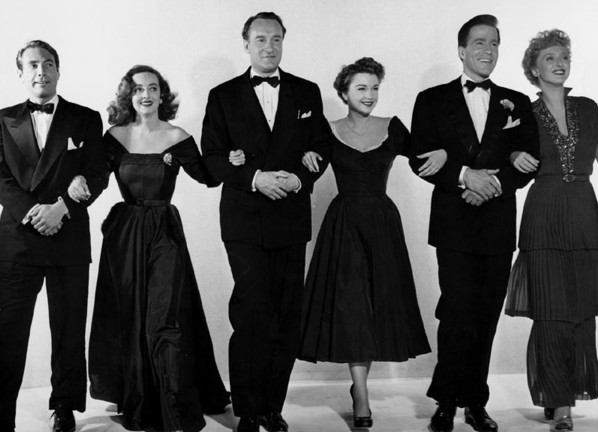
I could tell you that this is a film that is full of bigger-than-life characters and iconic performances but that doesn’t even begin to scratch at the surface of how well-acted and perfectly cast this film is.  Even boring old Hugh Marlowe is a perfect choice for playing boring old playwright Lloyd Richards.  (His wife is played by Celeste Holm.  Reportedly Bette Davis hated working with Celeste Holm but onscreen, their friendship feels very real and poignant and leads to some of the best scenes in the entire film.)  Gary Merrill, who later married Bette Davis, is likable as Margo’s boyfriend and Thelma Ritter is great as Margo’s outspoken assistant, largely because she’s Thelma Ritter and she was always great.  Marilyn Monroe famously makes the most of her minor role in All About Eve, playing an aspiring actress who has a very good reason for calling the butler a waiter.  And then there’s Bette Davis and George Sanders, both of whom are simply brilliant.

My favorite scene from All About Eve

My favorite scene from All About Eve

But to me, the best performance in All About Eve comes from Anne Baxter.  Baxter plays Eve as a perpetually smiling schemer and one of the great pleasures of the film is watching as Eve wrecks passive-aggressive havoc through Margo’s circle of friends.  Just watch the scenes where she deftly manipulates Celeste Holm.  All About Eve is usually referred to as being a vehicle for Bette Davis but if you actually watch the film, you see that the title is absolutely appropriate.  The film really is all about Eve.

And I could always tell you about how wonderfully sardonic the dialogue is but you already know that.  There’s a reason why even people who have never seen the film still quote Margo’s suggestion that everyone fasten their seat belts!

Bette Davis 2

So, in the end, what can I tell you about All About Eve?  Well, all I can really tell you is that it’s a great film and, if you haven’t seen it, you need to make time to learn all about Eve.

AllAboutEvecastpromo

6 Trailers That Will Save The World


Welcome to another edition of Lisa Marie’s Favorite Grindhouse and Exploitation trailers.

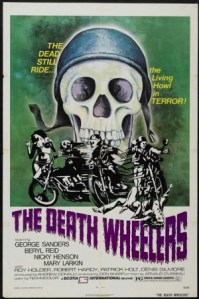
1) Psychomania (1971)

Also known as the Death Wheelers.  This is one of those trailer that can pretty much speak for itself.  (Though I will point out that co-star George Sanders committed suicide shortly after filming completed.)

2) 10 Violent Women (1982)

Not surprisingly, this movie was directed by Ted V. Mikels.  What makes this trailer memorable (for me) is the blandly cheerful narration.  I don’t know who that is providing the narration but you hear his voice a lot as you explore the world of grindhouse trailers.

3) The Twilight People (1973)

Made in the Philippines (as were many exploitation films in the 60s and 70s — I always expect to hear someone say, “Made in the Philippines — where life is cheap!” whenever I watch one of these trailers), The Twilight People is best remembered for featuring Pam Grier as the Panther Woman.  I love how the trailers for Filipino exploitation films always seem to promise us that we’re in for “blood…blood…and more blood!” like some nightmarish 1950s feminine hygiene film.

4) Cop Killers (1973)

Do you think we killed niiiiiiine people for nuthin, maaaaan?”  This trailer plays like one of the many “fake” grindhouse trailers that every toadsucker on Youtube is making nowadays.  (And, by the way, that trend is getting increasingly obnoxious as it’s obvious that a lot of these trailers are being made by jerks who have never even seen a genuine grindhouse film.)  However, Cop Killers is a real film and this is a real trailer.  Every time I go down to Half-Price books, I come across the DVD for this movie.  They want $9.00 for it.  And every time, I end up grabbing this DVD, planning on buying it, just to then come across a movie or book that I want more.  So, I haven’t seen Cop Killers yet but I’m sure that eventually, I’ll break down and get it.

5) Convoy Busters (1978)

Feel bad for all those cops getting killed Cop Killers?  Don’t worry, the fraternity of blue meanies got their revenge in plenty of other films, including this 1978 Italian film.  Convoy Busters was directed by Ruggero Deodat0 (of Cannibal Holocaust and House On The Edge of the Park fame) and is also known as Cop on Fire.  (Apparently, it was retitled to take advantage of the international success of Sam Peckinpah’s Convoy.)

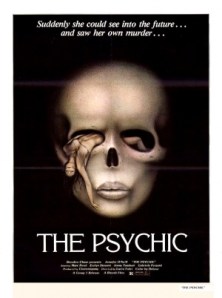
6) The Psychic (1977)

This is the (very) American trailer for Lucio Fulci’s Murder To The Tune of Seven Black Notes.  This film is actually one of Fulci’s more subtle and interesting films and, considering that it’s a Fulci film without zombies or a huge amount of gore —  it has a surprisingly large number of fans (including Quentin Tarantino).  At the time of its release, however, it failed at the box office and so hurt Fulci’s reputation that the producers of Zombi 2 were able to hire him cheap whereas previously, they wouldn’t have been able to afford him.  Hence, it can be argued that the success of Zombi 2 was directly the result of the failure of The Psychic.  (That’s what we call the circle of life.)