Late Night Retro Television Review: CHiPs 3.14 “Wheeling”


Welcome to Late Night Retro Television Reviews, a feature where we review some of our favorite and least favorite shows of the past!  On Mondays, I will be reviewing CHiPs, which ran on NBC from 1977 to 1983.  The entire show is currently streaming on Prime!
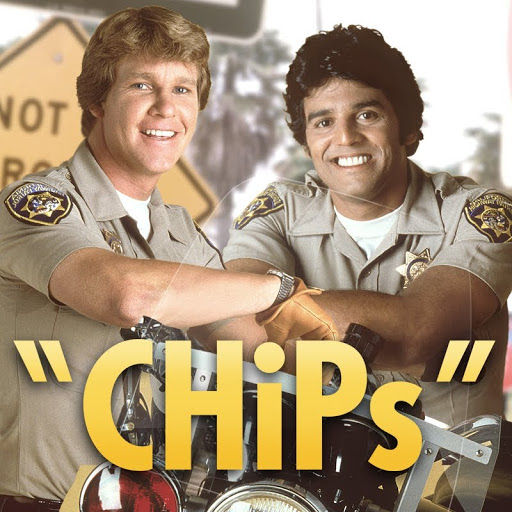
Things get weird in California.

Episode 3.14 “Wheeling”

(Dir by Barry Crane, originally aired on December 8th, 1979)

This is one of those weird episodes where Ponch and Jon just keep running into the same people over and over again.

Artie (Paul Gale), Don (Ray Vittie), and Alan (Ron Lombard) are all in wheelchairs but they’re not going to let that stop them from enjoying life and, far more dangerously, playing tag while driving on the highway.  Artie’s van taps Alan’s car.  Alan taps Don’s car.  Don tries to tap Artie’s van.  It’s dangerous and Ponch and Jon, when they see it, promptly pull the three men over.  Ponch is impressed with Artie’s joie d’vivre.  As usual, Baker is less impresses and is like, “You — of all people! — should understand the danger!”  (I swear, poor Larry Wilcox.  While Erik Estrada got to smile through each episode, it always fell on Wilcox to be the killjoy.)

That said, both Jon and Ponch came to admire Artie and his determination to make sure that all of his wheelchair-bound friends get the most out of life.  They even help Artie present a fancy new wheelchair to Brent (David Gilliam), a surfer who has not been able to bring himself to leave the hospital ever since he learned that he will never walk again.

Artie and the gang help out Jon and Ponch as well.  Jon and Ponch are searching for a blue car that was involved in a street race that left one teenager with a broken leg.  The teenager’s father, Harry (Taylor Lacher), has been speeding up and down the freeway, searching for the car.  Harry even made a citizens arrest, though Delgado (Fil Formicola) had an alibi for the time that Harry’s son was injured.  While Delgado makes plans to sue Harry for false arrest. Artie happens to spot the blue car that Jon and Ponch are looking for.  Way to go, Artie!

But then, after all of this, Artie and his friends decide to race on Harry’s street.  Harry goes crazy.  He jumps in his car and takes off after Artie’s van, not realizing that Artie was the one who helped the police catch the guy who hit Harry’s son.  It leads to a huge accident at a construction site.  The van flips over.  Harry’s car flips over.  Harry breaks his leg.  Artie’s breaks both of his arms.  The judge sentences Harry to serve as Artie’s manservant until Artie’s arms heal.  Everyone has a good laugh, including Harry.

What a weird episode!  I mean, its heart was definitely in the right place.  The whole point of the episode was that Artie and his friends were just as capable as anyone who could walk.  That’s a good message.  But, then, out of nowhere, Artie is suddenly involved in a street race and Harry is trying to crash into his van.  And then, at the end of it, everyone finds it all to be terrifically amusing.  And somehow, Ponch and Jon manage to be at the scene of every incident involved Harry, Artie, and Artie’s friends.  Like, seriously, what are the odds?  There are other highway patrolmen in California.

Again, a strange episode.  As always, the scenery was nice.  It’s always fun to see what the world looked like in 1979.  And I appreciated that this episode made a strong case for people not taking it upon themselves to make a citizens arrest because, seriously, people who do that tend to be so obnoxious.

Anyway, I enjoyed it.  It was just weird enough to be fun.  Drive safely out there!
Late Night Retro Television Review: Highway to Heaven 2.13 “Alone”


Welcome to Late Night Retro Television Reviews, a feature where we review some of our favorite and least favorite shows of the past!  On Thursdays, I will be reviewing Highway to Heaven, which aired on NBC from 1984 to 1989.  The entire show is currently streaming on Freevee and several other services!

This week, Highway to Heaven moved me to tears.

Episode 2.13 “Alone”

(Dir by Michael Landon, originally aired on January 8th, 1986)

Arnie (played by John Franklin, the head little baddie in the original version of Children of the Corn) is a developmentally challenged boy who ran away from home because his father was abusive.  Now, he lives in a box in an alley and his only companion is an adorable calico kitty that he’s named Thomas.  (Some, I know, will be tempted to point out that almost all calico cats are female but it should also be remembered that cats also don’t care what we name them as long as we remember to pet and feed them.)  On his birthday, he steals a muffin, a candle, and a can of tuna.  While Thomas eats, Arnie wishes that he could have just one friend.

*sniff*  Sorry, got something in my eye….

Suddenly, Jonathan and Mark are standing in front of him.  Jonathan introduces himself as an angel and says that he’s here to make Arnie’s wish come true.

Sorry, I’m getting teary-eyed here.

Jonathan and Mark have gotten a job as construction workers for a rancher named Morgan (Gerald Gordon).  Morgan’s son, Larry (Danny McMurphy), spends all of his time in bed because he never feels well enough to go outside.  There’s nothing physically wrong with Larry.  Instead, his illness is a result of his depression over his parents splitting up.

As you can probably guess, Arnie does meet Larry.  And they do become friends.  And Arnie does give his birthday wish to Larry so that Larry can be healthy and so his parents will get back together.  And yes, Morgan and Larry do end up adopting both Arnie and Thomas.

I’ll admit that I cried while watching this episode.  Make no mistake, there was a part of me that realized just how heavy-handed the episode was.  I knew I was being manipulated and occasionally, I did resent how blatant it all was.  But I still cried, because it was a sweet story and Thomas the Calico was such a sweet kitty.  It was manipulative (there’s that word again, I know) but the themes of the story — friendship, loneliness, sadness, and the joy of taking care of an animal — were all universal and the manner that they were dealt with was almost achingly sincere.  When Jonathan admonished a store owner for wanting to call the police just because Arnie stole some cat food to feed his only companion, it’s obvious that Landon was speaking from the heart.  This episode was the epitome of Highway to Heaven — unashamedly sentimental, not at all subtle, and far more effective than it perhaps had any right to be.

Cleaning Out The DVR Yet Again #40: Melinda (dir by Hugh A. Robertson)


(Lisa recently discovered that she only had about 8 hours of space left on her DVR!  It turns out that she’s been recording movies from July and she just hasn’t gotten around to watching and reviewing them yet.  So, once again, Lisa is cleaning out her DVR!  She is going to try to watch and review 52 movies by the end of 2017!  Will she make it?  Keep checking the site to find out!)

melinda

I recorded Melinda off of TCM on November 13th.

First released in 1972, Melinda is technically a murder mystery.  Frankie J. Parker (Calvin Lockhart, giving a brilliant performance) is a popular radio DJ in Los Angeles.  When we first see Frankie, he’s driving his expensive sportscar through a poor neighborhood.  It’s a neighborhood that he knows well but, as opposed to those around him, he’s made it out.  He’s handsome, slick, and more than a little arrogant.  When he arrives at a local gym, he looks at himself in a mirror and says, “I shouldn’t say it … but I am a pretty motherfucker.”  Frankie’s a student in a taekwondo class taught by Charles Atkins (Jim Kelly).  Charles gives Frankie a hard time about not giving back to the community.  Frankie blows off his concerns.  To be honest, we really should dislike Frankie but he’s so damn charming.  As played by Calvin Lockhart, Frankie has one of those irresistible smirks, the type of the lights up the screen.

One night, Frankie meets the mysterious Melinda (Vonetta McGee) and spends the night with her.  He thinks that it’s just going to be another one night stand but Melinda tells Frankie that he has the potential to be more than he realizes.  Touched, Frankie goes to work and resolves to be a better person.  Then he returns home and discovers that Melinda has been murdered!

The rest of the film deals with Frankie’s attempts to discover who murdered Melinda.  It turns out that Melinda had underworld connections and mob boss Mitch (Paul Stevens) is desperate to recover something that Melinda had in her possession when she died.  But honestly, the whole murder subplot is a MacGuffin (if you want to get all Hitchcockian about it).  Ultimately, Melinda is a character study of Frankie Parker and how, over the course of solving Melinda’s murder, he learns that there’s more to life than just looking out for himself.

Though Melinda was obviously made to capitalize on the blaxploitation craze of the early 70s, it’s actually far more low-key than most of the better known films in the genre.  (Or, at least it is until the karate-filled finale.)  Perhaps because it was directed by a black man and written by noted black playwright Lonne Elder III, Melinda is far more interested in exploring what makes its characters who they are, as opposed to just putting a gun in their hand and having them shoot up the screen.  Frankie Parker emerges as a fascinating character.

Mention should also be made of the performance of Rosalind Cash, who plays Terry, Frankie’s ex.  Cash gets an absolutely amazing scene where, while attempting to convince a bank employee that she’s Melinda so that she can get into Melinda’s safe deposit box, she tells off a rude teller.  It’s such a good scene and Cash delivers her lines with such fury that you find yourself forgetting that the teller was actually correct in her suspicion that Terry wasn’t actually who she said she was.

Melinda is probably one of the best films that hardly anyone has ever heard of.  Keep an eye out for it.