Lisa Marie Reviews An Oscar Nominee: In Old Arizona (dir by Raoul Walsh and Irving Cummings)


in-old-arizona-warner-baxter

Since the Oscars are approaching, I thought I would devote February to continuing my never-ending quest to watch and review every single film nominated for best picture!

With that in mind, I recently watched the 1928 film In Old Arizona.  In Old Arizona is a bit of an oddity in Oscar history.  Even though it is considered to have been a best picture nominee, it was never officially nominated.  In fact, in 1929, there were no official nominees.  Instead, the Academy simply announced the names of the winners.  The winners were selected by a small committee of judges.  The committee’s intentions are particularly obvious when you notice that not one film won more than one Oscar in 1929.  At a time when the industry was struggling to make the transition from silent film to the talkies, the 1929 Oscars were all about spreading the wealth and reassuring everyone that they were doing worthwhile work.  In Old Arizona‘s star, Warner Baxter, was named the year’s best actor while Broadway Melody was declared to have been the best picture.

(At that year’s Oscar ceremony, the second in the Academy’s history, the awards were reportedly handed out in 10 minutes and nobody gave an acceptance speech.  If this all seems strange when compared to the annual extravaganza that we all know and love, consider that Louis B. Mayer originally formed the Academy in order to give the studio bosses the upper hand in a labor dispute.  The awards were largely an afterthought.)

Years later, Oscar historians came across the notes of the committee’s meeting.  The notes listed every other film and performer that the committee considered.  Before settling on Broadway Melody, the committee apparently considered In Old Arizona.  For that reason, In Old Arizona is considered to have been nominated for best picture of the year.

If it seems like I’ve spent a bit more time than necessary discussing the history behind the 1929 Oscars, that’s because In Old Arizona isn’t that interesting of a film.  It was a huge box office success in 1929 and it was an undeniable influence on almost every Western that followed but seen today, it’s an extremely creaky film.  Influential or not, there’s not a scene, character, or performance in In Old Arizona that hasn’t been done better by another western.

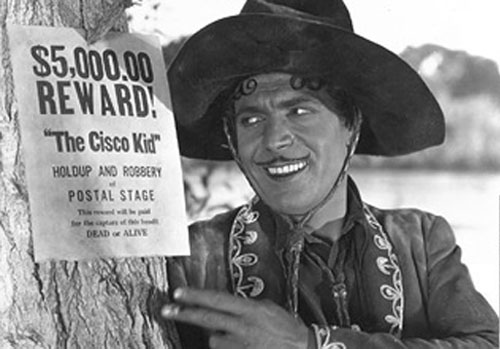
Based on a story by O. Henry, In Old Arizona tells the story of a bandit named The Cisco Kid (Warner Baxter).  Cisco may be an outlaw but he’s also a nice guy who enjoys a good laugh and occasionally sings a song while riding his horse across the Arizona landscape.  (California and Utah stood in for Arizona.)  The Cisco Kid may rob stagecoaches but he always does it with a smile.  Besides, he only needs the money so that he can give gifts to his girlfriend, Tonia (Dorothy Burgess).  What the Cisco Kid doesn’t know is that Tonia is bored and frustrated by his frequent absences and she has been cheating on him.  Then she’s approached by Sgt. Mickey Dunn (Edmund Lowe), the big dumb lug who has been ordered to bring the Kid in (dead or alive, of course).  Will Tonia betrayed the Kid?

If you’re watching In Old Arizona and hoping to be entertained, you’ll probably be disappointed.  Almost everything about this film has aged terribly.  Watching the film, it’s obvious that none of the actors had quite figured out how to adapt to the sound era and, as such, all of the performances were very theatrical and overdone.  Probably the easiest to take is Edmund Lowe, who at least managed to deliver his lines without screeching.  Sadly, the same cannot be said of Dorothy Burgess.  As for Warner Baxter, he may have won an Oscar for playing the Cisco Kid but that doesn’t make his acting any easier to take.

And yet, if you’re a history nerd like me, In Old Arizona is worth watching because it really is a time capsule of the era in which it was made.  In Old Arizona was not only the first Western to ever receive an Oscar.  This was also the first all-talking, all-sound picture.  Watching it today, without that knowledge, you might be tempted to wonder why the film lingers so long over seemingly mundane details, like horses walking down a street, the ticking of a clock, a baby crying, or a church bell ringing.  But, if you know the film’s significance, it’s fun to try to put yourself in the shoes of someone watching In Old Arizona in 1929 and, for the first time, realizing that film could not just a visual medium but one of sound as well.  For some members of that 1929 audience, In Old Arizona was probably the first time they ever heard the sound of a horse galloping across the landscape.

(I have to admit that, as a student of American history, I couldn’t help but get excited when one of the characters mentioned President McKinley.  McKinley may be forgotten today but audiences in 1929 would not only remember McKinley but also his tragic assassination.  By mentioning that McKinley was President, In Old Arizona not only reminded audiences that it was taking in the past but that it was also taking place during what would have been considered a more innocent time.  Much as how later movies would use John F. Kennedy as a nostalgic symbol of a more idealistic time, In Old Arizona uses William McKinley.)

In Old Arizona is no longer a particularly entertaining film but, as a historical artifact, it is absolutely fascinating.
Shattered Politics #1: Abraham Lincoln (dir by D.W. Griffith)


Unlike just about everyone else that I know, I am about as apolitical as you can get.

Oh, don’t get me wrong.  I always vote.  I believe in …. stuff.  Occasionally, I get angry about the state of the world. Why I’ll have you know that when I first registered to vote, I was really, really excited and I even sat down and researched every single person who was running for President.  (And, of course, I decided I would support John Edwards because he had good hair.  But then I changed my mind and ended up voting for Charles Jay, the candidate of the Personal Choice Party.)  But, for whatever reason, current events have never become the obsession for me that they are for some people.  You’ll never catch me posting a political meme or sagely agreeing with an activist on Facebook.  It’s just not for me.

(On the plus side, this has allowed me to have friends with many diverse viewpoints and generally lead a happy life.)

At the same time, I’m also fascinated by history and history is often the story of politics and politicians.  As a result, I’m far more interested in past affairs than I am in current affairs.  I can spend hours talking about the election of 1876 but I could hardly care less who is elected in 2016.  I know my political history well enough not to worry about the political present.

Perhaps that explains why, despite my indifference to politics, I tend to enjoy political movies.  And that leads us to my latest review series here at the Shattered Lens.  Over the next two weeks, I will be reviewing, in chronological order, 94 films about politics and politicians.  It’s a little something I call Shattered Politics.

(For some previous examples of what I mean by review series, check out Lisa’s Homestate Reviews, Lisa Goes Back To College, Netflix Noir, 44 Days of Paranoia, Embracing the MelodramaBack To School, and, of course, Lisa’s Marie’s Favorite Grindhouse and Exploitation Film Trailers!)

abraham-lincoln-movie-poster-1930-1020198617


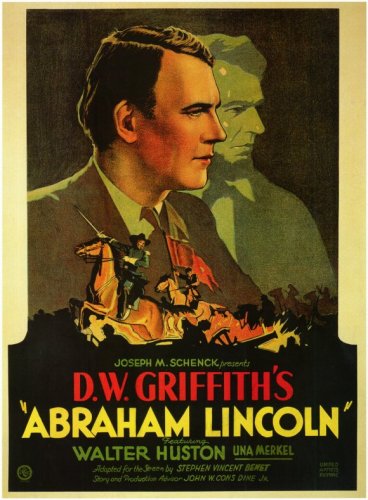
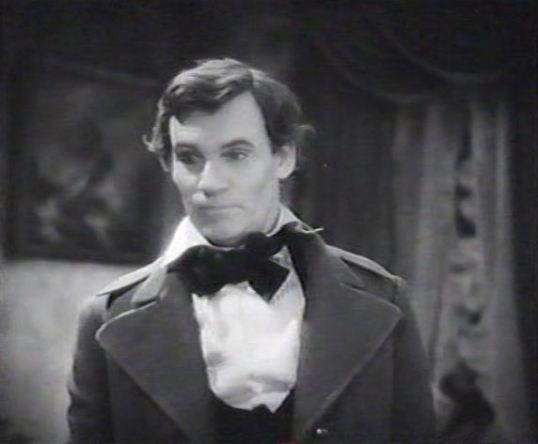
We start things off with a film from 1930.  One of only two sounds films to be directed by cinematic pioneer D.W. Griffith, Abraham Lincoln is — as you might guess from the title — a 90 minute biopic about the 16th President of the United States.  It tells the same basic story as Lincoln, just in a lot less time and with Walter Huston playing the title role.  The film opens in 1809 with his birth then speeds forward to detail his tragic love affair with Ann Rutledge (played by Una Merkel) and his subsequent marriage to Mary Todd (Kay Hammond).  We get a snippet of the Lincoln-Douglas debates and then, just as quickly, Abe is President, the country plunges into civil war, and an alcoholic actor named John Wilkes Booth (Ian Keith) is meeting with disreputable looking men in a shadowy bar and making shadowy plans.

Any honest review of this version of Lincoln’s life needs to deal with the obvious.  Abraham Lincoln was released 84 years ago, at a time when the film industry was still struggling to make the transition from silent to sound film.  In other words, the film is stiff, stagey, and full of actors who alternate between shouting their dialogue and delivering their lines through nervously clinched teeth.  This is essentially a silent film — complete with overdramatic title cards and heavy-handed symbolism — that just happens to feature some very awkwardly delivered dialogue.  Walter Huston is occasionally effective as Lincoln but, just as often, he’s not.

However, Abraham Lincoln is fascinating to watch from a historical point of view.  It helps if you know a little something about director D.W. Griffith.  Almost all of the narrative techniques that we now take for granted were originally introduced to cinema by D.W. Griffith and many of them were introduced in his controversial 1915 epic, The Birth of a Nation.  

Of course, Griffith’s legacy is problematic precisely because of The Birth of a Nation.  An epic look at the Civil War, Birth not only featured white actors in black face menacing Lillian Gish but also ended with the Ku Klux Klan heroically riding to the rescue.  That even viewers in 1915 were critical of the film’s racism and overly pro-Confederate sentiments should tell you something about just how extreme the film truly was.

(That said, one huge fan of the film was U.S. President and aspiring dictator Woodrow Wilson.)

By most accounts, Griffith was stunned by the negative reaction to The Birth of a Nation and several of his subsequent films (most famously, Intolerance) were meant to answer his critics.

That’s what makes the opening scenes of Abraham Lincoln all the more interesting.  The film opens in 1809 with a shot of a ship on the ocean.  We catch a glimpse of the Africans chained in the lower decks.  Two white slave traders are seen carrying a dead body to the side of the ship and tossing it overboard.

We cut to Virginia, where we see a group of slave owners complaining about how the North is harming them financially by trying to end the slave trade.  One of the men says that the only man who could have kept the north and south united is dead.  The camera pans up to a picture of George Washington.

Then, the scene cuts to Boston.  A group of northerners sit around a table and talk about how slavery is harming the north economically and therefore, it has to end.  One of the northerners says that the only man who could have kept north and south united is dead.  Again, the camera pans up to a picture of George Washington.

And, it’s a wonderfully effective sequence, one that not only reveals the economic reasons behind most wars but one which also reveals the cruelty, inhumanity, and pure evil of slavery.  (That said, when the film later shows us a glimpse of life in the Confederacy, Griffith does include a couple of slaves cheerfully dancing in the background.)

And, as awkward as the scenes involving dialogue are (the less said about the scenes between Walter Huston and Una Merkel, the better), Griffith does occasionally show the visual flair that was his trademark.  One excellent sequence involves soldier after soldier lining up, one after the other and each of them staring straight into the camera as they prepare to go to war.  When the film concentrates on scenes of men marching across the countryside, it actually works.

Then again, you may just want to see the film for the chance to hear one extra, when asked the identity of a man giving a fiery speech, awkwardly explain, “That’s the actor, John Wilkes Booth.  Not much of an actor but he’s got a way with the ladies!”

It’s really up to you.

Walter Huston as Abraham Lincoln

Walter Huston as Abraham Lincoln