TV Review: The Dropout 1.6 “Iron Sisters” (dir by Francesca Gregorini)


This week’s episode of The Dropout opens with Elizabeth Holmes staring at a camera. 

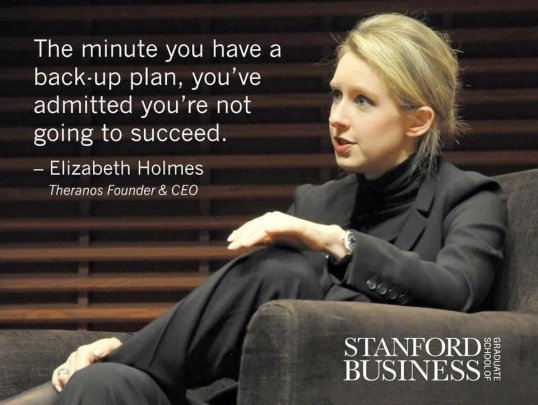
She’s got the black turtleneck on.  She’s speaking in the voice.  She’s doing the un-blinking stare.  She’s a bit awkward whenever she has to talk to anyone but that awkwardness now feels much more calculated than it did when we first met her.  Offscreen, we hear the voice of famed documentarian Errol Morris telling her which camera to look at.  Elizabeth tells Morris that she’s a huge fan of his work.  Though we don’t see Morris’s reaction, he certainly sounds thrilled by the compliment.  Of course, those of us who have been watching The Dropout from the start and who have also watched Alex Gibney’s documentary about Holmes, can guess what it probably the truth.  In all probability, Elizabeth Holmes had never seen any of Errol Morris’s documentaries.  For the most part, Elizabeth Holmes doesn’t appear to have had many interests beyond maintaining her carefully constructed public persona.  When Errol Morris makes mention of friends, a look of confusion crosses Elizabeth’s face.  Friendship is something that can only be shared between real people and, at this point, there’s nothing real about Elizabeth Holmes.

Friendship is a recurring theme throughout the sixth episode of The Dropout.  In fact, the episode returns so frequently to the theme that, for all of the show’s strengths, it actually runs the risk of getting a bit heavy-handed.  George and Charlotte Schultz are busy preparing Elizabeth’s 30th birthday party and they ask Elizabeth who they should invite.  They ask her who her friends are.  Elizabeth laughs and replies that the Schultzes are her friends.  The Schultzes laugh it off but to Elizabeth, her relationship with the Schultzes and the other members of the Board are really the only thing that she has.  For her, friendship is all about the validation of being praised by older, powerful people and, as this episode shows, men like George Schultz had a need to feel as if they were supporting her “good” work and ensuring that their final legacy will be a positive one.  Mix that with the stubborn refusal to admit to one’s mistake when one is old, wealthy, and well-connected and the end result is the type of environment that’s perfect for someone like Elizabeth Holmes.  

Indeed, the only vaguely real relationship that Elizabeth has is with Sunny and that relationship is one that she insists on keeping a secret.  (Though Charlotte instinctively understands what’s going on with Elizabeth and Sunny, George is clueless and complains, to Elizabeth, that Sunny just doesn’t have enough class.  In this case, George is right.)  In this episode, we see a bit more of Elizabeth and Sunny’s life together.  Sunny is resentful and manipulative.  Elizabeth needs him because she needs someone to actually be the bad boss while she’s busy shooting commercials and hanging out with the board of directors.  They enable each other, with Elizabeth almost using Sunny’s amorality as a shield from having to deal with the consequences of her own behavior.  If Elizabeth seems to be in deep denial about the extent of her fraud, Sunny seems to be convinced that he will always be able to outsmart anyone who tries to uncover the truth.  (Of course, as the show has repeatedly demonstrated, Sunny isn’t really that smart.)

Meanwhile, over the course of the episode, a much more unlikely friendship develops between Richard Fuisz, Phyllis Gardner, and Rochelle Gibbons.  All three of them are linked by a common desire to see Elizabeth revealed as a fraud.  Richard feels that Elizabeth treated him disrespectfully, Phyllis is offended by Elizabeth’s faux feminism, and Rochelle saw first-hand how Elizabeth and Sunny drove her husband to suicide.  Throughout the episode, the three of them try to get a Wall Street Journal reporter interested in the story but they struggle to find concrete evidence of Elizabeth’s fraud.  William H. Macy, Kate Burton, and especially Laurie Metcalf brought some much-needed moral clarity to last night’s episode.  In the past, I’ve complained that, as played by William H. Macy, Richard was almost too cartoonish to be believed but, as of last night’s episode, I stand corrected.  Richard is just as socially clueless as Elizabeth but, unlike Elizabeth, he has no idea how to use that to his advantage.  Instead of being cartoonish, Macy’s performance is instead a perfect counterpoint to Amanda Seyfried’s more tightly controlled performance as Elizabeth.

And finally, the episode’s most important friendship was the friendship between two new Theranos employees, Tyler Schultz (Dylan Minette) and Erika Cheung (Camryn Mi-Young Kim).  Erika began the episode in awe of Elizabeth, just to discover that Theranos was faking results and that the Edison was just a repurposed Siemen machine. Tyler and Erika took on the role of whistleblowers, just to discover that no one — especially not Tyler’s grandfather, George — had any interest in listening.  In the end, they both ended up losing the jobs.  That’s not a big deal for Tyler, who is a scion of the establishment.  For Erika, an idealist who shared much in common with the pre-Theranos Elizabeth Holmes, it’s very much a big deal.  As this episode makes clear, people will look the other way if it means being able to pay the rent and put food on the table.  It takes true bravery to do the right thing when you actually need the job, as Erika does.  Erika does the right thing and asks the right question and ends up by escorting out of Theranos by security guards.

There was a lot going on in this week’s episode but, ultimately, what I’ll always remember was Elizabeth’s birthday party, which featured the elderly members of the American establishment all wearing expressionless Elizabeth Holmes masks.  It was a sight of almost Cronenbergian horror.  Things only got more awkward as Elizabeth and George demanded that Tyler sing a song that he had written in honor of her birthday.  Of course, by this point, Tyler knew that Elizabeth was a fraud and Elizabeth knew that Tyler knew.  It was truly a moment of supreme cringiness but also one that apparently actually happened.  

The episode ends as it began, with Elizabeth Holmes staring straight at a camera and announcing that Theranos is the future.  #IronSisters!
 

TV Review: The Dropout 1.5 “Flower of Life” (dir by Francesca Gregorini)


Who was Elizabeth Holmes?

Was she an idealist who got in over her head and ended up cutting corners with the best of intentions?

Was she a con artist who simply lied for the money?

Was she the abused and manipulated partner in a crime that masterminded by Sunny Balwani?

Or was she a sociopath who was simply incapable of feeling any empathy for the people that she manipulated and, in some cases, destroyed?

That’s the question that’s been at the heart of the first five episodes of The Dropout.  It’s also a question that the show’s version of Elizabeth Holmes (played, brilliantly, by Amanda Seyfried) is struggling with.  One gets the feeling that she herself doesn’t full understand what’s going on inside of her head.  For the first half of the episode 5, Holmes is an almost sympathetic character.  Still desperate for Sunny’s approval and seemingly convinced that Theranos can come up with some magic spell that will actually make the Edison work, Elizabeth comes across as being more self-delusional than malicious.  For the first half of the episode, it’s like we’re watching the socially awkward but earnest Elizabeth who we first met at the beginning of the series.  At her uncle’s funeral, she asks her mother if she ever had any hobbies when she was younger and her mom can only list several competitive activities that Elizabeth took part in.  But, as becomes clear, Elizabeth never did anything just for fun or just for enjoyment.  Instead, everything the she’s always done has been a part of an obsessive need to not only prove her own abilities but to also prove that she’s superior to other people.

Perhaps this strange mix of a grandiose self-image and gnawing insecurity is why she simply cannot bring herself to settle the lawsuit that’s been brought against her by Richard Fuisz (William H. Macy).  Instead, with the help of her newest mentor, George Shultz (Sam Waterston), Elizabeth brings in David Boies (Kurtwood Smith).  Boies is one of the leading lawyers in the United States.  Before getting involved with Theranos, Boies tried to put Al Gore in the White House.  After his involvement with Theranos, Boies tried to keep Harvey Weinstein out of jail.  Boies failed on both accounts but he was far more successful when it came to battling Fuisz’s lawsuit.  One of the key scenes in the episode comes when Schultz mentions that he and Boies are on different sides politically but that they’re willing to come together to protect Theranos.  It doesn’t matter that Schultz is a Republican and Boies is a Democrat.  What matters is that they’re both a member of the elite and Theranos, with its prestigious board of directors, is now a part of the elite as well.  Richard Fuisz, with his terrible haircut and his excitable manner, is far too gauche to be allowed to defeat Theranos.

Indeed, Elizabeth spends most of this episode worrying about the lawsuit and also what might happen if Ian Gibbons (Stephen Fry) is called to testify.  Gibbons’s name is on all of Theranos’s patents, along with Elizabeth’s.  Gibbons is perhaps the one person who can testify that Elizabeth had nothing to do with designing any of Theranos’s equipment.  When we first see Theranos’s legal team pressuring Ian to sign a statement saying that, as an alcoholic, he can’t testify, we’re left to wonder whether the team is working at the direction of Sunny, Boies, or Elizabeth.  When Ian points out that signing such a statement will end his career, no one seems to care.  Ian Gibbons goes home, plays with his dogs, listens to his favorite opera, says goodnight to his wife, and then kills himself.

Elizabeth’s reaction to Ian’s death tells us all we need to know about her and it pretty much erases whatever sympathy we may have had for her.  She’s a bit like a robot, trying to generate the “right” emotions but not quite sure the proper way to do it.  When told that Ian is dead and that the lawsuit is apparently dead as well, Elizabeth focuses on the finger puppets that she wants to stock in the Theranos Wellness Centers.  The puppets are for children to wear after getting their finger pricked but they’re also a part of Elizabeth’s fantasy world, a world where Theranos will be fine and she’ll be as famous and beloved as Steve Jobs.  And if that means that the Edison had to be built with technology with Sunny stole from another company, so be it.

The episode ends with Brendan (Bashir Salahuddin) quitting the company and George Schultz’s nephew, Tyler (Dylan Minnette), starting his first day.  Using her fake voice, Elizabeth gives a speech to her cult-like employees.  She talks about her uncle’s death and how it effected her and we know that it’s all a lie but Elizabeth sells it.  The only disconcerting note comes from Sunny, who can’t stop himself from casually threatening to fire anyone who doesn’t share Elizabeth’s version.  They’re a team.  Elizabeth knows how to sell Theranos.  Sunny knows how to terrify anyone who asks too many questions.

This was the first episode of the series to not be directed by Michael Showalter.  Instead, it was directed by Francesca Gregorini and there are a few scenes where you really do miss Showalter’s ability to balance the absurd with the dramatic.  That said, this episode worked due to the performances of not only Seyfriend and Naveen Andrews but also William H. Macy, Kurtwood Smith, and especially Stephen Fry.  Fry especially broke my heart, even though I knew enough about the real story of Theranos that I already knew that Gibbons was going to take his own life.  Still, Fry plays the role with such a wounded dignity that you are left with no doubt that Gibbons was the last of the true believers.  He gave his life for Theranos and, in the end, Theranos gave him nothing in return.

The episode ends with Richard calling Phyllis Gardner (Laurie Metcalf), who was last seen telling a very young Elizabeth that there was no way to make the idea behind Theranos a reality.  Phyllis tells Richard that Elizabeth is a fraud.  And I have to admit that, as a viewer who had just spent 50 minutes with Elizabeth Holes and Sunny Balwani and David Boies, it was nice to hear someone come straight out and say it.

Next week, Tyler Schultz starts working at Theranos and he discovers that everything is not as it seems!  It’s the beginning of the end for Theranos and I’m looking forward to watching it all come down.