Hell-Fire Austin (1932, directed by Forrest Sheldon)


Having just gotten out of the army after serving in World War I, Bouncer (Nat Pendleton) and his friend, “Hell-Fire” Austin (Ken Maynard), head out to find their fortune in the west.  Austin claims that he’s an old west legend but, despite his claims, he still can’t get away with not paying his bill at a local café.  Austin and Bouncer are arrested and sentenced to work on a chain gang.

Times are tough but they start to look up when businessman Mark Edmonds (Alan Roscoe) arranges for them to be set free, on the condition that they train his horse and then ride it to victory in an upcoming race.  Edmonds wants the ranch that’s owned by Judy Brooks (Ivy Merton) and, in order to get it, he has to make sure that her horse, Tarzan, doesn’t win the race and the prize money that comes with it.  The only problem with the plan is that Austin likes Tarzan and he’s a little partial to Judy as well.

Hell-Fire Austin is an amusing film.  Like many of  the early western stars, Ken Maynard was a former rodeo star who turned to the movies and he looked authentic jumping on and riding a horse.  In Hell-Fire Austin, he and Nat Pendleton are a good comedy team, playing off of each other as only two friends who have been through both war and prison could.  The comedy comes less from what they say and more from their attitude towards each other.  They’re stuck with each other, no matter how much they might wish differently.  Hell-Fire Austin is an extremely simple movie but fans of the genre should enjoy it.  It’s post-World War I setting adds an extra element of meaning to the story, with Austin and Bouncer standing in for all the soldiers who, having seen terrible fighting in Europe, were now back in America and wondering what to do with their rest of their lives.  Austin and Bouncer had west, hoping to find a life like the one they’ve seen in the movies.  They find it but, of course, they have to go to prison first.

Ken Maynard was an actor who probably could have been nicknamed “Hell Fire” himself.  He was a big star in the early days of Hollywood but his reputation for drinking too much and being egotistical and temperamental sabotaged his career and he ended up back where he began, doing rodeo tricks for Ringling Bros.  He spent his last years living in a trailer, nearly forgotten and selling “memorabilia” that later turned out to be fake, a sad ending for an authentic cowboy.

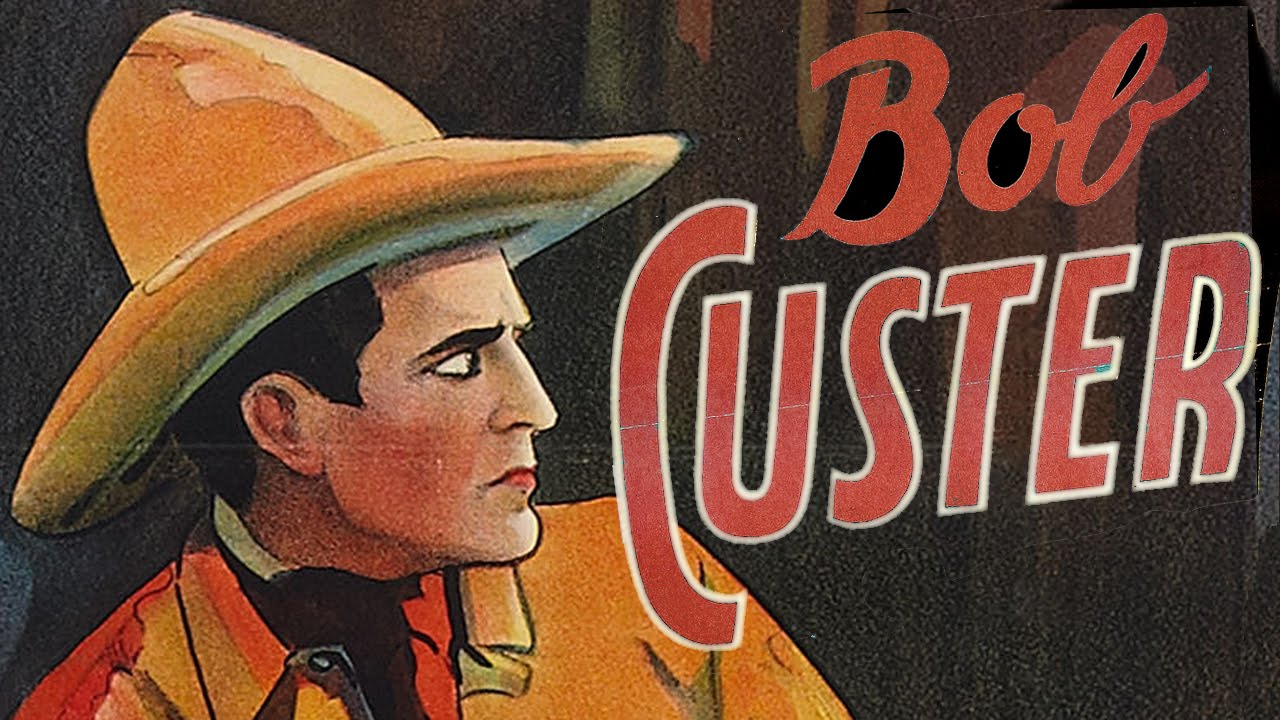
Law of the Rio Grande (1931, directed by Forrest Sheldon)


I nearly didn’t review Law of the Rio Grande.

First, the only copies I could find were at the Internet Archive and on YouTube.  The available copies run 48 minutes but according to the IMDb, Law of the Rio Grande originally had a 57-minute run time.  If that number is correct, that means that the versions on the Internet Archive and YouTube are missing 9 minutes.  Since there doesn’t appear to have been anything objectionable in the film (this is a 1931 b-western, after all), I’m going to guess that the 9-minutes were probably cut when the movie started playing on television in the 50s.  That is something that happened to a lot of the old western programmers.  Television was quick to buy them because they were cheap and they made for appropriate children’s programming but the movies were always edited for time and often, the original versions were lost.

Secondly, edited or not, Law of the Rio Grande is not very good.  It was made, for a very low-budget, by Syndicate Pictures, a poverty row studio.  The majority of the cast was made up of actors who had found success in the silent era but who never made the adjustment to the sound era.  Though the actors have the right look to play cowboys, none of them know how to actually make dialogue sound convincing.  There’s also a persistent sound of crackling static in the background of most of the scenes.  I don’t know if that’s the fault of the film or if it’s just a bad upload but it’s obvious that the cast and crew of Law of the Rio Grande were not used to working with sound.

Despite the film’s title, the Rio Grande was nowhere to be seen in the version that I saw.  Instead, the film is about two outlaws, Jim (Bob Custer) and Cookie (Harry Todd), who are determined to go straight.  Jim and Cookie end up working for Colonel Lanning (Carlton S. King) and his daughter, Judy (Betty Mack).  But then a former acquaintance known as the Blanco Kid (Edmund Cobb) shows up and threatens to reveal the truth about Jim’s background.  It’s a typical western programmer, with the main message being you can’t escape your past but you can beat it up in a fair fight.

The kids probably loved it in 1931.  Today, it’s mostly interesting as an example of one of Bob Custer’s final films.  Custer was a legitimate rodeo star who went to Hollywood during the silent era and who had a lot of success because he looked authentic jumping on a horse.  Like many silent era stars, he didn’t have to actually recite or even know his lines.  He just had to be himself.  Unfortunately, the sound era destroyed his career because, while he may have looked like a character from the old west, he didn’t sound like one.  Unable to find work at the major studios, Custer ended up making movies like this one for studios like Syndicate Pictures.  He retired from acting in 1936 and went on to become a building inspector for city of Los Angeles.  It turned out that he was a better engineer than he wan actor and eventually, he named Chief Building Inspector for the city of Newport Beach, California.  He passed away in 1974, nearly forty years after starring in his final film.  He was 76 years old.