I first ran into Alkonost back in the days of Audiogalaxy, when I barely had a clue what metal beyond Metallica and Pantera consisted of. They are remarkably early for folk/pagan metal, forming in Naberezhnye Chelny, the second largest city of Tatarstan in Russia, in 1995. Their first demos were released in 1997, and “Sun Shine Our Land” appears on their 2000 debut full-length, Songs of the Eternal Oak.
I wasn’t really aware that anything describable as pagan or folk metal existed (and most of the standards by which the genres are judged had yet to be written), so for me it was something of an anomaly. I’d been listening to a lot of Nokturnal Mortum at the time, and I was beginning to develop this idea of “eastern” metal as something far more ah, I guess I’d say spiritual, than the western angst engines I’d been accustomed to. It stood apart, too, from the fantasy stuff I’d been getting into at the time. It was something quite different from Blind Guardian, Iced Earth, Rhapsody… it felt like fantasy (power) metal turned inside out, where the music wasn’t so much describing as becoming the myth. That’s a lot of what folk and pagan metal is, I suppose.
I find it a bit fascinating that, all inheritance from Bathory aside, the genre did emerge largely out of the former Soviet Union. It has a historical framework that goes beyond musical trends. These are bands that, in the new era of free speech that defined the 1990s, rejected the ideals of modernization and looked to idealize the past as a more authentic human experience than anything under pseudo-socialism. I don’t know how much Alkonost actually influenced the pagan and folk scenes that followed, but the fact that I’d heard of them as early as 2000 is a telling sign. “Sun Shine Our Land” was one of my favorite songs back then, and certainly still merits attention.
There’s no good reason for pagan metal to be dormant in Central and South America. Hell, they have more to be pissed off about than anyone. As it stands though, Kukulcan is one of the only bands I have ever heard with a distinctly Aztec/Mayan theme. They come from Tlaxcala and Valle de Chalco, areas in the south of Mexico near the capital.
Apparently they have six demos and splits out now, but still no full-length cds. Tlamictilia Quixtiani is the opening track to Yaotlachinolli, their first demo, released in 2006. Here black metal serves as the backdrop for what sounds like a militant call to arms, amidst war horns, native drumming, and a woodwind that wavers between mourning and madness. That symbol in the four corners of the album cover is actually the Aztec swastika, which I couldn’t find much information on. But just in case such ambiguity fails to offend you, they made sure to plant a good old modern swastika in the middle of it. Ah, that must explain the Gothic font they used for their band logo. Such creative young lads…
But really, this demo is pretty great as pagan black metal goes. It’s an angry reassertion of pre-colonial heritage, noisily representing an indigenous American culture that gets largely ignored in the modern world.
Here’s a song I thought fit the season rather nicely. Natural Spirit is a folk/pagan metal band from Ukraine, and Внукам Даждь-Бога (To The Grandchildren of Dazhd-God, at least as Encyclopaedia Metallum translates it) appears on their original 1999 demo Star Throne. The band have released three albums since, most recently in 2011, but this is the only one I’ve heard, so I can’t speak for what they sound like these days.
I’m always a sucker for that cheap, almost SNES-sounding keyboard you find especially on Ukrainian pagan metal albums (Nokturnal Mortum’s cover of “Sorrow of the Moon” by Celtic Frost could be straight out of Secret of Mana or Soul Blazer at times). Of course there’s nothing authentic about it, but its primitive sound in comparison to other synth puts it in a unique position to sound both ancient and entirely unnatural. It’s both reverently pagan and haunting in a dark, fantasy-themed way, uniting visions of Tolkienic landscapes with conjurations of long forgotten gods.
The name in the title, Dazhd-God, refers to the Slavic sun god Dažbog, son of the fire god Svarog. The frequent references to Slavic mythology in Eastern European folk and folk metal are always revealing, if only for the lack of attention this pantheon receives. Translations of the Prose and Poetic Eddas are a dime a dozen, and most people who have the slightest passing interest in mythology have probably read at least some segments of them. History and Germanic Studies departments around the world specialize in them. As diligent as metal bands have been in preserving tales of the Norse gods, the historical texts are there to be had with or without them. With no Slavic Snorri Sturluson to fall back on, Eastern European bands interested in preserving and resurrecting the past share less company. They are far more uniquely responsible for my having ever even heard these names. It is perhaps a consequence of this that lends Slavic pagan metal a stronger affinity with mysticism, often coupled with an almost violent, desperate sense of pride. Внукам Даждь-Бога avoids the latter, but it definitely presents Dažbog in an otherwordly, supernatural light that you won’t find much of in Norse-centric metal beyond Burzum.
…zum Tode hin was the most pleasant surprise of 2009. Like Turisas in 2007 and Nekrogoblikon in 2011, Finsterforst managed to rise from the depths of mediocrity to greatness in a single album. I’d spun Weltenkraft often enough to know them when I heard them, but there was absolutely nothing special about it. I only grabbed …zum Tode hin in the first place because I was very actively keeping up with metal in general at the time, and it ended up on my top 10 list come the end of the year.
…zum Tode hin adopts a folk-black sound which should immediately appeal to fans of Moonsorrow, while maintaining the strong emphasis on accordion that characterized Weltenkraft. But unlike Moonsorrow (at least for me), Finsterforst’s melodies are extraordinarily memorable. I can’t tell you how many times I’ve got Urquell stuck in my head, and this never proves a nuisance. Looking over my 2009 list again, …zum Tode hin is fairly unique in having stood the test of time. I still have yet to grow tired of listening to it.
Finsterforst are a German band that formed in 2004. Their name means “dark forest”. The album title translates to “Towards Death”, and this particular track to “Original Source”. They haven’t released an album since …zum Tode hin, and singer Marco Schomas has since left the band. That’s a bit disconcerting, because his vocals fit their style perfectly, but the good news is a new record’s finally on its way. “Rastlos” should be available by November 27th. Cheers.
Nokturnal Mortum is a name one should only ever drop with caution. They are unfortunately the flagship band of the Ukrainian white supremacist nsbm scene. One might expect idiotic ideas to lead to pretty dim-witted music, but Nokturnal Mortum broke the mold. In fact, they’re one of the most talented bands I have ever heard. Knjaz Varggoth has a seemingly unshakable knack for infusing his music with the all of the pride and hatred that his ideology implies. From 1996 up to the present they have remained on the cutting edge of the folk/pagan metal scene, like it or not.
Cheremosh is conveniently a track with no ideological strings attached. Appearing initially on the 1997 Marble Moon ep and then in slightly more refined form on To the Gates of Blasphemous Fire in 1998, Cheremosh is an instrumental song. The name refers to the Cheremosh river in western Ukraine. With a distinct build-up and climax characteristic of many of their finest songs, Cheremosh transitions from a secluded scene of the river rolling along to some convincing and bizarre pagan ritual. The folk is mostly keyboards–Nokturnal Mortum did not begin to employ traditional instrumentation extensively until the following year on NeChrist. (NeChrist, I recently discovered, is a pun. “Nechist” are evil spirits in Russian folklore.) Nokturnal Mortum did a pretty impressive job of inventing their own folk sound through synth though, and their first three albums gain a lot from it. If you can stomach their ideology, Nokturnal Mortum present some of the most compelling pagan metal on the market, and this isn’t the last time I’ll be featuring them this month.
“Tuatha Dé Danann” refers to mythological pre-Christian inhabitants of Ireland, and contestedly translates as “peoples of the goddess Danu”. If an entirely appropriate name for an Irish folk metal band, what makes Tuatha de Danann especially odd is that they hail from Varginha, Brazil. The band can, moreover, claim to be one of the earliest-formed acts to perform folk metal, dating back to 1995 (though they quite recently broke up.)
Tuatha de Danann are fundamentally power metal–the definitive metal genre of Central and Southern America (I was in Costa Rica when Iron Maiden played there in 2009 and you’d have thought it was a national holiday). I’ve never been a big power metal enthusiast, so I never had much of a desire to explore Tuatha de Danann’s albums further, but the opening track to Tingaralatingadun, released in 2001, does a delightful (and historically, exceptionally early) job of flawlessly merging power and folk metal in a manner somewhat similar to Elvenking during their finer years. It is a bit more earthy than Elvenking, much to its advantage, and the effect of the constant guitar solo doodling, whistle, and generally airy production creates a lighthearted, mischievous vibe that I would describe as more fantasy than folk–or at least, it invokes a more fairytale superstition of early morning magic. Follow these guys into a cave and you might find a few hundred years have passed on your way back out.
The biggest selling point for me in this song is the tone of the whistle. I cannot sufficiently emphasize my love for whistles. There is no instrument I enjoy more, either to listen to or to play (banjos get a close second, though I’d be kidding myself if I claimed I could play one). “The Dance of the Little Ones” is especially successful in generating a sort of ‘through the fog’ whistle tone which I’ve heard employed by such diverse musicians as Belarusian folk band Stary Olsa (Стары Ольса) and Japanese video game composer Miki Higashino, and which I desperately wish I knew how to reproduce.
I want to hop on the bandwagon. It would be a little silly for me to post my real top 10; for one thing, it would include four Krallice tracks. That aside, nearly everything I’d put on it I’ve either posted on this site as a Song of the Day or included in both my review of its album and my top albums post. So to make this a bit different from my past posts, I’m going to limit myself to one song per band, stick to stuff that I imagine might appeal to people who aren’t interested in extreme metal, and keep it on the catchy side. I’ll list a more honest top 10 at the end.
10. Powerwolf – Son of a Wolf (from Blood of the Saints)
As such, my tenth place selection is about as metal as it’s going to get. Powerwolf’s Blood of the Saints might be simple and repetitive, but it’s about the catchiest power/heavy metal album I’ve ever heard. It indulges the same guilty pleasure for me as Lordi and Twisted Sister–two bands that inexplicably pump me up despite being entirely tame. It also offers some amazing operatic vocals and Dracula keyboards, the cheesiness of which can be easily forgiven. Son of a Wolf might be one of the more generic tracks in a sense, but it’s the one most often stuck in my head.
9. Alestorm – Barrett’s Privateers (from Back Through Time)
The only thing I love more than traditional folk and sea chanties is folk punk and metal. When the latter covers the former, I’m in bliss. Alestorm are emerging as the sort of Dropkick Murphys of metal with all their covers lately, and I hope they keep it up. I loved Barrett’s Privateers before what you’re hearing ever happened, and the metal version delights me to no end.
8. The Decemberists – Rox in the Box (from The King is Dead)
The Decemberists really toned it down this year. Where The Hazards of Love could be described as an epic rock opera, The King is Dead sticks to simple, pleasant folk. But Colin Meloy thoroughly researches pretty much every subject he’s ever tackled, and The King is Dead pays ample homage to its predecessors. Rox in the Box incorporates Irish traditional song Raggle Taggle Gypsy with delightful success.
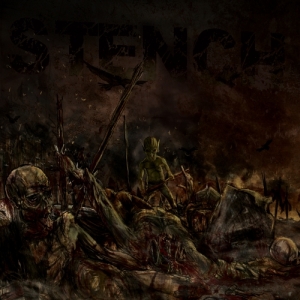
7. Nekrogoblikon – Goblin Box (from Stench)
With a keen eye towards contemporary folk metal like Alestorm and Finntroll, melodic death classics like In Flames and Children of Bodom, and much else besides, former gimmick band Nekrogoblikon really forged their own unique sound in the world of folk metal in 2011. At least half of the album is this good. Stench is the most unexpected surprise the year had to offer by far.
6. Korpiklaani – Surma (from Ukon Wacka)
Korpiklaani almost always end their albums with something special, and 2011 is no exception. The melody of Surma is beautiful, and Jonne Järvelä’s metal take on traditional Finnish vocals is as entertaining as ever.
5. Turisas – Hunting Pirates (from Stand Up and Fight)
I couldn’t find a youtube video that effectively captured the full scope of Turisas’s sound in such limited bitrates, but believe me, it’s huge. Go buy the album and find out for yourselves. Unlike Varangian Way, not every track is this good, but on a select number Turisas appear in their finest form. Adventurous, exciting, epic beyond compare, this band delivers with all of the high definition special effects of a Hollywood blockbuster.
4. The Flight of Sleipnir – Transcendence (from Essence of Nine)
Essence of Nine kicks off with a kaleidoscope of everything that makes stoner metal great, while reaching beyond the genre to incorporate folk and Akerfeldt-esque vocals. A beautifully constructed song, it crushes you even as it floats through the sky. I could imagine Tony Iommi himself rocking out to this one.
3. Boris – Black Original (from New Album)
From crust punk to black metal, there’s nothing Boris don’t do well, and 2011 has shown more than ever that there’s no style they’ll hesitate from dominating. I don’t know what’s been going on in the past few years with this popular rise of 80s sounds and weird electronics. I don’t listen to it, so I can’t relate. But if I expected it sounded anything nearly as good as what Boris pulled off this year I’d be all over it.
2. Tom Waits – Chicago (from Bad as Me)
Bad as Me kicks off with one of my favorite Tom Waits songs to date. It’s a timeless theme for him, but it feels more appropriate now than ever, and his dirty blues perfectly capture the sort of fear and excitement of packing up and seeking out a better life.
1. Dropkick Murphys – Take ‘Em Down (from Going Out in Style)
In a year just begging for good protest songs, Flogging Molly tried really hard and fell flat. Dropkick Murphys, another band you’d expect to join the cause, released perhaps their most generic album to date (still good mind you, but not a real chart topper). Take ‘Em Down is kind of out of place on the album, but it’s DKM to the core, and as best I can gather it’s an original song, not a cover of a traditional track. If so, it’s probably the most appropriate thing written all year. (The video is fan made.)
If you’re interested in my actual top 10, it runs something like this:
10. Falkenbach – Where His Ravens Fly…
9. Waldgeflüster – Kapitel I: Seenland
8. Liturgy – High Gold
7. Endstille – Endstille (Völkerschlächter)
6. Blut aus Nord – Epitome I
5. Krallice – Intro/Inhume
4. Liturgy – Harmonia
3. Krallice – Diotima
2. Krallice – Telluric Rings
1. Krallice – Dust and Light
And that excludes so many dozens of amazing songs that it seems almost pointless to post it.
The years I most actively indulge my musical interests are the ones I find most difficult to wrap up in any sort of nice cohesive summary. December always begins with a feeling that I’ve really built up a solid basis on which to rate the best albums of the year, and it tends to end with the realization that I’ve really only heard a minute fraction of what’s out there. I’m going to limit this to my top 15. Anything beyond that is just too arbitrary–the long list of new albums I’ve still yet to hear will ultimately reconfigure it beyond recognition.
15. Thantifaxath – Thantifaxath EP
Thantifaxath’s debut EP might only be 15 minutes long, but that was more than enough to place it high on my charts. The whole emerging post/prog-bm sound has been largely a product of bands with the resources to refine it, and it’s quite refreshing to hear sounds reminiscent of recent Enslaved without any of the studio gloss. That, and I get a sort of B-side outer space horror vibe from it that’s not so easy to come by. (Recommended track: Violently Expanding Nothing)
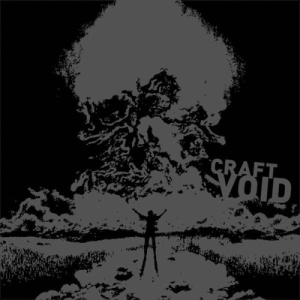
14. Craft – Void
This is the straight-up, no bullshit black metal album of the year. It doesn’t try anything fancy or original. It’s just good solid mid-tempo bm–brutal, evil, conjuring, and unforgiving. Hail Satan etc. (Recommended track: any of them)
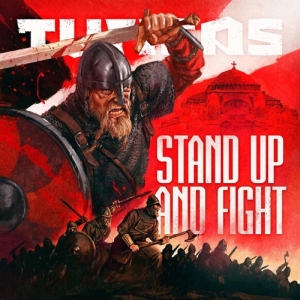
13. Turisas – Stand Up and Fight
Stand Up and Fight doesn’t hold a candle to The Varangian Way, but I never really expected it to. As a follow-up to one of my all-time favorite albums, it does a solid job of maintaining that immensely epic, triumphal sound they landed on in 2007. It lacks their previous work’s continuity, both in quality and in theme, but it’s still packed with astoundingly vivid imagery and exciting theatrics that render it almost more of a movie than an album. (Recommended tracks: Venetoi! Prasinoi!, Hunting Pirates)
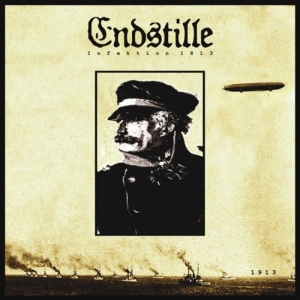
12. Endstille – Infektion 1813
Swedish-style black metal seldom does much for me, and it’s hard to describe just what appeals to me so much about Germany’s Endstille. But just as Verführer caught me by pleasant surprise two years ago, Infektion 1813 managed to captivate me in spite of all expectations to the contrary. Like Marduk (the only other band of the sort that occasionally impresses me), they stick to themes of modern warfare, but Endstille’s musical artillery bombardments carry a sense of something sinister that Marduk lacks. The dark side of human nature Endstille explores isn’t shrouded in enticing mystery–it’s something so thoroughly historically validated that we’d rather just pretend it doesn’t exist at all. The final track, Völkerschlächter, is one of the best songs of the year. Stylistically subdued, it pummels the listener instead with a long list of political and military leaders responsible for mass murder, named in a thick German accent over a seven second riff that’s repeated for 11 minutes. It’s a brutal realization that the sensations black metal tends to arouse are quite real and quite deplorable, and it will leave you feeling a little sick inside.
11. Nekrogoblikon – Stench
Nekrogoblikon released a folk metal parody album in 2006 that was good for laughs and really nothing else. The music was pretty awful, but that was intentional. It was a joke, with no presumption to be any good as anything but a joke. They’re the last band on earth I ever expected, a full six years after the fact, to pop back up with a really fucking solid sound. But Stench is good. I mean, Stench is really good. It’s still comical in theme, but the music has been refined beyond measure. Quirky, cheesy guitar and keyboard doodles have become vivid images of little flesh-eating gremlins dancing around your feet, whiny mock-vocals have taken the shape of pretty solid Elvenking-esque power metal, pretty much everything about them has grown into a legitimate melo-death and power infused folk metal sound. Don’t get me wrong, it’s still not meant to be taken seriously, but they’re now of Finntroll caliber. (Recommended tracks: Goblin Box, Gallows & Graves, A Feast)
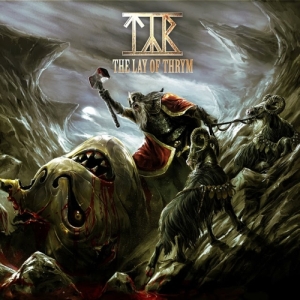
10. Týr – The Lay of Thrym
I thought By the Light of the Northern Star was a fairly weak album, and because The Lay of Thrym maintains some of the stylistic changes they underwent then, a part of me keeps wanting to say it can’t be as good as say, Land or Eric the Red. But of all the albums I acquired in 2011, I’ve probably listened to this one the most. Týr have one of the most unique sounds on the market, and it’s thoroughly incapable of ever boring me or growing old. Heri Joensen’s consistently excellent vocal performance alone is enough to make them perpetual year-end contenders. (Recommended track: Hall of Freedom)
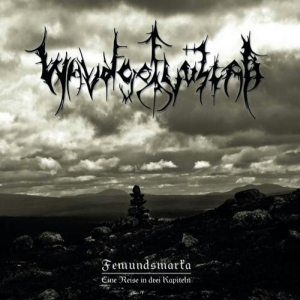
9. Waldgeflüster – Femundsmarka – Eine Reise in drei Kapiteln
This is some of the most endearing black metal I’ve heard in a while. Intended as a musical reminiscence of Winterherz’ journey through Femundsmarka National Park in Scandinavia, it’s a beautiful glorification of nature that takes some of the best accomplishments of Drudkh and Agalloch and adds to them a very uplifting vibe. Someone made an 8 minute compilation of the album on youtube which does a good job at previewing without revealing all of its finest moments. (Recommended track: Kapitel I: Seenland)
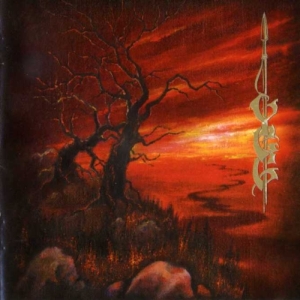
8. Ygg – Ygg
Ygg is an hour-long trance, evoking ancient gods in a way that only Slavic metal can. You could probably pick apart the music and discover plenty of flaws, but that would miss the point. I think that a lot of these Ukrainian and Russian bands are true believers, and that the purpose of music like this is more to create an experience in the listener than to be good for its own sake. This is a spiritual journey, and if it fails to move you as such it will probably come off as rather repetitive and generic, but I find it impressively effective. (Recommended track: Ygg)
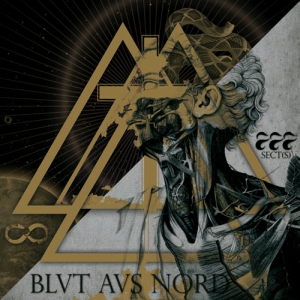
7. Blut aus Nord – 777: Sect(s)
I don’t know where to put this really. I could just as easily have labeled it second best album of the year. Dropping it down to 7th might seem a little unjustified, but eh, this is a list of my top albums, not of the “best” albums of the year. There’s no denying Sect(s) credit as a brilliant masterpiece, but it’s an ode to madness. I mean, this music scares the shit out of me, and if that means it’s accomplished something no other album has, that also means I don’t particularly “enjoy” listening to it. (Recommended track: Epitome I)
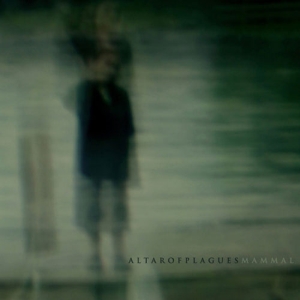
6. Altar of Plagues – Mammal
I never did listen to Mammal as actively as I would have liked. I never sat down and gave it my undivided attention from start to finish. But it’s served as a background piece for many late nights at work. It zones me in–stimulates my senses without ever distracting them from the task at hand. I don’t feel like I can really say much about what makes it great, because that’s not the sort of thing I’ve considered while listening to it, but I absolutely love it. It’s a big improvement from White Tomb, which was itself an excellent album, and more so than most other releases of 2011 I will probably continue to listen to it frequently in years to come. (Recommended track: Neptune is Dead)
5. Primordial – Redemption at the Puritan’s Hand (track: No Grave Deep Enough)
Redemption at the Puritan’s Hand is by no means perfect. It’s got a few sub-par tracks detracting from the full start to finish experience, but when it’s at its best all else can be easily forgiven. Call it folk metal or call it black metal, whichever you prefer, but first and foremost call it Irish, with every good thing that might entail. The vocals are outstanding, the music rocks out in folk fashion without ever relenting from its metal force, and while the lyrics don’t always make sense, they always hit like a fucking truck. Where they do all come together, delivered with Nemtheanga’s vast and desperate bellows, the result is overwhelming. O Death, where are your teeth that gnaw on the bones of fabled men? O Death, where are your claws that haul me from the grave? (Other recommended tracks: The Puritan’s Hand, Death of the Gods)
4. Falconer – Armod (track: Griftefrid)
Prior to 2011 I’d largely written Falconer off as one of those power metal acts that were just a little too cheesy to ever excite me. Maybe it was bad timing. Maybe I just happened to hear them for the first time while Kristoffer Göbel was filling in on vocals. Or maybe Armod is just their magnum opus–a spark of genius they’ve never neared before. Flawless if we ignore the “bonus tracks”, Armod takes that early folk metal sound Vintersorg pioneered with Otyg, merges it perfectly with power metal, and offers up 11 of the most well-written and excellently produced songs of the year. Mathias Blad’s vocals are absolutely phenomenal. (Other recommended tracks: Herr Peder Och Hans Syster)
3. Falkenbach – Tiurida (track: Sunnavend)
A lot of people might voice the legitimate complaint that Tiurida, Vratyas Vakyas’s first studio album in six years, sounds absolutely indistinguishable from his prior four. For me, that’s exactly why it ranks so high. Vakyas landed on a completely unique, instantly recognizable sound which, alongside Bathory, defined viking metal as a genre, and he’s refused to change it one bit. I fell in love with this album ten years ago. (Other recommended tracks: Where His Ravens Fly…)
2. Liturgy – Aesthethica (track: Harmonia)
Yes, Liturgy. It’s immature, childish, and imperfect, but it’s uplifting in a completely new way. No matter how far Hunt-Hendrix might go to embarrass himself and his band mates, behind all of his pompous babble there just might be some truth to it. (Other recommended tracks: True Will)
1. Krallice – Diotima (track: Dust and Light)
More than the album of the year, Diotima is one of the greatest albums ever made. I can’t fathom the amount of skill it must take to perform with the speed and precision that these guys do, but if they battered down a physical barrier to metal in 2008, they finally grasped hold of what lies beyond it in 2011. They claim that the songs on their first three albums were all written at the same time by Mick Barr and Colin Marston, before their self-titled debut. If that’s the case, then it must be the experience of performing together and the creative contributions of Lev Weinstein and Nick McMaster that raised Diotima to a higher level. It’s not just that they’ve improved in every way imaginable; the songs themselves are overwhelming, breathtaking, and chaotic to a degree they’d never before accomplished. Krallice perform an unwieldy monster that took a few albums to thoroughly overcome. Now they’re in complete control, and their absolutely brilliant song-writing can shine through. With the exception of the dubious Litany of Regrets, this is possibly the greatest album I have ever heard. (Other recommended tracks: Inhume, Diotima, Telluric Rings)
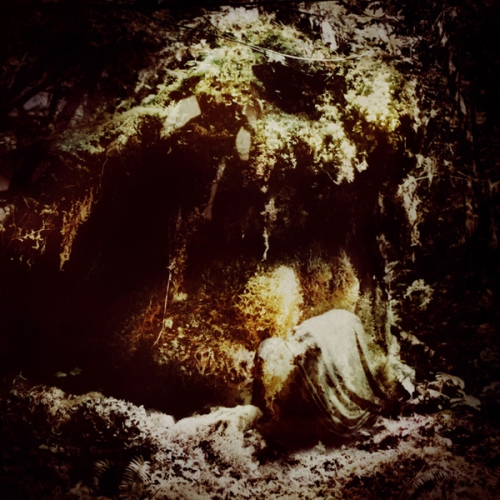
I heard this band before you did. No, really. It was completely by accident, to be honest. I had just found out about Agalloch bassist Jason William Walton sideproject and indisputable worst band in existence Especially Likely Sloth. Youtube didn’t exist yet so I had to actually go to the Vendlus Records website, where they were really pushing preorders of Wolves in the Throne Room’s debut album. It was only like $8 so I threw it in the cart. Two years later I almost saw them live, opening for Jesu on their 2007 US tour. I thought it would be kind of cool, being the one kid in the house who had actually heard of them (I had no idea Southern Lord picked them up), but they made the mistake of scheduling all their Texas stops the exact same areas/days as Finntroll, and the opportunity to see the latter two days in a row won out.
Next thing I know they’re the most popular black metal band in the world. Go figure.
Thuja Magus Imperium
I guess what shocked me most about that was I never thought they were very good. I mean, I had heard Diadem of 12 Stars plenty of times, and to me they were just another black metal band, with no distinguishing features to speak of.
By the time I found out about their success though, they had just released a third album. I hadn’t heard about the second, I didn’t remember the first (because it is very forgettable), and I was not feeling up to the task of attentively engaging three albums which I didn’t have high hopes for. All of the hype was coming from outside of metal circles, and sure, Pitchfork has pushed good metal before (Mastodon for one outstanding example), but nine times out of ten their selections are borderline arbitrary–the first metal experience of ‘experts’ completely foreign to the genre or maybe even just the newest release from a record label helping to pay their bills. No, when metal bands become popular in non-metal crowds, it usually has nothing to do with their music.
Last week though, I heard Liturgy. Hyped by all of the same dubious sources, it was comparisons to Krallice and Hunter Hunt-Hendrix’s outlandish interview that ultimately compelled me, but in light of the fact that Aesthethica is fucking amazing, I thought it high time I gave a few other “Pitchfork metal” bands a try. For obvious reasons both in fame and personal experience, Wolves in the Throne Room were the first casualty.
I had Celestial Lineage on repeat for two solid days trying desperately to derive something, anything special and significant out of it. I couldn’t. At the surface they were the same generic status quo black metal act I heard demo recording samples of back in 2005. But as it always goes, when it came down to actually spelling out what in particular I found boring about them I finally found myself noticing some of the appeal. Not much, mind you, but a little bit.
Let’s look at this opening track. I hear a chick singing to some simple piano and synth, some basic tremolo lurking in the background–a mood setting introduction, like 50% of the genre. Nothing in particular sets it above average. I’m not really feeling it yet, still just hearing a recording studio session. The black metal fades out of the ambiance rather than exploding, and I like that. Once again, it’s nothing unique, but always an effective way of stating your intentions up front. There’s an obvious Agalloch influence, most distinct in the guitar solos, and by the time they end I’m definitely getting a dark, reflective vibe–nature themes, something really earthy. The transition back into a female chant, a synthy night sky with chime-spawned stars, a slow resurrection of guitar painting the celestial horizon in different shades of black, blotting out the stars in an auroral haze… It’s exceptionally visual, and it’s visual in a distinctly American way. You know: earth spirituality; something native to the soil; American folk metal, which possesses virtually no stylistic commonality with its pantheon-laden European namesake.
The second track is a two minute ambient piece, and I find it irritably overdone. It is accented by a vocal chant which just doesn’t fit the picture, and I think if they’d left that out it would have been perfect. At any rate, the third song explodes back into black metal.
Subterranean Initiation
This is what I remember forgetting about their first album: really generic black metal. A mix of second wave and Ukrainian sounds, it is moody and scene-setting only to the extent that all black metal is, and offers absolutely no leads as to what the band had in mind beyond “Ok dudes at this part let’s sound like Emperor or Drudkh or some shit, it’ll be cool.”
A little over 4 minutes in the song comes to a standstill, and the residual distortion and drums kind of scrape along in a not particularly coherent mishmash. Out of it emerges a shamefully obnoxious guitar hammering the same meh chords over and over and over (and over) and I would probably have shot myself at this point, but beneath it all the drummer is actually tearing it the fuck up with subtly accented blast beats that I found simultaneously intense and relaxing. The guitar eventually goes post-rock kind of out of nowhere and ends a mostly boring song on a pretty good note.
Astral Blood
I kind of wanted to end this on Woodland Cathedral, a 5+ minute ambient track that impressed me in ways similar to the latter half of the opening song, but since it’s mainly their black metal that I’ve been bashing, Astral Blood is probably the better choice. Here they do it right, and I never need to question their originality because I’m already too caught up in it to care. The mood sets in instantly, unleashing black metal’s potentially soothing effects–the sort of feel good in the cold contemplative darkness track that I like having on as a background piece. When the ambiance returns it’s gorgeous, and the song doesn’t really go down hill until 5:30 (at which point the guitar repeat is once again merely obnoxious), periodically recovering and digressing through to the end.
So, what’s the final verdict? On the surface, generic. In depth, too diverse for its own good. The first track, Thuja Magus Imperium, is really brilliant, but it is perhaps the only track I can say such things about. There is a fine line between meditative repetition and a broken record, and Wolves in the Throne Room seem pretty oblivious to it. What’s more, their fastest metal moments lack emotion and intensity, and their slowest lack subtlety. Their ambient tracks are nice, but they have a habit of overdoing them, especially vocally (including the female vocals at times), where once again a little subtlety could have saved the day. I was pretty impressed by the drummer the few times I tuned in to him, and perhaps another listen as attentive as the few I put in writing this would position me to praise him more thoroughly, but I am out of time and patience.
It’s because Celestial Lineage does possess a few moments of brilliance, however, that a thorough critique is even possible. The album as a whole is not at all generic in the sense of say, the new Demonaz album, and, while I might enjoy listening to that one slightly more, it’s got a lot less to appreciate. Celestial Lineage is only generic in its methods for creating complexity; it’s not generic at its core. But it is also nothing special, as I’d originally perceived.
Wolves in the Throne Room have reportedly claimed that their music is meant to be meditative rather than aggressive, and that they play black metal on their own terms. They’re fooling themselves with the latter claim, and while I’ll grant that it’s meditative, those non-metal fans who think it is exceptionally so simply have not experienced much of the genre.
Ensiferum’s self-titled debut in January 2001 was a prophetic landmark in metal, and I remember the feeling I got when I first heard it, probably about a year later. It wasn’t groundbreaking in its originality. No, I’d heard music like it before, here and there, scattered throughout my earliest mp3 collections. Blind Guardian and Rhapsody (of Fire), with their epic folk-infused triumphal marches and war cries, Thyrfing, with their stomp-along anthems to some Nordic specter, that peculiar absurdity Finntroll, so difficult to describe at the time… these bands had all been brought to my attention before Ensiferum.
I did not perceive at the time a common thread connecting them all. I was just frantically whipping my 28.8 kilobit per second modem headfirst into a musical fog, oblivious as it began to coalesce around me. Napster was dead, and with it passed my inclination to only pirate the most popular metal and grunge’s dying embers. Audiogalaxy was the new center of musical civilization, and with it came enlightenment. You didn’t just type in what you wanted and download it. You discussed it in chatrooms. You discussed it in forums. You carried the discussions over to more general-purpose forums. The internet became more united among music enthusiasts than it has ever been before or since.
Thus it was that 2001 served as a landmark year for me. I would look up Blind Guardian, and an hour later (well, this was 2001, so more like a day later) I would be enjoying Elvenking’s To Oak Woods Bestowed demo, Within Temptation’s Mother Earth, Therion’s Deggial… I didn’t know that these were all relatively new releases, I couldn’t categorize them into genres, and I had no real means of becoming informed about the bands save word of mouth (like anyone had heard of Wikipedia or Google back then). All I knew, or at least thought I knew, was that certain people had an incredible aptitude for finding and recommending music I would consistently love. I had not yet recognized the phenomenon at work here–the significance of the fact that all of this music was appearing at around the same time.
It must have been around the end of 2001 that I stumbled upon Ensiferum. By then I had heard dozens, maybe a hundred non-mainstream metal bands that I loved, and I was starting to pick up on their common themes, but I hadn’t fully put my finger on it. Then I saw this album cover, heard this song, and went “Ah ha! This is viking metal.” It might not be the precise term I would use today, and it might sound rather trivial, but at the time it was a sort of epiphany. This was the amalgamation of all of the metal Audiogalaxy had offered me under one roof. All of the amazing new things going on between about 1996 and 2001 suddenly took form as a conscious whole; Ensiferum was a glorious sign of things to come, heralding a new age of metal.
“From the three ascending moons,
moonshine was spilling onto the ground.
Gruesome trophies were all around,
in the halls of the Goblin King.
Now the victory is ours!
Let us dance the dance of immortals!”
 Through the Shattered Lens