Farm workers Steve (Ronald Reagan) and Danny (Richard Whorf) arrives in Florida, looking for work. The whole town is controlled by the corrupt Henry Madden (Gene Lockhart) but the honest Steve would rather work for Nick (George Tobias), who treats his workers fairly. While Steve romances Lola Mears (Ann Sheridan), who works at a “juke joint,” he also tries to organize the other workers into demanding better conditions. When Madden frames Steve and Lola for a murder, the entire town turns against them.
This is not a bad Warner Bros. melodrama. As with a lot of Warner Bros. films, the heroes are the poor workers who have found themselves exploited by wealthy men like Madden. As played by Ronald Reagan, Steve is no radical firebrand. He is just someone who wants the workers to get a fair shake and who wants to help decent bosses like Nick make a living despite the efforts of Madden to put them out of business. As was so often the case with his movies, Reagan is an affable hero without ever actually being compelling. Gene Lockhart is the dependably hateful villain and the cast is full of dependable character actors, including Faye Emerson, Alan Hale, Howard Da Silva, and Fuzzy Knight.
Ann Sheridan is really the main reason to Juke Girl and she’s as sexy and tough as ever. There’s a reason why this movie was named for her character’s profession, even though its really only a minor part of the film. Sheridan is the main attraction here and she gives a strong performance as a bad girl who is actually good underneath it all. Her character worries that settling down with Steve will mean a lifetime of struggling to make ends meet but she sees that Steve is worth it by the end of the movie. The town may not be worthy of either of them but Steve and Lola are meant to be together.
Matt Sawyer (Ronald Reagan) is a junior reporter whose enthusiasm for breaking the big news is always getting him in trouble. Sometimes, he runs with a story before getting all of his facts straight and the newspaper gets sued. If not for his enthusiasm and his affability, Matt would have been fired a long time ago. Instead of losing his job, Matt just finds himself demoted to riding in a squad car with Sgt. Daniels (James Gleason) and the slow-witted Officer Slattery (Edward Brophy). Matt still manages to find a story when he and the cops discover a dead man in a flophouse.
The man turns out to have been a millionaire. The coroner rules his death a suicide but Matt is convinced that it was murder. How could the man have shot himself if he died with his hands in his pockets? Over the objections of the police and his editors, Matt investigates the man’s death. Helping him out is the man’s daughter, Jane Abbott (Joan Perry).
NineLivesAreNotEnough is one the many B-pictures that Ronald Regan made for Warner Bros. It’s only 63 minutes long and, despite the murder mystery, the emphasis is more on comedy than drama. For all of his reputation for being a stiff actor, Reagan proves himself to be surprisingly adroit when it comes to exchanging snappy dialogue with his editor. This film showcases the innate likability that made Reagan a success as both an actor and a politician. What he lacks in range, he makes up for in sheer affability. Watching Reagan in movies like this, it is easy to see the limitations that kept him from being a major star while also revealing why he later had so much success asking people to vote for him.
Considering how the press felt and still feels about Ronald Reagan, it’s entertaining to see him cast as a reporter who has a reputation for getting the story wrong. When it’s really important, though, Matt Sawyer gets it right.
Yeah, yeah, I know. That sounds kinda silly, doesn’t it? However, November is traditionally the month that classic film bloggers tend to concentrate on writing about film noir. It provides a bit of grit and cynicism in between the horror fun of October and the holiday schmaltz of December.
I have to admit that I’m a little bit torn when it comes to taking part in Noirvember. On the one hand, I love a good film noir and there’s quite a few obscure and underrated ones available on YouTube right now. On the other hand, as a natural-born contrarian, I don’t like the idea of hopping on any bandwagons.
In the end, my love of film noir won out. So, welcome to my first entry in 30 Days of Noir.
The 1942 film, Lady Gangster, opens with Dot Burton (Faye Emerson) walking up to a bank. She’s carrying a small white dog with her. Though the bank isn’t due to open for another 30 minutes, she explains to the bank guard that she’s got a train to catch and she simply has to deposit a check. The guard unlocks the door and lets both her and her dog inside.
While filling out her deposit slip, Dot puts the dog down on the floor. The dogs runs off, distracting the guard just long enough for three men with guns to slip into the bank and rob the place. Though the police quickly arrive, the men manage to escape, taking $400,000 with them.
The police are immediately suspicious of Dot, especially when she struggles to keep her story straight as to why she’s at the bank. The lead detective thinks that Dot was in on it. Dot says that she was merely out for a stroll with her dog. Dot says that her dog is named Tiny. The dog, which looks exactly like one that was recently reported missing, is wearing a collar that reads “Boots.”
The district attorney announces that Dot will be prosecuted to the full extent of the law. However, a crusading radio broadcaster named Ken Phillips (Frank Wilcox) is convinced that Dot is being railroaded. Once he realizes that he went to high school with her, Ken is even more determined to help Dot. Using the power of the airwaves, he forces the district attorney to release Dot into his custody. Once free, Dot promptly confesses to Ken that she was a part of the robbery and that she’s hidden the money. An indignant Ken turns her into the police.
So now, Dot’s in prison and no one’s sure where the money is. One of the bank robbers even dresses up like a woman so that he can see Dot on visiting day but she refuses to tell him anything. Dot isn’t going to reveal where the money is unless it means she can also get parole. She needs to get released soon because she’s already got two psychotic snitches targeting her.
Fortunately, Ken has had a change of heart and is lobbying for her release. Unfortunately, Dot has been tricked into believing that Ken has once again betrayed her so, naturally enough, she sets him up to be murdered. When Dot discovers that she’s been fooled, can she find a way to warn Ken before it’s too late?
Believe it or not, all of this happens over the course of 62 minutes. With that many betrayals, twists, and crimes packed into that short of a running time, there’s never a dull moment in Lady Gangster. Though the film itself is full of huge plot holes and Frank Wilcox is a bit of a stiff as Ken, the film is totally worth seeing for Faye Emerson’s ferocious performance as Dot Burton. Dot is a force of nature. When the robbers try to steal her money, Dot instead steals from them. When Dot believes that Ken has betrayed her, she sets him up to be murdered with a moment of hesitation. When Dot discovers that Ken didn’t betray her, she immediately starts scheming to prevent the murder that she arranged. Even when Dot confesses to being a part of the robbery, she does it on her own terms. Nobody tells Dot what to do and, in that way, she represents the best of America. As Dot herself explains it, “I’ll play ball with anyone but Hitler.”
The film has a rather odd ending, one that makes you wonder just how forgiving people generally were back in 1942. But no matter! Lady Gangster is a quickly paced movie that’s just melodramatic enough to be enjoyable. It’s in the public domain and on YouTube. Watch it for Faye Emerson’s performance.
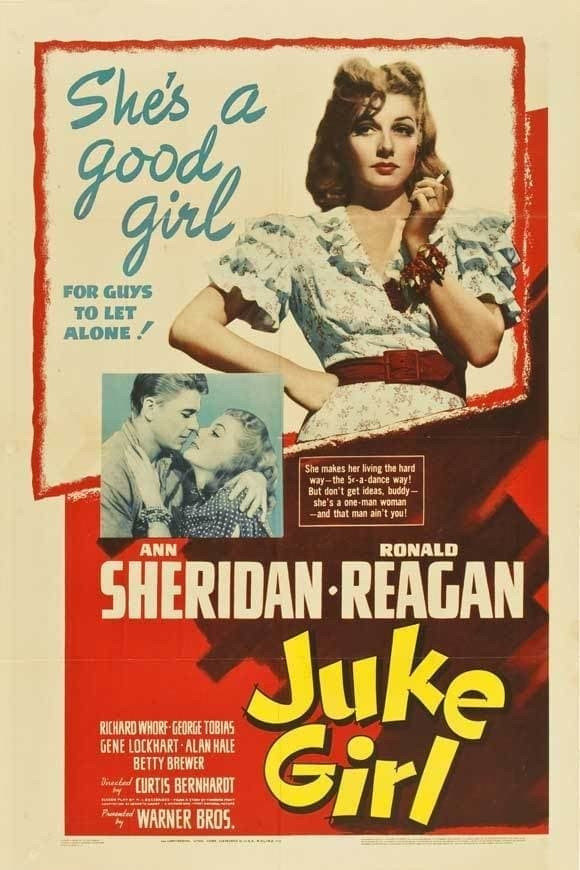 Farm workers Steve (Ronald Reagan) and Danny (Richard Whorf) arrives in Florida, looking for work. The whole town is controlled by the corrupt Henry Madden (Gene Lockhart) but the honest Steve would rather work for Nick (George Tobias), who treats his workers fairly. While Steve romances Lola Mears (Ann Sheridan), who works at a “juke joint,” he also tries to organize the other workers into demanding better conditions. When Madden frames Steve and Lola for a murder, the entire town turns against them.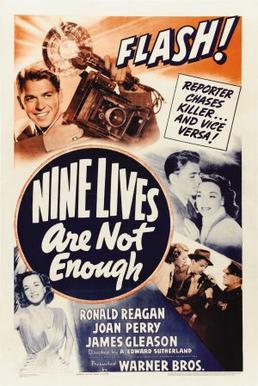

 Through the Shattered Lens