Patreon Preview Week : “Beatnik Buenos Aires” By Diego Arandojo And Facundo Percio


Continuing with our “preview week” of content originally posted on my Patreon, here’s a recent-ish review I wrote of Diego Arandojo and Facundo Percio’s BEATNIK BUENOS AIRES, published in English in 2021 by Fantagraphics —

There are three kinds of historical narratives — those that relate the nuts and bolts of the particular epoch they’re analyzing, those that capture and evoke the MOOD and ATMOSPHERE of the time, and those that manage to do both. 

The comics medium is uniquely suited to the second option, of course, being a visual means of communication, but that doesn’t preclude the first and third options from being on the table, as it were, as well — when you’ve only got 96 pages to work with, though, you’d better figure out precisely what it is you’re looking to do if you want to do it WELL. There’s not much room for false steps when you’re operating within the strictures of a concise page count, after all, and there’s even LESS time to recover from them.
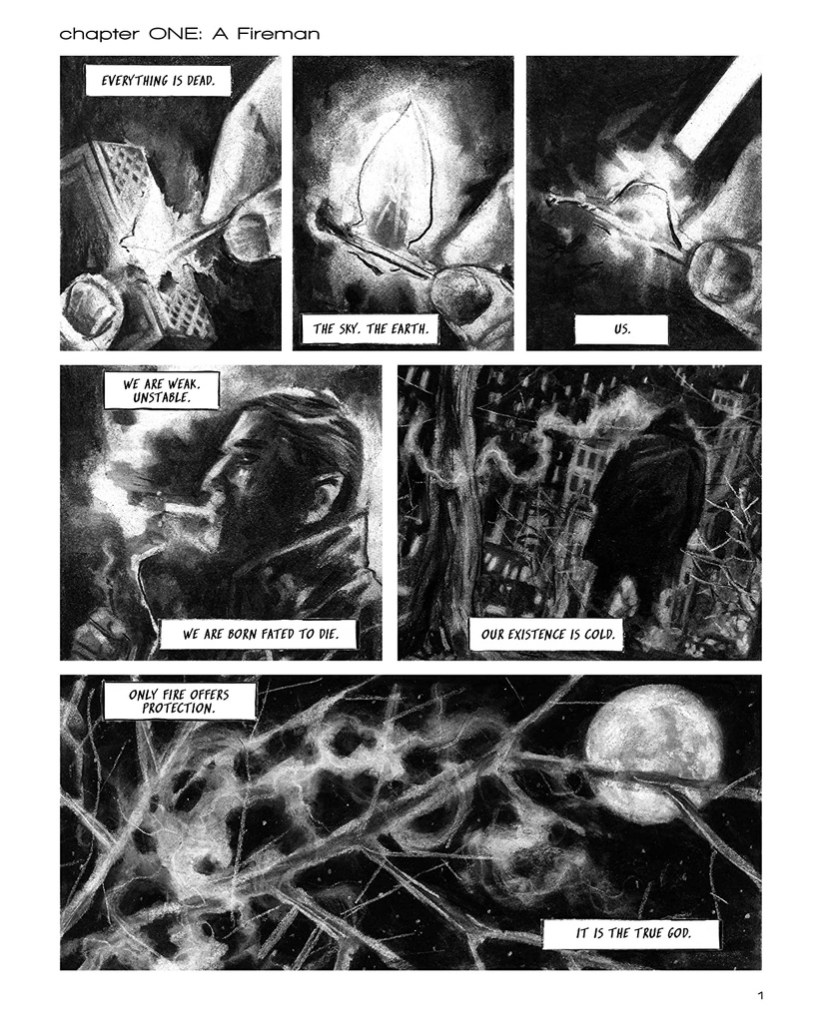
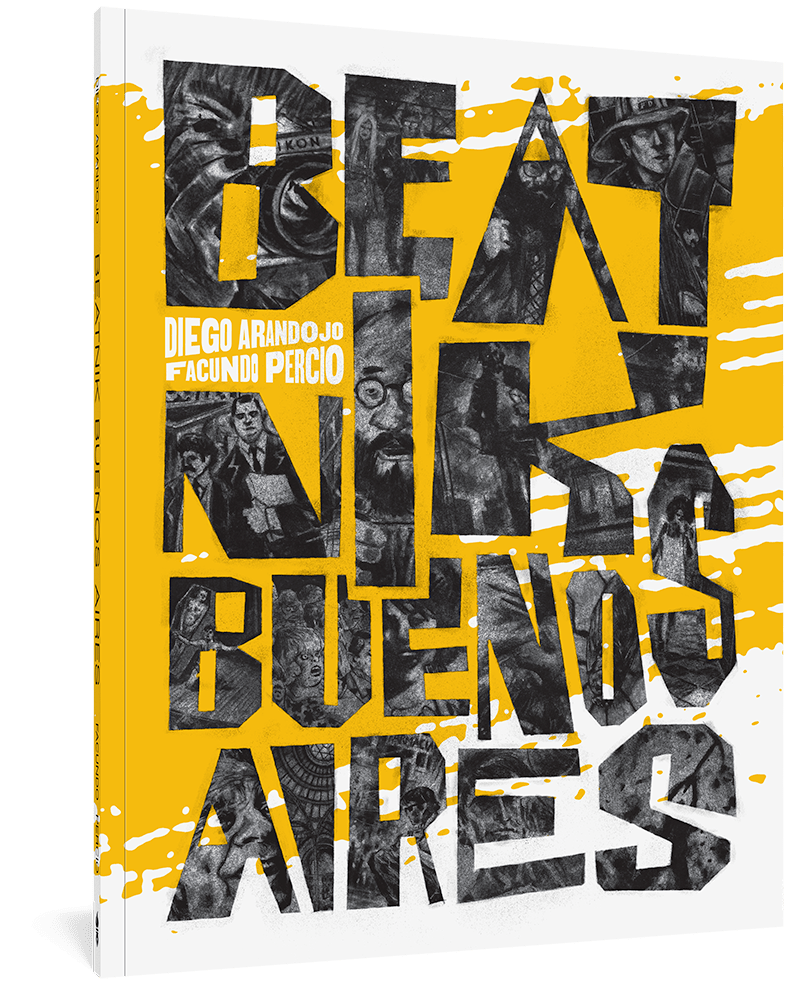
To that end, the Argentinian creative team of writer Diego Arandojo and artist Facudo Percio get right to work on delivering the goods in BEATNIK BUENOS AIRES (originally published on their native soil in 2019 and released in an English-language edition earlier this year by Fantagraphics, with translation by Andrea Rosenberg), a sweeping overview of the dimly-lit cafes and eccentric creative personages that made up the largely-forgotten 1960s (to be specific, 1963) Bohemian scene in their country’s capitol city. To their credit, the narrative doesn’t FEEL rushed in any way — and Percio’s exquisitely moody charcoal illustrations certainly LOOK anything but — yet there’s an urgency to the pacing here that belies its breezy tone. All of which is to say, there’s a LOT going on, but we are only given crucial glimpses of a LITTLE of it.

This, however, is not a criticism — in fact, the ingenious structure herein really works, the book’s 13 short chapters, each focused on a different artist, coalescing into an eminently readable (and again, because it bears repeating, visually GORGEOUS) tapestry that avails itself of the second of three storytelling options I mentioned at the outset, with mood and atmosphere taking precedence over the grim and gritty details.
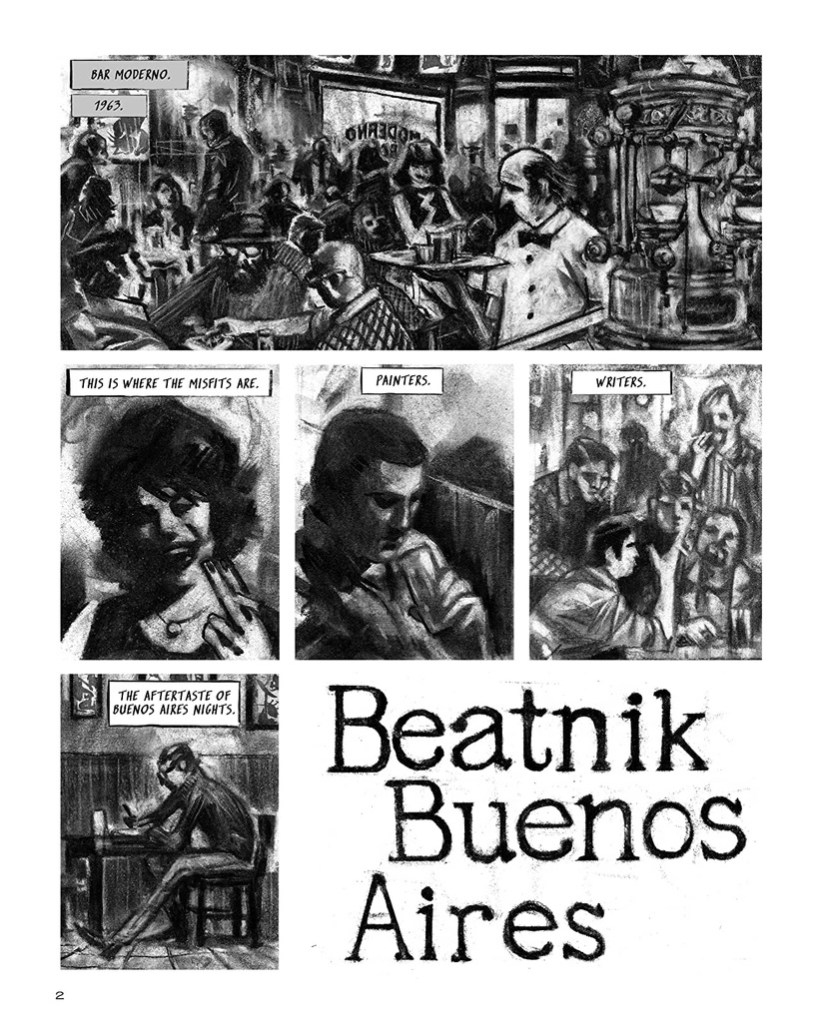
Which isn’t to say that you’re not afforded one tantalizing peek after another into the places, people, and events that made this largely sub rosa cultural renaissance so special, only that these collaborators are far more concerned with imparting the essential CHARACTER of the period than they are its minutiae. You’ll be left wanting more, absolutely, but that’s as much a testament to the POWER of the craft on display here than it is to any of its shortcomings — and there are endnotes at the back for those looking to branch off into some independent researches of their own.

Still, this scattershot approach is not without its shortcomings — without some sort of fuller meat and bones context, the actions of an art forger and a photographer who damn near kills his girlfriend come off as too matter-of-fact in their presentation/recounting for their own good, and while we get a taste of the unfortunate sexism that was rife in this counter-cultural milieu, Arandojo never takes it upon himself to take the dudes perpetrating it to task for it in any way. In fact, sometimes his overall tone can be a bit too hagiographic to be considered either honest OR effective.

These are no mere minor quibbles, I’ll grant you, but in the overall scheme of things they certainly don’t rise to the level of being “deal-breakers,” either. This is an IMPRESSIONTIC overview first and foremost, remember, and erring on the side of the overly-comprehensive would likely get in the way of the primary task at hand, that being to capture the essence of the overall local zeitgeist. With another hundred pages (at least), Arandojo and Percio would certainly have been able to pull off something more exhaustive, but then some of that urgency I spoke so highly of would necessarily have been, if not lost, at the very least hopelessly bogged down.

Whether or not you view this comic as a modest little masterwork or an intriguing but ultimately pointless exercise in self-indulgence, then, rests largely on whether or not you’re willing to meet it on its own terms — it achieves almost all of what it sets out to do, some notable exceptions aside, but if that’s ENOUGH for you or not is something only you can decide for yourself. All I know for certain is that Arandojo and Percio made me smell the cigarette smoke, hear the jazz, and feel the heat of the creative energy that were all hanging so heavily in that rarefied 1963 Buenos Aires air.

Interested in more? Then please take a look at my Patreon, the blatant promotion of which is, after all, what this week is all about. Here’s the link : https://www.patreon.com/fourcolorapocalypse
Patreon Preview Week : “Scoop Scuttle And His Pals : The Crackpot Comics Of Basil Wolverton,” Edited By Greg Sadowski


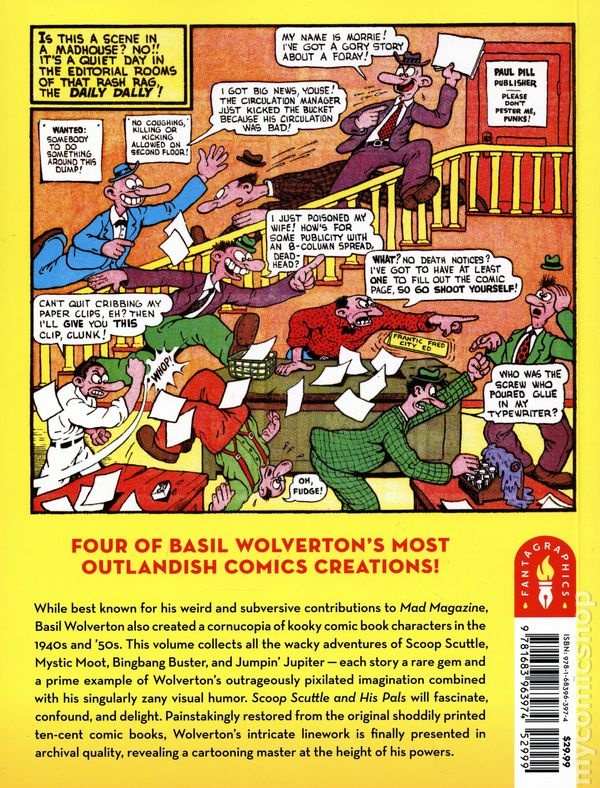
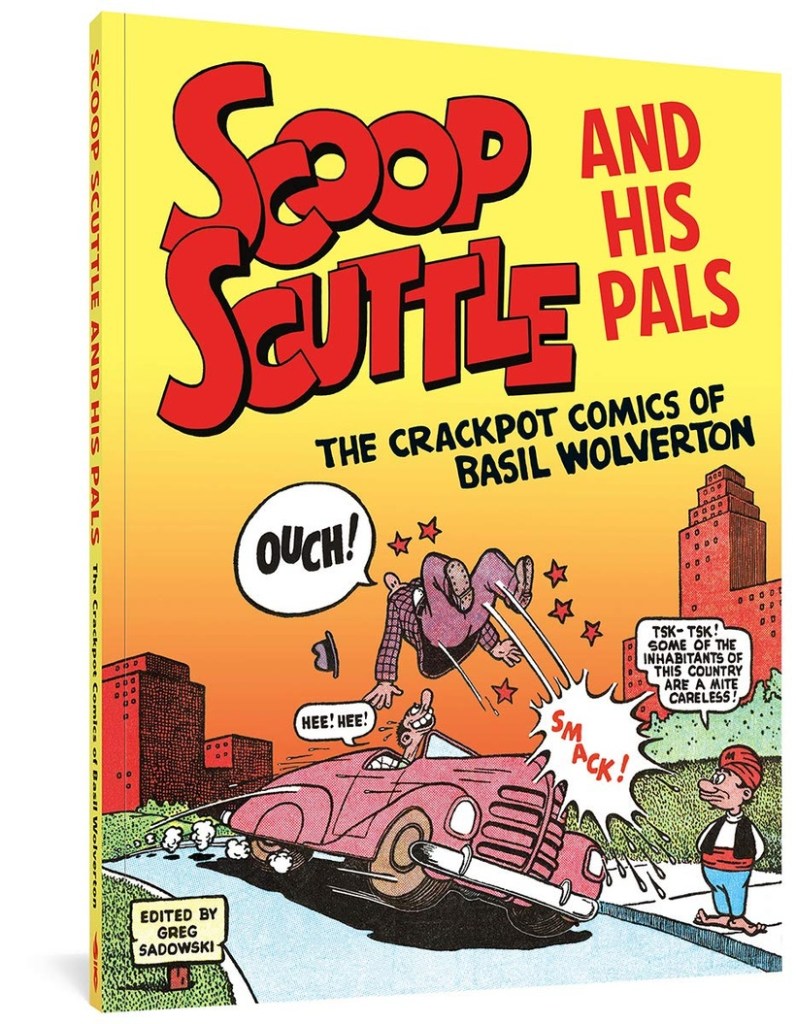
I do this once a year, and figured the first week of the year might be a better time for it than some random week in July or August or whatever — essentially the point here being, and I’m not too proud to admit it, to gin up a little interest in my Patreon site by offering everyone a sampling of the wares they’ll find if they decide to join up. I update it three times weekly, and seriously, it does help make all this writing (somewhat) financially viable. Plus, we’ve got a great group of folks on there, the conversation in the comments section is usually pretty lively, and everyone whose a member is, at the risk of sounding corny, more than just a member, they’re a friend. And couldn’t we all do with more of those in life? Anyway, first up is a review I did a couple months back of editor Greg Sadowski’s 2021 Fantagraphics collection SCOOP SCUTTLE AND HIS PALS : THE CRACKPOT COMICS OF BASIL WOVERTON, with a link to my Patreon at the end if you’re interested in reading more stuff of this nature..

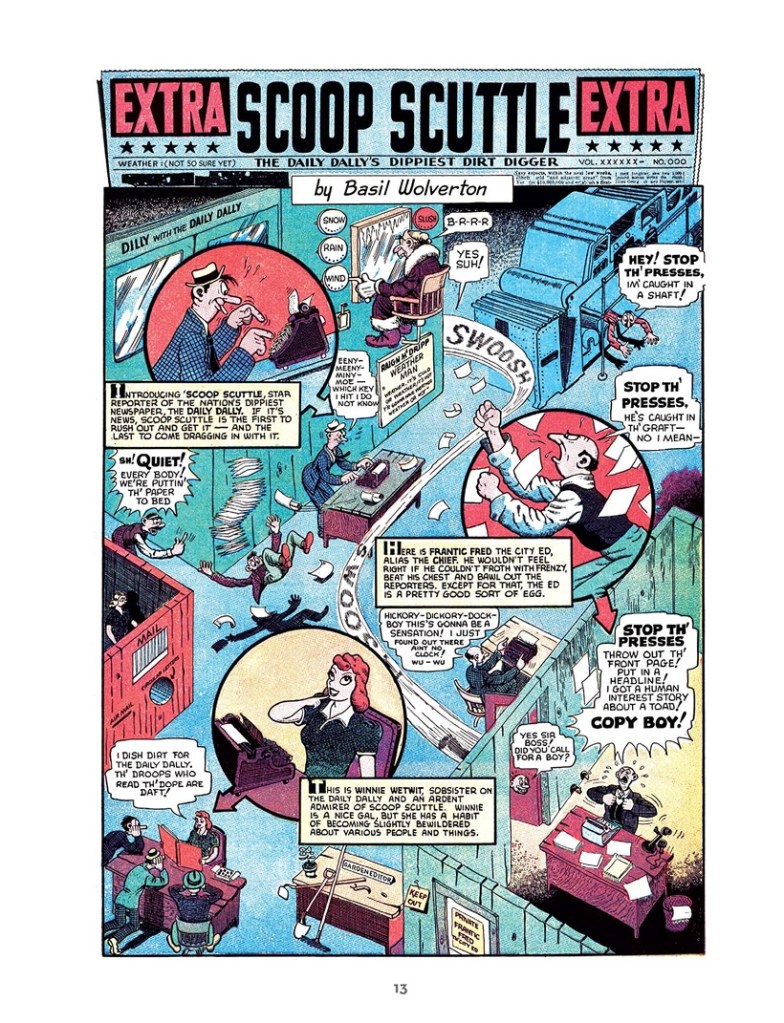
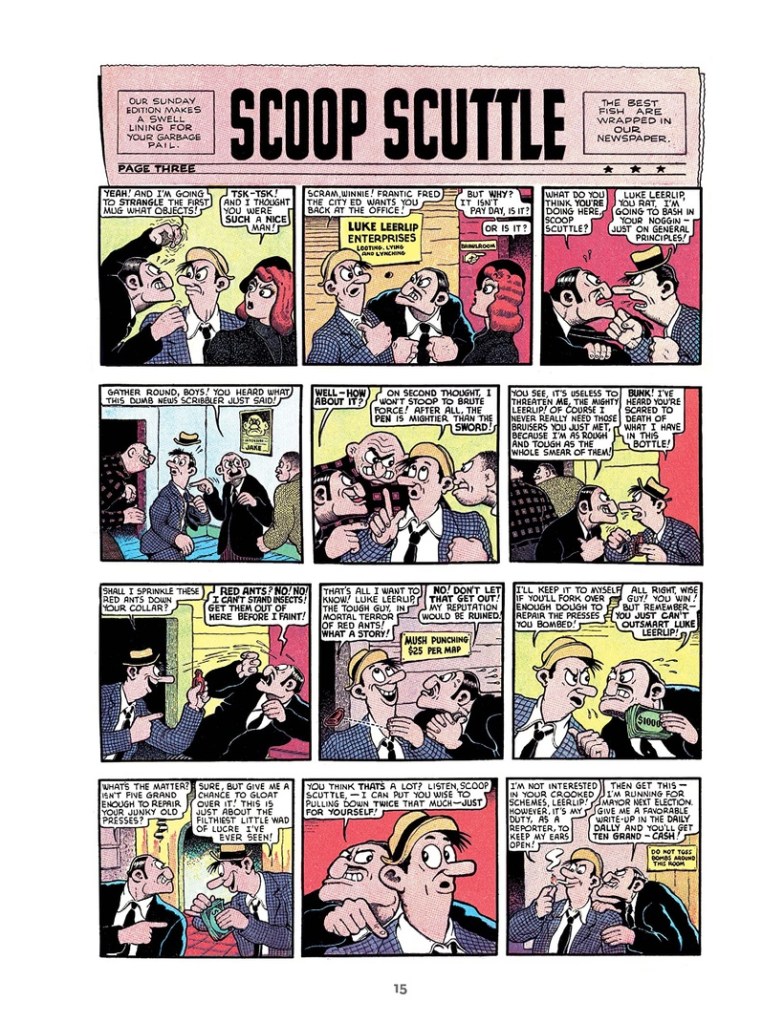
Most people are well aware that visionary cartoonist Basil Wolverton’s legendary contributions to MAD were hardly his first go-’round with humor strips, but leave it to Wolverton scholar par excellence Greg Sadowski to curate a long-overdue collection of some of his most obscure and overlooked comedic creations of the 1940s and 1950s : goofball reporter Scoop Scuttle, magic-nosed swami Mystic Moot, idiot savant cowboy Bingbang Buster and his horse Hedy, and slapstick spacefarer Jumpin’ Jupiter. To say that none of these characters made much by way of a lasting impression on the readership of the time is undoubtedly true, sure — but each in their own way presaged much of the madcap shenanigans to come from Wolverton’s mind and pen, and their misadventures are sure to delight even the most jaded of modern readers.

Which, admittedly, is a camp that I all-too-frequently find myself numbered amongst, given my frankly robust reading schedule, yet even for those of us who’ve literally seen it all before, there’s something about seeing how it was done earlier that feels like, if you’ll forgive the cliche, a breath of fresh air. And talking of cliches —

OF COURSE they’re a dime a dozen in these pages, but Wolverton’s ability to poke good-natured fun at them remains an unbridled joy, even if the occasional ethnic stereotype rightly gives today’s readers some pause. That being said, such offensive caricatures are in far shorter supply in Wolverton’s work than they are in that of many of his contemporaries, and the persons, places, and things he draws are so uniformly outlandish that they don’t especially stand out from what’s more or less ALWAYS a crowded field of visual eccentricities. Simply stated, then, it’s safe to say that these stories (and it should be stated for the record that Sadowski presents the printed exploits of all four characters in their entirety) were all constructed as FUN strips fist and foremost, and that they remain precisely that to this day.

Admittedly, there’s no escaping the fact that these are “toned down” a notch compared to Wolverton’s MAD work, but it’s intriguing to see him feeling his way forward, so to speak, and it’s also important to remember that he was working under undoubtedly tighter editorial standards. Even for all that, though, there’s a tremendous amount of innovation on display in many of these strips, and not just in terms of the far-out sound effects that Sadowski draws particular attention to in his thoroughly absorbing introductory essay — indeed, the page layouts, intuitive flow of the action, outrageous character designs, and even some of the plot twists are all several levels above and beyond the standard humor comics fare of the era.

None of which means this isn’t ultimately formulaic stuff, mind you — but a big part of Wolverton’s genius always rested in his ability to thoroughly subvert expectation WITHIN a given formula; to give readers a combination of MORE than what they bargained for and EXACTLY what they bargained for simultaneously. In that respect, then, this necessarily “hemmed in” work could potentially be said to represent a MORE INGENIOUS distillation of the “Wolverton ethos,” if you will, than later material where he was more free to let it all hang out.

Sure, ultimately I don’t think there’s any argument that SCOOP SCUTTLE AND HIS PALS will primarily be of interest to hard-core Wolverton aficionados above all (certainly the admirable amount of care that went into the flat-out amazing restoration process makes this an essential purchase even for collectors who might own a fair number of time-yellowed originals), but it’s also this critic’s considered opinion that Sadowski has managed to put together a collection that damn near ANYONE can take a tremendous amount of enjoyment from, be they crusty veteran or member of comics laity. Given what we’ve all been through over the past year and change, some extra laughter in our lives is likely to be welcomed by anyone and everyone, and if the source of that laughter is 70-80 years old, then hell, that’s reason to be IMPRESSED as well as amused.

Okay, I hope you’ve enjoyed this first little sample offering. If you’re interested in more, my Patreon costs as little as a dollar a month to join and can be found by heading over to https://www.patreon.com/fourcolorapocalypse