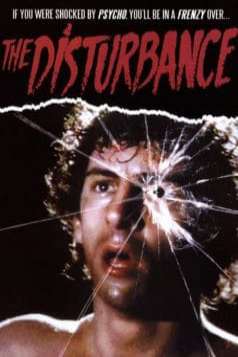
The TSL’s Grindhouse: The Disturbance (dir by Cliff Guest)


One of my pet peeves, as someone who has watched her share of movies about disturbed men driven by madness to kill, is that serial killers are often presented as being far more interesting than they actually are.  Whereas the typical serial killer is someone who has never been able to maintain a relationship and who can’t hold down a job and who, in many cases, barely even graduated high school, movie serial killers always tend to be portrayed as being handsome, charming, witty, and diabolically clever.  Blame it on Ted Bundy.  Blame it on the popularity of Hannibal Lecter.  Blame it on the film industry’s embrace of clichés.  Blame it on whoever. or whatever  It’s annoying and it encourages the tendency of the media to focus more on the killers than on their victims.

One good thing that you can say about the 1990 film The Disturbance is that it’s killer is no winner.  Clay Moyer (Timothy Greeson) is a schizophrenic who has just been released from a mental hospital and seems to be destined to soon return.  He’s someone who is haunted by hallucinations and violent fantasies.  At the same time, he’s also learned how to project enough superficial charm that he can actually interact with people.  When he meets Susan (Lisa Geoffrion) on the beach, he’s able to get a date and later, he’s even able to get a relationship.  But, as the film graphically shows, even when he’s making love to Susan, he’s fantasizing about killing her.  Even during the best moments of their relationship, he’s fantasizing about doing terrible things to the neighbor.  Because he’s extremely possessive while obviously hiding a huge part of his life from her, Susan eventually starts to pull away from him.  When he gets too pushy in his efforts to keep her around, she breaks it off.  Since the relationship was the only positive thing that Clay had in his life, he sinks further into madness and he eventually does some very bad things.  But, seeing as how Clay was having violent fantasies even while he was still dating Susan, it’s totally probable that his collapse was predestined.  If he hadn’t been triggered by the end of the relationship, he would have been triggered by something else.  There’s no hope for Clay, who was pretty much doomed from the minute he was born.

The budget of this Florida-shot indie is low and it’s obvious that most of the actors weren’t professionals.  And yet, the fact that the actors are occasionally stiff and awkward actually adds to the film’s authenticity.  If the film had been too slick, it wouldn’t have been as effective.  It would have felt like another overproduced Hollywood serial killer film.  Instead, The Disturbance feels like a journey into the mind of someone who actually is a ticking time bomb, reaching the end of his countdown.  It’s not a fun journey but then again, it shouldn’t be fun.  The mind of a sexual sadist is not going to be a pleasant place to visit.

The film works largely due to the lead performance of Timothy Greeson, who plays Clay as someone who desperately wants to be normal but who is very much aware that he never will be.  He’s a prisoner to his fantasies and, as much as he tries, he knows that he’s never going to escape his demons.  As an actor, Greeson is appealing enough that you can buy that Susan might go on a date with him while he also believably portrays the instability that leads to her dumping him.

It’s a well-done film, though a bit too disturbing to really be an entertaining viewing experience.  (On a personal level, there were several scenes involving a cat that I simply could not handle.)  I appreciated the film’s integrity far more than I enjoyed actually watching it but at least the movie refused to idealize its killer.

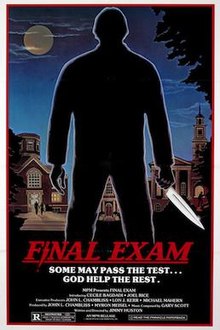
The TSL’s Grindhouse: Final Exam (dir by Jimmy Huston)


The 1981 slasher film, Final Exam, opens with a familiar scene.  A couple is making out in a car.  A man (played by Timothy L. Raynor) comes along and kills them both.

Why does the man do this?  Is he an escaped mental patient, like the killer who always appear in the urban legend about the man with the hook?  Is he an angry father, upset that students have been parking near his farm and corrupting his children with their sinful ways?  Is he an occultist, hoping that a blood sacrifice will bring about the end of the world?  Is he a jilted lover or an unemployed day laborer or a zombie or an international assassin or a former fat boy looking for vengeance on the students who pulled the prank that caused him to drop out of college?  Seriously, what is this guy’s deal!?

We never find out.  That, in itself, makes Final Exam unique.  The Killer is not only not given a motive, he’s not even given a name!  He’s just someone who shows up and starts killing.  No one knows him and he doesn’t appear to know anyone that he kills.  The fact that he’s so anonymous is actually a factor in the film’s favor.  The flamboyant motivations that are given to most slasher villains tend to serve as a distancing device for the audience.  It’s easy, for instance, to dismiss Jason Voorhees because we know that the idea of him drowning and then somehow showing up in the woods just doesn’t make any sense.  The convoluted backstory of Michael Myers (or at least the Myers who was present in the original, pre-reboot Halloween films) eventually became so ludicrous that it made it easier for audiences to say, “Well, it’s just a move.”  Final Exam‘s motiveless killer is actually far more true to life.  In real life, it’s rare that we ever learn the motives behind the crimes.  By making the Killer anonymous, Final Exam takes away one of the tools that the audience can use to assure themselves that it’s only a movie.

Unfortunately, the scenes following the opening murder are so inept that the audience is instantly reminded that they’re just watching a movie and not a particularly well-made one at that.  It’s final exam time on campus but several students aren’t ready to take their Chemistry exam.  So, a fraternity fakes a shooting spree — yes, you read that correctly — and manages to get the exam delayed for a day.  That means that, while all of the other students have gone home, the chemistry students stay on campus so that they can study for their final exam.  And, of course, the killer is on his way to the campus as well….

While the killer makes his way to campus, we sit through several scenes of campus hijinks.  It’s a weird mix of horror and comedy.  We meet a few students who are obviously destined to victims.  Neurotic Radish (Joel S. Rice) is likably nerdy.  Lisa (DeAnna Robbins) is having an affair with one of her professors, but at least she has a great first name.  The frat boys are doing steroids and tying each other to trees.  Apparently, spending the night tied to a tree is some sort of initiation ritual.  That’s not a good situation to find yourself in when there’s a killer stalking the surrounding area.

Yes, the killer does eventually arrive on campus but it seems to take him forever.  Once he does arrive, he starts killing everyone that he meets and, again, his lack of motivation makes him far more disturbing and frightening than he has any right to be.  It really is the ultimate nightmare.  Not only is someone trying to kill you but he’s doing it just because.  There’s no reason for his actions and therefore, there’s no way to talk him out of it.  There’s no secret to distracting or stopping him.  You just have to run and hope you can escape.  Cecile Bugdadi plays Courtney, who is pretty obviously destined to be the final girl.  She gives a good performance and you definitely want her to escape but again, the film is so poorly paced that, by the time she gets her chance to face the Killer, the majority of the audience will probably have checked out, either mentally or physically.

Final Exam has a cult following, which I kind of understand.  It really is the epitome of what people imagine when they imagine a typical, low-budget, early 80s slasher film.  It represents an era.  But for me, it’s just too uneven to work.

The TSL’s Grindhouse: Pumpkinhead (dir by Stan Winston)


Originally released in 1988, Pumpkinhead has always struck me as being one of those films that more people remember hearing someone else talk about it than have actually sat down and watched.  

I think that’s because it has such a great title.  Pumpkinhead!  That’s not a title that you’re going to forget and it conjures up all sorts of scary images.  If you hear someone mention that title, it stays in your head.  It’s an easy title to remember and it’s also an easy title to turn into a macabre joke.  If, on Halloween night, you and your friends hear a sound in the house, you can always say, “It must be Pumpkinhead!”  Everyone will laugh, regardless of whether they’ve seen the film or not.  It’s kind of like how everyone knows what the Great Pumpkin is, even if they’ve never actually watched the old cartoon.

As for the actual film, it’s a mix of monster horror and hick revenge flick.  It’s one of those movies where a bunch of dumb city kids do something stupid while driving through the country and, as a result, they end up having to deal with a curse and a monster. 

Ed Harley (Lance Henriksen) is a widower who owns a grocery store that is pretty much sitting out in the middle of nowhere.  Seriously, you look at his little store sitting off the side of a country road and you wonder how he makes enough money to feed his family.  Of course, the store’s location isn’t the only problem.  The other problem is that Ed seems to instinctively mistrust the few people who do stop off at the place.  Even if I lived near there, I probably wouldn’t want to shop at that store because I know Ed would glare at me and make me feel like I was doing something wrong.

However, a group of dumbass dirt bikers do stop off at the store.  And then they decide to drive their dirt bikers around the store while another member of the group takes pictures.  Unfortunately, the dirt bikers run over Ed’s son, little Billy.  The dirt bikers flee the scene, heading to their cabin.  Ed meanwhile goes to the local witch and asks her to summon …. PUMPKINHEAD!

After a lengthy ceremony, Pumpkinhead shows up.  Because Pumpkinhead was directed special effects maestro Stan Winston, he’s a very impressive creature.  He looks something like this:

You may notice that Pumpkinhead doesn’t actually have a pumpkin for a head but no matter!  It’s still a good name and when your monster looks like that, he can call himself whatever he wants.

Anyway, Pumpkinhead tracks down and starts to kill the people responsible for the death of Billy.  Unfortunately, it turns out that Ed experiences each murder along with Pumpkinhead and he quickly has a change of heart.  The witch tells him it’s too late.  Pumpkinhead will not stop until everyone’s dead and if Ed tries to interfere, Ed will die as well.

It’s a clever-enough idea, a filmed version of one of those old legends that you occasionally hear about in the country.  It’s a good thing that the monster is really, really scary because his victims are pretty much forgettable.  Some of them feel bad about killing Ed’s son and some of them don’t but it’s hard to keep straight which is which.  They’re just too bland.  As a result, their deaths don’t really generate any sort of emotion, good or bad.  They’re just there to be victims.  The only person your really care about is Ed but that’s mostly because he’s played by Lance Henriksen and Henriksen is one of those actors who can bring almost any character to life, regardless of how thinly-drawn that character may be.  Henriksen has a built-in authenticity.  Since he’s clearly not a product of the Hollywood publicity machine but is instead someone who obviously lived an interesting life before he ever auditioned for his first film, you believe in Henriksen’s performance even when the script betrays him.  You believe that he owns that store, even though the store seems to be in the worst location ever.  When he mourns Billy, you believe it.  When he tries to stop Pumpkinhead, you believe that as well.  What little humanity that there is to be found in the film is almost totally the result of Henriksen’s performance.

So, give it up for Lance Henriksen and give it up for the scariness of Pumpkinhead and also give it up for director Stan Winston, who came up with enough horrific visuals that it almost made up for his apparent lack of interest in the film’s human characters.  Give it up to for a little-known character actress named Florence Schauffer, who is properly creepy as the local witch.  Pumpkinhead is a good film to watch with your friends on Halloween, even if the title monster doesn’t really have a pumpkin for a head.

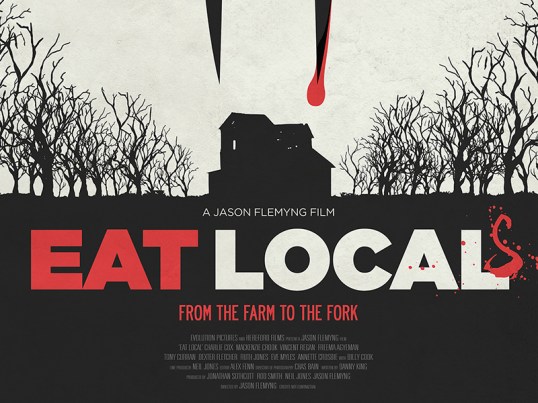
The TSL’s Grindhouse: Eat Locals (dir by Jason Flemyng)


Every fifty years, the top vampires in the UK gather in one location.  They discuss their upcoming plans.  They settle old scores.  They make peace or declare war.  Actually, I’m perhaps giving them a bit too much credit.  Judging from the 2017 film, Eat Locals, they spend most of their time being bitchy and plotting against each other.  Vampires are apparently not the easiest creatures to get along with.

Their latest meeting is taking place at a farmhouse out in the country.  In theory, the farmhouse should be isolated enough for the vampires to meet in peace but it doesn’t turn out that way.  First, Vanessa (Eva Myles) shows up with a human hitchhiker named Sebastian (Billy Cook).  Sebastian may think he’s going to get laid but it turns out that the vampires are more interested in eating a local.  Then, a bunch of British soldiers show up.  It turns out that they’re from the special vampire squad and they’re determined to take out all the top vampires all at once.  Their leader is also apparently interested in collecting vampire blood, which he can then sell to a cosmetics company.  Want to defy aging?  Vampire blood’s the answer!

I watched Eat Locals last Halloween.  My friends and I had previously watched (at my insistence) Vampire Circus and we decided to follow it up with another British vampire film, this one a more recent one.  (Vampire Circus was released in 1972.  Eat Locals, on the other hand, was released 45 years later, in 2017.)  As an unapologetic horror snob, I was a bit skeptical about Eat Locals and, when the film started, I may have groaned a little because it became obvious that this was going to be one of those films where people spent a lot of time sitting around in an unlit room.  But still, I gave it a chance.

And, ultimately, Eat Locals turned out to be better than I was expecting.  The film has its flaws but it was hard not to admire its determination to stay true to its concept, even at the risk of alienating its audience.  Eat Locals pretty much takes place in one location.  This means that, for all of the build-up, the first big battle between the soldiers and the vampires largely takes place off-screen.  That’s the sort of narrative decision that will undoubtedly turn off a lot of viewers but I actually liked the staginess of it all.  At a time when other directors would have cut away and wasted a lot of money on an action scene that wouldn’t have added much to the film’s narrative, director Jason Flemyng (who is better known as an actor) sticks with the vampires.

Unfortunately, the vampires aren’t always as interesting as the film seems to think that they are.  They’re all very arch and very British but most of them don’t have much personality beyond that.  A few of them, however, are memorable as a result of the efforts of the talented cast.  Charlie Cox, Freeman Agyeman, Vincent Regan all make a favorable impression with their fanged roles.  As for the soldiers, they’re all very British as well.  If you’ve ever watched any film about the UK Special Forces, you will immediately recognize every type of character and situation that Eat Locals satirizes.

Eat Locals is an uneven film and the narrative momentum lags during its final few minutes.  In many ways, it feels like a really clever short film that’s been expanded upon.  That said, there’s enough vampiric satire and uniquely British humor to make the film an entertaining watch.

The TSL’s Grindhouse: Son of Sam (dir by Ulli Lommel)


Oh, Ulli Lommel.

Where to even begin?

Born in what is now Poland but what was then Germany, the late Ulli Lommel got his start as a frequent collaborator with the enfant terrible of New Wave German cinema, Rainer Werner Fassbinder.  Lommel acted in several of Fassbinder’s films and Fassbinder produced Lommel’s third film as a director, the acclaimed The Tenderness of Wolves.  In the 70s, Lommel relocated to the United States and, after marrying heiress Suzanna Love, he became a prominent part of the New York City art scene.  He hung out with Andy Warhol.  He made films about punk rock.  He directed three films, Cocaine Cowboys, The Boogeyman, and The Devonsville Terror, that proved that he actually did have some talent when it came to taking on thrillers and horror films.

And then, it all pretty much fell apart.  Reportedly, after he and Love divorced, he lost not only his frequent star but also his main financial backer.  Lommel spent the rest of his lengthy career directing zero-budget horror films that were best-known for featuring stock footage that was lifted from his previous films.  Starting in 2005, he started making direct-to-video movies about real-life serial killers.  In interviews, Lommel insisted that his films were not exploitive but that, instead, his serial killer films were meant to offer up a critique of the hypocrisy of American society.  And while it’s easy to roll your eyes at Lommel’s claim, I have no doubt that he was being, in his own way, perfectly sincere.  His serial killer films are famous for not sticking to the facts but they should be even more famous for their emphasis on alienation and loneliness.  All of Lommel’s serial killer films focus on people living on the fringes of society, ignored by those who would rather pretend that they didn’t exist.  Lommel consistently portrayed serial killers as being a symptom of a much bigger disease.

Unfortunately, Lommel made his films with very little money and on a very tight shooting schedule.  Reportedly, Lommel’s philosophy was to almost always only shoot one take.  If someone screwed up a line or if there was a glaring continuity error or if the camera crew briefly appeared in the background, so be it.  Indeed, because Lommel’s later films were so deliberately chaotic and semi-improvised, it was often difficult to tell if a continuity error was actually a mistake or something that Lommel deliberately planned.

Sadly, this led to Ulli Lommel getting a reputation for being one of the worst directors of all time.  That’s not fair, though.  Whatever one might say about his low budgets or his odd style, one cannot deny that Ulli Lommel had a unique vision and that he stuck with it.  That’s more than you can see for most bad directors.  If nothing else, you’ll never mistake a Ulli Lommel film for being the work of any other director.

Take his 2005 film about the Son of Sam.  The film is 80 minutes of David Berkowitz (played by Yogi Joshi) wandering around New York with a confused look on his face.  Whenever he sees anyone, a voice commands him to kill while another voice chants “Son of Sam …. Son of Sam.”  Meanwhile, there are flashforwards to the recently arrested David Berkowitz, meeting with his public defender and subsequently asking a priest (played by Lommel himself) to exorcise the demons from him.  Then there are flashbacks to Berkowitz at some sort of Satanic coven meeting where the high priestess won’t stop laughing.  (In typical Lommel fashion, the high priestess is clad in her underwear while everyone else in the cult is dressed in black.)  Then, there’s another set of flashbacks to Berkowitz talking to an old woman who may or may not be a part of the cult.  Then a dog shows up and gives Berkowitz a meaningful stare.

It’s a mess with no real plot and making it through the entire 80 minutes is a true endurance test.  The film not only screws up the facts behind the murders (i.e., the real-life Berkowitz shot people sitting in cars, the film’s Berkowitz shoots a drug dealer standing in a doorway) but it also buys into Berkowitz’s self-serving claim of having been manipulated by a Satanic cult, a claim that falls apart under scrutiny and common sense but which was still recently presented as fact by a Netflix miniseries.  We’re told that the film is taking place in the 70s, which is good because, despite the presence of one awkward conversation about going to Studio 54, you’d never know it otherwise.

And yet …. there’s an intensity to Lommel’s vision that I have a hard time totally dismissing.  The movie plays out like a fever dream and the visuals are so chaotic and so random and just so weird that it’s hard not to feel that Lommel probably did manage to capture what it was like inside of David Berkowitz’s messed-up head.

Don’t get me wrong.  Son of Sam is not a good film.  It’s a mess and it’s repetitive nature gets boring fairly quickly.  But it’s also hardly the work of the worst director of all time.  Instead, it’s uniquely Lommel.

Lisa Marie’s Grindhouse Trailers: The First Sunday In October Edition


It’s the holiday season and you know what that means!

Or maybe you don’t.  Sometimes, I forget that not everyone can read my mind.  Anyway, I used to do a weekly post of my favorite grindhouse trailers.  Eventually, it went from being a weekly thing to being an occasional thing, largely due to the fact that there’s only so many trailers available on YouTube.  Now, Lisa Marie’s Favorite Grindhouse and Exploitation Film Trailers is something that I usually only bring out on a holiday.

Like Halloween!

So, with that in mind, here are 6 trailers for the first Sunday of October!  By the way, these trailers might contain some material that some viewers might find objectionable.  To be honest, if you’re reading this site in October, you’re probably used to horrific imagery and there’s nothing here that will really upset you.  But, y’know …. better to pretend to care than to not care at all!

  1. I Dismember Mama (1972)

This is probably one of the best known of the classic grindhouse trailers.  It features very little footage from the film (which, despite the title, is apparently fairly tame) but it does feature interviews with actors playing the people who supposedly watched it.  Interestingly enough, the recent film version of Dear Evan Hansen did the same thing.

2. A Night to Dismember (1984)

Oh, Doris!  This trailer for Doris Wishman’s A Night To Dismember goes on for a bit but that’s kind of the key to it’s charm.

3. Blood Cult (1985)

Blood Cult is often cited as being the first direct-to-video film.  And the film definitely has a home movie feel to it …. as does the trailer!

4. Blood Beach (1981)

If Blood Cult is not your thing, how about Blood Beach?  This film has the grainy aesthetic of the best low-budget grindhouse trailers.

5. Blood Feast (1963)

Since we’ve already got a blood theme going here, this seems like an appropriate place for the trailer for the first gore film, Herschell Gordon Lewis’s Blood Feast!  Have you ever had an Egyptian feast?

6. 2,000 Maniacs (1964)

And finally, let’s wrap up today’s edition with another blood-soaked trailer from Herschell Gordon Lewis. 2,000 Maniacs is Lewis’s take on Brigadoon. Not surprisingly, this trailer features almost as much music as the trailer for Dear Evan Hansen.

Lisa Marie’s Grindhouse Trailers will return next week, with more trailer that may or may not be connected to Dear Evan Hansen!

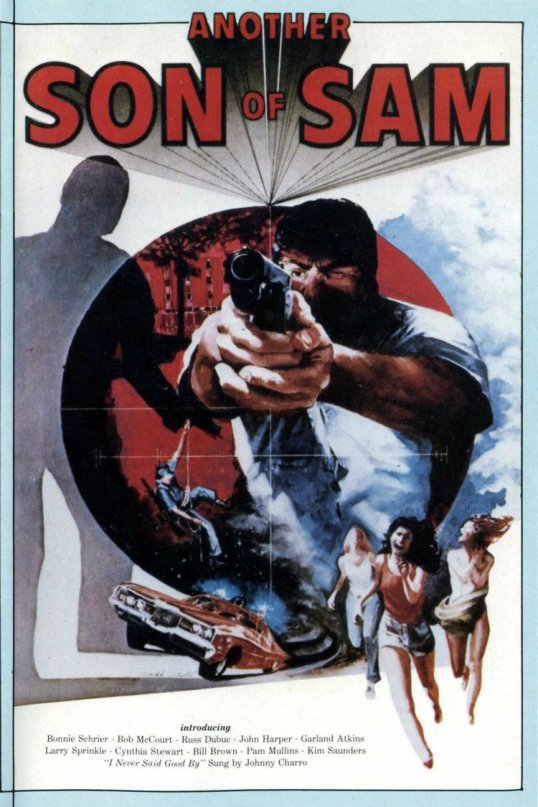
The TSL’s Grindhouse: Another Son of Sam (dir by Dave A. Adams)


Well, his friends call him Another Son of Sam

But his real name is Mister Earl….

Actually, his real name is Harvey.  Let’s make that clear right now.  Despite it’s title, Another Son of Sam has next to nothing to do with the Son of Sam.  Instead, this zero-budget, North Carolina-shot exploitation film is about a mental patient named Harvey who, having been traumatized by his mother, escapes from the hospital and goes on a rampage at a nearby college.  This film was first shot in 1975, under the name Hostages.  However, it couldn’t actually secure a release until 1977, when it was retitled Another Son of Sam.  

Another Son of Sam is difficult to summarize, not because it’s particularly complex but, instead, because close to nothing actually happens.  Even though it’s only 70 minutes long, there’s really only enough plot for about five minutes.  However, because I do like to maintain a certain minimum word count when it comes to my reviews, I guess I better find something to say about this film.

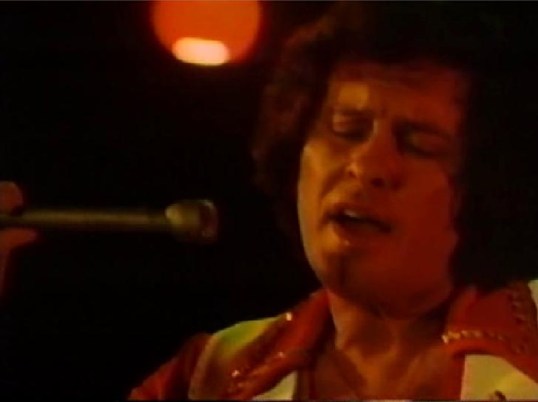
It opens with a lengthy sequence of police Lt. Setzer (Russ Dubuc) enjoying a weekend at the lake.  The lake is never really mentioned again but some of the shots of the boat skimming the water are so nicely done that you can’t help but think that the film should have dropped the whole escaped killer thing and instead just focused on Setzer’s weekend.  After leaving the lake, Lt. Setzer goes to a bar and enjoys a performance from singer Johnny Charro!  Charro, who was and is something of a local celebrity in Charlotte, North Carolina, is credited as playing himself.  He sings an endless song, one that is repeated several time throughout the film.  Whenever anyone turns on a radio, there’s Johnny Charro!

Meanwhile, crazy old Harvey kills an orderly, escapes from a mental hospital, and hides out on a college campus.  Luckily, Lt. Setzer just happens to be investigating an unrelated case at the college!  Once Setzer realizes that there’s a killer on campus, he calls out the SWAT team!  The SWAT team searches for Harvey but, because they all kind of suck at their job, Harvey kills a few of them.

And that’s pretty much the entire film.

Now, there’s a lot of negative things you can say about Another Son of Sam.  None of the characters are memorable.  The acting is risible.  The pace is so slow that 70 minutes feels more like 70 hours.  However, I would like to take a moment to focus on two things that work surprisingly well.

First off, director Dave Adams (who was apparently a stuntman making his directorial debut) purposefully avoids showing us Harvey’s face.  Instead, we see his hands when he’s committing a murder and his eyes when he’s watching a potential victim.  The many shots of Harvey’s eyes, glaring out from the darkness, are actually effectively creepy.  By not showing us his face, Adams allows Harvey to remain an unknowable force of evil.  This is not one of those films where the audience is meant to sympathize or identify with the killer and I appreciated that.

Secondly, the film does this weird thing where the scene will suddenly freeze but we’ll still hear the sounds of people talking or walking down a hallway or listening to Johnny Charro or whatever else they were doing before the scene froze.  Apparently, this is because Adam shot the film using short ends and, as a result, the camera would often run out of film in the middle of a scene.  However, even if it wasn’t deliberate on the part of the director, the freeze frames actually do improve the film.  Along with creating a properly surreal viewing experience, they also remind us of just how unpredictable life can be and how quickly it can end.  One minute, you’re taking a shower or you’re talking about your plans for Spring Break.  The next minute, you’re frozen in place as all of your plans come to a perhaps permanent halt.  The freeze frames may have been the result of incompetence but they still work.

And it’s good that something works in Another Son of Sam because this is an otherwise unfortunate film.  I say that as someone who actually has a weakness for grainy, low-budget, amateur movies.  I liked the lake, the freeze frames, the eyes, and Johnny Charro.  But once the film hit 30 minutes, my mind was wandering.

One interesting note: the film opens with a list of mass murders, starting with Jack the Ripper and ending with David Berkowitz.  It makes the point that most of the killers were never caught and, even if they were, their motivations were never understood.  One of the killers they mention as having never been caught is “Seattle Ted.”  This, of course, was a reference to Ted Bundy, who would be captured two years after the release of Another Son of Sam.

Ladies and gentleman …. JOHNNY CHARRO!

The TSL’s Horror Grindhouse: Sharktopus (dir by Declan O’Brien)


Half Shark….

Half Octopus….

All Man!

No, wait a minute.  That’s not right.  Let’s try that again.

Half Shark….

Half Octopus….

All Killer!

There, that’s it!  That’s our Sharktopus!

Produced by the legendary Roger Corman, Sharktopus originally aired on the SyFy channel in 2010.  It tells the story of S-11, a creature that is half-shark and half-octopus.  How exactly did S-11 come to exist?  Well, blame the government!  The government wanted a new weapon and apparently, it didn’t bother them that the weapon would have no practical use beyond going rogue and killing civilians.  Dr. Nathan Sands (Eric Roberts, the one and only) created the sharktopus with the help of his daughter, Nicole (Sara Malakul Lane).  When S-11 swims off on its own and starts eating human beachgoers, Nicole teams up with mercenary Andy Flynn (Kerem Bursin).  Nicole and Andy think that they’ve been sent to destroy S-11 but it turns out that Nathan has other plans.

Let’s just state the obvious.  This is the greatest film ever made.  Okay, well …. maybe it’s not the greatest.  Some people would probably say that it’s not even that good but I think they’re overthinking things.  What it comes down to is that there really aren’t as many films out there about shark/octopus hybrids as you might think.  When it comes to this very specific genre of horror films, Sharktopus is the best.

This is a film that understands why the audience is watching.  We’re watching because we want to see Sharktopus action!  So, while the film does contain its fair share of scenes of Nicole and Andy searching the ocean, the majority of the film is still made up of Sharktopus attacks.  You don’t really get to know any of the victims, though I did feel bad for the gentleman who shouted, “Oh no!  Not like this!” as he was pulled down to the ocean by S-11’s tentacles, but that’s okay.  It’s all about the Sharktopus, a creature that is so ludicrous that it’s impossible not to like it.

Another thing that’s impossible not to like is the fact that Eric Roberts is in this film.  The last time I checked, Roberts had a total of 641 acting credits listed on the imdb.  He’s appeared in every type of films — from Oscar-nominated prestige films to low-budget faith-based films to Lifetime films to …. well, films like Sharktopus.  But regardless of the film, Roberts always seems to be trying his best or, at the very least, he comes across like he’s genuinely amused by the absurdity of it all.  Roberts has a lot of fun in Sharktopus, playing his mad scientist character with a twinkle in his eye and a barely suppressed evil smile.  Dr. Sands takes genuine pride in his creation and it’s kind of hard not to get caught up in his enthusiasm.

Sharktopus is a fun movie.  It’s a low-budget and deeply silly epic and it you can’t enjoy the sight of shark/octopus hybrid creeping across the beach than I don’t know what to tell you.  In fact, Sharktopus was popular enough with SyFy audiences that it would return for a whole series of films in which it battled hybrid monsters.  Go Sharktopus!

On a final note, keep an eye out for Roger Corman while watching this film.  He plays a man on the beach who watches as a treasure seeker is dragged off to the ocean.  When he realizes that she dropped a valuable coin while being taken away, Corman walks out on the beach and grabs it for himself.  Hopefully, he sold that coin and used the money to go on a nice vacation.  If anyone’s earned it, it’s Roger Corman!


Two From Cirio H. Santiago: Silk and Silk 2


When is an Andy Sidaris film not an Andy Sidaris film?

When it’s directed by Cirio H. Santiago, of course!

Santiago, the Roger Corman of the Phillippines, is credited with directing 100 films over the course of his 60-year career and the 1986 film Silk is definitely one of them! And the sequel, 1989’s Silk 2, is definitely another one. That may sound like faint phrase and I guess it is. Let’s just face it — not everyone is going to be a Cirio H. Santiago fan. Some people are going to want movies that make sense and maintain some sort of continuity from scene to scene. To those people, I will say that Silk and Silk 2 are probably not for you. However, if you just enjoy watching people fire guns and blow things up, the Silk films might be for you.

In the first film, Cec Verrell plays Jenny Sleighton, also known as Silk. Silk is the toughest cop in what we’re told is Honolulu but which is obviously Manila in real life. Early on Jenny informs us that she’s known as Silk because, “I’m so fucking smooth.” Silk may be smooth but she’s also deadly. The film establishes early on that Silk will basically shoot anyone. Normally, that might be a problem but, fortunately, Silk only seems to meet criminals. Over the course of the film, Silk investigates a smuggling operation. She starts out busting heroin dealers and then eventually comes across an identity theft ring …. at least, I think that’s what happens. Trying to follow the plot isn’t always easy but then again, why would you want to follow the plot of a film like Silk? The plot’s not the point. The action is the point and Cec Verrell is such a convincing action star that I’m surprised that she didn’t have a bigger career. Seriously, Cec Verell kicks ass!

Unfortuantely, Cec Verell did not return for Silk 2. In Silk 2, Monique Gabrielle steps into the lead role. Technically, Gabrielle is better at convincingly delivering her dialogue that Verell was but Gabrielle is never believable as an action star. As opposed to the first Silk, which emphasized action, Silk 2 emphasizes nudity and it even features a strangely blurred sex scene. (It’s like soft focus times twenty.) The plot of Silk 2, however, is a bit more fun than the plot of the first film, as it deals with the search for some ancient scrolls and it features Silk’s partner continually getting captured and tortured by the bad guys. After a while, you start to wonder if maybe Silk should stop rescuing him every time that he kidnaps because, seriously, the guy needs to learn to make more of an effort not to kidnapped every time he leaves his house. Eventually, Silk teams up with an ancient scroll expert, who looks like a reject from the brat pack. He and Silk fall for each other, of course. As with the first film, it’s not always easy to follow what’s going on but it’s a short movie and it’s quickly paced, making it ideal for when you want to watch a movie but you don’t necessarily want to have to pay too much attention to it.

Technically, neither Silk nor Silk 2 are that good but they’re both entertaining when taken on their own admittedly special terms. For all of his flaws as a filmmaker, it’s hard not to appreciate the fact that Cirio H. Santiago, like Andy Sidaris and Roger Corman, never let a lack of budget or ability stand in his way. Between 1955 and 2014, Cirio H, Santiago directed 100 films and every single one of them is uniquely his. There’s something to be said for that.

The TSL’s Grindhouse: The Vindicator (dir by Jean-Claude Lord)


The 1986 film, The Vindicator, is one of those Canadian exploitation films that doesn’t make much sense but is still memorable just because of how dedicated it is to being utterly incoherent.

Basically, an evil corporate guy named Alex Whyte (played by Richard Cox) wants to design a space suit that will turn people into rage-filled assassins. Or something like that. To be honest, I had a hard time following just what exactly Alex was trying to do. When one of his scientists, Carl Lehman (David Mcllwraith), figures out that Alex is up to something sinister, Alex blows him up. Alex then puts Carl’s charred body into the suit and Carl is transformed into a cyborg who flies into a murderous rage whenever anyone gets too close to him. That’s not exactly what Carl was hoping to spend the rest of his life doing so Carl breaks free from the lab and seeks revenge while also trying to protect his wife (Terri Austin) and his daughter (Catherine Disher). Unfortunately, because of the whole rage thing, Carl can’t allow himself to get close to them but somehow, he figures out how to speak to them through the synthesizer that’s sitting in the living room.

Now that Carl is wandering around Canada and killing all of his former co-workers, Alex decides that he needs to do something to take Carl out of commission so he hires an assassin known as Hunter. Hunter is played by Pam Grier. Yes, that’s right — the Pam Grier! Soon, Hunter and her team are pursuing Carl across Canada and, in the process, they end up killing almost as many people as Carl. And those people who aren’t killed by Carl or Hunter fall victim to the types of accidents that could only happy in a Canadian exploitation film. For instance, in one scene, a truck drives over a guard rail and immediately explodes.

Meanwhile, Carl’s friend, Bert (played by Maury Chaykin because this is a Canadian film), is falling in love with Carl’s wife and plotting to try to take her away from her cyborg husband. At first, Bert appears to be a sympathetic character and then, about an hour into the movie, Bert is suddenly not sympathetic at all. The same can actually be said for just about everyone in the film, which will lead most viewers to wonder just why exactly we should care about whether or not Carl is ever stopped.

It’s a messy film. For a relatively short and presumably low-budget film, there’s a lot of characters in The Vindicator and it’s not always clear how everyone is related. Since Carl kills most of them, I can only assume that they’re all bad but still, you can’t help but wonder if maybe Carl is being a bit too quick to assume that everyone was okay with him getting blown up. Carl is one judgmental cyborg.

Supposedly, special effects maestro Stan Winston was involved with the production of The Vindicator and, to give credit where credit is due, Carl does look like what I guess most people would expect a cyborg to look like. In fact, when I watched the movie, I originally assumed that it was a Robocop rip-off but then I discovered that The Vindicator actually came out a year before Robocop. That’s not to say, of course, that The Vindicator was, in any way, an influence on Robocop. Beyond the cyborg-theme, the two films really have nothing in common. Robocop is a satirical commentary on fascism. The Vindicator is …. well, I’m not really sure what it’s supposed to be.

The Vindicator is a mess. It’s one of those films where no one’s motivations make any sense and it is often next to impossible to actually keep track of who is who. (The actors playing Alex and Carl looked so much alike that it took me a few minutes to figure out that Carl was the one who got blown up.) And yet, like many Canadian exploitation films from the 80s, The Vindicator is also compulsively watchable. The actions move quickly. The entire plot has a make-it-up-as-you-go-along feel to it that’s kind of entertaining. Plus, Pam Grier’s in the film, openly rolling her eyes at just how silly it all is. The Vindicator isn’t exactly good but it did hold my interest. All things considered, maybe that’s vindication enough.