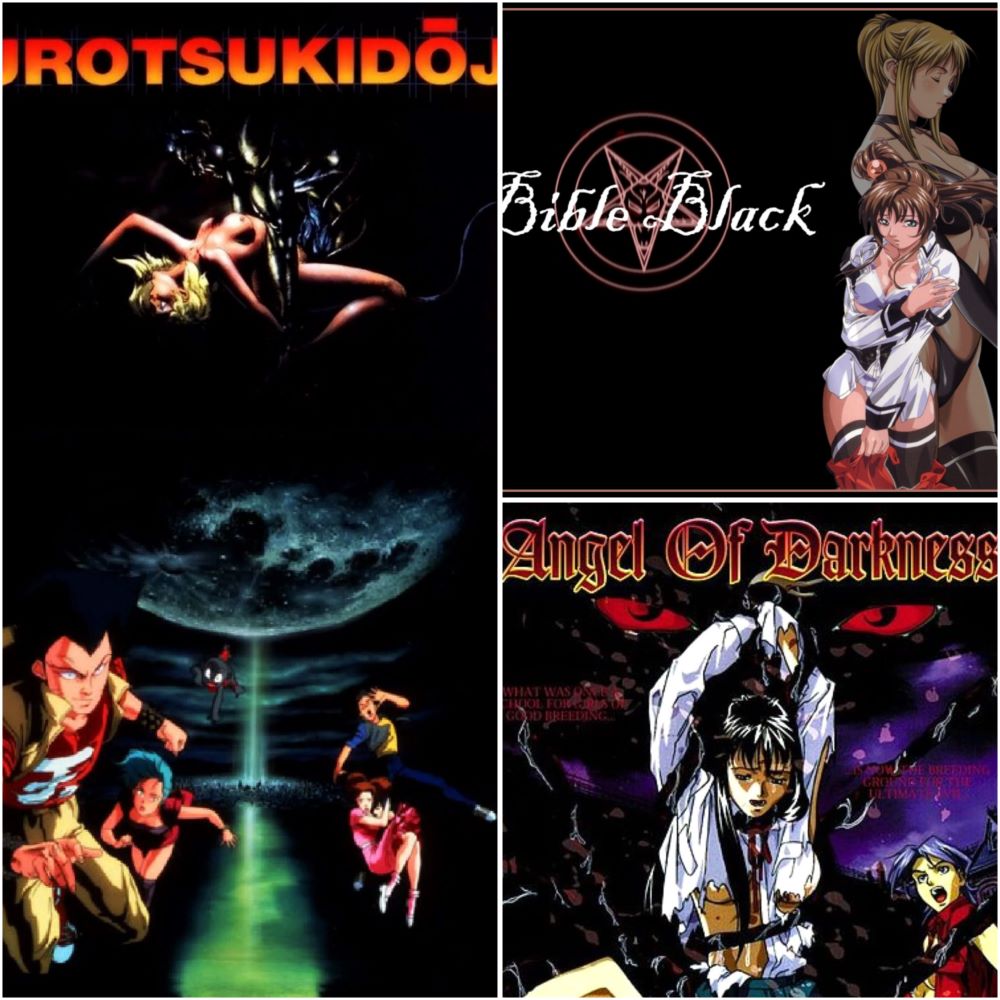
“In desire and dread, horror reveals fragile moral boundaries.”
Hentai, as a genre of adult anime and manga, often explores sexuality in ways that push boundaries and traverse taboo territory. Within hentai, the subgenre of horror hentai stands apart for its unsettling blend of explicit sexual content and graphic violence, creating a distinctly disturbing atmosphere that extends beyond simple eroticism. Iconic titles such as Urotsukidoji, Angel of Darkness, and Bible Black exemplify the dark eroticism where sexuality is woven tightly with terror, gore, and supernatural dread, evoking both fascination and horror in audiences.
These works represent a period in hentai anime history when the medium evolved beyond mere explicit content into a form that combined high-quality animation with rich, complex narratives. Early pioneers like Urotsukidoji brought innovative animation techniques and layered storytelling, blending apocalyptic mythology with intense eroticism and horror. Similarly, Angel of Darkness explored psychological and existential themes within a darkly atmospheric boarding school setting, while Bible Black infused occult horror with morally complex character dynamics and ritualistic narratives. This golden era reflected a moment when hentai was capable of delivering mature, multi-dimensional stories alongside its adult themes.
However, as the hentai industry expanded and commercial pressures intensified, there was a growing shift toward quick production and profit-driven projects. Many recent works have sacrificed the intricate narrative structures and animation quality for formulaic, episodic content designed for rapid consumption. The loss of this narrative depth has diminished horror hentai’s ability to engage audiences emotionally and intellectually, making classic works all the more significant for their artistic ambition.
This analysis explores the crucial role sex and violence play in crafting horror hentai’s unique atmosphere by examining Urotsukidoji, Angel of Darkness, and Bible Black, while also reflecting on the medium’s evolution and the cultural contexts that shape these narratives.
The Fusion of Horror and Eroticism in Hentai
Horror hentai is distinctive because it merges two primal human experiences: desire and fear. Unlike conventional pornography or horror, it uses sex and violence symbiotically, each intensifying the impact of the other. The explicit sexual acts are far from mere titillation; they embody power dynamics, bodily autonomy violations, and often supernatural corruption. Violence is not a separate or accidental feature either, but deliberately intertwined—it amplifies the grotesque, shock, and transgressive qualities of the sexual content. This fusion creates an atmosphere charged with tension, vulnerability, domination, and degradation, engendering a complex emotional response that unsettles while captivating.
In horror hentai, sex often becomes a vehicle of horror itself—ritualistic, invasive, or monstrous. It evokes the taboo and the unnatural, shattering normative boundaries of consent, intimacy, and bodily sanctity. Violence, similarly, departs from mere physical harm and becomes symbolic of decay, corruption, and the invasion of the self. Together, they manifest the darkest aspects of human and supernatural experience, igniting dread and repulsion alongside erotic fascination. This duality is fundamental for horror hentai’s distinctive atmosphere.
Urotsukidoji: Apocalyptic Horror and Demonic Carnality
Urotsukidoji: Legend of the Overfiend (1987) stands as a landmark in horror hentai, merging apocalyptic mythology with hyper-sexualized violence. The story unites three overlapping worlds—the human realm (Ningenkai), the Demon World (Makai), and the Man-Beast World (Jūjinkai)—through the prophecy of the Chōjin or Overfiend, a godlike being destined to either unify or annihilate these realms. This cosmic setting is filled with grotesque demons, primal lust, and brutal power struggles, establishing a surreal and nihilistic horror atmosphere.
The plot focuses on Amano Jyaku, a sly and chaotic half-demon dispatched to Earth to find and protect the true Overfiend inhabiting the human teenager Tatsuo Nagumo. Nagumo’s ordinary college life—marked by voyeuristic tendencies and a turbulent romance with cheerleader Akemi Ito—collides violently with the supernatural. Akemi herself becomes a victim of monstrous sexual assaults by demons disguised as authority figures. Scenes of graphic rape and tentacle-based body horror fuse sexual transgression with violence, confronting moral boundaries and generating visceral horror.
Jyaku’s relationships with otherworldly beings, including his nymphomaniac sister Megumi and others, amplify the series’ themes of lust, corruption, and spiritual warfare. One poignant subplot involves Niki’s tragic transformation: under demonic influence, he self-mutilates for power, embodying the horror of humanity’s capitulation to hedonism and violence. Set against a decaying Osaka cityscape plagued by monstrous invasions and apocalyptic destruction, Urotsukidoji contrasts the banal and the terrible, heightening unease. The visual style’s vivid, brutal imagery escalates the horror, making sexual violence and grotesque bodily distortions emblematic of cosmic decay. The result is an immersive experience where apocalyptic dread, demonic carnality, and primal lust collide, producing a uniquely disturbing horror narrative rooted in both the supernatural and the deeply personal.
Angel of Darkness: Psychological and Existential Horror in a Girls’ Academy
Angel of Darkness (1994) crafts a deeply unsettling atmosphere of horror through its bleak, rain-soaked setting at Siren Academy, a secluded all-girls boarding school cloaked in mystery and shadow. The oppressive environment—with its dark hallways, forbidding chapel, and hidden underground basements—functions as a claustrophobic prison that accentuates the vulnerability and isolation of the characters. The pervasive stormy weather amplifies the tension, underscoring the darkness both physical and psychological that permeates the story.
The narrative centers on Atsuko Yoshikawa and Sayaka Matsumoto, two students whose secret love is fraught with danger, especially given the presence of Atsuko’s possessive older sister Yuko, a teacher tainted by jealousy and entangled in the sinister forces at the school. The introduction of Professor Goda, a young science teacher who becomes possessed by an ancient sex demon called the “Inju,” marks the descent into horror. This supernatural entity is unleashed after Goda breaks a mysterious stone seal beneath a large tree during a thunderstorm, allowing the Inju to inhabit his body and begin a reign of terror.
The school’s underground chapel becomes a horrifying locus of sexual assault and torture, as Goda and the cruel school director exploit the students to feed the Inju, who grows stronger by consuming the girls’ bodily fluids. This fusion of physical violation with demonic possession conveys a potent, symbolic horror of exploitation and corruption, intertwining the personal violation of the girls’ bodies with a cosmic, supernatural threat. Supporting this is the enigmatic figure Rom, a dark fairy-like presence whose role is ambiguous but undeniably ominous, adding a mythic and surreal layer to the nightmare that envelops the academy. The girls’ visible despair and alienation throughout the series reveal the pervasive psychological weight of the evil they endure, highlighting themes of loss, trauma, and shattered identity.
Plotlines featuring ritualistic sexual domination, possession, and brutal abuse map onto broader psychological and existential terrors. The story’s climax reveals the Inju’s plan to use Yuko’s body to birth a demonic female offspring, raising the stakes by entwining personal, familial betrayal with apocalyptic horror. Atsuko and Sayaka’s efforts to confront and halt this dark destiny are fraught with desperation and helplessness, deepening the emotional impact.
The explicit sexual violence depicted in Angel of Darkness is graphic and provocative, but it is employed narratively to symbolize the fracturing of selfhood and the encroachment of darkness into private, sacred spaces. Elements of Japanese folklore and supernatural horror—including tentacled demons, curses, and possession—infuse the work with a cultural resonance that heightens the uncanny and grotesque. Ultimately, Angel of Darkness balances supernatural horror with psychological realism, situating its explicit depictions of sex and violence within a tragic narrative of trauma, loss, and entrapment. Its atmospheric power lies in weaving bodily violation and possession into a story of existential despair, transforming the boarding school into a haunted prison where horror permeates every intimate moment.
Bible Black: Occult Horror within a School of Dark Desire
Bible Black (2001) blends occult horror with extreme sexuality inside a seemingly typical Japanese high school, subverting the safe, familiar setting with dark rituals and supernatural threats. Central is the titular grimoire, a forbidden tome enabling demonic spells and rituals that require sexual acts as conduits for power. The narrative follows Minako Suzuki, an initially naive student drawn into occult mysteries, alongside Reika Kitami, a manipulative sorceress wielding the Bible Black’s powers for deadly ends, and teacher Taki Minase, who becomes a possessed enforcer of dark magic. The school’s hidden chambers and secretive cults wrap the story in an atmosphere thick with dread and betrayal.
Sex scenes are inextricably linked to violence and domination, involving possession, forced rituals, and psychological torment. Victims are frequently coerced or overtaken by dark forces, reducing their bodies to battlegrounds where pleasure, pain, control, and horror merge. The series’ graphic depiction of rape and torture underscores themes of lost agency and creeping corruption. Juxtaposing everyday student life with nightly occult depravity creates a dissonance that intensifies the horror. Vivid animation accentuates shadows, magical transfigurations, and brutal acts, building a suffocating mood where normalcy is a fragile mask.
Bible Black ultimately explores the destructive fusion of forbidden knowledge, obsession, and corrupted desire. Its horror emerges from depicting the unraveling of morality and identity under the influence of occult lust and violence.
Ethical Themes: A Comparison of Moral Ambiguity and Taboo
While Urotsukidoji, Angel of Darkness, and Bible Black all employ sex and violence to generate a horror atmosphere, they explore distinct ethical themes that reflect varied understandings of morality, power, consent, and human nature. Urotsukidoji is steeped in cultural-specific moral ambiguity rather than clear distinctions of good and evil. Drawing from a mythic apocalyptic framework, the arrival of the Chōjin (Overfiend) symbolizes both destruction and potential transformation. The series portrays sexuality as a primordial, transformative force—sometimes destructive but essential within a cosmic order beyond human moral judgment. Characters like Amano Jyaku embody chaotic morality, acting as both protector and trickster, blurring the boundaries between right and wrong within spiritual and existential contexts. This moral ambiguity challenges Western sensibilities by embedding taboo sexual violence within a larger allegory of cosmic chaos and renewal.
In contrast, Angel of Darkness shifts the focus toward trauma, violation, and existential despair, emphasizing the intimate human impact of sexual violence and supernatural possession. The horror arises from the devastating effects of such abuses on identity, relationships, and hope within the closed sanctuary of Siren Academy. The series presents bodily and psychological violation as corrosive forces that undermine selfhood, while portraying love and loyalty as fragile bulwarks against overwhelming darkness. Unlike the cosmic ambiguity of Urotsukidoji or the power corruption in Bible Black, Angel of Darkness offers a tragic meditation on suffering and resilience, critiquing institutional predation and exploring the reverberations of trauma.
Bible Black explicitly foregrounds ethical concerns centered on corruption, consent, and the abuse of power. Sexual violence and occult rituals function as tools of manipulation, leading to spiritual degradation and loss of agency. The narrative depicts many sexual acts as violations—forced possession, ritual rape, and psychological torment—highlighting the consequences of unchecked desire and the destruction wrought by forbidden knowledge. The setting of a high school amplifies this tension by juxtaposing youthful innocence with predation and manipulation, resulting in a cautionary tale about power’s capacity to unravel morality and identity.
Together, these works form a spectrum of ethical inquiry: Urotsukidoji invites contemplation on transcultural notions of morality and cosmic destiny, Angel of Darkness humanizes horror through intimate trauma and victimhood, and Bible Black warns against abuses of power and corruption. Though all depict explicit sexual violence and horror, their ethical expressions diverge—ranging from mythic transcendence through taboo (Urotsukidoji), to reflection on suffering and care (Angel of Darkness), to condemnation of manipulation (Bible Black). This layered ethical complexity enriches their horror atmospheres, compelling audiences not only to recoil but to engage with profound questions of consent, power, and human fragility.
Japanese Cultural and Social Influence on Horror Hentai
The chilling atmospheres and provocative content of Urotsukidoji, Angel of Darkness, and Bible Black are deeply informed by specific cultural and social norms in Japan, shaping how sex, violence, and horror intertwine in ways distinct from Western media. These works reflect a nexus of traditional Japanese folklore, post-war societal anxieties, and cultural attitudes toward sexuality, taboo, and the supernatural.
Japanese horror broadly draws from centuries-old spiritual beliefs and folklore, including entities like yōkai (supernatural creatures), yūrei (vengeful spirits), and obake (shape-shifters), which frequently embody unresolved trauma, injustice, or societal imbalance. This foundation informs horror hentai’s supernatural elements, with demons, possession, and curses recurring as metaphors for spiritual and psychological disruption. For instance, Angel of Darkness’s “Inju” sex demon and its possession ritual can be linked to traditional concepts of spirit invasion accompanied by trauma and retribution, core to many classical Japanese ghost stories.
The pervasive theme of violated purity and corrupted innocence found in all three titles reflects the emphasis on purity and social conformity in Japanese culture, where public discussions of sexuality are often repressed or heavily mediated. Hentai’s graphic sexual content, juxtaposed with grotesque violence and supernatural horror, can be seen as transgressive responses to this repression—externalizing hidden desires, fears, and social taboos. This tension is especially apparent in Bible Black, set in a high school, where innocence and social order clash violently with occult corruption and sexual depravity.
Another culturally distinctive element is the motif of youthful or childlike characters, despite legal adult status, which taps into complex Japanese perspectives on age, purity, and desire. The repeated depiction of tentacle erotica—an iconic and controversial trope originating in Japan—exemplifies how fantastical, non-human sexual violence is used to bypass censorship and symbolize penetrating societal taboos about sexuality and violation. The grotesque yet metaphorical tentacle scenes in Urotsukidoji highlight this distinctly Japanese form of combining horror, eroticism, and fantasy.
Moreover, Japanese post-war history and rapid modernization have infused the country’s horror traditions with themes of trauma, alienation, and distrust of technological or institutional authority. This background resonates in Angel of Darkness’s claustrophobic boarding school setting and corrupt institutional figures, highlighting societal fears of oppression and loss of individual agency. The tension between tradition and modernity, evident in Japan’s urban decay and cultural transformation, animates these horror hentai narratives with an underlying socio-historical anxiety.
A profound and complex cultural layer within these works is the appropriation and reinterpretation of Christian symbolism and ritual. In Japanese cultural context, Christian imagery—such as crosses, holy water, church architecture, and priestly robes—does not uniformly convey purely sacred or redemptive meanings as in Western Christianity. Instead, these symbols often carry a dual or ambiguous function. They serve simultaneously as signs of sacredness and purity and as markers of the demonic, the profane, and corruption within horror hentai narratives. This ambiguous use stems from Japan’s history with Christianity as an imported religion, which has been both admired as exotic and subject to persecution and suppression historically.
In the Japanese cultural imagination, Christian ritual and symbolism are often detached from their doctrinal meanings and recontextualized within native concepts of purity, impurity, and spiritual balance. This cultural reinterpretation infuses Christian iconography with an ambivalent power, making crosses and holy rites potential sites of both spiritual protection and demonic infiltration or desecration. For example, holy water may be used not only to bless but also to exacerbate supernatural crises; the church as a place may become the theater of unholy rituals. This dual use reflects Japan’s syncretism, where imported religious forms are made to interact with Shinto and Buddhist perspectives on spirituality and the sacred.
Such transformations of Christian symbols amplify the horror in hentai by turning what Western audiences associate with sanctity into eerie, unstable signifiers of spiritual conflict and moral reversal. The profane and sacred intertwine, reinforcing the sense of a world where boundaries between good and evil are porous and contested. This dynamic enriches the narratives of Bible Black and Angel of Darkness especially, where Christian motifs become layered signifiers with both protective and threatening resonance.
The influence of traditional Japanese theater styles like Noh and Kabuki also permeates the visual and narrative language of horror. These theatrical traditions emphasize psychological tension, stillness, and emotional trauma rather than explicit violence alone, encouraging viewers to engage with horror on a subtle, psychological level even amidst graphic content. The use of masks, symbolic costumes, and stylized movement has parallels in the exaggerated yet symbolic visual depictions in hentai horror.
In sum, these culturally specific influences enrich Urotsukidoji, Angel of Darkness, and Bible Black with layers of meaning uncommon in Western horror erotica. Far from mere shock or titillation, their sex and violence echo complex dialogues about spiritual imbalance, social repression, trauma, and the liminal spaces where the human and supernatural converge in Japanese cultural imagination. This cultural embedding is essential to understanding their unique and enduring impact within and beyond Japan.
The Atmospheric Power of Sex and Violence in Horror Hentai
Sex and violence in horror hentai are not simple add-ons but foundational elements that shape tone, narrative, and viewer engagement. The combination evokes a raw emotional cocktail of repulsion, fascination, dread, and arousal. This complex emotional interplay deepens immersion and heightens tension, crucial for horror’s psychological impact.
Sexualized violence challenges taboos, breaking social and psychological boundaries that normally regulate discomfort and arousal. It renders characters highly vulnerable, evoking empathy alongside horror. This vulnerability is instrumental in constructing an oppressive and unsettling atmosphere where horror feels potent and immediate.
The graphic and often surreal visual style of horror hentai amplifies these effects. Distorted bodies, exaggerated features, and unflinching depictions of sex and gore confront viewers with the monstrous and uncanny. This fusion of eroticism and grotesquery crafts a uniquely immersive horror atmosphere that is as shocking as it is intense.
Final Reflections
In Urotsukidoji, Angel of Darkness, and Bible Black, sex and violence do not merely coexist but coalesce to generate a distinctive atmosphere of horror in hentai. Through apocalyptic carnality, occult seduction, and psychological trauma, these elements engender an immersive experience that disturbs and compels. The entwinement of sex and violence transcends shock to become a vehicle for exploring power, corruption, vulnerability, and taboo. This dark eroticism forms the backbone of horror hentai’s unique capacity to evoke fear and fascination, crafting narratives where horror is felt in the deepest, most primal human urges.
The synthesis of sex and violence in these works creates a space where horror and desire collide, challenging viewer boundaries and offering a potent psychological impact unmatched by other media forms. Horror hentai, with its extreme and transgressive approach, reveals the intrinsic horror in human sexuality and violence, transforming these primal forces into tools of terror and storytelling mastery.

 Through the Shattered Lens