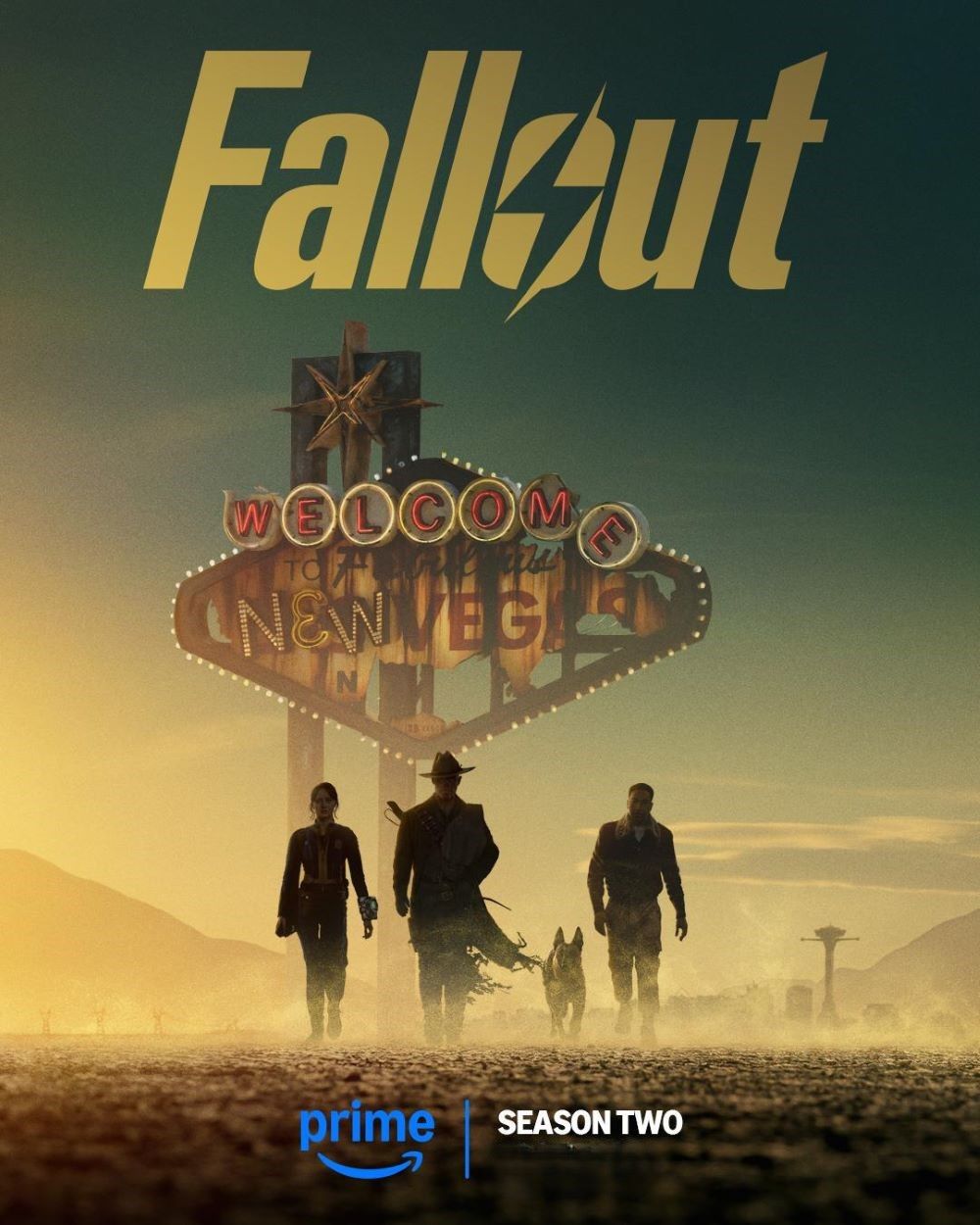
“If you have to hurt people, God won’t judge you. Don’t think of them as human beings. Think of them as Americans.” — Joan Harper
Episode 7 of Fallout season 2, “The Handoff,” sneaks up on you like a radstorm on the horizon—one of those late-season gut checks that reshuffles priorities without much fanfare. It’s got ambition oozing from every irradiated pore, bouncing between mind-bending Vault-Tec tech, vault-bound soap opera blowouts, and pre-war nightmares that hit way too close to home. The sprawl can feel chaotic at times, with not every character getting their full due, but the thematic throughline—how far will you go to survive, and what does it cost your soul?—keeps it cohesive and compelling. Dark humor peppers the bleakness, moral lines blur like fallout haze, and by the end, you’re left wondering who’s really pulling the strings in this wasteland mess.
Kicking things off with a bang—or more like a suicide bomber’s blast—the episode dives straight into a harrowing pre-war flashback spotlighting a young Steph Harper and her mother Joan, played with steely desperation by Natasha Henstridge. They’re clawing their way out of the Uranium City internment camp, a grim U.S. holding pen for Canadian citizens rounded up in the Resource Wars’ fever pitch. Power-armored goons close in, hurling firepower and slurs amid the pandemonium, until Joan grabs her kid and hisses that unforgettable line: “Don’t think of them as human beings. Think of them as Americans.” Oof. It’s a dehumanizing gut-punch that sets the episode’s tone right away, illustrating how the pre-apocalypse world was already a powder keg of nationalism run amok, where “us vs. them” justified any atrocity. And talk about prescient or coincidental timing—this drops amid 2026’s real-world headlines of U.S.-Canada friction, from Trump’s tariff saber-rattling and Davos snubs to wild talk of military “hypotheticals” and economic arm-twisting between the North American neighbors. Whether the writers had a crystal ball or just nailed the evergreen vibe of border paranoia, it makes the fiction feel like a mirror held up to today’s geopolitics, amplifying the episode’s warnings about how quickly “allies” turn into existential threats.
That raw survival instinct bleeds seamlessly into Lucy’s arc, which powers the hour like a fusion core. Trapped in a gleaming Vault-Tec bunker, she’s stuck playing house with her dad Hank, who’s equal parts folksy mentor and corporate ghoul. The star of the show here is their memory-reprogramming gizmo—a hulking console that dials memories up, down, or into oblivion like tweaking a Pip-Boy radio. Hank gives her the tour on a goofy golf cart joyride through empty offices, explaining it with the enthusiasm of a salesman hawking timeshares: boost the happy bits, erase the trauma, rinse and repeat. It’s genius-level creepy, transforming what could be bland sci-fi into a satire of corporate wellness gone murderous. Vault-Tec didn’t invent evil; they just bureaucratized it, turning ethical nightmares into quarterly performance metrics. Lucy starts off hopeful, probing for the father she remembers from Vault 33, but those sterile hallways and his breezy justifications erode her faith layer by layer. The awkward father-daughter chats—half bonding session, half indoctrination—build real tension, showing her idealism cracking under the weight of his casual complicity.
Then comes the dinner scene, a masterclass in quiet devastation. Lucy clocks the NCR soldier she’d warmed to earlier, now a vacant-eyed tray jockey slinging slop with a lobotomized grin. Boom—personal loss made visceral. No swelling score or slow-mo needed; it’s the everyday horror of a friend erased that ignites her fire. She snaps, cuffing Hank to the kitchen drawer in a moment that’s equal parts petty revenge and profound symbolism. No more running from the truth, pops. Ella Purnell nails the transformation: Lucy’s not snapping into cynicism, she’s forging resolve from the ashes of naivety. Her wide-eyed wasteland optimism was always her superpower, but here it matures into a fierce moral compass that doesn’t bend for family ties or Vault-Tec spin. It’s the episode’s emotional core, proving Fallout shines brightest when it grounds big ideas in intimate betrayals.
Meanwhile, Vault 32 delivers the chaos quotient with Steph’s implosion, riffing off the flashback’s desperation in a claustrophobic, community-drama wrapper. Steph’s been teetering on insecure overlord vibes all season—fake-it-till-you-make-it overseer masking cracks with smiles and status games. But Woody’s shattered glasses fished from the garbage disposal? That’s the innocuous spark that lights the fuse. Chet, nursing his quiet rage, hits critical mass smack in the middle of their wedding. Steph bulldozing ahead with vows while the room simmers? Cringe gold. When Chet unloads publicly—secrets, lies, the works—it cascades into pandemonium: guests flip to an angry horde, baying for blood as they chase her into the Overseer’s lair. It’s Fallout‘s sweet spot—pulpy melodrama meets social horror, exposing vault life as a fragile illusion of civility. One bad call, one hidden body, and poof: the social contract shreds. Steph morphs from punchline to predator, cornered and feral, hinting she’s capable of worse. The handheld camerawork ramps the frenzy, trapping you in the mob’s ugly momentum, while the petty human stakes keep it relatable amid the apocalypse schlock.
Maximus pulls a solid B-plot shift, hunkered in an NCR gear depot where he finally claims power armor like it’s his birthright. Gone’s the jittery Brotherhood hopeful; enter a guy starting to fill out the role, clanking around with newfound purpose. Aaron Moten plays it understated—no hero pose, just incremental grit that nods to his growth without overshadowing the mains. It’s smart table-setting: the season’s been chipping at Brotherhood dogma, and Maximus suiting up feels like him inching toward their ideal, blind spots and all. Could use more introspection, sure, but it plants seeds for faction fireworks down the line.
Norm? Rough week. His subplot—eavesdropped identity slip, knockout punch, prisoner drag—teases intrigue but fizzles into logistics. It’s the script shuffling pieces, not diving into his vault-rat cunning or isolation. Fans of his sly outsider lens might gripe at the neglect, highlighting the episode’s tightrope walk over ensemble overload.
Technically, it’s a banger. Vault-Tec’s retro-futurist sheen—neon signs, buzzing fluorescents—clashes beautifully with the soul-crushing tech, like a twisted ad for the American Dream. The wedding revolt goes gritty and kinetic, sweat and shouts filling the frame. Purnell anchors the heart, Steph’s portrayer the hysteria, Henstridge the haunting cameo. Sound design pops too: distant echoes in the offices, the wedding’s rising clamor, that bomber’s muffled roar.
Balance is the bugaboo—too many irons mean rushed beats for Maximus and Norm. Yet it embodies Fallout‘s messy ethos: no tidy arcs, just grinding compromises under institutional thumbs. The Uranium City prelude warns of pre-war poison still pumping through the veins, Lucy’s defiance spotlights personal agency, Vault 32’s riot proves communities devour their own. “The Handoff” probes free will amid rigged games, from neural hacks to tribal loyalties, all laced with wasteland wit. Flawed? Marginally. Essential? Hell yes. The finale looms like an Enclave drop-ship—everything teeters, primed for Fallout‘s brand of irradiated reckoning.
Fallout Season 2 Episodes
 Through the Shattered Lens