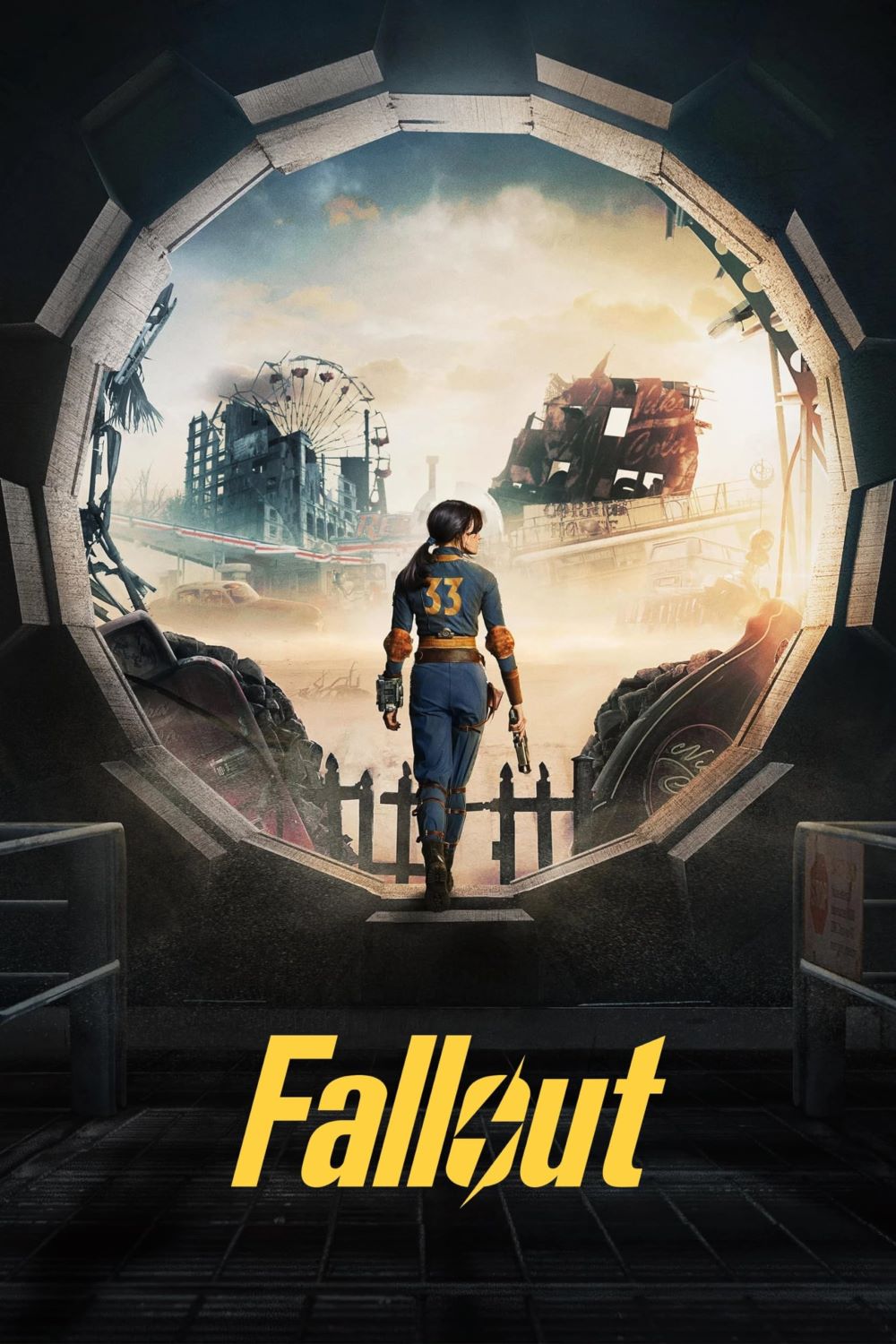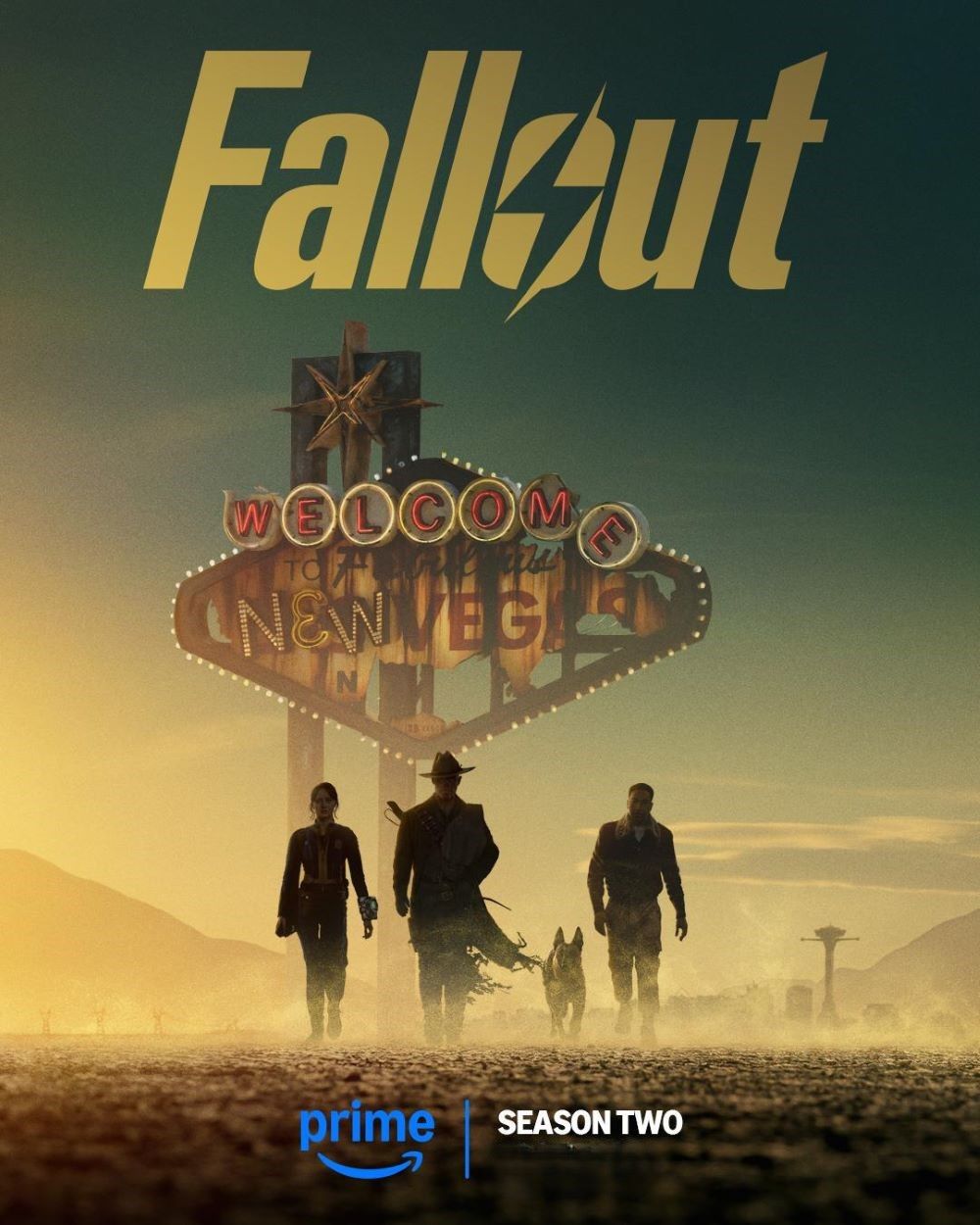
Review: Fallout (Season 2, Episode 1 “The Innovator”)


“Control is not control unless it’s absolute.” — Robert House

Episode 1 of Fallout Season 2 eases us back into the irradiated chaos with a deliberate pace that prioritizes atmosphere over non-stop action, reminding everyone why this show’s wasteland feels so lived-in and unpredictable. Titled something along the lines of a nod to foresight amid apocalypse, it shifts the spotlight toward the glittering promise of New Vegas while weaving in threads from the vaults and the open road, all without feeling like it’s just recapping old ground. The result is a premiere that builds quiet dread and dark laughs in equal measure, setting up a season that promises to dig deeper into the franchise’s corporate nightmares and personal vendettas.

Right from the jump, the episode grabs attention with a slick demonstration of pre-war tech gone horribly right—or wrong, depending on your perspective. Justin Theroux as Robert House commands the screen as a slick-suited mogul, his magnetic performance dripping with oily charisma and precise menace as he demos a mind-control gadget on skeptical workers, his unhinged glee peaking in a catastrophic head-explosion that hilariously exposes tech’s lethal limits. It’s peak Fallout absurdity: blending high-tech horror with retro-futurist flair, like if a 1950s infomercial took a fatal detour into Black Mirror territory. This opener not only hooks you visually but plants seeds for how old-world ambition fuels the post-apoc mess, tying neatly into the larger puzzle of who pulled the triggers on those bombs.

The core trio gets prime real estate here, each storyline humming with tension that advances their arcs without rushing the reveals. Lucy (Ella Purnell), still clinging to her vault-bred optimism, teams up with The Ghoul (Walton Goggins) for a Mojave trek that’s equal parts banter and brutality. Their pit stop at a rundown motel turns into a classic role-playing moment—talks fail, bullets fly, and suddenly you’re knee-deep in the kind of chaotic shootout that screams video game roots, but with character stakes that make the gore hit different. The Ghoul’s gleeful savagery clashes beautifully with Lucy’s reluctant humanity, sharpening their odd-couple dynamic into the show’s emotional engine, where every kill or quip peels back layers of trauma and growth.

Meanwhile, flashbacks to the days before the flash illuminate the cowboy’s (Walton Goggins) haunted past, dropping him into a high-stakes conspiracy involving energy breakthroughs and power grabs that could rewrite history. These segments pulse with moral ambiguity, showing how one man’s vision—or hubris—shapes the ruins we roam today, all delivered through sharp dialogue and tense standoffs that avoid info-dumps. It’s a smart way to expand the lore, making the pre-war era feel as treacherous and satirical as the wasteland, while hinting at butterfly effects that ripple straight to the present-day action.

Back underground in Vault 31, Norm (Moisés Arias) faces a grueling isolation game, rationed and rationed until desperation breeds rebellion. Pacing a sterile corridor lined with frozen execs, he grapples with the cold calculus of survival versus unleashing corporate ghosts, culminating in a choice that’s as chilling as it is inevitable. This thread underscores the series’ knack for turning confined spaces into pressure cookers, where ideology and instinct collide, and it mirrors the surface-level horrors in a way that unifies the episode’s split timelines. No capes or saviors here—just raw human (or post-human) frailty amid institutional rot.

What elevates this opener beyond fan service is its thematic cohesion: progress as the ultimate wasteland monster, whether it’s mind-bending devices in hidden labs, faction wars over scraps of the old world, or vaults masquerading as utopias. The production design shines, from neon-drenched ruins evoking casino glamour turned grim to grotesque experiments that nod to the games’ darkest quests without aping them beat-for-beat. Humor lands in the margins—snarky one-liners amid mayhem, visual gags like branded apocalypse merch—keeping the bleakness palatable and true to the source material’s satirical bite.

Pacing-wise, it unfolds like a slow-burn fuse: the front half reacquaints us with players and places, building investment through intimate beats, while the back ramps up with visceral twists that leave you hungry for more. A few moments drag if you’re craving instant explosions, but that’s by design—this isn’t a rollercoaster start; it’s a deliberate march toward war, factions aligning, and secrets cracking open. Lucy’s pursuit of family truth intersects with tech terrors in ways that feel organic and ominous, promising escalations that blend personal drama with world-shaking stakes.

Visually and sonically, Fallout Season 2 flexes harder, with practical effects that make every mutant skirmish or gadget malfunction pop off the screen, backed by a score that mixes twangy guitars with synth dread for that signature retro-punk vibe. Layered atop that is the inspired use of 1950s-era music—crooning ballads and peppy tunes playing ironically over carnage and corporate horror—anchoring the show’s aesthetic in its ironic nostalgia for a “better” past that led to ruin. The leads ooze chemistry, stealing scenes with micro-expressions that convey volumes, while supporting turns add layers of menace and mirth. It’s not flawless—the multi-threaded structure demands attention, and some setups tease bigger payoffs down the line—but as a launchpad, it nails the balance of homage, innovation, and binge bait.

Ultimately, this episode thrives on Fallout’s core irony: in a world built on fallout from unchecked ambition, our survivors scrape by with grit, guns, and grudging alliances. It honors the games’ sprawl while carving its own path through New Vegas’ shadows, teasing faction intrigue, tech horrors, and moral quagmires that could redefine the Mojave. If Season 1 proved the concept, Episode 1 of Season 2 whispers that the real radiation burns are just heating up—grab your Pip-Boy, because this wasteland’s about to get a whole lot wilder.

Review: Fallout (Season 1)


“War never changes. You look out at this Wasteland, looks like chaos. But here’s always somebody behind the wheel.” — The Ghoul

Fallout’s first season lands like a mini-nuke: messy around the edges, but undeniably powerful and surprisingly fun. It’s one of those adaptations that feels comfortable being both a love letter to the games and its own weird, often hilarious beast.

Set a couple of centuries after nuclear war, Fallout drops viewers into a retro-futurist wasteland where 1950s aesthetics collide with irradiated horror and corporate evil turned up to eleven. The show splits its focus between three main threads: Lucy, a bright-eyed vault dweller forced to leave her underground utopia; Maximus, an eager but insecure squire in the Brotherhood of Steel; and The Ghoul, a bounty hunter whose past life as a pre-war actor slowly bleeds through his charred exterior. The decision to juggle these perspectives is smart, because each storyline scratches a different itch: Lucy carries the emotional core and fish-out-of-water comedy, Maximus gives the militaristic, power-armor fantasy with a side of satire, and The Ghoul supplies the hard-boiled noir edge and moral ambiguity. The result is a season that rarely feels static; even when one plotline stalls a bit, another kicks in with fresh energy.

The tone is one of the show’s biggest strengths. Fallout leans hard into pitch-black humor without ever completely undercutting the stakes, which is harder to pull off than it looks. Limbs fly, heads explode, dogs get eaten, and yet the show keeps finding a way to make you laugh at the absurdity without turning the apocalypse into a joke. The violence is graphic and frequent, but it usually serves a purpose: to remind you that this world is brutal, even when the characters are cracking wise or bartering over chems. If the games felt like wandering into a deranged theme park built on the ruins of civilization, the series captures that same feeling of “this is horrible, but also kind of hilarious.” That balance, more than any specific lore reference, is what makes it feel like Fallout rather than just another grimdark sci-fi show.

Performance-wise, the casting is pretty inspired. Ella Purnell plays Lucy with this mix of optimism, naivety, and stubborn decency that could easily have been grating, but instead becomes the emotional anchor of the whole season. She brings just enough steel to the character that her idealism feels like a choice, not a default setting. Aaron Moten’s Maximus is a slower burn, and early on he risks fading into the background as “generic soldier guy,” but the more the show digs into Brotherhood politics, insecurity, and the pressure to be “worthy” of power armor, the more interesting he becomes. Walton Goggins, though, more or less walks away with the show. As The Ghoul, he’s vicious, funny, and weirdly tragic, and the flashbacks to his pre-war life give the season some of its most compelling dramatic beats. There’s a sense of continuity in his performance between the slick actor he was and the monster he becomes that keeps the character from feeling like a one-note cowboy caricature.

Visually, Fallout looks a lot better than a streaming adaptation of a video game has any right to. The production design leans into practical sets and tactile props where possible, and it pays off. Power armor has real heft, the vaults look lived-in rather than just glossy sci-fi hallways, and the wasteland feels like a place where people actually scrape out a living instead of just a CGI backdrop. The show has fun with the franchise’s iconography—Nuka-Cola, Pip-Boys, Vault-Tec branding, goofy radios—but it rarely pauses to point and wink too hard. The design team clearly understands that Fallout is basically “atomic-age corporate optimism weaponized into apocalypse,” and that theme is baked into everything from costumes to billboards rotting in the sand. Even the creature designs, like the mutated critters and ghouls, walk that line between unsettling and cartoonishly over-the-top, which fits the overall tone.

On the writing side, the structure of the season feels very much like an RPG campaign. Episodes often play like individual “quests” that build toward a bigger mystery: Lucy stumbling into a bizarre settlement, Maximus dealing with Brotherhood politics, The Ghoul chasing a lead that intersects with both of them. That quest-chain structure gives the first half of the season a propulsive, almost episodic energy, and it’s one reason the show is so watchable. At the same time, this approach has trade-offs. Sometimes character development feels a bit checkpoint-driven—people change because the story needs them to for the next “quest,” rather than as a smooth emotional progression. You can occasionally see the writers nudging the pieces into place, especially as the season barrels toward the finale.

Fallout sits in an interesting sweet spot when lined up against another prestige video game adaptation like HBO’s The Last of Us. Instead of treating the games as a sacred script that must be recreated line for line, it treats the Fallout universe as a shared sandbox—a tone, a style, a set of rules—rather than a fixed storyline that must be obeyed. Where The Last of Us is largely a faithful retelling of Joel and Ellie’s journey, Fallout seems far more interested in asking, “What else can happen in this world?” instead of “How do we restage that iconic mission?” It borrows the franchise’s black-comedy vibe, retro-futurist Americana, and corporate dystopia, then builds mostly original plots and character arcs on top.

That choice immediately gives the writers room to play. They’re not constantly checking themselves against specific missions, boss fights, or famous cutscenes; they’re free to jump around the timeline, invent new factions or townships, and reframe old ideas in ways that a beat-for-beat adaptation could never manage without sparking outrage. This approach also lets Fallout add to the lore instead of just reanimating it in live action. Because it’s not locked into recreating a particular protagonist’s path, the show can explore corners of the wasteland that were only hinted at in the games, complicate existing factions, or take big swings with backstory and world history. That kind of freedom inevitably creates some continuity friction for hardcore fans, but it also keeps the series from feeling like a lavish, expensive recap of something players already experienced with a controller in hand. Where The Last of Us excels by deepening and humanizing a story many already know, Fallout thrives by expanding its universe sideways, treating the source material as a toolbox rather than a template—and that makes it feel more like a genuine new chapter in the franchise than a live-action checklist.

Thematically, the show has more on its mind than explosions and fan-service, which is nice. Fallout keeps circling back to questions about corporate power, the illusion of safety, and how far people will go to preserve their own little slice of control. Vault-Tec’s smiling fascism is a blunt but effective metaphor for real-world systems that promise protection while quietly planning for everyone’s demise. The Brotherhood of Steel, meanwhile, becomes a vehicle for exploring militarized religion, hierarchy, and the dream of “owning” technology and knowledge. None of this is subtle, but Fallout isn’t a subtle franchise to begin with, and the series has enough self-awareness to let its satire stay sharp without slowing everything down for speeches. When it hits, it feels like the writers are asking, “Who gets to decide what’s worth saving when everything’s already gone?”

Where the season stumbles most is consistency. The pacing isn’t always smooth; some mid-season episodes are stacked with memorable set pieces and character moments, while others feel like they’re mostly there to set up endgame twists. The finale, in particular, is likely to be divisive. On one hand, it ties several plot threads together, drops a couple of bold lore swings, and sets up future seasons with a few big, crowd-pleasing reveals. On the other hand, it rushes emotional payoffs and leans heavily on explaining rather than letting certain developments breathe. The shift in tone in the last episode is noticeable enough that some viewers may feel like they suddenly switched to a slightly different show. It’s not a deal-breaker, but it does mean the season ends with more “wow, that was a lot” than a clean emotional landing.

As an adaptation, this freedom-to-expand strategy pays off by appealing to longtime fans and welcoming newcomers without getting bogged down in purist debates. Fans of the games will catch tons of details, locations, and tonal echoes that feel like affectionate nods rather than empty easter eggs. At the same time, the show isn’t just re-skinning existing game plots, which is a good call. It feels like a side story in the same universe rather than a strict retelling. That said, the lore choices late in the season—especially around the broader timeline and certain factions—are bound to spark arguments. If someone is deeply attached to the canon of the older games, some of the retcons and reinterpretations might play like a slap in the face. If someone is more relaxed about canon and just wants an entertaining, coherent story in that world, the show will probably land much better.

The writing of individual scenes shows a lot of care, especially in the way humor and dread coexist. Some of the best moments aren’t the big action beats but the small conversations: a strange, tense chat in a ruined diner, a piece of pre-war media resurfacing at the worst possible time, or a casual bit of wasteland banter that suddenly turns threatening. The dialogue sometimes leans too modern for the retro setting, but the rhythm feels natural enough that it rarely jars. When the show is firing on all cylinders, it nails that specific Fallout flavor: characters staring at incomprehensible horror and responding with a joke, a shrug, or a desperate sales pitch.

If there’s one area where the season could improve going forward, it’s in fleshing out the secondary cast and giving certain arcs more emotional weight. Some supporting characters are memorable and sharply drawn, while others feel like they exist mainly to be lore-delivery devices or cannon fodder. The world feels rich enough that it can absolutely sustain more side stories and slower, character-focused detours. A little more breathing room for relationships—whether friendships, rivalries, or romances—would help the big twists land harder and keep the show from occasionally feeling like it’s sprinting from spectacle to spectacle.

Overall, Fallout’s first season is a strong, confident debut that understands what made the games stand out without being slavishly beholden to them. It’s funny, brutal, stylish, and surprisingly character-driven for a show that spends so much time reveling in bloodshed and nuclear kitsch. The missteps in pacing and the polarizing choices in the finale keep it from being flawless, but they also signal a series willing to take risks rather than play it safe. For viewers who enjoy genre TV with personality, and for gamers who have been burned by adaptations before, this season is absolutely worth the trip into the wasteland. It doesn’t just survive the jump to live action; it stomps into it in full power armor, flaws and all.

Playing Catch-Up With The Films of 2017: Churchill (dir by Jonathan Teplitzky)


2017 is shaping up to be the year of films about Winston Churchill.

For instance, Dunkirk has been an Oscar front-runner ever since it was released last summer.  Winston Churchill does not actually appear in Dunkirk but his shadow hangs over the entire film.  Whenever Mark Rylance says that he’s doing what the prime minister requested him to do, we know that he’s talking about Winston Churchill.

Darkest Hour, which I hope to see this week, features Gary Oldman in the role of Churchill.  For most of the year, a lot of people (like me) assumed that Darkest Hour would be a definite best picture nominee and a probable winner.  While the film seems to have lost a little of its luster, everyone still seems to agree that Gary Oldman is not only going to be nominated by best actor but that he also has a pretty chance of finally winning.

However, before either of those films were released, there was Churchill.  Chuchill received a very limited release in June.  It starred Brian Cox in the title role and it took place in the days leading up to D-Day.  It follows Churchill as he struggles with self-doubt.  He is haunted by nightmares about the men he lost while a military commander in 1915.  He worries that he is being marginalized by the Americans (represented by John Slattery in the role of Dwight D. Eisenhower).  He worries that if he authorizes the invasion of Normandy, he’ll run the risk of losing whatever prestige he has left.  What if the invasion ends in disaster?

That question right there is the main problem with Churchill.  If you know anything about history, you know that the invasion of Normandy was a victory for the Allies, albeit a costly one.  Therefore, for this film to maintain any sort of suspense about what ‘s going to happen, it has to be viewed by people who don’t know about history.  But people who don’t care about history probably won’t be interested in watching a somewhat stuffy film about Winston Churchill.

Despite a few surrealistic nightmare sequences, Churchill ultimately feels like it belongs more on PBS than a movie screen.  It doesn’t surprise me to learn that the majority of director Jonathan Treplitzky’s work has been for British television because Churchill really does feel like a heavily edited version of a 6-hour miniseries.  You watch and you’re impressed by the production values and some of the performances but you find yourself wondering if certain have scenes have been cut out.  If Churchill had been made for HBO, I imagine that Brian Cox and Miranda Richardson (as Churchill’s wife) would be Emmy front-runners.  But, as a feature film, it feels like a decidedly minor portrayal of a major figure.

One final note: all films about the British government during World War II are required to feature at least one scene with King George VI.  Colin Firth, in The King’s Speech, remains the best George.  Laurence Fox in W.E. was the worst.  In Churchill, King George VI is played by James Purefoy.  He doesn’t have a big role but he does a good job with it.  To be honest, I wish that his role had been bigger because he and Cox are entertaining to watch when they’re acting opposite each other.

http://www.youtube.com/watch?v=sVOzMZ4IrMA


Playing Catch-Up: The Accountant, Carnage Park, The Choice, The Legend of Tarzan


Continuing my look back at the films of 2016, here are four mini-reviews of some films that really didn’t make enough of an impression to demand a full review.

http://www.youtube.com/watch?v=wmKtb-Pvpf4

The Accountant (dir by Gavin O’Connor)

2016 was a mixed year for Ben Affleck.  Batman v. Superman may have been a box office success but it was also such a critical disaster that it may have done more harm to Affleck’s legacy than good.  If nothing else, Affleck will spend the rest of his life being subjected to jokes about Martha.  While Ben’s younger brother has become an Oscar front runner as a result of his performance in Manchester By The Sea, Ben’s latest Oscar effort, Live By Night, has been released to critical scorn and audience indifference.

At the same time, Ben Affleck also gave perhaps his best performance ever in The Accountant.  Affleck plays an autistic accountant who exclusively works for criminals and who has been raised to be an expert in all forms of self-defense.  The film’s plot is overly complicated and director Gavin O’Connor struggles to maintain a consistent tone but Affleck gives a really great performance and Anna Kendrick reminds audiences that she’s capable of more than just starring in the Pitch Perfect franchise.

http://www.youtube.com/watch?v=6iVQLAGKPPE

Carnage Park (dir by Mickey Keating)

I really wanted to like Carnage Park, because it was specifically advertised as being an homage to the grindhouse films of the 1970s and y’all know how much I love those!  Ashley Bell plays a woman who gets kidnapped twice, once by two bank robbers and then by a psycho named Wyatt (Pat Healy).  Healy chases Bell through the desert, hunting her Most Dangerous Game-style.  There are some intense scenes and both Bell and Healy are well-cast but, ultimately, it’s just kind of blah.

http://www.youtube.com/watch?v=EmdHVSKhxhM

The Choice (dir by Ross Katz)

The Choice was last year’s Nicholas Sparks adaptation.  It came out, as all Nichols Sparks adaptations do, just in time for Valentine’s Day and it got reviews that were so negative that a lot of people will never admit that they actually saw it.  Benjamin Walker and Teresa Palmer play two people who meet, fall in love, and marry in North Carolina.  But then Palmer is in a car accident, ends up in a coma, and Walker has to decide whether or not to turn off the life support.

As I said, The Choice got terrible reviews and it’s certainly not subtle movie but it’s actually better than a lot of films adapted from the work of Nicholas Sparks.  Walker and Palmer are a likable couple and, at the very least, The Choice deserves some credit for having the courage not to embrace the currently trendy cause of euthanasia.  That alone makes The Choice better than Me Before You.

The Legend of Tarzan (dir by David Yates)

Alexander Skarsgard looks good without his shirt on and Samuel L. Jackson is always a fun to watch and that’s really all that matters as far as The Legend of Tarzan is concerned.  It’s an enjoyable enough adventure film but you won’t remember much about it afterward.  Christoph Waltz is a good actor but he’s played so many villains that it’s hard to get excited over it anymore.

Embracing the Melodrama Part II #117: Never Let Me Go (dir by Mark Romanek)


NeverletmegoposterquadI can still remember, back in the year 2010, when I first saw Never Let Me Go at the Dallas Angelika.  Going into the film, I didn’t really know what was waiting for me.  I hadn’t read the novel that it was based on.  All I knew was that it had a cool trailer and it starred two of my favorite actresses, Carey Mulligan and Keira Knightley.  Before I watched Never Let Me Go, I didn’t even know who Andrew Garfield was but that changed quickly.  Never Let Me Go took me by surprise.  I figured it would be a sad movie, based on the melancholy trailer and title.  But I had no idea how sad or effective it would be.  By the end of the movie, I was in tears.

And, even though I was already writing for this site at the time, I somehow never wrote up a review of Never Let Me Go.  Oh, I certainly meant to.  I went out of my way to recommend the movie on twitter.  I included it on my list of films that deserved Oscar consideration.  But I never actually got around to writing that full review.  The emotions were just too overwhelming.

Well, I’m going to use this opportunity to recommend that, if you haven’t already, you make an effort to see Never Let Me Go.  It’s a beautifully done film, one that confirms that director Mark Romanek is a major talent who really should have more than just three feature films to his credit.  (True, he does have a lot of music videos…)  As well, the film was written by Alex Garland, which should interest those of you who fell in love with Ex Machina earlier this year.

As for the film itself, it takes place in a world where, we’re told, a medical breakthrough was discovered in 1952 that allows people to live to be over 100 years old.  The details of that medical breakthrough are slowly revealed to us over the course of the film.  Unfortunately, it’s impossible to really talk about this film without revealing those details so consider this to be your SPOILER WARNING.

Basically — much as in Clonus — life has been extended through the use of cloning.  Cloned children are raised outside of the view of “normal” society.  They go to special schools.  And when they turn 18, they are harvested for their organs.  Clones are told that their ultimate goal is to “complete,” which is a polite way to say that most of them die before they ever reach 30.  A few lucky ones are allowed to be “carers.”  They take care of and comfort dying clones and, as a result, they get to put off their first organ donation for a few years.

Unlike Clonus, where the cloning was clandestine and done only to benefit the very rich, the clones are not a secret in Never Let Me Go.  Everyone knows why they exist and everyone knows what is going to ultimately happen to them.  Whenever the clones are allowed to leave their schools and explore the real world, they are greeted with a mix of hostility, fear, and guilt.  Because they are due to be sacrificed, society chooses to believe that the clones are somehow less than human.

As for the clones, the majority of them accept their fate.  You watch Never Let Me Go and you keep waiting for some sort of revolution and it never comes.  Some of the clones are angry.  Many of them desperately believe that there’s some way that they can avoid having to give up their organs.  A good deal of the film is spent listening to people you’ve come to love talk about getting a “deferral” that the audience knows does not exist.  For the most part, though, the clones passively accept their fate because that’s what they’ve been raised to do.

The film itself follows three clones from their childhood to their completion.  Kathy (Carey Mulligan) is a carer.  Ruth (Keira Knightley) starts out as a snob but softens as her fate becomes more and more inevitable.  And, lastly, there’s Tommy (Andrew Garfield).  Tommy starts out as an awkward young boy and he grows up to be an awkward young man.  Of all of them, Tommy is the most convinced that, as a result of the artwork he innocently drew as a boy, he will somehow be given a deferment.  Garfield is so heartbreaking in this role.  When he finally snaps and screams in frustration, you scream with him.

Never Let Me Go is not an easy film to watch but it’s one that I highly recommend.  It’ll make you think and it’ll make you cry.  And after you watch the movie, read Kazuo Ishiguro’s wonderful novel.  It’s even more heart-breaking than the movie.

Trailer: Kick-Ass 2 (Extended Red Band)


KickAss2

This past week saw the largest collection of nerd, geek and comic book fandom gathered in one magical place. The place in question is San Diego and the event is called San Diego Comic-Con or simply just uttered in awed whispers as Comic-Con. It is a place that many outsiders have shunned as a place that has no place in good, normal society yet they continue to arrive in larger numbers to ply their products to those they shun. Even this blog has it’s shamers and ignorant individuals who spew insults yet they too continue to visit because deep in their subconscious they know, like those who ridicule Comic-Con and those who attend them with a passion, that they’re the ones out of step with whats not accepted in society.

What does this mean when it comes to the latest trailer for Kick-Ass 2 that just came out of Comic-Con?

Absolutely nothing other than the trailer and the film itself is just another weird meeting of the two cultures. It’s a film that celebrates the ridiculousness and absurdity of the comic book culture, yet it’s one that’s funded by the very same people who insulted the scene just a decade ago.

The first film was a revelation and helped introduced the world to one Chloe Grace Moretz, but it also showed that comic books and films made from them didn’t have to be PG or even PG-13. There was a place for ultra-violence in our comic book films. It also helped bring the name of Matthew Vaughn into the forefront of comic book fandom. While he’s not directing this sequel (he elected to go with X-Men: First Class and we’re all the better for it), he did help in bringing it to life and hand-picked his successor in Jeff Wadlow.

While Kick-Ass 2 is not getting the same sort of buzz from Comic-Con the original film did it is still one film I’m quite interested in seeing just to find out what has happened to our young superheroes and vigilante crime fighters since the last film. Plus, it’s main villain likes to call himself “Motherfucker”.

Trailer: Kick-Ass 2 (Red Band)


KickAss2

2010’s Kick-Ass was one of those films that you either loved or hated. It was a film adapted from the Mark Millar and John Romita, Jr. comic book of the same name that also had a similar reputation of having extreme opposites in regards to how people perceived it.

I, for one, loved the film despite just being “meh” when it came to the comic. Where the film by Matthew Vaughn was a darkly comic deconstruction of the superhero story the comic book that gave birth to it was just an exercise in shocking the readers without working for it. Yet, despite that the film was a hit with both the fans of the comic book and those who didn’t even know it was a comic book. That popularity allowed the film to make enough profit that a sequel was greenlit even before a second volume of the comic book was even started by Millar and Romita, Jr.

Kick-Ass 2 sees the return of both Hit-Girl and Kick-Ass with Red Mist now calling himself The Motherfucker and the film’s main antagonist. The sequel sees Matthew Vaughn return as producer with Jeff Wadlow stepping in as director.

Kick-Ass 2 is set for an August 16, 2013 North American release date with the film premiering earlier on July 19, 2013 in the UK.

Lisa Marie Deals With Intruders (dir. by Juan Carlos Fresnadillo)


Earlier this month, I saw Intruders, the latest film from director Juan Carlo Fresnadillo.  Spanish horror films are currently the trendy genre to love and Intruders has everything that we’ve come to expect from Spanish horror: creepy children, gothic atmosphere, claustrophobic staging, ineffectual representatives of the Church, and a feeling that the society of the present is held hostage by the sins of the past. 

Intruders tells two parallel stories about two children who are haunted by a malevolent, faceless spirit known as Hollowface.  Hollowface comes out at night and searches for a new face (and who can blame him, really?).  As the film opens, he is haunting a young boy (Izan Corchero) and his mother (Pilar Lopez de Ayala) in Spain.  The boy deals with his fear of Hollowface by writing a lengthy story about him.  Meanwhile, in England, 12 year-old Mia (Ella Purnell) finds a copy of the boy’s story in an empty tree stump and reads it aloud.  Shortly after doing this, she starts to see Hollowface in the shadows of her bedroom.  The only person who believes her is her father (played by Clive Owen).  The film proceeds to cut back-and-forth between these two haunted children until finally, in its final few minutes, the two stories come together. 

Intruders starts out strong but then quickly starts to fall apart.  As a malevolent force, Hollowface is effective as long as he’s just a shadowy figure floating through childish nightmares but, as the film progresses, he becomes less and less intimidating until finally he’s just another poorly defined villain in a costume.  By that same token, Fresnadillo’s direction is nicely atmospheric and creepy during the first half of the film but then, as the two parallel stories come together, the film starts to feel more and more generic.  The two stories are, of course, linked together by a big twist.  Oddly enough, even though I managed to guess the twist, it still felt like it came out of close-to-nowhere. 

That said, Intruders isn’t a disaster.  The film is fairly well-acted (especially by Clive Owen, who in a perfect world would be playing James Bond in Skyfall) and even once the narrative falls apart, Fresnadillo still comes up with the occasional effective shock.  Even if I wasn’t familiar with Fresnadillo’s previous films, I would probably take a chance on his next movie.

Just as long as it’s not The Return of Hollowface or anything like that.