Welcome to Retro Television Reviews, a feature where we review some of our favorite and least favorite shows of the past! On Thursdays, I will be reviewing Decoy, which aired in Syndication in 1957 and 1958. The show can be viewed on Tubi!
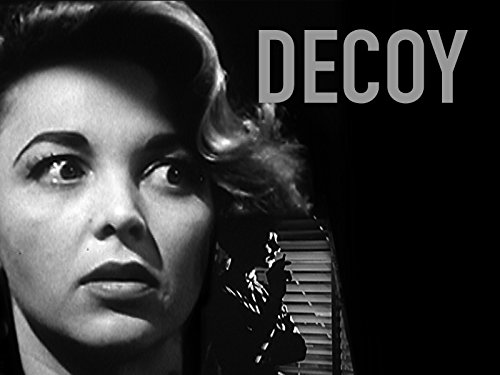
This week, Casey help to stop an obscene phone caller.
Episode 1.3 “The Phoner”
(Dir by Teddy Sills, originally aired on October 28th, 1957)
Betty Hodges (Pat Englund) has been getting obscene phone calls. It’s the 1950s. That means there’s no caller ID, there’s no cell towers to ping signals off of, there’s no way to block a number, the phone rings until its answered, and every call is made and taken on a landline phone. This is the era when most calls were still connected by an operator. Terrified of the calls but determined not to be chased out of the city like so many other young women who have targeted by the so-called Phoner, Betty calls the police. Casey (Beverly Garland) moves in with Betty, pretending to be her sister. When the phone rings, it’s Casey who will answer and it’s Casey who will have to keep the guy talking for five minutes while the phone company traces the call.
We don’t ever learn the name of the man making the calls. In the credits, he’s listed as the Phoner. Played by Frank Sutton, the Phoner is a sweaty man who makes his calls from a phone booth and who brags about how many girlfriends he claims to have had. (He’s the 50s version of an incel.) We’re told that he says disturbingly obscene things over the phone but, this being a 50s show, we don’t hear any of them. Of course, we don’t have to hear them. Betty’s terrified reactions are all we need to see.
Eventually, Betty is attacked leaving work. She stumbles out of an alley, her face beaten and her clothes torn. And again, it’s the 50s. So all we hear is that Betty has been attacked but anyone watching would understand what had happened. In the hospital, Betty whispers to Casey. When Casey is asked what Betty said, Casey replies, “She wishes she was dead.”
Eventually, the Phoner calls Casey back. They set up a date in the park. The Phoner doesn’t show up at the park but he does show up at the apartment later. After a struggle, he’s subdued by Casey and the other cops watching the apartment. Even though common sense tells the viewer that nothing too bad is going to happen to the show’s lead character, it’s still a tense scene, largely because of Frank Sutton’s feral performance as the Phoner.
This is a poignant episode, even if it did obviously have to hold back due to the censorship rules of the time. Just as frightening as Sutton was as the Phoner, Garland was equally impressive as the determined Casey. If I did have any problem with this episode, it’s that when she’s initially confronted by the Phoner, Casey doesn’t recognize his voice. When a man threatens you, you never forget the voice.
This was a good episode. Hopefully, the Phoner died in prison.
 Through the Shattered Lens