I shared a screenshot from The Departed for today’s 4 Shots From 4 Films and now I’ve got this song stuck in my head. And now, it’ll be stuck in your head too! Even if this song hadn’t been used in The Departed, just the sound of it brings to mind low-level gangsters making big mistakes and causing a lot of damage. There are some songs that are just fight songs and this is one of them.
Faith and Begorrah, St. Pat’s Day tis a big deal around these parts, and what better way to wake up and get your Irish on than with Dropkick Murphys singing “I’m Shipping Up To Boston”!:
“May you be in heaven half an hour before the devil knows you’re dead”
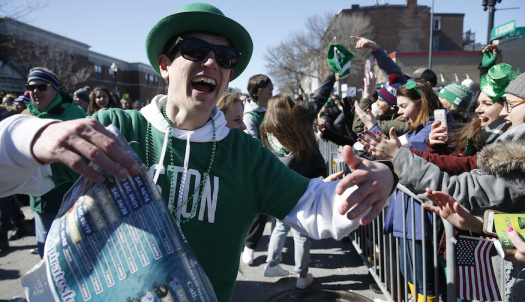
South Boston, MA — 3/18/2018 – the Annual St. Patrick’s Day parade. (Jessica Rinaldi/Globe Staff)
There are apparently two videos for I’m Shipping Up To Boston available. The one above was apparently released at the same time that The Departedmade the song famous. It features the band performing and footage from the film.
The other version is below. This version was directed by Mark Higgins and it basically involves the band, as Higgins put it on YouTube, “hanging with hooligans and runnin’ from the cops.” Personally, I prefer the version below but they’re both good.
Boston’s Dropkick Murphys are an Irish punk-rock band whose foot-stompin’, hell-raisin’ concerts are always a rowdy good time! Their 2013 release “Signed and Sealed in Blood” features the holiday tune “The Season’s Upon Us”, celebrating a typical family Christmas, South Shore style. If you’ve never heard them, you’re in for a treat! Enjoy, and Nollaig Shona!:
Sure, Patrick was a Catholic saint and Ostara, Easter’s namesake, was a pagan goddess, but it’s what you do on a holiday that really marks its significance. So let pious men paint crosses on long-impotent eggs; the damned still have their days. For me, spring begins with a pint of Guinness bright and early on March 17th.
For a few years now I’ve started out Paddy’s Day with the goal in mind of researching and recounting the history of some of my favorite Irish songs, and the spirits of the season have always gotten the better of me. But inebriation brings its own cryptic wisdoms, and this year, as I searched and fumbled through disjointed google results, it was the chronology of the music that really stood out to me. Ireland writes its history in song.
1984: Streams of Whiskey
Every song has an author–a source of origin. Though it may evolve into something entirely unrecognizable, it has to start somewhere, and even when its most distinguishable features are additions, someone has to add them. What distinguishes a traditional song from a cover has a lot to do with the mentality of the individuals copying it, which is in turn dictated in part by the DNA of the song itself. Covers acknowledge authorship–both of the original performer and of the artists performing the new rendition. Traditional songs do not. They are for the masses, and belong to everyone equally. Shane MacGowan and The Pogues authored many traditional songs. Streams of Whiskey, off of their 1984 debut album, can be considered one of their first. Its subject, Irish nationalist, poet, and playwright Brendan Behan, died of alcoholism twenty years prior, but the song is by no means “tragic”.
Last night as I slept I dreamt I met with Behan. I shook him by the hand and we passed the time of day. When questioned on his views–on the crux of life’s philosophies–he had but these few clear and simple words to say: I am going, I am going any which way the wind may be blowing. I am going, I am going where streams of whiskey are flowing.
I have cursed, bled, and sworn, jumped bail and landed up in jail. Life has often tried to stretch me, but the rope always was slack. And now that I’ve a pile, I’ll go down to the Chelsea. I’ll walk in on my feet, but I’ll leave there on my back.
Oh the words that he spoke seemed the wisest of philosophies. There’s nothing ever gained by a wet thing called a tear. When the world is too dark, and I need the light inside of me, I’ll go into a bar and drink fifteen pints of beer.
~1960: Come Out Ye Black and Tans
The Behans were themselves a source of Irish tradition. Brendan’s brother, Dominic, composed two particularly lasting staples: Come Out Ye Black and Tans and The Auld Triangle. Black and Tans recounts their father Stephen’s active role in the Irish War of Independence (1919-1921), and as best I can gather was written by Dominic after his own release from prison for political dissent.
I was born on a Dublin street where the Royal drums did beat, and the loving English feet walked all over us. And every single night, when me dad would come home tight, he’d invite the neighbors outside with this chorus: Come out ye Black and Tans, come out and fight me like a man. Show your wife how you won medals down in Flanders. Tell her how the I.R.A. made you run like hell away from the green and lovely lanes in Killeshandra. Come, tell us how you slew those brave Arabs two by two; like the Zulus, they had spears and bows and arrows. How you bravely faced each one with your sixteen pounder gun, and you frightened them poor natives to their marrow.
1919: Foggy Dew
Stephen Behan’s war officially began in 1919–the same year in which Canon Charles O’Neill wrote Foggy Dew. His song was a reflection on the 1916 Easter Uprising, and a sign of future struggles. The Allies of the First World War’s promise of independence to small nations created previously non-existent nationalist identities around the world, but Ireland’s exclusion from the deal reinvigorated sentiments which had existed for generations. Foggy Dew, and the many songs that appeared alongside it, revitalized a lyrical tradition which, while separated by the 19th century’s period of emigration, was never fully forgotten.
As down the glen one Easter morn to a city fair rode I, there armed lines of marching men in squadrons passed me by. No pipe did hum, no battle drum did sound its dread tattoo. But the Angelus bells o’er the Liffey’s swell rang out through the foggy dew.
Right proudly high over Dublin Town they hung out the flag of war. ‘Twas better to die beneath an Irish sky than at Suvla or Sud-El-Bar. And from the plains of Royal Meath strong men came hurrying through, while Britannia’s Huns, with their long range guns, sailed in through the foggy dew.
Oh the bravest fell, and the requiem bell rang mournfully and clear for those who died that Eastertide in the spring time of the year. And the world did gaze, in deep amaze, at those fearless men, but few, who bore the fight, that freedom’s light might shine through the foggy dew.
As back through the glen I rode again, my heart with grief was sore. For I parted then with valiant men whom I never shall see more. But to and fro in my dreams I go and I kneel and pray for you, for slavery fled, o glorious dead, when you fell in the foggy dew.
~1870: Spancil Hill
Michael Considine was an Irish immigrant to Boston, who moved to California in his early 20s and died shortly thereafter. The history of his song is steeped in myth. It supposedly made its way back to Ireland through family connections and came into the possession of Michael’s six year old nephew, John Considine, who kept it safe for 70 years and confirmed its authenticity upon hearing it performed by a stranger in 1953. Whatever its true story, it preserves a memory of departure after the fact, shedding any semblance of optimism about a land of opportunity.
Last night as I lay dreaming of pleasant days gone by, my mind being bent on rambling. To Ireland I did fly. I stepped on board a vision and I followed with the wind, and I shortly came to anchor at the cross of Spancil Hill.
It was on the 23rd of June, the day before the fair, when lreland’s sons and daughters in crowds assembled there, the young and the old, the brave and the bold, their journey to fulfill. There were jovial conversations at the fair of Spancil Hill.
I went to see my neighbors, to hear what they might say. The old ones were all dead and gone, and the young one’s turning grey. I met with the tailor Quigley, he’s a bold as ever still. He used to make my britches when I lived in Spancil Hill.
I paid a flying visit to my first and only love. She’s as white as any lily and as gentle as a dove. She threw her arms around me saying “Johnny I love you still.” She’s Ned the farmer’s daughter and the flower of Spancil Hill.
I dreamt I held and kissed her as in the days of yore. She said, “Johnny you’re only joking like many’s the time before.” The cock he crew in the morning; he crew both loud and shrill. I awoke in California, many miles from Spancil Hill.
~1850-1860: The Rocky Road to Dublin
D. K. Gavan’s mid-19th century depiction of emigration was a bit more optimistic. It remains persistently playful, presenting an Irish youth’s boastful account of his relocation from Galway to Liverpool as an adventure rather than a loss. Perhaps of some significance towards this end is that it was written by an Irishman who does not appear to have ever left for good or entered into the working class.
In the merry month of May, from me home I started. Left the girls of Tuam so nearly broken-hearted. Saluted father dear, kissed me darling mother, drank a pint of beer, me grief and tears to smother. Then off to reap the corn, leave where I was born, cut a stout black thorn to banish ghosts and goblins. Bought a pair of brogues to rattle o’er the bogs and frighten all the dogs on the rocky road to Dublin.
In Mullingar that night I rested limbs so weary. Started by daylight next morning bright and early. Took a drop of pure to keep me heart from sinking. That’s a Paddy’s cure whenever he’s on the drinking. See the lassies smile, laughing all the while at me darling style, ‘twould leave your heart a bubblin’. Asked me was I hired, wages I required, till I almost tired of the rocky road to Dublin.
In Dublin next arrived, I thought it such a pity to be soon deprived a view of that fine city. Then I took a stroll, all among the quality. Me bundle, it was stole, all in a neat locality. Something crossed me mind, when I looked behind. No bundle could I find upon me stick a wobblin’. Inquiring for the rogue, they said me Connaught brogue wasn’t much in vogue on the rocky road to Dublin.
From there I got away, me spirits never falling. Landed on the quay, just as the ship was sailing. Captain at me roared, said that no room had he. When I jumped aboard, a cabin found for Paddy down among the pigs, played some hearty rigs, danced some hearty jigs, the water round me bubbling. Then off Holyhead. I wished meself was dead, or better far instead on the rocky road to Dublin.
The boys of Liverpool, when we safely landed, called meself a fool. I could no longer stand it. Blood began to boil, temper I was losing. Poor old Erin’s Isle they began abusing. “Hurrah me soul” says I, let the Shillelagh I fly, some Galway boys were nigh and saw I was a hobblin’ in. With a load “hurray” joining in the fray, till we cleared the way on the rocky road to Dublin.
~1820: The Wild Rover
The mere existence of The Wild Rover as a drinking song is a testament to Ireland’s independent spirit, and it marks, perhaps, the tail end of another era in nationalist-themed music. It was originally composed as a temperance song, and the lyrics indeed tell of a repentant alcoholic prepared to give up the drink for good. But with a nuance difference. Early printings of the lyrics (at least, one I read dated between 1813 and 1838) have the subject of the song testing the landlady with money to see if she will sell him whiskey and then refusing to actually drink it, extolling the virtues of sobriety. In the popular, surviving version, the wild rover slips into his old ways just one last time.
I’ve been a wild rover for many a year, and I spent all my money on whiskey and beer. Now I’m returning with gold in great store, and I never will play the wild rover no more. And it’s no, nay, never, no nay never no more, will I play the wild rover. No never, no more. I went to an ale-house I used to frequent, and I told the landlady me money was spent. I asked her for credit, she answered me “nay, such a custom as yours I could have any day.” I took from my pocket ten sovereigns bright, and the landlady’s eyes opened wide with delight. She said “I have whiskey and wines of the best, and the words that I told you were only in jest.” I’ll go home to my parents, confess what I’ve done, and I’ll ask them to pardon their prodigal son. And if they forgive me as ofttimes before, I never will play the wild rover no more.
~1800: Johnny I Hardly Knew Ye
My personal favorite Irish traditional song, Johnny I Hardly Knew Ye, is best known in the United States in its bastardized American Civil War form: When Johnny Comes Marching Home Again. The American version welcomes home a brave warrior, who fought with valor and served his cause dutifully. Life was a bit more realistic in Ireland. This song first appeared some time after the 1798 Irish Rebellion–a movement sparked by the recent American and French Revolutions–at a time when the British Empire was shipping Irishmen off to Sri Lanka to fight their senseless colonial wars. It is a brutally honest depiction of the reality of war that surpasses any modern attempt.
While goin’ the road to sweet Athy, hurrah, hurrah
While goin’ the road to sweet Athy, hurrah, hurrah
While goin’ the road to sweet Athy with a stick in me hand and a drop in me eye
Well don’t you laugh now, don’t you cry
Johnny, I hardly knew ye.
With your guns and drums and drums and guns, hurrah, hurrah
With your guns and drums and drums and guns, hurrah, hurrah
With your guns and drums and drums and guns, the enemy nearly slew ye
Why darling dear, you look so queer
Johnny, I hardly knew ye.
Where are the eyes that looked so mild? hurrah, hurrah
Where are the eyes that looked so mild? hurrah, hurrah
Where are the eyes that looked so mild when you at first me heart beguiled?
What have you done to me and the child?
Johnny, I hardly knew ye.
Where are your legs that used to run? hurrah, hurrah
Where are your legs that used to run? hurrah, hurrah
Where are your legs that used to run when first you went to carry a gun?
Indeed you dancing days are done
Johnny, I hardly knew ye.
Well you haven’t an arm and you haven’t a leg, hurrah, hurrah
You haven’t an arm and you haven’t a leg, hurrah, hurrah
You haven’t an arm and you haven’t a leg. You’re an armless, legless, boneless egg.
You ought to ‘ve been born with a bowl to beg
Johnny, I hardly knew ye.
I’m happy for to see you home, hurrah, hurrah
Back from the island of Ceylon, hurrah, hurrah
I’m happy for to see you home, though indeed you cannot see your home.
Why on earth were you inclined to roam?
Johnny, I hardly knew ye.
~1500s: The Parting Glass
There’s something profoundly assertive in the lot of these songs. They aren’t the mindless jingles for which America is only one of many guilty parties. Even the most seemingly mundane, say, The Wild Rover, carries with it a hidden rejection of artificial restrictions on human nature. Perhaps that’s why they bear such a strong cross-cultural appeal. St. Patrick’s Day isn’t a celebration of Irish tradition; it’s a celebration of what Irish tradition understands best–the human experience. One of my favorite lines in any song comes packaged in the oldest Irish song I know. It could be a simple statement of fact, but I fancy it a tongue-in-cheek play on words. Because Irish tradition understands that loss is not a thing experienced prior to the fact. Preemptive expressions of sorrow are bullshit, and our recognition of that fact in the moment is part of the experience. So, since it falls unto my lot that I should rise and you should not, I gently rise and softly call, good night and joy be with you all.
I want to hop on the bandwagon. It would be a little silly for me to post my real top 10; for one thing, it would include four Krallice tracks. That aside, nearly everything I’d put on it I’ve either posted on this site as a Song of the Day or included in both my review of its album and my top albums post. So to make this a bit different from my past posts, I’m going to limit myself to one song per band, stick to stuff that I imagine might appeal to people who aren’t interested in extreme metal, and keep it on the catchy side. I’ll list a more honest top 10 at the end.
10. Powerwolf – Son of a Wolf (from Blood of the Saints)
As such, my tenth place selection is about as metal as it’s going to get. Powerwolf’s Blood of the Saints might be simple and repetitive, but it’s about the catchiest power/heavy metal album I’ve ever heard. It indulges the same guilty pleasure for me as Lordi and Twisted Sister–two bands that inexplicably pump me up despite being entirely tame. It also offers some amazing operatic vocals and Dracula keyboards, the cheesiness of which can be easily forgiven. Son of a Wolf might be one of the more generic tracks in a sense, but it’s the one most often stuck in my head.
9. Alestorm – Barrett’s Privateers (from Back Through Time)
The only thing I love more than traditional folk and sea chanties is folk punk and metal. When the latter covers the former, I’m in bliss. Alestorm are emerging as the sort of Dropkick Murphys of metal with all their covers lately, and I hope they keep it up. I loved Barrett’s Privateers before what you’re hearing ever happened, and the metal version delights me to no end.
8. The Decemberists – Rox in the Box (from The King is Dead)
The Decemberists really toned it down this year. Where The Hazards of Love could be described as an epic rock opera, The King is Dead sticks to simple, pleasant folk. But Colin Meloy thoroughly researches pretty much every subject he’s ever tackled, and The King is Dead pays ample homage to its predecessors. Rox in the Box incorporates Irish traditional song Raggle Taggle Gypsy with delightful success.
7. Nekrogoblikon – Goblin Box (from Stench)
With a keen eye towards contemporary folk metal like Alestorm and Finntroll, melodic death classics like In Flames and Children of Bodom, and much else besides, former gimmick band Nekrogoblikon really forged their own unique sound in the world of folk metal in 2011. At least half of the album is this good. Stench is the most unexpected surprise the year had to offer by far.
6. Korpiklaani – Surma (from Ukon Wacka)
Korpiklaani almost always end their albums with something special, and 2011 is no exception. The melody of Surma is beautiful, and Jonne Järvelä’s metal take on traditional Finnish vocals is as entertaining as ever.
5. Turisas – Hunting Pirates (from Stand Up and Fight)
I couldn’t find a youtube video that effectively captured the full scope of Turisas’s sound in such limited bitrates, but believe me, it’s huge. Go buy the album and find out for yourselves. Unlike Varangian Way, not every track is this good, but on a select number Turisas appear in their finest form. Adventurous, exciting, epic beyond compare, this band delivers with all of the high definition special effects of a Hollywood blockbuster.
4. The Flight of Sleipnir – Transcendence (from Essence of Nine)
Essence of Nine kicks off with a kaleidoscope of everything that makes stoner metal great, while reaching beyond the genre to incorporate folk and Akerfeldt-esque vocals. A beautifully constructed song, it crushes you even as it floats through the sky. I could imagine Tony Iommi himself rocking out to this one.
3. Boris – Black Original (from New Album)
From crust punk to black metal, there’s nothing Boris don’t do well, and 2011 has shown more than ever that there’s no style they’ll hesitate from dominating. I don’t know what’s been going on in the past few years with this popular rise of 80s sounds and weird electronics. I don’t listen to it, so I can’t relate. But if I expected it sounded anything nearly as good as what Boris pulled off this year I’d be all over it.
2. Tom Waits – Chicago (from Bad as Me)
Bad as Me kicks off with one of my favorite Tom Waits songs to date. It’s a timeless theme for him, but it feels more appropriate now than ever, and his dirty blues perfectly capture the sort of fear and excitement of packing up and seeking out a better life.
1. Dropkick Murphys – Take ‘Em Down (from Going Out in Style)
In a year just begging for good protest songs, Flogging Molly tried really hard and fell flat. Dropkick Murphys, another band you’d expect to join the cause, released perhaps their most generic album to date (still good mind you, but not a real chart topper). Take ‘Em Down is kind of out of place on the album, but it’s DKM to the core, and as best I can gather it’s an original song, not a cover of a traditional track. If so, it’s probably the most appropriate thing written all year. (The video is fan made.)
If you’re interested in my actual top 10, it runs something like this:
10. Falkenbach – Where His Ravens Fly…
9. Waldgeflüster – Kapitel I: Seenland
8. Liturgy – High Gold
7. Endstille – Endstille (Völkerschlächter)
6. Blut aus Nord – Epitome I
5. Krallice – Intro/Inhume
4. Liturgy – Harmonia
3. Krallice – Diotima
2. Krallice – Telluric Rings
1. Krallice – Dust and Light
And that excludes so many dozens of amazing songs that it seems almost pointless to post it.
I was going to write at length regarding Irish music for Saint Patrick’s Day, but, well-meaning admirer of Irish culture that I am, I have consumed far too many Guinness today to produce anything coherent. Instead I’m just going to post a few songs for the occasion. Perhaps if you are new to Irish music they’ll peak your curiosity.
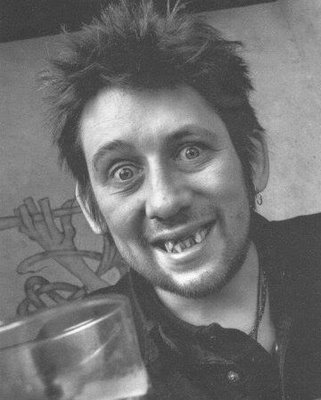
If you don’t like the Pogues songs in this mix more than all the rest, just keep drinking and you will eventually understand. (My hero Shane MacGowan is displayed above.)
Dropkick Murphys – The Spicy McHaggis Jig (original)
Dropkick Murphys – Loyal to No-One (original)
The Dubliners – Spancil Hill (19th century)
Dropkick Murphys – Fairmount Hill (19th century)
The Tossers – Good Morning Da (original)
The Tossers – Johnny I Hardly Knew Ye (19th century)
The Irish Descendents – Come Out Ye Black and Tans (20th century)
Flogging Molly – Salty Dog (original)
The Pogues – The Sickbed of Cuchulainn (original)
The Pogues – Boys from the County Hell (original)
The Pogues – Streams of Whiskey (original)
The Pogues – If I Should Fall from Grace with God (original)
The Chieftains (with Sinead O’Connor) – The Foggy Dew (17th century)
Dropkick Murphys – Kiss Me, I’m Shitfaced (original)
The Pogues – The Parting Glass (16th century)
Happy Paddy’s Day! Maybe next year I’ll actually write something before I’m too far gone. Until then, as Arleigh said to me, ” Good night and stay drunk!”
Having seen 263 different bands live, and a good many of those more than once, I offer you a top 10 list based on ample experience. Oh there might be better live bands out there, but mark my words, these guys are among the very best.
10. Sunn O)))
1 time: 20090917
Recommended album: Black One, or their collaboration with Boris: Altar
Sunn O))) is what happens when an ancient mystery cult encounters electricity. This is probably the closest you can get in this day and age to a true pagan spiritual experience. This is amplifier worship in the literal sense.
9. The Mountain Goats
1 time: 20061029 No Children off of Tallahassee
Recommended album: All Hail West Texas
A funny looking man picks up an acoustic guitar and starts singing you a story about two young lads named Jeff and Cyrus. As the painfully awkward lyrics inform you of their botched efforts to form a metal band, accusing society’s lack of tolerance for holding their dreams at bay, you really start to wonder whether you should cheer the guy on or steal his lunch money. Then the story reaches its conclusion with a chorus of “Hail Satan! Hail Satan tonight!”, everyone in the audience is singing along, and you at last realize that it doesn’t really matter whether you understand the guy or not. This is delightful. If you bother to dig around a little, read more of the lyrics, catch the references here and there, you’ll come to find that John Darnielle absolutely “gets it”. The joke was on you. But it was a clever innocent joke, because everything this guy writes is just as honest as it is intentionally comical. Show up, sing along, listen to his stories, walk away smiling.
8. Týr
2 times: 20080516, 20080517 Hail to the Hammer off of various albums
Recommended album: Eric the Red
“Viking metal” is as much an ethos as a musical style. Indeed, I hesitate to label any but the most undeniable bands “viking”, as opposed to “folk” or “pagan”. But in Týr we find the true third generation of the genre, following Bathory and Falkenbach, with whom they share little stylistically save a knack for writing anthemic heavy metal pagan hymns. I never got into Týr much until I saw them live, but was impressed by their great vocal harmonies, trance-like song progressions, and most notably the confidence with which they could hold the stage even when singing a cappella. By the end of the night I was making arrangements to drive three hours away to see them again.
7. Cracker
3 times: 20060614, 20071031, 20090527 St. Cajetan off of Cracker
Recommended album: Garage D’Or best of compilation
Cracker are the most underrated band of the last 20 years. I’ve been a fan since Teen Angst (What the World Needs Now) and Low were radio staples in the early 90s, but when I finally saw them live for the first time in 2006, I was blown away by their energetic stage presence. Johnny Hickman is a rock guitar guru, blending the established melodies with bluesy improvisations that at no point feel forced. David Lowery, nearly 50, rocks out harder than most younger musicians today. You’ll show up with limited hopes of tapping your feet to a few old familiar songs and discover a band that ranges from head-banging rock to slow tongue-in-cheek ballads to plodding blues-worship masterpieces.
6. Explosions in the Sky
1 time: 20070429 Your Hand in Mine off of The Earth is Not a Cold Dead Place
Recommended album: The Earth is Not a Cold Dead Place
The name says it all. Granted I saw them main stage at Coachella on a sound system set to support Rage Against the Machine’s first gig in nearly a decade, I have to imagine their music completely encompasses any venue. Explosions in the Sky write songs so compelling that you will completely forget you’re at a gig. The music penetrates everything in its vicinity and thrusts itself into you so forcefully that no amount of distractions will diminish the experience.
5. The Decemberists
4 times: 20040627, 20040628, 20061024, 20090814
excerpt from The Hazards of Love
Recommended album: The Crane Wife
The Decemberists have evolved from a thoroughly entertaining sideshow into a complex, operatic experience, without losing track of their original nature. Last time I saw them they performed the Hazards of Love rock opera in its hour long entirety without breaks, then returned for a good half hour of interactive fun. Audience participation is required, but hard to resist when they’re marching up and down the aisles in parade, awkwardly yanking people out of their seats to perform weird skits set to their older songs.
4. Boris
3 times: 20070316, 20071019, 20080629 Farewell off of Pink
Recommended album: Akuma No Uta
A youtube comment for this video described Farewell as “probably the greatest sludge ballad of all time”. Remember that feeling of disintegrating into the world that you got the first time you listened to Converge’s “Jane Doe” or Explosions in the Sky’s “The Birth and Death of Day”? A video of Boris can’t possibly do them justice. The shear volume of sound is their most distinguishable characteristic. On songs like “Farewell” it will disolve you. On songs like “My Neighbor Satan” it will implode you. On songs like “Naki Kyoku” it will chill you out in a mellow bliss.
3. GWAR
5 times: 20060723, 20061124, 20070707, 20071006, 20090923 Womb with a View off of War Party
Recommended album: Beyond Hell
Ever seen a man in a pig suit get a spear jammed up his ass and split out the top of his spine? Ever get soaked in the blood and puss launching forth from the gaping wound, while a monster with a three foot dick sings about raping your girlfriend and feeding her to bears? …What, that doesn’t sound fun? Everyone should see GWAR live at least once. You will either become a cult follower or start going to church more.
2. Dropkick Murphys
3 times: 20070913, 20080307, 20090629 Kiss Me, I’m Shitfaced off of Blackout
Recommended album: The Meanest of Times
If you’ve ever drank a beer and liked it, you are a Dropkick Murphys fan. Their gigs are more like giant parties… Well, parties with bagpipes and Guinness.
1. Blind Guardian
2 times: 20061210, 20061211 Mirror Mirror off of Nightfall in Middle-Earth
Recommended album: NiME or A Night at the Opera
Hansi Kursch is the King of the Nerds, and we must give our worthy sage the rightful placement he deserves. What happens when you combine Iron Maiden stage presence with the most epic melodies ever written and lyrics about the Dark Lord Sauron? Click and see my friend. Click and see.


 Through the Shattered Lens