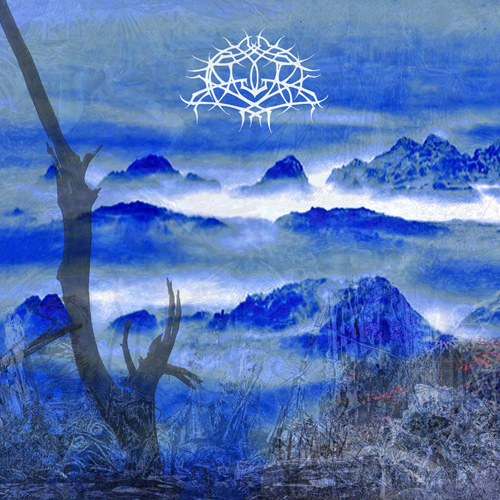
I was pretty shocked when Krallice released Years Past Matter this August. If I remember an interview with the band I watched correctly, their first three albums–Krallice, Dimensional Bleedthrough, and Diotima–had all been written by Mick Barr and Colin Marston at roughly the same time. A very clear progression distinguished each, and by Diotima significant influence by drummer Lev Weinstein and bassist Nick McMaster was apparent, but the foundation had been there all along. I expected a rather lengthy break between Diotima and their next release, as I figured the band would be working more from scratch at that point. Instead, Years Past Matter appeared on the scene just a little over a year later.
The surprise worked out rather nicely, because I didn’t have time to build up unrealistically high expectations. Diotima was the best new album I’d heard in a decade, and I really doubted Krallice would be able to top it any time soon. They didn’t, and that’s just fine, because Years Past Matter is still outstanding.
I feel like it is a somewhat subdued work in comparison, far less explosive and dynamic than Diotima. Almost every Diotima track had a total mind-fuck moment or two: The intro track, Inhume at the beginning and at 5:25, Diotima at 5:35 and 8:50, Telluric Rings at 2:55, 6:40 and 10:35, Dust and Light at 4:45. I’ve yet to find any moment on this album where the music slaps me upside the head with a brick and makes me stair wide-eyed mouthing “holy fucking shit”. That being said, last.fm claims I’ve listened to Diotima over a hundred times. Krallice isn’t the sort of band you can fully appreciate on short notice.
It also seems like the drumming and bass have reverted to the secondary roles they had on Krallice and Dimensional Bleedthrough, not function as equal players in the manner of Diotima. There were a lot of instances on Diotima, especially on Inhume, where I think the drumming actually managed to trump the guitars in delivery. That might not be a matter of performance so much as production, and it’s worth noting towards this end that my dear, beloved cd player in my 2005 Nissan Sentra finally passed away this summer. I swear its stock model had better sound quality than any high-end sound system I have ever heard. It might just be the case that these elements on Years Past Matter feel slightly less overwhelming because my shoddy computer headset fails to do them justice.
But in light of the lofty and exclusive pedestal I place Diotima upon, these are modest complaints. Over all Years Past Matter feels a lot like Dimensional Bleedthrough to me. That was an album which, unlike their 2008 debut, I completely failed to appreciate initially. It wasn’t until Diotima had raised my opinion of the band through the roof that I began to revisit Dimensional Bleedthrough and really recognize its quality. I’m not going to make the same mistake with Years Past Matter, but it’s going to take more than the few dozen listens I’ve given it so far to really grasp its full worth. The myriad subtle complexities only become apparent bit by bit over time, and in the absence of Diotima’s explosiveness there is little to immediate grasp hold of. Like Dimensional Bleedthrough, the songs progress slowly and require a substantial attention span to fully engage. What works so well for both that album and Years Past Matter is that the atmosphere they generate makes for ideal background music. You can let it play all evening without ever growing tired, and when you do temporarily tune in what you encounter is always outstanding. My experience with these albums has been one of a gradual piecing together of the parts I happen to engage, building up over countless rewarding listens into a big picture that I know by heart from start to finish.
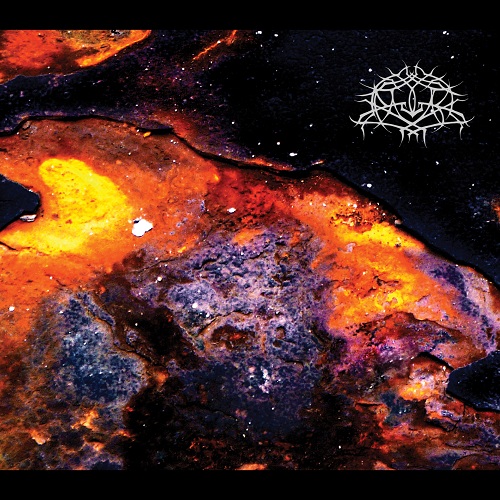
The physical presentation of the album actually adds a lot too. Along with one of the most compelling album covers I’ve seen in a while, Years Past Matter offers no printed lyrics or meaningful track titles. I haven’t gotten a chance to try and decipher any of the lyrics as sung, but I don’t think they are meant to play an essential role in the songs the way they do on Diotima. The feeling is more of some abstract, dehumanized vision of outer space. This isn’t so much a change in the sound–the vibe I get from it is essentially the same as on Dimensional Bleedthrough–but it places the music in a slightly different context from the outset.
If you don’t care for what you’re hearing on first listen, this band probably isn’t for you. Their unique take on black metal has remained fairly consistent throughout the years. But if you do appreciate the technical precision and the overall atmosphere, don’t be too quick to write off their song-writing. What may sound meandering at first will in time coalesce into a brilliantly crafted song. The big picture is a lot more accessible on Krallice and especially Diotima, but it was there to be had on Dimensional Bleedthrough too; I just tried too hard at that time to extract it. Years Past Matter has been a great experience for me this year because I’m not trying at all. I’m enjoying the ride and letting the full vision of their songs emerge naturally over time.
The years I most actively indulge my musical interests are the ones I find most difficult to wrap up in any sort of nice cohesive summary. December always begins with a feeling that I’ve really built up a solid basis on which to rate the best albums of the year, and it tends to end with the realization that I’ve really only heard a minute fraction of what’s out there. I’m going to limit this to my top 15. Anything beyond that is just too arbitrary–the long list of new albums I’ve still yet to hear will ultimately reconfigure it beyond recognition.
15. Thantifaxath – Thantifaxath EP
Thantifaxath’s debut EP might only be 15 minutes long, but that was more than enough to place it high on my charts. The whole emerging post/prog-bm sound has been largely a product of bands with the resources to refine it, and it’s quite refreshing to hear sounds reminiscent of recent Enslaved without any of the studio gloss. That, and I get a sort of B-side outer space horror vibe from it that’s not so easy to come by. (Recommended track: Violently Expanding Nothing)
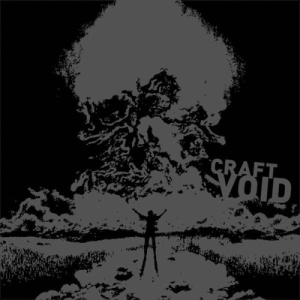
14. Craft – Void
This is the straight-up, no bullshit black metal album of the year. It doesn’t try anything fancy or original. It’s just good solid mid-tempo bm–brutal, evil, conjuring, and unforgiving. Hail Satan etc. (Recommended track: any of them)
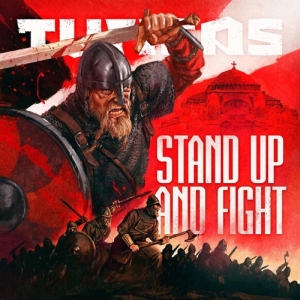
13. Turisas – Stand Up and Fight
Stand Up and Fight doesn’t hold a candle to The Varangian Way, but I never really expected it to. As a follow-up to one of my all-time favorite albums, it does a solid job of maintaining that immensely epic, triumphal sound they landed on in 2007. It lacks their previous work’s continuity, both in quality and in theme, but it’s still packed with astoundingly vivid imagery and exciting theatrics that render it almost more of a movie than an album. (Recommended tracks: Venetoi! Prasinoi!, Hunting Pirates)
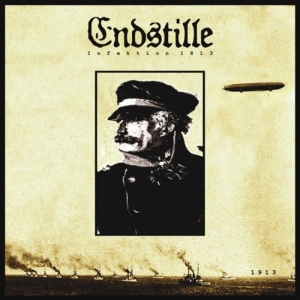
12. Endstille – Infektion 1813
Swedish-style black metal seldom does much for me, and it’s hard to describe just what appeals to me so much about Germany’s Endstille. But just as Verführer caught me by pleasant surprise two years ago, Infektion 1813 managed to captivate me in spite of all expectations to the contrary. Like Marduk (the only other band of the sort that occasionally impresses me), they stick to themes of modern warfare, but Endstille’s musical artillery bombardments carry a sense of something sinister that Marduk lacks. The dark side of human nature Endstille explores isn’t shrouded in enticing mystery–it’s something so thoroughly historically validated that we’d rather just pretend it doesn’t exist at all. The final track, Völkerschlächter, is one of the best songs of the year. Stylistically subdued, it pummels the listener instead with a long list of political and military leaders responsible for mass murder, named in a thick German accent over a seven second riff that’s repeated for 11 minutes. It’s a brutal realization that the sensations black metal tends to arouse are quite real and quite deplorable, and it will leave you feeling a little sick inside.
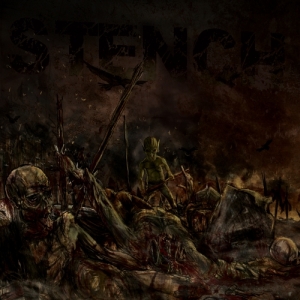
11. Nekrogoblikon – Stench
Nekrogoblikon released a folk metal parody album in 2006 that was good for laughs and really nothing else. The music was pretty awful, but that was intentional. It was a joke, with no presumption to be any good as anything but a joke. They’re the last band on earth I ever expected, a full six years after the fact, to pop back up with a really fucking solid sound. But Stench is good. I mean, Stench is really good. It’s still comical in theme, but the music has been refined beyond measure. Quirky, cheesy guitar and keyboard doodles have become vivid images of little flesh-eating gremlins dancing around your feet, whiny mock-vocals have taken the shape of pretty solid Elvenking-esque power metal, pretty much everything about them has grown into a legitimate melo-death and power infused folk metal sound. Don’t get me wrong, it’s still not meant to be taken seriously, but they’re now of Finntroll caliber. (Recommended tracks: Goblin Box, Gallows & Graves, A Feast)
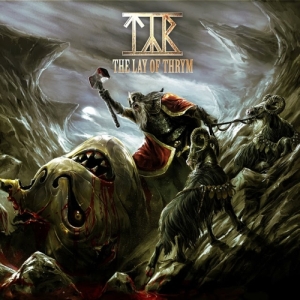
10. Týr – The Lay of Thrym
I thought By the Light of the Northern Star was a fairly weak album, and because The Lay of Thrym maintains some of the stylistic changes they underwent then, a part of me keeps wanting to say it can’t be as good as say, Land or Eric the Red. But of all the albums I acquired in 2011, I’ve probably listened to this one the most. Týr have one of the most unique sounds on the market, and it’s thoroughly incapable of ever boring me or growing old. Heri Joensen’s consistently excellent vocal performance alone is enough to make them perpetual year-end contenders. (Recommended track: Hall of Freedom)
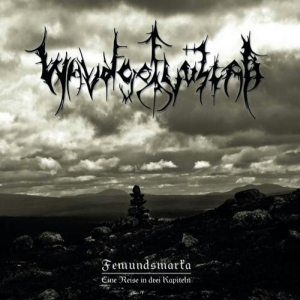
9. Waldgeflüster – Femundsmarka – Eine Reise in drei Kapiteln
This is some of the most endearing black metal I’ve heard in a while. Intended as a musical reminiscence of Winterherz’ journey through Femundsmarka National Park in Scandinavia, it’s a beautiful glorification of nature that takes some of the best accomplishments of Drudkh and Agalloch and adds to them a very uplifting vibe. Someone made an 8 minute compilation of the album on youtube which does a good job at previewing without revealing all of its finest moments. (Recommended track: Kapitel I: Seenland)
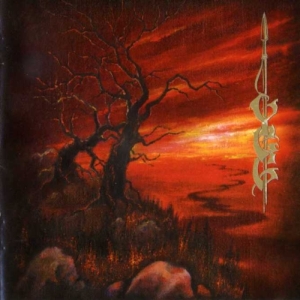
8. Ygg – Ygg
Ygg is an hour-long trance, evoking ancient gods in a way that only Slavic metal can. You could probably pick apart the music and discover plenty of flaws, but that would miss the point. I think that a lot of these Ukrainian and Russian bands are true believers, and that the purpose of music like this is more to create an experience in the listener than to be good for its own sake. This is a spiritual journey, and if it fails to move you as such it will probably come off as rather repetitive and generic, but I find it impressively effective. (Recommended track: Ygg)
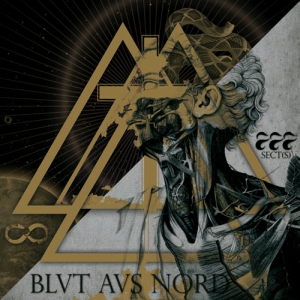
7. Blut aus Nord – 777: Sect(s)
I don’t know where to put this really. I could just as easily have labeled it second best album of the year. Dropping it down to 7th might seem a little unjustified, but eh, this is a list of my top albums, not of the “best” albums of the year. There’s no denying Sect(s) credit as a brilliant masterpiece, but it’s an ode to madness. I mean, this music scares the shit out of me, and if that means it’s accomplished something no other album has, that also means I don’t particularly “enjoy” listening to it. (Recommended track: Epitome I)
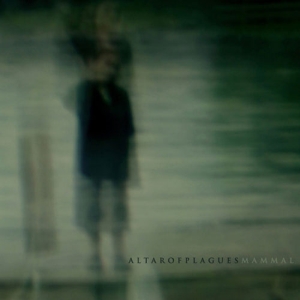
6. Altar of Plagues – Mammal
I never did listen to Mammal as actively as I would have liked. I never sat down and gave it my undivided attention from start to finish. But it’s served as a background piece for many late nights at work. It zones me in–stimulates my senses without ever distracting them from the task at hand. I don’t feel like I can really say much about what makes it great, because that’s not the sort of thing I’ve considered while listening to it, but I absolutely love it. It’s a big improvement from White Tomb, which was itself an excellent album, and more so than most other releases of 2011 I will probably continue to listen to it frequently in years to come. (Recommended track: Neptune is Dead)
5. Primordial – Redemption at the Puritan’s Hand (track: No Grave Deep Enough)
Redemption at the Puritan’s Hand is by no means perfect. It’s got a few sub-par tracks detracting from the full start to finish experience, but when it’s at its best all else can be easily forgiven. Call it folk metal or call it black metal, whichever you prefer, but first and foremost call it Irish, with every good thing that might entail. The vocals are outstanding, the music rocks out in folk fashion without ever relenting from its metal force, and while the lyrics don’t always make sense, they always hit like a fucking truck. Where they do all come together, delivered with Nemtheanga’s vast and desperate bellows, the result is overwhelming. O Death, where are your teeth that gnaw on the bones of fabled men? O Death, where are your claws that haul me from the grave? (Other recommended tracks: The Puritan’s Hand, Death of the Gods)
4. Falconer – Armod (track: Griftefrid)
Prior to 2011 I’d largely written Falconer off as one of those power metal acts that were just a little too cheesy to ever excite me. Maybe it was bad timing. Maybe I just happened to hear them for the first time while Kristoffer Göbel was filling in on vocals. Or maybe Armod is just their magnum opus–a spark of genius they’ve never neared before. Flawless if we ignore the “bonus tracks”, Armod takes that early folk metal sound Vintersorg pioneered with Otyg, merges it perfectly with power metal, and offers up 11 of the most well-written and excellently produced songs of the year. Mathias Blad’s vocals are absolutely phenomenal. (Other recommended tracks: Herr Peder Och Hans Syster)
3. Falkenbach – Tiurida (track: Sunnavend)
A lot of people might voice the legitimate complaint that Tiurida, Vratyas Vakyas’s first studio album in six years, sounds absolutely indistinguishable from his prior four. For me, that’s exactly why it ranks so high. Vakyas landed on a completely unique, instantly recognizable sound which, alongside Bathory, defined viking metal as a genre, and he’s refused to change it one bit. I fell in love with this album ten years ago. (Other recommended tracks: Where His Ravens Fly…)
2. Liturgy – Aesthethica (track: Harmonia)
Yes, Liturgy. It’s immature, childish, and imperfect, but it’s uplifting in a completely new way. No matter how far Hunt-Hendrix might go to embarrass himself and his band mates, behind all of his pompous babble there just might be some truth to it. (Other recommended tracks: True Will)
1. Krallice – Diotima (track: Dust and Light)
More than the album of the year, Diotima is one of the greatest albums ever made. I can’t fathom the amount of skill it must take to perform with the speed and precision that these guys do, but if they battered down a physical barrier to metal in 2008, they finally grasped hold of what lies beyond it in 2011. They claim that the songs on their first three albums were all written at the same time by Mick Barr and Colin Marston, before their self-titled debut. If that’s the case, then it must be the experience of performing together and the creative contributions of Lev Weinstein and Nick McMaster that raised Diotima to a higher level. It’s not just that they’ve improved in every way imaginable; the songs themselves are overwhelming, breathtaking, and chaotic to a degree they’d never before accomplished. Krallice perform an unwieldy monster that took a few albums to thoroughly overcome. Now they’re in complete control, and their absolutely brilliant song-writing can shine through. With the exception of the dubious Litany of Regrets, this is possibly the greatest album I have ever heard. (Other recommended tracks: Inhume, Diotima, Telluric Rings)
Krallice began as a joint project between Colin Marston of Behold… The Arctopus and Mick Barr of Orthrelm some time in 2006 or 2007. My very limited experience with both of these bands has left the unpleasant taste in my mouth of haphazard noise for its own sake–barely coherent avant-garde math rock which never has and never will excite me. Inexplicably, with their powers combined the two have produced some of the most beautifully constructed songs I have ever heard. Their self-titled debut in 2008, especially the opening track Wretched Wisdom, completely blew my mind in a way that no other band has accomplished since, taking the still formative genre of post-black metal and practically perfecting it in one shot.
Their second album, Dimensional Bleedthrough, never quite moved me the way their self-titled did, and while I listened to it aplenty when first released, it was soon forgotten. I was nevertheless quite excited to try out Diotima, released this past April, and within the first, well, really five seconds or so, I knew something had changed. By the end of its 70 minutes I had experienced one of the finest masterpieces of metal ever written.
(untitled intro)/Inhume
There’s a lot to be said even of the two minute introduction leading in to Inhume. Never mind that ten minute tracks is their norm, the introduction (they didn’t even bother naming it) is an incredible song in its own right. Diotima begins with a nuclear bomb, the chain reaction of which never ends. The desperate melody is more emotionally driven than anything on Dimensional Bleedthrough, calling to mind their first release, but the intensification of the drumming established on Dimensional Bleedthrough persists. It’s a perfect merging of all of their first two album’s finest qualities–beautiful song-writing on the one hand and intensity on the other–and I enter Inhume a deer in the headlights.
There is barely room to breathe before the next song slams a frantic vision of shapes and patterns into your brain that disturb and terrorize. It overwhelms you with ordered chaos. It’s never inaccessible, never obscure, but rather all too comprehensible. Often I speak of the importance of listening to an album in two states of mind, first passively, appreciating its aesthetics, and then attempting to analyze what’s really going on. On Diotima these experiences are one and the same. The drumming locks your eyelids in place, wide open, and the guitars assault your rationality.
Inhume is followed by The Clearing, and the album begins to calm down. The song initially picks up where Inhume leaves off, but before long the sensory overload fades into something more dark and moody. Mick Barr offers up his tortured, otherworldly black metal vocals for the first time on the album, and Nicholas McMaster’s bass lines and rhythmic death metal vocals become a little more pronounced. The song goes on to repeat a pattern of ascending chords which periodically break, here into a moving melody, there into a brutally bassy grind. Rather than ultimately coalescing into something grand, it ends in the midst of gloom, Barr and McMaster trading off screeches and growls in something dark, sinister, and perhaps a bit unfulfilling.
The mood of the ending is a bit unpleasant, but in so far as it leaves the listener discouraged, it’s perfectly placed to be followed by the album’s most uplifting track, Diotima.
Diotima
This album is more or less brilliant from start to finish, but two songs stand miles above the rest. The fourth track, Diotima, is one of them. It begins in the depths of The Clearing’s conclusion, with some bizarre creation in the form of tremolo guitar bubbling and boiling forth from the pit. The guitar battles against slow, brooding drums and vocals to find its way out of this miasma, and finally, around 5:30, it breaks free. The amorphous creation briefly stands alone, a vision of volatile beauty in perpetual motion, but before long the bass and drums begin to slowly creep up from beneath, ready to collide and set off a chain reaction which, well, might be the most incredible minute of music I have ever experienced.
The song is barely half over when this movement comes to an end, and the rest is experienced in a state of shock and enlightened awe. Something of a return to Inhume’s overwhelming combination of constantly fluctuating guitars and consistently warp speed drumming characterizes what immediately follows, and then a sort of death metal breakdown paves the way for the tracks final explosion, which never actually ends, instead fading off into the distance.
The fifth song, Litany of Regrets, is the only really questionable inclusion on the album. It consists of fourteen minutes of oscillating guitars and a single sustained drumline, breaking only infrequently and never for more than a few seconds. I could try to dig for some deeper complexity to it, but frankly if 20-some listens haven’t converted me nothing ever will. It’s the only track I ever skip, and I feel no inclination to speak at length about it. In reviewing the album just as in listening to it, I just find myself impatiently anticipating Diotima’s other exceptional masterpiece, Telluric Rings.
Telluric Rings
Unfortunately, the studio cut of this track seems to have been recently removed from youtube. I’m not sure what’s up with that, but out of respect for the band (especially since all other tracks were left up) I will hold off uploading my own copy of it until I find out why it’s gone missing. None of the live recordings are quite sufficient to pick up all of the subtitles I intend to describe, but it’s nice to display some of their visual intensity, and you really ought to buy this album anyway.
This song sweeps you off your feet in the first second–a beautiful, captivating flow of sound perfectly paced to mesmerize. The perfect bend in the midst of tremolo picking around the 25 second mark just blows my fucking mind. Diotima might sport my favorite moment on the album, but Telluric Rings is by far my favorite song over all. At no point, not for a single second, does it ever let go. The lyrics to the opening movement might make no sense to me, but they are somehow beautiful, and more discernible than most of the album. “The eye seeks a desert. / The anchorite sits, pensive, / thought encumbered. / Pillars of cracked rock and the catarrhs of coarse winds”.
The first transition begins about 2 and a half minutes in, allowing a few seconds of obvious escalation in which to wave goodbye. There is a bit of sadness in its coming. You sense correctly that the bliss of the first movement will never return. But the moment the actual transition ends and the second movement begins your attention involuntarily shifts focus. The violence and brutality of what follows is overwhelming. Here again the song is paced to perfection, indescribably captivating in its new form. McMaster’s vocals reach their finest on the album with the rhythmic belting out of “where lie old dreams of caverned maws and light in gulfing void.“
The next transition happens far more abruptly. Around 6:40 the guitars explode in pure desperation, perhaps the most emotional moment on the album save the title track, underscored and amplified by a creative baseline.
At 9 minutes, everything stops. The band all hang their heads, and nothing on the stage moves save Colin Marston’s fingers. A twisted melody drowns itself in distortion. There is nothing beautiful here–nothing like the solo guitar segment of Diotima. This is just pure morbid foreboding. You know it will break, it does break, and well, enjoy.
Dust and Light
Diotima’s final track, Dust and Light, is also its most difficult. It leaves nothing of the bad taste of Litany of Regrets, but neither is its quality immediately apparent. The beginning is a very fitting comedown from Telluric Rings. Mick Barr’s vocals and the blast beats which soon arise are distant now, dissolving in a pure and beautiful haze. The sense of ascension does not last forever, however. The song undergoes three transition beginning around 4:45, first into something more direct, then into something more typically violent and aggressive, and finally into another sort of haze starkly different from the first. No longer is the music dissolving into something greater. Now it is just combusting, breaking apart into a cloud of its own sundered particles. And thus it ends. Perhaps the final lyrical line best explains this song: “Acknowledge divinity’s mortality.“
 Through the Shattered Lens