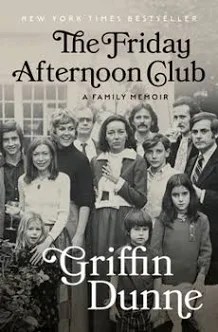
I want to start by recommending The Friday Afternoon Club, Griffin Dunne’s memoir of growing up amongst the rich and famous in Hollywood and Manhattan. The son of Dominick Dunne and the nephew of John Gregory Dunne, Griffin Dunne came of age in the 60s and the 70s. Reading his memoir, it’s easy to wonder if there’s anyone who he didn’t rub shoulders with at one time or another. Sean Connery saves him from drowning when he’s just eight. He attends one of Ken Kesey’s acid tests with John Gregory Dunne and Joan Didion. A pre-stardom Harrison Ford does carpentry work at the Dunne family home and shares his weed with the young Griffin. In New York, Griffin’s roommate and (for the most part) platonic best friend is a hyperactive young actress named Carrie Fisher. While Griffin tries to find himself in Hollywood and New York, his father Dominick drops in and out of the film business.
For it’s first half, The Friday Afternoon Club is, at times, a laugh-out-loud memoir. Griffin Dunne is a very funny storyteller and his command of language reveals a bright and insightful mind. However, the second half of the book takes a dark turn with the murder of his sister, Dominique. Dominique, who had just appeared in Poltergeist, was strangled by her abusive boyfriend, a chef named John Thomas Sweeney. Griffin Dunne writes unsparingly of the horror of watching as Sweeney’s lawyers tried to present Dominique as somehow being to blame for her own death. After the judge refused to allow the prosecution to introduce evidence showing that Sweeney had a history of abusing and choking women, the jury found Sweeney guilty of manslaughter. (The jury foreman later said that, if the jury had been allowed to hear the evidence of Sweeney’s past abusive behavior, they would have found Sweeney guilty of murder.) Sweeney was sentenced to six years in prison and was paroled after only 30 months. Griffin Dunne writes of the years that both he and his father spent obsessing on Sweeney’s whereabouts. (Sweeney, for those curious, continued to find work as a chef even after his prison sentence. He currently goes by the name of John Maura.)
It’s a powerful memoir. Griffin writes honestly about his dysfunctional family, describing even their conflicts with a good deal of love. Probably the most touching passages in the book are about his relationship with his brother Alex, the one member of the family to see through Sweeney from the start. Those looking for Hollywood gossip will find plenty, though Griffin is never malicious. Those looking for details about the filming of An American Werewolf in London and After Hours will find those as well.
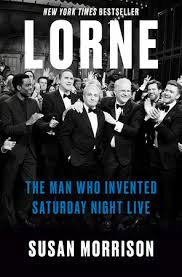
Published earlier this year, Susan Morrison’s Lorne is a biography of Lorne Michaels, the man behind Saturday Night Live. Lorne has actually produced quite a few other shows and movies but, as this book makes clear, his legacy will always be Saturday Night Live. The book follows Lorne from his beginnings in Canada to his time as a counter-culture tastemaker to his current position as a senior member of America’s cultural establishment. Lorne went from being a rebel to being a member of the club and, reading about the process, one comes to suspect that he was always more comfortable in the club than outside of it. It’s an interesting journey and the Lorne Michaels who emerges is occasionally idealistic, occasionally pragmatic, and — even after 595 pages — rather enigmatic. It’s a fascinating story, one that provides insight into American culture has changed and developed over the past 50 years. There’s certainly more insight to be found in this book than in Jason Reitman’s Saturday Night.

On a similar note, Todd S. Purdum’s Desi Arnaz: The Man Who Invented Television argues that Arnaz deserves far more credit for …. well, inventing television than he’s usually given. Often dismissively described as being Lucille Ball’s less talented husband, Purdom persuasively argues that Arnaz deserves far more credit for the success of I Love Lucy than he is commonly given. The book details how Arnaz’s family lost their fortune in one of Cuba’s many revolutions, how Arnaz came to America and built a career for himself, and how Arnaz revolutionized television as the producer of I Love Lucy. The book deals with both the good and the bad of Lucy and Desi’s marriage. Desi emerges as a complex and flawed character, one whose career never really recovered after his divorce from Lucille Ball.
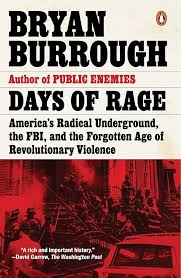
Finally, an old friend recommended that I read Bryan Burrough’s 2015 book, Days of Rage. Days of Rage takes a look at the the domestic terrorism of the 70s, the bombings, kidnappings, and even murders that were committed by members of such groups as the Weatherman, the BLA, the SLA (they kidnapped Patty Hearst), and the FALN. Along with taking a look at the motivations of the terrorists themselves, Burrough also writes about how the FBI reacted. In the end, it’s a book without any heroes. The FBI frequently violated the law in their pursuit of domestic enemies. Meanwhile, the radicals often come across as being a collection of hypocrites who were essentially more interested in playing revolution than actually accomplishing anything. The Weathermen, in particular, come across as being a bunch of smug and overly privileged LARPers. It’s an interesting book and one that feels very relevant in our current cultural moment.
 Through the Shattered Lens