Norman Mailer, running for mayor of New York City in 1969
4 (or more) Shots From 4 (or more) Films is just what it says it is, 4 (or more) shots from 4 (or more) of our favorite films. As opposed to the reviews and recaps that we usually post, 4 (or more) Shots From 4 (or more) Films lets the visuals do the talking.
Norman Mailer wasn’t just a writer and symbol of New York City. He was also an aspiring filmmaker, a director who made three experimental films in the 60s and one studio film in the 80s. And while none of his films could really be described as being a hit with either audiences or critics, they do — to a certain extent — epitomize an era. Plus, the story of Rip Torn hitting Mailer with a hammer during the filming of Maidstone will live forever.
In honor of Norman Mailer the director, here are….
4 Shots From 4 Norma Mailer Films
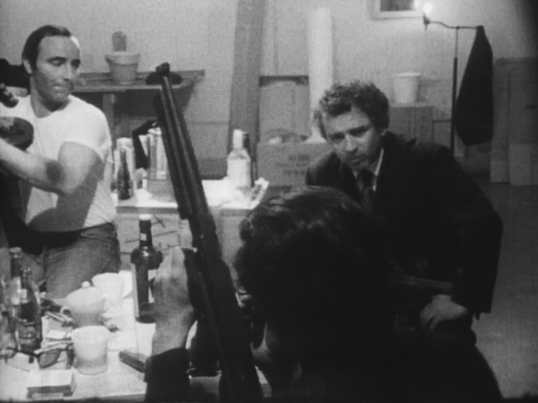
Wild 90 (1968, dir by Norman Mailer, DP: D.A. Pennebaker)
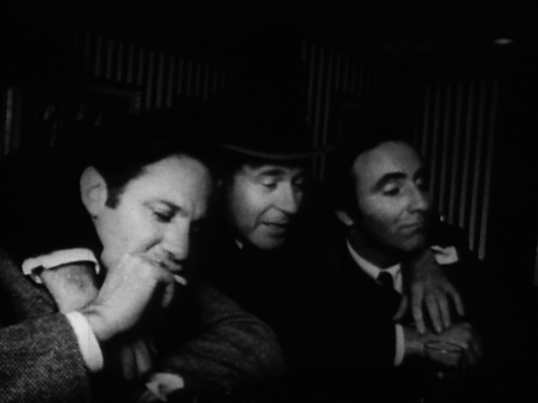
Beyond The Law (1968, dir by Norman Mailer, DP: D.A. Pennebaker)
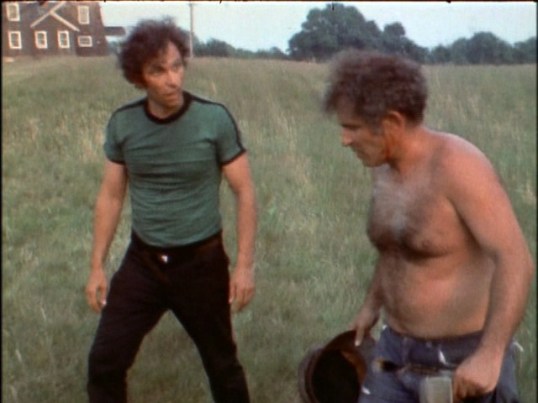
Maidstone (1970, dir by Norman Mailer, DP: D.A. Pennebaker)
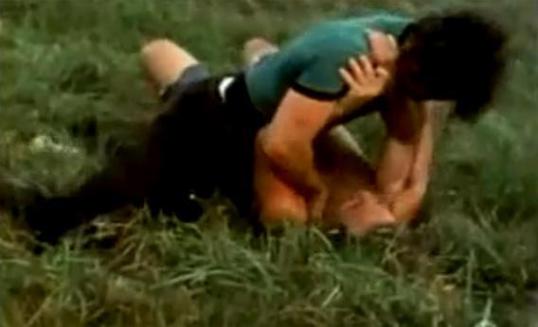
Tough Guys Don’t Dance (1987, dir by Norman Mailer, DP: Mike Moyer and John Bailey)
Produced, directed, financed by, and starring writer Norman Mailer, 1968’s Wild 90 is incomprehensibly bad. Words escape me when it comes to describing just how boring and pointless this film.
Over the course of four nights, Mailer and two of his friends were filmed in a shabby apartment. Norman Mailer played The Prince, a gangster who talks tough and is constantly doing stuff like punching the room’s only hanging lightbulb. Buzz Farber and Mickey Knox played Cameo and Twenty Years, the Prince’s partners in crime. Acclaimed documentarian D.A. Pennebaker served as cinematographer, using a hand-held camera to capture the three men as they drank, laughed, fought, and pretended to be gangsters.
The plot of the film is not easy to describe, both because the entire film was improvised and also because the soundtrack is so muddy that it’s often impossible to understand what anyone’s saying. As far as I can tell, the Prince’s latest criminal scheme has gone south and the Prince and his two cronies are hiding out in the apartment until the heat dies down. They don’t have much to do, other than drink and exchange profane dialogue. (The three men do their best to sound like real-life, poetically crude gangsters. It’s hard to judge how well they do any of that because the dialogue is often incomprehensible.) Some people drop by the apartment. Normally, that would liven things up but in this one, everyone just seems like they want to leave before Norman Mailer accidentally punches them. One man comes in a with a dog that start barking. Mailer barks back until the dog falls silent.
Making all of this interesting is the fact that, in the 1960s, Norman Mailer was one of America’s leading public intellectuals. Today, living in the age of influencers, it can be easy to forget that there were once public intellectuals, like Mailer, William F. Buckley, Gore Vidal, John Kenneth Galbraith, and Tom Wolfe, who disagreements were followed by the public and who made headlines when they showed up drunk on the daytime talk shows. Mailer was an acclaimed and often controversial writer, one who was as famous for his arrogance and his public feuds as for his novels and essays. Mailer was a New York fixture and a Pulitzer Prize winner He was one of the first writers to suggest that the Left and the Right could be united by a shared belief in individual freedom. A year after the release of Wild 90, Mailer ran an ill-fated campaign for mayor of New York City. His slogan was “No more bullshit!” and his campaign, which attracted some attention early on, was ultimately sabotaged by his habit of showing up drunk to his rallies and insulting his supporters.
What he was not was a very good filmmaker. Wild 90 was Mailer’s first film and it’s a nearly unwatchable disaster. (At least his later film, Maidstone, had Rip Torn around to liven things up.) With its low-budget, black-and-white look and it’s DIY aesthetic, Wild 90 may remind some of the Andy Warhol’s Factory films but Warhol (or, if we’re to be absolutely honest, Paul Morrissey) was at least trying to be subversive. Wild 90, on the other hand, is pure self-indulgence, a chance for Mailer to say, “Look how funny I am!” Farbar and Knox at least manage to give semi-believable performances. Mailer continually looks straight at the camera and seems to panic whenever either of his co-stars start to take the attention off of him. The entire film seems to be Mailer’s attempt to convince everyone that he really was a tough guy.
There is one moment of the film that does work. The film opens with some gorgeously shabby images of lower Manhattan. Norman Mailer was a proud New Yorker so it’s appropriate that the best part of the film is the part that highlights the city he loved.
Norman Mailer, running for mayor of New York City in 1969
4 (or more) Shots From 4 (or more) Films is just what it says it is, 4 (or more) shots from 4 (or more) of our favorite films. As opposed to the reviews and recaps that we usually post, 4 (or more) Shots From 4 (or more) Films lets the visuals do the talking.
Norman Mailer wasn’t just a writer and symbol of New York City. He was also an aspiring filmmaker, a director who made three experimental films in the 60s and one studio film in the 80s. And while none of his films could really be described as being a hit with either audiences or critics, they do — to a certain extent — epitomize an era. Plus, the story of Rip Torn hitting Mailer with a hammer during the filming of Maidstone will live forever.
In honor of Norman Mailer the director, here are….
4 Shots From 4 Norma Mailer Films
Wild 90 (1968, dir by Norman Mailer, DP: D.A. Pennebaker)
Beyond The Law (1968, dir by Norman Mailer, DP: D.A. Pennebaker)
Maidstone (1970, dir by Norman Mailer, DP: D.A. Pennebaker)
Tough Guys Don’t Dance (1987, dir by Norman Mailer, DP: Mike Moyer and John Bailey)
Today we wish a happy birthday to one of the most important figure in American music and American culture in general, Mr. Bob Dylan.
This music video was shot as a promo for the ground-breaking documentary, Don’t Look Back. It was filmed in an alley near the Savoy Hotel in London. The cards that Dylan flips throughout the video were written by Donovan, Allen Ginsberg, Bob Neuwirth and Dylan himself and, of course, both Ginsberg and Bob Neuwirth can spotted standing in the background of the video. (Considering that Don’t Look Back features a famous scene in which Dylan absolutely humiliates Donovan, I always found it interesting that he played a role in the production of this video. Did Donovan help write out the cards before or after the It’s All Over Now, Baby Blue incident?) In typical Dylan fashion, the cards feature intentional misspellings and occasionally they don’t actually match up with the lyrics. For instance, the song may mention needing “eleven dollar bills” but the card reads “twenty.”
Dylan filmed two other versions of this video, neither one of which was officially released but which can both be found in Martin Scorsese’s Dylan documentary, Don’t Look Back. One was shot at a nearby park while the other was apparently filmed in the Savoy Hotel itself. All three of the videos follow the same basic theme of Dylan flipping cards while Ginsberg and Neuwirth wander about in the background.
This song, which was inspired by the writings of Beats like Ginsberg and Kerouac (as well as, according to Bob Dylan, by the music of Chuck Berry), was Bob Dylan’s first top ten single in the U.S.
“All I can do is be me, whoever that is.” — Bob Dylan
Bob Dylan not only revolutionized music but he was also responsible for one of the first music videos. The video for Subterranean Homesick Blues originally appeared at the start of D.A. Pennebaker’s documentary, Don’t Look Back. It was filmed in May 8th, 1965 in the alley behind the Savoy Hotel in London and, as Bob flips those cue cards, keep an eye out for both songwriter Bob Neuwirth and the poet Allen Ginsberg in the background.
Happy birthday to Bob Dylan, who is 74 years old today.



 Through the Shattered Lens