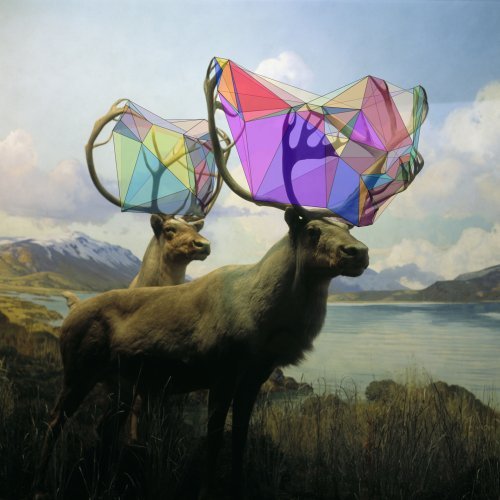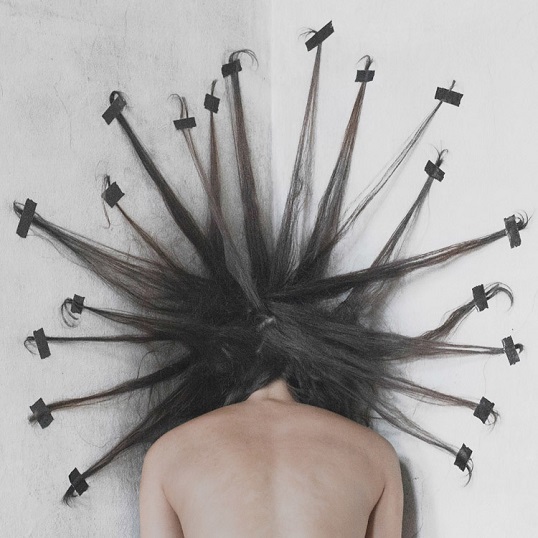
Pyramids are four seemingly random Joes from Denton, Texas, who have managed to attract some huge names in the world of music, possibly through their completely ridiculous album covers. Well, maybe not that, but the genre-defying oddity known as Pyramids and their associated acts have shown an uncanny knack for recruiting stars to their projects. Originally signed to Aaron Turner’s (Isis, Old Man Gloom) acclaimed Hydra Head Records, they managed a transition to metal’s newest cutting edge label, Profound Lore, as soon as the former went defunct. Their self-titled debut in 2008 scored Colin Marston (Krallice), Vindsval (Blut Aus Nord), and Justin Broadrick (Godflesh, Jesu), among others, to contribute to a remix album, while band leader R. Loren’s White Moth and Sailors with Wax Wings projects have featured David Tibet (Current 93), Alec Empire (Atari Teenage Riot), Jonas Renkse (Katatonia), John Gossard (Weakling), Simon Scott (Slowdive), Hildur Guðnadóttir (múm), and Aaron Stainthorpe (My Dying Bride), to name… a few? The 2009 follow-up, a collaborative album with Nadja, featured Simon Raymonde (Cocteau Twins), and there’s an Ulver remix of it floating around out there. They also lead some cassette tape project with 49 bands I’ve never heard of and This Will Destroy You.
In spite of the absolutely ridiculous, confounding string of names I just threw out, this band remains pretty damn obscure. A Northern Meadow, their first full-length since 2009, may well change all that, with positive reviews on sites like Pitchfork Media ensuring them a moment in the spotlight. Moreover, Colin Marston and Vindsval are active guest musicians this time, with pretty encompassing roles.
track: “In Perfect Stillness, I’ve Only Found Sorrow”
The opening track, “In Perfect Stillness, I’ve Only Found Sorrow”, kicks off with Marston’s quintessential tremolo and Vindsval’s equally iconic drum programming, while R. Loren’s vocals quickly cue us into the fact that this isn’t going to be a straight metal album. Instead, we face a prolonged melancholy that finds its essence in the vocals and never really resolves into anything. This brooding approach carries throughout the album, but as the minutes tick by you can notice a slight sort of development–little hints at a more complex animal below the surface. “The Earth Melts Into Red Gashes Like The Mouths Of Whales” rises out of the plod for thirty seconds of really catchy guitar before dissolving back into bleak noise. “The Substance Of Grief Is Not Imaginary” feels like a Blut Aus Nord song in slow motion, offering all of their accustomed madness with none of the speed or volume, while Loren briefly confounds the mood with a really beautiful but short lived vocal melody. “Indigo Birds” extends the vocal presence, with Loren singing longer with more effects and range. As the song dissolves out into distorted droning and ultimately three minutes of dissonant synth, the album approaches a modest transition in character. The interlude resets the mood, allowing the remainder of the album to take, I think, a slightly more abrasive or confrontational approach.
Track: “I Am So Sorry, Goodbye”
The second half of the album is more distinct, with more drive in the guitar and a faster rate of transition. “I Have Four Sons, All Named For Men We Lost To War” starts off with the most crushing tones on the album, enhanced in their finality by the still slow pace set by Vindsval’s drums. “I Am So Sorry, Goodbye” has a really memorable industrial groove, with some synth tones that invoke for the first time in me a real vision of something… perhaps ancient, a sort of primordial ruin made all the older by Loren’s forlorn, beautiful vocals. Like “Indigo Birds”, the song dissolves out into low-tuned guitar and synth droning, but the feeling is more complete. The substance of the song gives you more to reflect on in the haze of noise that follows.
On “I Am So Sorry, Goodbye” and growing throughout the remainder of the album, Loren’s vocals start to sound subtly reminiscent of Chino Moreno to me–high-pitch meanderings that feel slightly unstable yet always harmonious. It’s an effect he pulls off well, and it makes the album feel rather back-loaded to me. “Consilience” wraps things up with a turn back to the darker side. More chaotic, and with a new touch of pessimism to the vocals, it concludes an already morbid album on a particularly bleak note. Oppressive synth creeps its way in a bit earlier, and a hard stop takes us to fading noise and silence.
A Northern Meadow leaves me with pretty mixed feelings. R. Loren has a clear aural agenda that he sticks to throughout, yet I can’t escape the feeling that the album’s highest points were those most distant from the overarching theme. The beat-down opening of “I Have Four Sons…”, the synth early in “I Am So Sorry, Goodbye”, Marston’s driving 30-second sweep in “The Earth Melts…”, the short-lived vocal burst at the start of “My Father, Tall as Goliath”… I find myself anticipating these finer moments through a lot of the moody grind, rather than just enjoying the ride and taking the highs as they hit me. That grind has a lot of character at times, especially the further into the album I get, but not enough to match the talent Loren was working with here.
I guess I would say that A Northern Meadow is a very unique album, and I love Loren’s dedication to uniting awesome musicians, but I don’t feel very compelled to keep listening to it as the novelty begins to wear off. If its slightly chaotic morbidity strikes a chord with you, you might love it, but if you can’t connect to that feeling it will inevitably grow tedious at times. Marston’s noodling isn’t extensive enough to keep me constantly engaged the way a Krallice album can–a tall order, considering how equally brilliant that band’s other three members are–nor do I think Vindsval’s drum tones hold up in this sort of mono-tempo drag. It doesn’t help that both musicians inevitably play themselves. Like say, Humphrey Bogart or Morgan Freeman, they are so distinctly themselves that you feel like you’re hearing the actors, not the characters they are meant to portray. There is nothing of the instrumental synergy both produce in their main bands. I don’t hear the chemistry of two great musicians working together here. I just hear two great musicians, like some mash-up with Loren mixing vocals and synth into the pot. There may be some truth to that: if I understood Loren’s recent interview with Decibel Magazine correctly, I’m pretty sure Vindsval and Marston had no direct communication while crafting this.
I’m not saying A Northern Meadow is bad. Not at all. But it does leave me wanting something more. I can’t help but wonder what could come out of Loren, Marston, and Vindsval sitting down in a recording studio together, and I suspect it would be something more substantive than this, with a lot more motion and a lot less gloom. But that meeting might be pretty difficult to arrange, and who knows whether they would see eye to eye if Loren had allowed them less freedom to do their own things. I might yet get into this, if I can get over what it isn’t sufficiently to appreciate what it is.
 Through the Shattered Lens