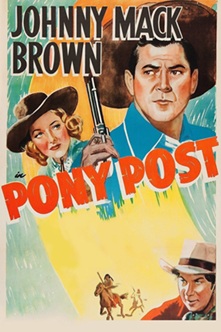
 In the days of the Old West, Griff Atkins (Stanley Blystone) manages a Pony Express station but, because of his gambling debts, he actually encourages the Indians and the outlaw Richard brothers (John Rockwell and Ray Teal) to attack the Pony Express riders and steal their horses. Major Goodwin (Tom Chatterton) tries to put a stop to all this by firing Griff and putting Cal Sheridan (Johnny Mack Brown) in charge. Griff and the Richard brothers continue their outlaw ways and eventually, the head of one of the relay stations is killed in one of their raids. While the dead man’s daughter, Norma (Nell O’Day), investigates the murder, Cal works to bring peace the line and falls in love with Goodwin’s daughter, Alice (Dorothy Short). Meanwhile, aspiring Pony Express rider Shorty (Fuzzy Knight) tries to invent a trampoline system that will help him to mount a horse.
No matter how bad things get in the west, you can always count on Johnny Mack Brown to bring some order and to get it done in less than an hour. Johnny Mack Brown was always a good hero and that’s the case here. Eventually this film has all of the horse riding and tough fighting that fans of the genre expect from these westerns but, for a short movie (it only runs for 59 minutes), it still seems to take a while for it to really get going. The first half of the movie is more about Fuzzy Knight singing songs and trying to become a rider than it is about anything else. I usually enjoy Fuzzy’s antics but, like the B-western themselves, they are definitely an acquired taste for most viewers.

 Through the Shattered Lens