Over the next 5 days, I will discuss Charles Bronson’s DEATH WISH series in chronological order. This series has brought me countless hours of entertainment over the last 40 years, so enjoy and let me know your thoughts!
“Don’t ever make a death wish, because a death wish always comes true!” – I’ve always thought this was kind of a corny saying on the original DEATH WISH trailer, but as one of the world’s biggest Charles Bronson fans, I still hold the original DEATH WISH (1974) in extremely high regard. This is the 70’s revenge classic that made Bronson a box office superstar in his home country, while simultaneously influencing the way vengeance was depicted on screen for decades to come. DEATH WISH is one of the most underrated and influential films from a decade that was full of great films.
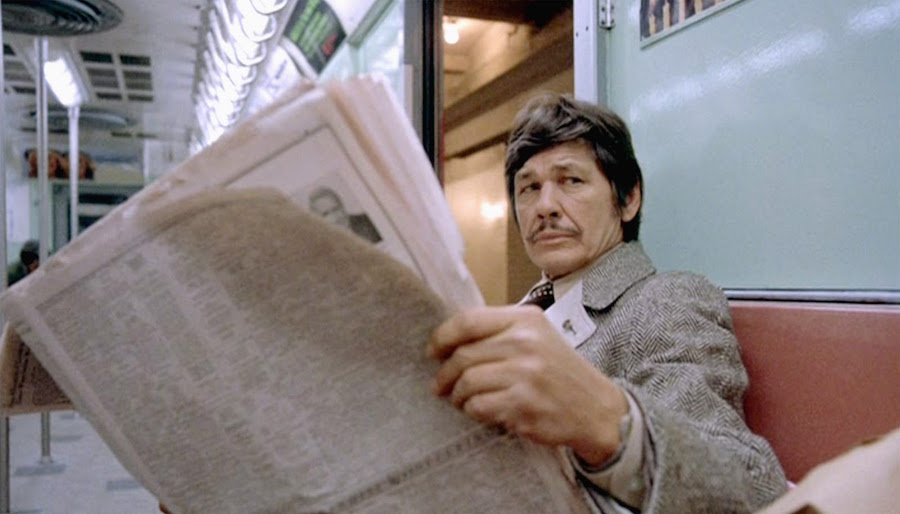
If you’re reading this review, I’d be about 99% positive that you know the basic story of the film. Charles Bronson plays Paul Kersey, a conscientious objector whose wife is killed and whose daughter is raped by a group of criminal thugs in New York City. When the police are incapable of providing justice, Kersey turns into a sidewalk vigilante and stalks the streets and subways of New York, luring thugs to mug him so he can shoot them with his 32-caliber Colt Police Positive pistol. Vincent Gardenia plays detective Frank Ochoa, who’s put in charge of finding the vigilante and putting an end to his one-man mission of justice.
It’s been 50 years since DEATH WISH was released into theaters and it’s hard to fathom just how controversial the film was in its time, especially since I wasn’t even 1 year old when it was released. The graphic rape scene that kicks off the events of the film, combined with the vigilante subject matter, turned off so many big stars, including Jack Lemmon, Henry Fonda and George C. Scott. This opened up the door for Charles Bronson who didn’t have any such misgivings. They just didn’t understand what a nerve the film would touch with the filmgoing public, who were tired of their cities being overrun by violent criminals. The movie became an audience participation movie unlike any others of the time with cheering in the seats every time Kersey offed another criminal. The controversial film became one of the top box office hits of the year and the biggest of Bronson’s career.
DEATH WISH was the fourth of six films directed by Michael Winner and starring Charles Bronson. In typical Winner fashion, the film has some strange touches, but the director is extremely effective in building the motivation for vigilante justice that was required for the film to thrive. He handles the action sequences well, and his cast is outstanding. Bronson & Gardenia are perfect in the lead roles, and the lovely Hope Lange has the brief, infamous role as Kersey’s brutalized wife. Stuart Margolin is especially memorable as the Arizona businessman who gives Kersey his gun. There are also a number of actors in small roles who were not well known when the movie was made who would go on to successful film careers. The biggest is Jeff Goldblum who has the most memorable role of the three muggers who attack Kersey’s wife and daughter at the beginning of the film. It’s a brief, but no holds barred performance for sure. Oscar winning actress Olympia Dukakis has a small role as a cop who expresses her frustration about the amount of leg work expected of her by Detective Ochoa. And finally, Christopher Guest has one scene as a young cop who finds the wounded vigilante and recovers his gun.
On a personal note, this film holds a special place in my heart as the first Charles Bronson film I ever saw. It was probably in 1984 or ‘85, and I stayed up with my dad to watch the late movie on our local TV station. The movie happened to be DEATH WISH. As bad things were happening to Kersey’s family at the beginning of the film, my dad told me not to worry, that “Charles would get them.” That intrigued me and let me know that Bronson had a reputation that preceded him. From that point forward, I wanted to rent a Charles Bronson film every time we went to the video store. And the rest, as they say, is history!
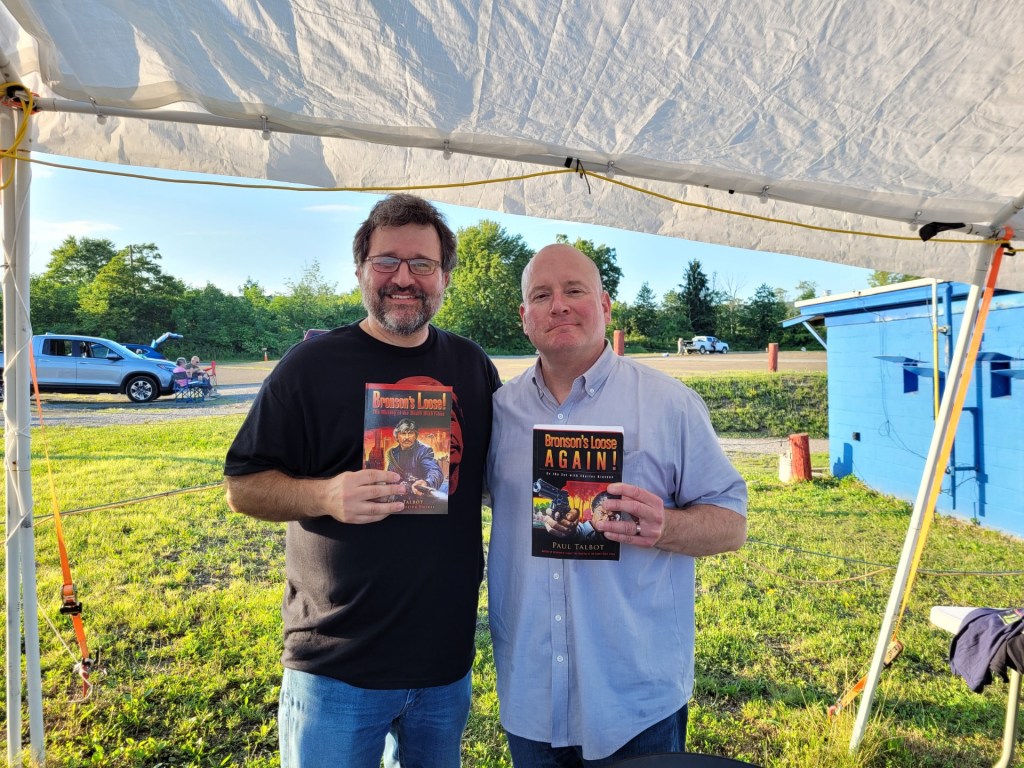
BONUS: The definitive book about the DEATH WISH film series was written by my friend, author and film historian Paul Talbot. The name of the book is BRONSON’S LOOSE: THE MAKING OF THE DEATH WISH FILMS. If you have any interest in Charles Bronson, the DEATH WISH series or Cannon Films, I can’t recommend Paul’s books more highly.
HARD TIMES is probably the best movie that features Charles Bronson in the lead, and it’s my personal favorite movie of all time as of the date of this review. I reserve the right to change this opinion at any time!
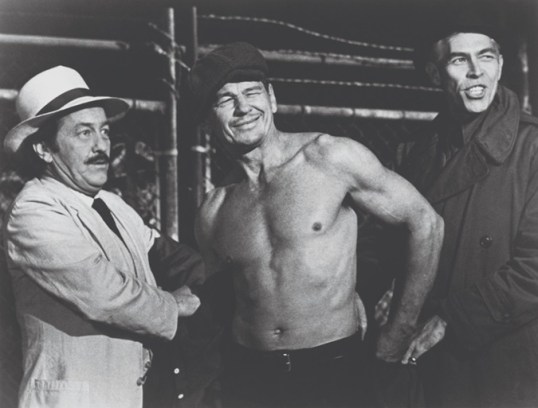
Charles Bronson is Chaney, a drifter who’s riding the rails in the south during the great depression. Soon after getting off the train in some unnamed southern town, Chaney comes across an underground “fight” where we first meet Speed, played by the great James Coburn. It seems Speed is the money man for this big lug of a fighter who gets his butt kicked in front of God, the local underground fighting world, a man with horrible teeth, and Chaney. After witnessing this fiasco, Chaney follows Speed to a local restaurant where he apparently waits in the shadows until Speed goes up to the counter to get a refill of oysters and a couple of lemons. I say this because when Speed turns from the counter with his newly filled tray, Chaney is sitting at Speed’s table. I’m surprised that Speed even talks to him because the first thing Chaney does is help himself to an oyster, WITHOUT EVEN ASKING! Even with this breach of etiquette, Speed discusses the fight from earlier in the evening with Chaney, who offers his fighting services to Speed since the “big lug” is clearly not a good investment into the future and who is probably in a hospital overnight dealing with a concussion. Speed is hesitant to accept this offer since Chaney appears to be fairly old (Bronson was 53 when he made the film), but he changes his mind when Chaney offers his last $6 bucks to Speed to bet on him. Cut to Chaney getting his chance to fight. This is a fun scene because his opponent is the same fighter from earlier who kicked the big lug’s butt. The guy even taunts Chaney for being too old. The fight starts and it consists of two hits, Chaney hits the smartass, the smartass hits the ground. Somewhat amazed, Speed takes Chaney to New Orleans, and the two embark on an odyssey together to win fights and make thick wads of cash. The remainder of the film documents that odyssey, although it does take time out for a few “in-betweens.”
HARD TIMES is one of Bronson’s best films, and one of the main reasons why is that it provides a boatload of audience satisfaction. There are many examples of this. First is the scene mentioned above where Chaney takes out the smirking, dismissive fighter who sees our hero as too old. Too old my ass! In another scene, a bunch of unrefined Cajuns out in the boondocks refuse to pay up after Chaney kicks their fighter’s butt. Rather than pay up, the slimy Cajuns pull out a gun and dare Speed and Chaney to come take the money. Our heroes leave at that time, but Chaney convinces them to hang around out in the country for awhile so they can surprise the Cajuns under the cover of darkness at the local honkytonk, which happens to be owned by the head slimy Cajun. Chaney takes the gun, takes the money, and then shoots up the place with the gun, grinning as he saves the last bullet to shoot a mirror he’s looking directly into. It’s a fun scene that ends with Chaney, Speed and the gang speeding off into the night laughing like hyenas! In another scene, Chaney takes on the big, bald-headed, unbeatable fighter Jim Henry (Robert Tessier) in an awesome cage match. Let’s just say Jim Henry thought he was unbeatable and leave it at that. And finally, a competing New Orleans money man (Jim Henry’s guy) just can’t stand that he no longer has the top fighter in town, so he brings in a fighter from Chicago to take on Chaney. I won’t tell you what happens, but it’s some really fun stuff!
The cast of HARD TIMES also elevates the film to top tier status. I’ve already discussed Bronson and Coburn, but Strother Martin and Jill Ireland also add to the joy. Martin plays Poe, Chaney’s drug addict cut man, who dresses up like he could grow up to be Colonel Sanders in his older age. It’s a fun performance that adds a lot to the film. Jill Ireland plays Chaney’s love interest. She’s quite beautiful, but she seems to always be giving Chaney a hard time about what he does for a living. His response is usually to simply leave when she starts that BS. I thinks that’s kind of fun too.
And finally, this was the directorial debut of Walter Hill, the man behind THE WARRIORS, THE DRIVER, THE LONG RIDERS, SOUTHERN COMFORT, 48 HOURS, and RED HEAT. His movie is lean and mean, without a wasted moment that isn’t moving the film along. Hill has crafted a fun movie, filled with great performances. I think it’s one of the most underrated films of the 1970’s!
The scene below is a major spoiler for the film 10 to Midnight so don’t watch if you haven’t seen the film yet. And, to be honest, you probably shouldn’t even read the rest of this post, as the post itself is probably a spoiler as well. There’s no way to truly talk about this film without talking about the ending. 10 to Midnight is a film that’s been on my mind a lot this year, largely because Charles Bronson plays a character who reminds me of my Dad. Bronson’s relationship with his daughter (played by Lisa Eilbacher) also reminds me of my own relationship with my Dad. I doubt there’s many people who get sentimental over a relatively unheralded vigilante horror film from 1983 but, as I’m still processing losing my Dad earlier this year, I am one of those people.
If you have seen the film, you know that this is one of the best endings that Charles Bronson ever filmed. Indeed, in today’s chaotic world, there’s some very satisfying about both Bronson’s final line and his no-nonsense style of dealing with problems. And indeed, with all the bad vibes that seem to have been unleashed on the world over the past few years, this scene feels like an exorcism of sorts.
Serial killer Warren Stacy (Gene Davis) thought he could game the system. He thought he had everything figured out. He smugly assumed no one could stop his reign of terror.
Well, Bronson disagrees.
And with that one wonderful final line, Charles Bronson brings this year’s Horrorthon to a close.
In this episode from 1961, Charles Bronson stars as Yank Dawson, an aging boxer who finds himself in haunted auditorium in England during World War II. Bronson was 39 years old when he starred as Yank Dawson and he gives a good performance. The role makes good use of both Bronson’s imposing physicality and also the smoldering anger that would eventually make Bronson a star in both Europe and, later, the United States.
The episode below first aired on January 10th, 1961.
As some of our regular readers undoubtedly know, I am involved in a few weekly live tweets on twitter. I host #FridayNightFlix every Friday, I co-host #ScarySocial on Saturday, and I am one of the five hosts of #MondayActionMovie! Every week, we get together. We watch a movie. We tweet our way through it.
Tonight, for #ScarySocial, I will be hosting 1983’s Ten To Midnight, starring Charles Bronson!
If you want to join us on Saturday night, just hop onto twitter, start the film at 9 pm et, and use the #ScarySocial hashtag! The film is available on Prime, Tubi, and a host of other streaming sites! I’ll be there co-hosting and I imagine some other members of the TSL Crew will be there as well. It’s a friendly group and welcoming of newcomers so don’t be shy.
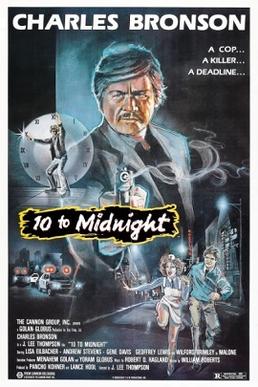
The 1983 film, 10 to Midnight, opens with LAPD detective Leo Kessler (played by legendary tough guy Charles Bronson) sitting at his desk in a police station. He’s typing up a report and taking his time about it. A reporter who is in search of a story starts to bother Leo.
“Jerry,” Leo tells him, “I’m not a nice person. I’m a mean, selfish son-of-a-bitch. I know you want a story but I want a killer and what I want comes first.”
It’s a classic opening, even if Leo isn’t being totally honest. Yes, he can be a little bit selfish but he’s really not as mean as he pretends to be. He may not know how to talk to his daughter Laurie (Lisa Eilbacher) but he is also very protective of her and he wants to be a better father than he’s been in the past. He may roll his eyes when he discovers that Detective Paul McAnn (Andrew Stevens) is the son of a sociology professor but he still tries to act as a mentor to his younger partner. Leo may complain that the criminal justice system “protects those maggots like they’re an endangered species” but that’s just because he’s seen some truly disturbing things during his time on the force and, let’s face it, Leo has a point. When one of Laurie’s friends is murdered, Leo is convinced that Warren Stacy (Gene Davis) is the murderer and he’s determined to do whatever he has to do to get Warren off the streets. “All those girls,” Leo snarls when he sees Warren, his tone letting us know that his mission to stop Warren is about more than just doing his job.
Warren Stacy is handsome, athletic, and he has good taste in movies. (He’s especially a fan of Butch Cassidy and the Sundance Kid. Just don’t try to trick him by saying Steve McQueen played the Sundance Kid.) Warren is also a total creep, the type of guy who complains that a murder victim “wasn’t a good person,” because she trashed him in her diary. When Leo takes a look around Warren’s apartment, he finds not only porn but also a penis pump. (“It’s for jacking off!” Leo yells at Warren, enunciating the line as only Charles Bronson could.) Warren is also a murderer but he’s a clever murderer, the type who sets himself up with an alibi by acting obnoxiously in a movie theater. Warren strips nude before killing his victims, in order to make sure that he doesn’t leave behind any evidence. (This film was made in the days before DNA testing.)
Leo knows that Warren is guilty but, as both his gruff-but-fair captain (Wilford Brimley, naturally) and the D.A. (Robert F. Lyons) point out, he has no way to prove it. When Warren starts to stalk Laurie and her friends (including Kelly Preston), Leo decides that he has no choice but to frame Warren. But when Warren’s amoral attorney, Dave Dante (Geoffrey Lewis, giving a wonderfully sleazy performance), threatens to call McAnn to the stand, McAnn has to decide whether to tell the truth or to join Leo in framing a guilty man.
10 to Midnight is a violent, vulgar, and undoubtedly exploitive film, one that features a ham-fisted message about how the justice system is more concerned with protecting the rights of the accused as opposed to lives of the innocent. And yet, in its gloriously pulpy way, this is also one of Bronson’s best films. It’s certainly my personal favorite of the films that he made for Cannon.
Director J. Lee Thompson and Charles Bronson were frequent collaborators and Thompson obviously knew how to get the best out of the notoriously reserved actor. Bronson was not known for his tremendous range but he still gives one of his strongest performances in 10 to Midnight, playing Leo as being not just a determined cop but also as an aging man who is confused by the way the world is changing around him. Stopping Warren isn’t just about justice. It’s also about fighting back against the the type of world that would create a Warren Stacy and then allow him to remain on the streets in the first place. Interestingly, though Leo doesn’t hesitate when it comes to framing Warren, he is also sympathetic to McAnn’s objections. Unlike other Bronson characters, Leo doesn’t hold a grudge when his partner questions his methods. Instead, he simply know that McAnn hasn’t spent enough time in the real world to understand what’s at stake. McAnn hasn’t given into cynicism. He hasn’t decided that the best way to deal with his job is to be a “mean son of a bitch.” Bronson and Andrew Stevens, who had worked together in the past, have a believable dynamic. McAnn looks up to Leo but is also conflicted by his actions. Leo may be annoyed by McAnn’s reluctance but he also respects him for trying to be an honest cop. Their partnership feels real in a way that sets 10 to Midnight apart from so many other films about an older cop having to deal with an idealistic partner.
One of the most interesting things about the film is Leo’s relationship with his daughter, Laurie. Over the course of the film, Leo and Laurie go from barely speaking to bonding over liquor and their shared regrets about the state of the justice system. When McAnn first meets Laurie, she’s offended when McAnn suggests that she takes after her father. But, as the film progresses, she comes to realize that she and Leo have much in common. (To be honest, I related quite a bit to Laurie, especially as I’ve recently come to better appreciate how much of my own independent nature was inherited from my father.) Lisa Eilbacher and Charles Bronson are believable as father-and-daughter and they play off of each other well. The scenes between Laurie and Leo give 10 to Midnight a bit more depth than one might otherwise expect from a Bronson Cannon film. Leo isn’t just trying to protect his daughter and her roommates from a serial killer. He’s also trying to be the father who he wishes he had been when she was younger. He’s trying to make up for lost time, even as he also tries to keep Warren Stacy away from his family.
As played by Gene Davis, Warren Stacy is one of the most loathsome cinematic villains of all time. Warren’s crimes are disturbing enough. (Indeed, the surreal sight of a naked and blood-covered Warren Stacy stalking through a dark apartment is pure nightmare fuel.) What makes Warren particularly frightening is that we’ve all had to deal with a Warren Stacy at some point in our life. He’s the sarcastic and easily offended incel who thought he was entitled to a phone number or a date or perhaps even more. As I rewatched this movie last night, I wondered how many Warrens I had met in my life. How many potential serial killers have any of us unknowingly had to deal with? Warren tries to strut through life, smirking and going out of his way to let everyone know that he knows more than they do but the minute that Leo turns the table on him, Warren starts whining about he’s being treated unfairly. During his final, disturbing rampage, Warren yells that his victims aren’t being honest with him, blaming them for his actions. The film deserves a lot of credit for not turning Warren into some sort of diabolical and erudite supervillain. He’s not Hannibal Lecter. Instead, like all real-life serial killers, he’s a loser who is looking for power over those to whom he feels inferior and for revenge on a world that he feels owes him something. He’s a realistic monster and that makes him all the more frightening and the film all the more powerful. Warren is the type of killer who, even as I sit here typing this, could be walking down anyone’s street. He’s such a complete monster that it’s undeniably cathartic whenever Leo goes after him.
How delusional is Warren Stacy? He’s delusional enough to actually taunt Charles Bronson! At one point, Warren informs Leo that he can’t be punished for being sick. Warren announces that, when he’s arrested, he might go away for a while but he’ll be back and there’s nothing Leo can do about it. (The suggestion, of course, is that Warren will be back because he committed his crimes in California and all the judges were appointed by a bunch of bleeding heart governors. Warren may not say that out loud but we all know that is the film’s subtext. Some people may agree with the film, some people may disagree. Myself, I’m against the death penalty because I think it’s a prime example of government overreach but I still cheered the first time that I heard Clint Eastwood say, “Well, I’m all torn up about his rights,” in Dirty Harry.) How does Leo react to Warren’s taunts? I can’t spoil the film’s best moment but I can tell you that 10 to Midnight features one of Bronson’s greatest (and, after what we’ve just seen Warren do, most emotionally satisfying) one-lines.
The title has nothing to do with anything that happens in the film. In typical Cannon fashion, the film’s producers came up with a snappy title (and 10 to Midnight is a good one) and then slapped it onto a script that was previously called Bloody Sunday. Fortunately, as long as Bronson is doing what he does best, it doesn’t matter if the title makes sense. And make no mistake. 10 to Midnight is Bronson at his best.
10 To Midnight (1983, dir by J. Lee Thompson, DP: Adam Greenberg)
Charles Bronson was born 101 years ago today. In honor of the man’s legacy, here he is at the end of 1983’s 10 To Midnight, letting Warren Stacy know that “we won’t” be hearing from him.
In honor of what would have been Charles Bronson’s 100th birthday, today’s blast from the past is an episode of the old 1960s anthology series, One Step Beyond. The gimmick with this show was that every story was said to be based on fact, no matter how outlandish or improbable the story may be.
In this episode from 1961, Charles Bronson stars as Yank Dawson, an aging boxer who finds himself in haunted auditorium in England during World War II. Bronson was 39 years old when he starred as Yank Dawson and he gives a good performance. The role makes good use of both Bronson’s imposing physicality and also the smoldering anger that would eventually make Bronson a star in both Europe and, later, the United States.
The episode below first aired on January 10th, 1961.
4 Or More Shots From 4 Or More Films is just what it says it is, 4 shots from 4 of our favorite films. As opposed to the reviews and recaps that we usually post, 4 Shots From 4 Films lets the visuals do the talking!
Today is the 100th anniversary of the birth of an actor who is very popular here at the Shattered Lens, Charles Bronson! In honor of the momentous occasion, we now pay tribute to the one and only Bronson with….
4 Shots From 4 Charles Bronson Films
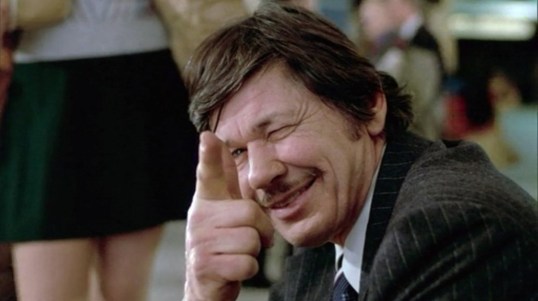
Death Wish (1974, dir by Michael Winner, DP: Arthur Ormitz)
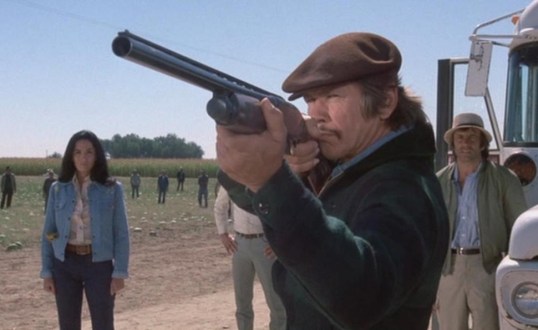
Mr. Majestyk (1974, dir by Richard Fleischer DP: Richard Kline)
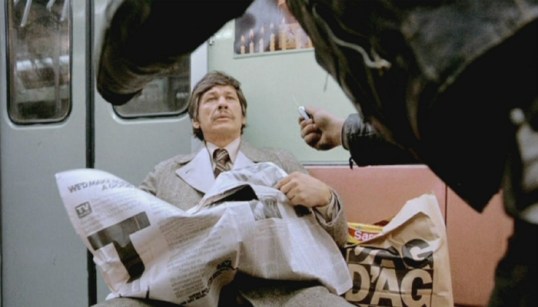
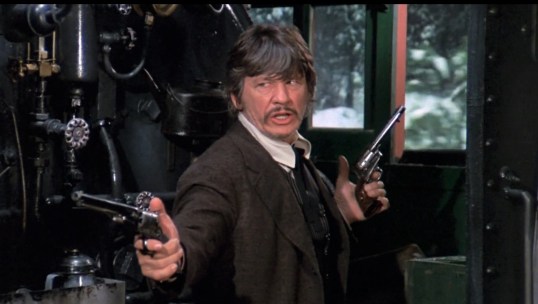
Breakheart Pass (1975, dir by Tom Gries, DP: Lucien Ballard)
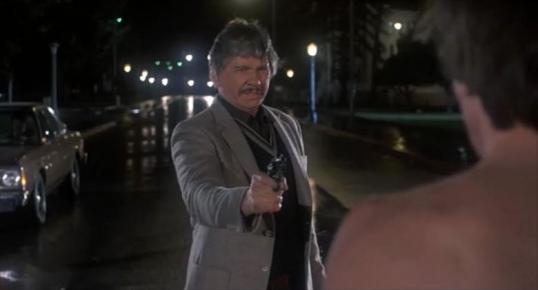
10 To Midnight (1983, dir by J. Lee Thompson, DP: Adam Greenberg)
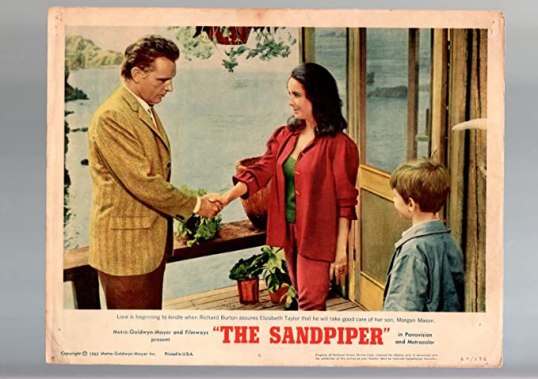
I recorded The Sandpiper that last time that it aired on TCM. This 1965 film is one of the many films that Elizabeth Taylor and Richard Burton made together after they fell in love during the making of Cleopatra. And while it’s true that Who’s Afraid of Virginia Woolf? won Taylor an Oscar and probably should have won one for Burton as well, the majority of the Taylor/Burton films were overproduced melodramas that often seemed as if they’d been rushed into production in order to capitalize on the couple’s tabloid popularity. Unfortunately, Virginia Woolf aside, neither Taylor nor Burton seemed to bring out the best in each other as actors.
The Sandpiper finds Taylor playing Laura Reynolds, an artist who lives in a California beach house with her young son, Danny (Morgan Mason). Laura is a free spirit who believes that everyone, including her son, should have the freedom to make their own choices. She is resistant to any and all authority. She’s a bohemian, a rebel, the type who doesn’t care what society has to say and who flaunts her refusal to follow the dictates of respectability. Good for her! However, she’s also Elizabeth Taylor, which means that she’s impossibly glamorous and even her “cluttered” beach house looks like it’s a hundred times more expensive than anything that anyone viewing the film will ever be able to afford. Though Taylor tries hard, there’s nothing convincingly bohemian about her.
Richard Burton plays Dr. Edward Hewitt, who runs the nearby Episcopal school. Dr. Hewitt is not a free spirit. Instead, he and his wife, Claire (Eva Marie Saint), very much believe in structure and playing by the rules. They believe in a traditional education and, when a judge orders Danny to be enrolled at their school, that’s what Hewitt plans to give him. This, of course, brings Hewitt into conflict with Laura. Both of them have differing ways of looking at the world and Laura is not a fan of religion in general. However, since they’re played by Burton and Taylor, they’re destined to fall in love and have a scandalous affair.
Dr. Hewitt is one of the many religious figures that Burton played throughout his career. In fact, Burton played so many alcoholic priests that I spent most of the movie assuming that Hewitt was an alcoholic as well. However, he’s not. He’s just Episcopalian. That said, Burton delivers every line of dialogue in his trademark “great actor” voice and every minute that he’s onscreen just seems to be full of self-loathing. Even before he cheats on his wife, Hewitt seems to hate himself. Of course, once Burton does start cheating on his wife, it only gets worse. The film presents Hewitt as being something of a hesitant participant, someone who knows that he’s doing the wrong thing but he simply cannot stop himself. Laura, meanwhile, is presented as being someone who is fully willing to break up a marriage to get what she wants. One gets the feeling that 1965 audiences probably just assumed they were watching the true story of how Taylor and Burton fell in love during the making the Cleopatra. That said, it’s all pretty tame. Just like Taylor, director Vincente Minnelli was too much of a product of the old Hollywood to truly embrace this story for all of its sordid potential.
If you’ve ever wanted to watch Charles Bronson debate religion with Richard Burton, this is the film for you. Bronson plays a sculptor and an atheist who upsets Hewitt by calling him “reverend.” Bronson is actually more convincing in the film than either Burton or Taylor, bringing a rough authenticity to his role. Whereas Burton and Taylor both seem to be going through the motions, Bronson comes across as if he actually has a personal stake in the film’s story. It’s not enough to save the movie, of course. Fortunately, a year later, Liz and Dick would be used to better effect in Who’s Afraid of Virginia Woolf?
 Through the Shattered Lens