Today, the Shattered Lens wishes a happy birthday to the one and only Liza Minnelli. Here she is, in today’s scene that I love, performing Money with Joel Grey in 1972’s Cabaret.
Today, the Shattered Lens wishes a happy birthday to the one and only Liza Minnelli. Here she is, in today’s scene that I love, performing Money with Joel Grey in 1972’s Cabaret.
4 Or More Shots From 4 Or More Films is just what it says it is, 4 shots from 4 of our favorite films. As opposed to the reviews and recaps that we usually post, 4 Shots From 4 Films lets the visuals do the talking!
Today, we celebrate the birth and legacy of Bob Fosse. It’s time for….
4 Shots From 4 Bob Fosse Films
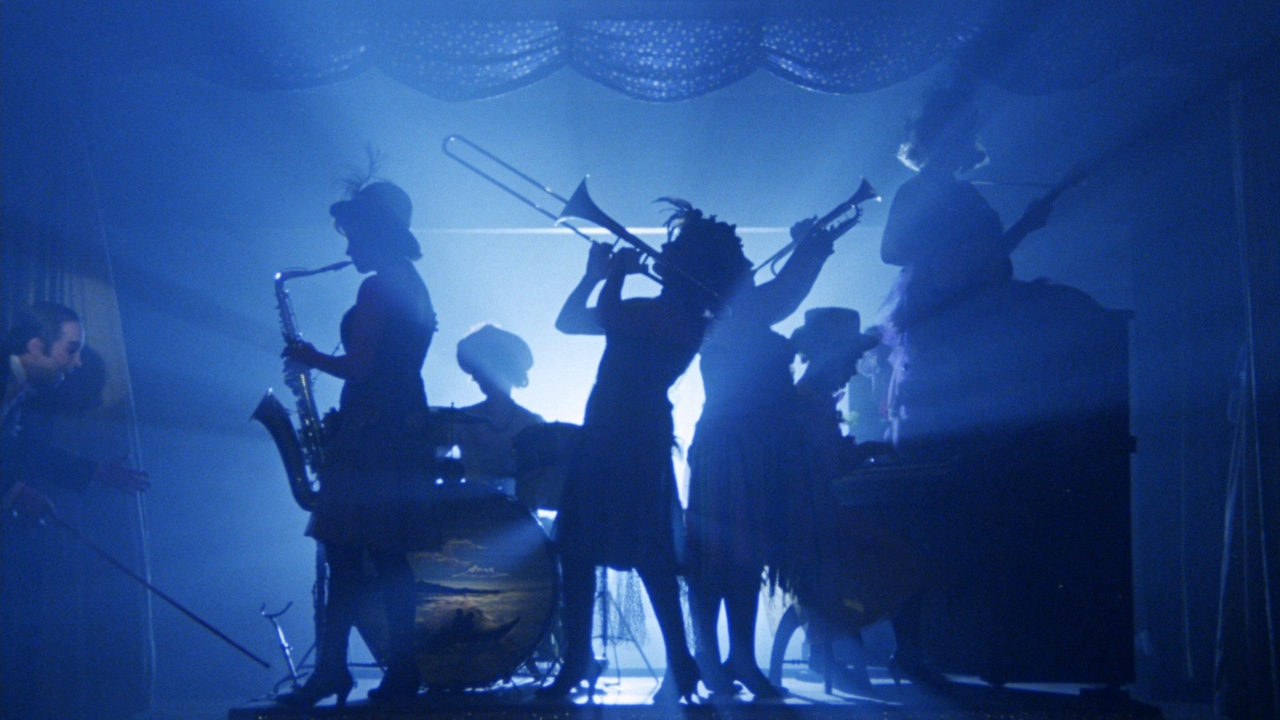
Cabaret (1972, dir by Bob Fosse, DP: Geoffrey Unsworth)
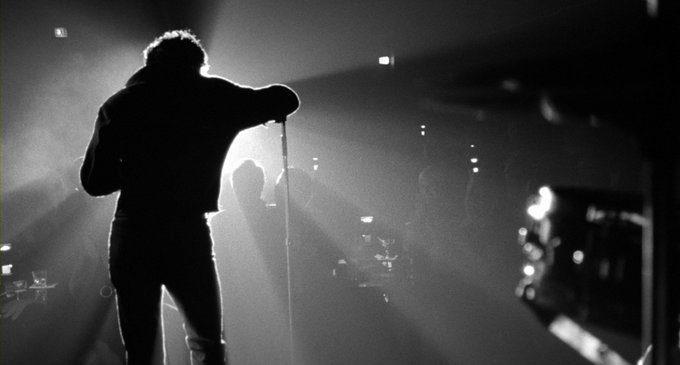
Lenny (1974, dir by Bob Fosse, DP: Bruce Surtees)
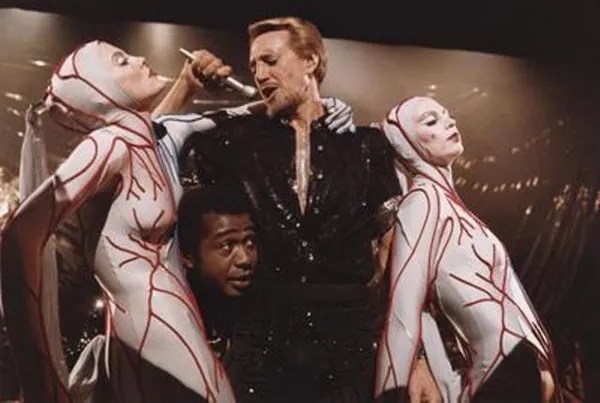
All That Jazz (1979, dir by Bob Fosse, DP: Giuseppe Rotunno)
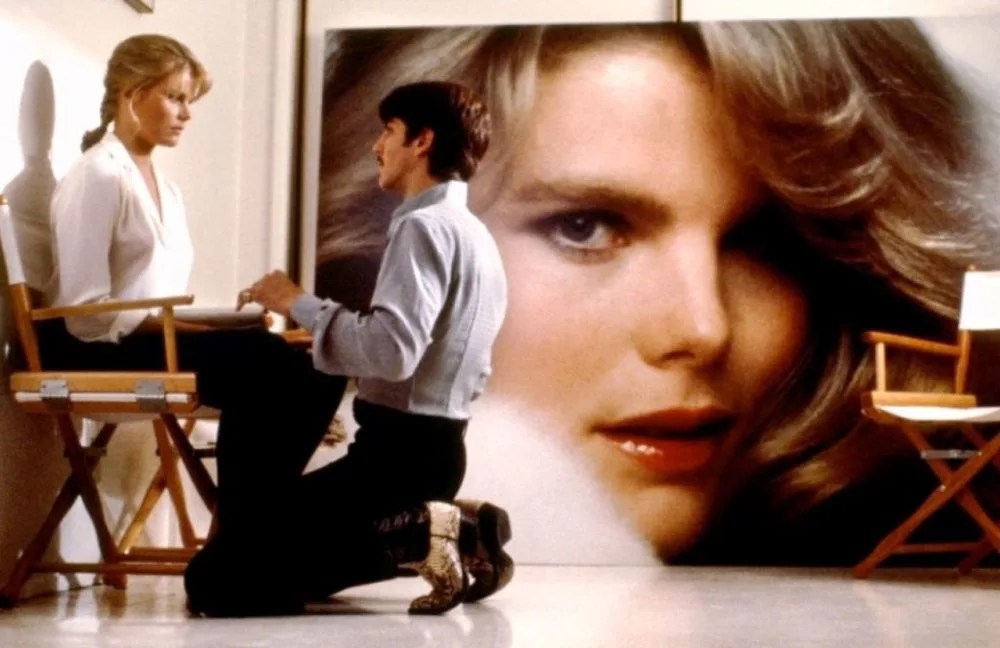
Star 80 (1983, dir by Bob Fosse, DP: Sven Nyvkist)
Today, the Shattered Lens wishes a happy birthday to the one and only Liza Minnelli. Here she is, in today’s scene that I love, performing Money with Joel Grey in 1972’s Cabaret.
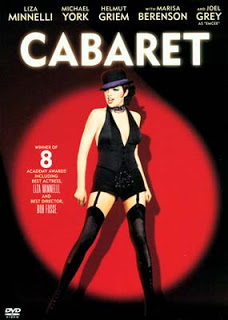
The Godfather is such a classic film that it’s always somewhat surprising to be reminded that it wasn’t exactly an Oscar powerhouse. When the Academy Awards for 1972 were handed out, The Godfather may have won Best Picture, Adapted Screenplay, and Actor but, out of 10 nominations, that’s all it won. Francis Ford Coppola did not win Best Director, Gordon Willis was not even nominated for Best Cinematography, and neither Al Pacino, James Caan, nor Robert Duvall won Best Supporting Actor. According to the fascinating book Inside Oscar, Godfather producer Al Ruddy started his acceptance speech by acknowledging that, “We were getting a little nervous there.”
When you look at the 1972 Academy Awards, what quickly becomes obvious is that the year’s big winner was Cabaret. All of those Oscars that people naturally assume went to The Godfather? They went to Cabaret. Out of ten nominations, Cabaret won eight. It set a record for the most Oscars won by a film that did not win best picture.
If it hadn’t been for The Godfather, Cabaret would have won best picture and it would have totally deserved it. Oh my God — how I envy all of our readers who were alive in 1972! How wonderful it must have been to have not one but two legitimately great and groundbreaking films released in the same year! Five years ago, I was lucky enough to see both The Godfather and Cabaret on the big screen and it was an amazing experience but I can only imagine what it was like to discover these two films for the very first time, with no preconceived notions.
Seriously, I need a time machine and I need it now.
Cabaret takes place in Berlin in 1931. Germany is still struggling to recover from World War I. When the reserved English academic Brian (Michael York) first arrives in the city, he barely notices the buffoonish men standing on street corners, handing out anti-Semitic pamphlets. He’s more interested in earning his doctorate. When he moves into a boarding house, he meets and cautiously befriends Sally Bowles (Liza Minnelli), a free-spirited American actress who dances at the Kit Kat Klub. When Sally tries to seduce Brian, he is curiously passive. Finally, after she asks him if he doesn’t like girls, Brian tells her that he’s tried to have sex with three separate women and each time, he failed. However, Sally is not one to give up and eventually she does manage to seduce Brian, telling him that the other women were just the “wrong three girls.”
To make money, Brian gives English lessons. One of his students is the wealthy and innocent, Natalia (Marisa Berenson). While Brian teachers her English and Sally gives her advice about sex and love, Natalia finds herself more and more of an outsider in Berlin. She’s Jewish and as a result, her dog is murdered. Fritz Wendel (Fritz Wepper) falls in love with Natalia but marrying her means publicly revealing that he’s Jewish and putting both of their lives in danger.
Sally performs at the Kit Kat Klub, where the Emcee (Joel Grey) gives the wealthy audiences a taste of decadence. At first, the audience is full of well-dressed and upper class people but, with each performance, we notice that the audience is changing. More humorless men in uniforms appear at the tables, like constantly multiplying cancer cells. Outside the Klub, men are attacked in the streets but the show inside continues. Though they may not know it (and Sally would certainly never admit it), we watch the performances in Kit Kat Klub with the full knowledge of what is going to eventually happen to the majority of the people who we see on stage. (That the Emcee is played by an actor who is both Jewish and gay only serves to drive the point home.) As a result, the performances are both entertaining and ominous at the same time.
It’s easy to be critical of Sally. In fact, I think it’s a little bit too easy for some critics. Sally may be apathetic and she may be self-centered and apolitical but how different is she from most of us? With the exception of Natalia, Sally may be the only truly honest character in the film. She alone understand that life is a nonstop performance and that there’s nothing she can do to change the world in which she’s found herself. All she can do is look out for herself.
Sally and Brian eventually meet and enter into a brief ménage à trois with Max (Helmut Griem), a wealthy baron. Sally occasionally allows herself to dream of being a baroness while Brian struggles to deal with the jealousy he feels towards both Max and Sally.
Of the three of them, Brian is the only one to eventually become alarmed by the rise of the National Socialism. Sally refuses to take consider anything that’s happening outside of her own life and her own dreams. Meanwhile, Max holds the Nazis in disdain but insists that the aristocracy can control them and that the Nazis are useful for keeping the lower classes in line.
And then this happens:
This scene is one of the most important in the history of cinema and it’s one that is even more relevant today than ever. With the U.S. currently in the middle of a bitter and angry election cycle, everyday seems to bring more of the political mob mentality that this scene epitomizes. In Cabaret, the mob sang in a beer garden. In the modern world, they hop on twitter and start hashtags.
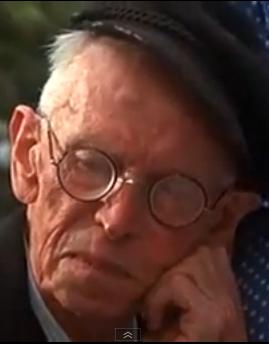
Whenever I watch Cabaret, I always think about that old man in the beer garden. He alone sits there and does not sing. He alone seems to understand.
Cabaret is a powerful and important film, now more than ever.
Gravity won the most but 12 Years A Slave won the award that everyone will remember. With 7 Oscars, Gravity nearly tied with Cabaret for winning the most Oscars without also winning best picture. Cabaret won 8 Oscars but lost best picture to The Godfather (which won 3 Oscars, the exact same amount as 12 Years A Slave).
BEST PICTURE
“American Hustle”
“Captain Phillips”
“Dallas Buyers Club”
“Gravity”
“Her”
“Nebraska”
“Philomena”
X – “12 Years a Slave”
“The Wolf of Wall Street”
BEST DIRECTOR
X – Alfonso Cuaron, “Gravity”
Steve McQueen, “12 Years a Slave”
David O. Russell, “American Hustle”
Martin Scorsese, “The Wolf of Wall Street”
Alexander Payne, “Nebraska”
BEST ACTOR
Christian Bale, “American Hustle”
Bruce Dern, “Nebraska”
Leonardo DiCaprio, “The Wolf of Wall Street”
Chiwetel Ejiofor, “12 Years a Slave”
X – Matthew McConaughey, “Dallas Buyers Club”
BEST ACTRESS
Amy Adams, “American Hustle”
X – Cate Blanchett, “Blue Jasmine”
Sandra Bullock, “Gravity”
Judi Dench, “Philomena”
Meryl Streep, “August: Osage County”
BEST SUPPORTING ACTOR
Barkhad Abdi, “Captain Phillips”
Bradley Cooper, “American Hustle”
Michael Fassbender, “12 Years a Slave”
Jonah Hill, “The Wolf of Wall Street”
X – Jared Leto, “Dallas Buyers Club”
BEST SUPPORTING ACTRESS
Sally Hawkins, “Blue Jasmine”
Jennifer Lawrence, “American Hustle”
X – Lupita Nyong’o, “12 Years a Slave”
Julia Roberts, “August: Osage County”
June Squibb, “Nebraska”
BEST ORIGINAL SCREENPLAY
“American Hustle”
“Blue Jasmine”
“Dallas Buyers Club”
X – “Her”
“Nebraska”
BEST ADAPTED SCREENPLAY
“Before Midnight”
“Captain Phillips”
“Philomena”
X – “12 Years a Slave”
“The Wolf of Wall Street”
BEST FOREIGN LANGUAGE FILM
“The Broken Circle Breakdown”
X – “The Great Beauty”
“The Hunt”
“The Missing Picture’
“Omar”
BEST ANIMATED FEATURE
“The Croods”
“Despicable Me 2”
“Ernest and Celestine”
X – “Frozen”
“The Wind Rises”
BEST DOCUMENTARY FEATURE
“The Act of Killing”
“Cutie and the Boxer”
“Dirty Wars”
“The Square”
X – “20 Feet From Stardom”
BEST CINEMATOGRAPHY
“The Grandmaster”
X – “Gravity”
“Inside Llewyn Davis”
“Nebraska”
“Prisoners”
BEST COSTUME DESIGN
“American Hustle”
“The Grandmaster”
X – “The Great Gatsby”
“The Invisible Woman”
“12 Years a Slave”
BEST EDITING
“American Hustle”
“Captain Phillips”
“Dallas Buyers Club”
X – “Gravity”
“12 Years a Slave”
BEST MAKEUP
X – “Dallas Buyers Club”
“Jackass Presents: Bad Grandpa”
“The Lone Ranger”
BEST PRODUCTION DESIGN
“American Hustle”
“Gravity”
X – “The Great Gatsby”
“Her”
“12 Years a Slave”
BEST SCORE
“The Book Thief”
X – “Gravity”
“Her”
“Philomena”
“Saving Mr. Banks”
BEST SONG
“Alone, Yet Not Alone” from “Alone, Yet Not Alone”
“Happy” from “Despicable Me 2”
X – “Let it Go” from “Frozen”
“The Moon Song” from “Her”
“Ordinary Love” from “Mandela: Long Walk to Freedom”
BEST SOUND EDITING
“All is Lost”
“Captain Phillips”
X – “Gravity”
“The Hobbit: The Desolation of Smaug”
“Lone Survivor”
BEST SOUND MIXING
“Captain Phillips”
X – “Gravity”
“The Hobbit: The Desolation of Smaug”
“Inside Llewyn Davis”
“Lone Survivor”
BEST VISUAL EFFECTS
X – “Gravity”
“The Hobbit: The Desolation of Smaug”
“Iron Man 3”
“The Lone Ranger”
“Star Trek: Into Darkness”
BEST ANIMATED SHORT
“Feral”
“Get a Horse!”
X – “Mr. Hublot”
“Possessions”
“Room on the Broom”
BEST DOCUMENTARY SHORT
“CaveDigger”
“Facing Fear”
“Karama Has No Walls”
X – “The Lady in Number 6: Music Saved My Life”
“Prison Terminal: The Last Days of Private Jack Hall”
BEST LIVE ACTION SHORT
“A quel No Era Yo (That Wasn’t Me)”
“Avant De Tout Perdre” (Just Before Losing Everything)”
X – “Helium”
“Pitääkö Mun Kaikki Hoitaa? (Do I Have to Take Care of Everything?)”
“The Voorman Problem”
Tuesday night was election night so, of course, everyone on twitter was talking about politics. People were making fun of Chris Christie’s weight, accusing Barack Obama of being a communist, and going on and on about the Tea Party. Some of them were very liberal and some of them were very conservative and quite a few of them made a big deal about being in the middle. However, the one thing that many of them had in common was that, regardless of what they believed, they were convinced that they had the best plan for America and that anyone who disagreed with them had to be idiotic, evil, or both.
That, by the way, is why I tend to stay off of twitter whenever there’s something political going on. It’s far too stressful having to deal with so many people convinced that tomorrow belongs exclusively to them.
Myself, I believe in freedom of choice and the importance of the individual. That’s one reason why twitter bothers me when it comes to politics. Everyone has something to say but nobody says it as an individual. Instead, there’s a mob mentality that I find difficult to take.
Today’s scene that I love is all about that political mob mentality.
Bob Fosse’s 1972 film Cabaret takes place in pre-World War II Nazi Germany. In this scene, writer Brian (Michael York) and the decadent aristocrat Max (Helmut Griem) visit a Berlin beer garden. As they discuss their own personal concerns, they are interrupted by a boy who singing a patriotic song called “Tomorrow Belongs To Me.”
Fosse begins the song with a close-up of the boy’s angelic face, only gradually moving the camera to reveal that the boy is dressed in the uniform of the Hitler youth. As the boy’s singing steadily grows more and more strident, the other Germans at the beer garden join in. As more and more voices join in, the song goes from being hopeful and optimistic to being ominous and threatening.
Most significantly, only one old man declines to join in. Instead, that man can only watch the scene with a weary sadness that indicates that he’s survived enough to know better.
It’s a powerful and disturbing scene and one that serves as a powerful warning against the political mob mentality.

When I decided that I was going to post a series of dance scenes that I love, I knew I’d have to include at least one scene from Cabaret.
But which scene?
Bob Fosse’s 1972 film is a treasure trove for those of us who love dance.
In the end, I went with Money because it’s true.
Money does make the world go around.
 Through the Shattered Lens