Retro Television Review: Fantasy Island 7.8 “Random Choices/My Mommy, The Swinger”


Welcome to Retro Television Reviews, a feature where we review some of our favorite and least favorite shows of the past!  On Tuesdays, I will be reviewing the original Fantasy Island, which ran on ABC from 1977 to 1984.  Unfortunately, the show has been removed from most streaming sites.  Fortunately, I’ve got nearly every episode on my DVR.
This week, we have two more fantasies that do not feature Tattoo.  What even is the point?

Episode 7.8 “Random Choices/My Mommy, The Swinger”

(Dir by Bob Sweeney, originally aired on December 3rd, 1983)

Elaine Ashley (Florence Henderson) is divorced and raising two kids on her own.  Her fantasy is to be a swinger for the weekend!  Mr. Roarke arranges for Lawrence to watch the kids and then he sets Elaine up with tennis player Martin Avery (Robert Goulet).  While Lawrence attempts to explain to the kids why their mother doesn’t want them around for the weekend, Martin offers Elaine a job.  It’s a good job with a nice salary but it would require her to put her children in a boarding school.  On the plus side, I guess Elaine would finally get laid again since that seems to be her main concern.  On the negative side, no more kids.

Elaine is tempted.  In fact, Elaine is so tempted that it actually make her into a really unsympathetic character.  At first, Elaine takes the job but then, when she sees how upset her children are about no longer living with her, she changes her mind.  Hey, Elaine — how did you think the children would react!?

This fantasy irked me.  Of course, to be absolutely honest about things, Florence Henderson irks me in general.  Maybe I’m still holding the last episode of The Brady Bunch Variety Hour against her but, whenever Florence Henderson appeared on this show or on The Love Boat, the characters she played always came across as being judgmental and self-absorbed.  That’s certainly the case here.  You take your children to a tropical paradise and then you abandon them with the butler?  Really?

As for the other fantasy, it featured Jose Ferrer as a dying billionaire who needed to find someone who he could trust to give away his money to people who deserved it.  Roarke determined that person was Eddie Random (James Read), an angry young man who felt his father had been cheated by Ferrer’s tycoon.  The entire fantasy came down to Eddie proving himself by taking supplies to an Island and helping a crotchety old man come to terms with the death of his wife.

This second fantasy felt like a backdoor pilot.  It literally ended with Eddie and the billionaire leaving to have many more adventures.  As such, the fantasy itself felt rather incomplete and …. well, silly.  Why would the tycoon need Fantasy Island to help him find the right person to give away his money?  Why does he even need a person to do that?  He should have just arranged for a big scavenger hunt and whoever found the most items would get the money.  That would have been a lot more fun.

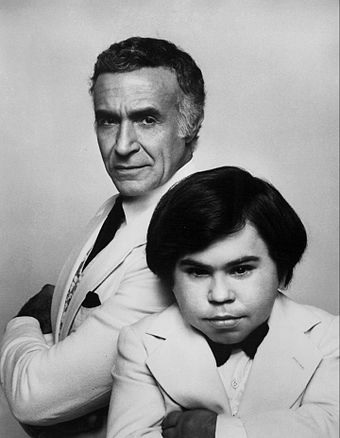
You know who always enjoyed fantasies dealing with money?  Tattoo.  I miss him.
Fever Pitch (1985, directed by Richard Brooks)


It takes a great director to come up with a movie as bad as Fever Pitch and, in his day, Richard Brooks was a great director.  Among Brooks’s films as a director you’ll find titles like Blackboard Jungle, Cat on a Hot Tin Roof, Elmer Gantry, The Professionals, and In Cold Blood.  These were all films that took risks and broke new ground and which were willing to defy the conventions of the time.  Brooks was a director who told hard-boiled stories that dealt honestly with real-life issues.

Unfortunately, as often happens with great filmmakers, Brooks struggled to remain relevant as he got older.  Hollywood’s sensibility eventually caught up with Brooks’s sensibility and then moved past it.  While Brooks remained an interesting director, his final films often seemed to be the work of a grumpy old man who just wanted all those young people to stay off his lawn.

Fever Pitch, Brooks’s final film, stars Ryan O’Neal as Steve Taggart.  Taggart is a sports writer for The Los Angeles Herald Examiner.  He’s been writing a series of stories about a compulsive gambler named Mr. Green.  The stories are so popular that his editor (John Saxon) has no problem giving Taggart $10,000 so that Taggart can then give the money to Mr. Green so that Mr. Green can continue to gamble.  What anyone, especially the editor of a major newspaper, should be able to figure out is that Mr. Green is actually Steve Taggart.

Taggart takes the money to Las Vegas, where he hits the casinos while also researching the root causes of gambling.  On the one hand, Brooks includes a lot of scenes of Taggart listening to real people explain the history and the dangers of gambling, often in the most didactic ways possible.  (Hank Greenspun, the legendary publisher of The Las Vegas Sun, appears as himself and shows why he became a publisher and not an actor.)  On other other hand, MGM not only produced the film but allowed it to be filmed at the MGM Grand Resort & Casino in Las Vegas.  Fever Pitch is anti-gambling film that also doubles as a commercial for a casino.  It’s like an anti-smoking film that gives everyone in the audience a free pack of Camels.

Steve hooks up with an unbelievable wholesome prostitute played by Catherine Hicks.  He also has to deal with several shady characters, including a veteran gambler named Charlie (Giancarlo Giannini) ad a debt collector named The Hat (played by William Smith).  Taggart is obsessed with gambling but he doesn’t seem to be very good at it, as he keeps getting beat up and threatened.  Eventually, he goes to a Gamblers Anonymous meeting and he seems to be ready to admit that he has a problem and that it’s keeping him from being a good father to his daughter.  That might seem like the ideal place for the movie to end but instead, Taggart has to try his luck with just one last slot machine.

Fever Pitch is doomed from the minute Ryan O’Neal starts his narration.  Nothing about O’Neal suggests that he could be capable of writing a hard-hitting expose about the life of a compulsive gambler.  In this film, he doesn’t even come across like he would be capable of reading it. O’Neal is too passive of an actor to be a convincing gambler and his wooden performance clashes with Brooks’s attempts to create a hyperkinetic feel to the Vegas scenes.  While everyone in the film is lecturing him about the dangers of gambling, O’Neal sit there with same blank look on his face.

A critical and a commercial failure, Fever Pitch was Brooks’s final film.  He died seven years later, leaving behind a legacy of important movies that cannot be tarnished even by something like Fever Pitch.