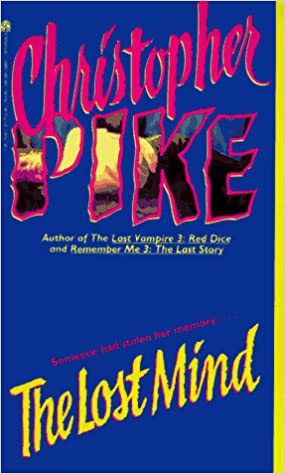
Horror Novel Review: The Lost Mind by Christopher Pike


First published in 1995, this is an odd one.

The book opens with our main character waking up in middle of the wilderness. She has no idea who she is or where she is. She doesn’t know why she’s covered in blood. What she does know is that there’s another girl lying a few feet away from her and she’s been stabbed to death! Did the living girl kill the other girl? She knows that she didn’t but, at the same time, she also knows that everyone will assume that she did.

It’s only after our main character stumbles across her car that she discovers that her name is Jenny. It’s only when she drives to a nearby town that she discovers that she lives with her overworked mom and her little brother. Apparently she goes to school and she has a job but Jenny can’t remember the specifics of any of it. Also, Jenny has a best friend named Crystal and they’re so extremely close that people are shocked whenever they see that Jenny is by herself. In fact, no one has seen Crystal for a while. Where could she be …. uh-oh.

Now, if this was an R.L. Stine novel, this is where you would expect some sort of cutesy twist to kick in. This is where you would look up from the book and says, “Ah-ha! I bet Jenny actually is Crystal and Jenny is just some imaginary character that she created to help her deal with a past trauma!” However, this is not an R.L. Stine novel. This is a Christopher Pike novel and Christopher Pike was always a hundred times darker than R.L. Stine ever was. If Stine always ended his books with a return to normalcy and maybe a joke or two, Pike’s novels took his characters to Hell and usually abandoned them there.

Even as she tries to figure out what type of life she’s led up until losing her memory, Jenny finds herself having dreams and visions where she’s in another person’s body, watching as they smoke hash, commit murders, and perform occult ceremonies. Soon, Jenny is investigating just what exactly it means to have a soul and whether or not a soul can move from one body to another. And, as she discovers more about the circumstances of Crystal’s death, she’s forced to consider just how far she’ll go to get revenge….

AGCK! Seriously, this is pretty dark stuff for a YA novel. I would have had nightmares if I had read this when I was a child. But that’s the thing with Christopher Pike. When he told a horrific story, he didn’t hold back. Instead, he created a world where happy endings often did not exist. The Lost Mind is dark and morbid and, even reading it now as an snarky and sarcastic adult, the book’s mystery was still intriguing. The book started out with a murder and it ended with a bang. Someone needs to turn this one into a Lifetime film.

Book Review: Murder By Design: The Unsane Cinema of Dario Argento by Troy Howarth


Ah, Dario Argento.

That Argento is responsible for some of the greatest horror and suspense films of all time, everyone agrees. At the same time, there’s a tendency amongst critics to be unfairly dismissive of his post-Opera films. The claims that Argento either lost his touch or that he ceased to care about his films or that Asia Argento is somehow to blame for the uneveness of his later films have themselves become clichés, repeated by people who really should know better. Obviously, any director is going to struggle to follow-up the string of masterpieces that Argento directed early on in his career. And yet, the claim that Argento’s later films aren’t worth watching simply does not hold up under scrutiny. Unfortunately, these claims became even more widespread with the release of the unnecessary remake of Suspiria. When it become obvious that Luca Guadagnino’s film was a pretentious disaster, his online supporters responded by trying to destory the legacy of Argento’s masterpiece.

That’s why I’m grateful for Troy Howarth’s Murder By Design. Published in 2020, Murder By Design examines the life and the work of Dario Argento. It’s a combination of a biography and a critical analysis and it’s probably about as fair of an examination of Argento’s controversial legacy as I’ve ever read. Howarth, of course, writes about the films that everyone agrees are brilliant but, even more importantly, Howarth also gives the same amount of consideration to the films that are usually dismissed, like Phantom of the Opera and The Stendhal Syndrome. Though Howarth is hardly a blind Argento cheerleader — he’s critical of many of Argento’s later films — he also doesn’t give in to the temptation to lazily dismiss everything that Argento directed after 1985. He approaches Argento as both a fan and a scholar, critical but open-minded. As a result, he not only provides an interesting look at Argento but also a look at the development of post-World War II film industry and at the growth of horror as a genre.

Even better, Howarth explores all of Argento’s work. That includes the screenplays that he wrote before directing his first film. That includes the films that he produced and the television shows that he hosted. He makes the case for Argenton as an artist whose influence and vision goes far beyond just the films that he’s directed. Troy Howarth is one of the best writers about Italian cinema out there and Murder By Design is a must-read for anyone serious about Argento.

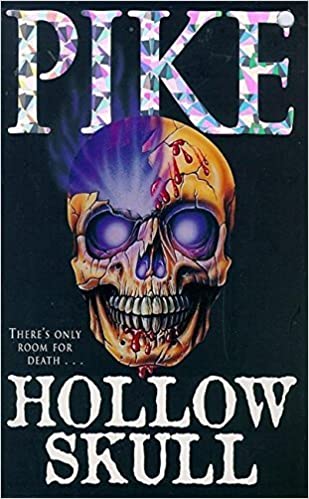
Horror Novel Review: The Hollow Skull by Christopher Pike


Reading a Christopher Pike book after spending a few days focused on R.L. Stine can be a jarring experience.

Even though Stine and Pike are often compared to each other, Pike’s books are usually a lot darker than Stine’s.  Whereas an R.L. Stine boo will, more often than not, end with the promise of a return to normalcy, Pike’s novels often seem to end on a down note.  The teenage heroes of Pike’s books are just as likely to fail as they are to succeed.  Whereas Stine usually only offers up one or two deaths over the course of his books, Pike has no fear of wiping nearly the entire cast by the final chapter.  The world of Christopher Pike is a dark disturbing place.

Consider 1998’s The Hollow Skull.  The Hollow Skull takes place in the small desert town of Madison, Nevada.  Cassie has just graduated high school and is desperate to get out of the town.  After all, California’s not that fear away.  Why couldn’t Cassie move out there and maybe go to college at UCLA?  The only problem is that all of her friends seem to be content with the idea of staying in Madison, including her boyfriend.  Plus, if Cassie leaves, that’ll mean leaving her little sister with their abusive, alcoholic father.

Still, because Cassie is determined to escape, her friends suggest that they all go on one last adventure.  Hey, why not go down the abandoned mine shaft!?  Of course, it turns out that there’s a weird pool of black goo at the bottom of the mine shaft and, after one Cassie’s friends falls in the goo, he starts to act strangely.

In fact, the entire town of Madison starts to act differently, as if they’ve been possessed and disturbing thoughts are now being put into their skulls.  Suddenly, everyone that Cassie knows is acting differently.  Cassie decides that it time for her and her sister to flee Madison but it turns out that escaping is not going to be as easy as going down an abandoned mine shaft….

Seriously, abandon all hope ye who enter here!  This is a dark, dark book. It owes more than a little debt to Invasion of the Body Snatchers but, even more than being a traditional YA horror novel, it’s also a look at just how difficult it is to start a new life.  No matter how hard she tries, Cassie cannot seem to make a clean break from Madison.  Even if she’s not possessed like everyone else in town, she’s still trapped.  At its best, the book captures the hopelessness of being trapped in one location or situation and feeling like you’ll never be able to figure out how to move forward.  

Of course, plotwise, it’s all a bit predictable.  If you’ve seen any of the versions of Invasion of the Body Snatchers, you’ll be able to guess what’s going to happen.  For that matter, if you’ve read Christopher Pike’s Monster, you’ll also be able to predict much of what awaits Cassie.  Still, if you’re weary of R.L. Stine’s positivity, Christopher Pike provides a rather downbeat antidote.  

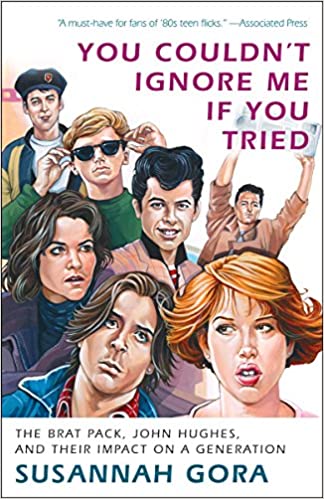
Book Review: You Couldn’t Ignore Me If You Tried by Susannah Gora


I’m going to take a brief break from recommending books about the horror genre so that I might take some time to recommend a book about another underappreciated genre of film, the 80s teen film.

I read You Couldn’t Ignore Me If You Tried back in September and I thoroughly enjoyed it. It definitely contributed to my later enjoyment of Andrew McCarthy’s autobiography, Brat. At the same time, reading Brat also caused me to think even more about You Couldn’t Ignore Me If You Tried. So, as you can see, it’s all just a circle of good film books.

You Couldn’t Ignore Me If You Tried takes a look at the classic teen films of the 80s — Pretty in Pink, The Breakfast Club, Ferris Bueller’s Day Off, Sixteen Candles, and Say Anything. It also takes a look at two films that are a bit less interesting, St. Elmo’s Fire and Some Kind of Wonderful. (Sadly, Fast Times At Ridgemont High is pretty much left unexamined, except for a few references to it in the chapter about Say Anything.) The book explores how John Hughes revolutionized Hollywood by making films that took teenagers and their problems seriously, how he helped to launch a group of talented young actors to stardom while also inspiring directors like Cameron Crowe, and how one reporter managed to end it all by writing an article about the Brat Pack.

The film is full of not just reviews about and thoughts concerning the films but also the stories of how they came to be made. Did you know that Nicolas Cage and John Cusack both had a shot at being cast as Bender in The Breakfast Club? Did you know that Ferris Bueller’s Day Off was originally envisioned as a vehicle for Anthony Michael Hall? Did you know that John Hughes came close to firing Judd Nelson from The Breakfast Club and that it was Paul Gleason (who played Bender’s nemesis, Mr. Vernon) who talked him out of it? It’s all in there and it makes for an entertaining read. There’s something very sweet about discovering that the cast of the Breakfast Club were as close while filming as the characters were while serving detention. And, just as in Andrew McCarthy’s book, it’s very infuriating to learn how one reporter’s night out with Judd Nelson, Rob Lowe, and Emilio Estevez led to not only the creation of the Brat Pack label but also the tarring of any actor who was associated with the Brat Pack.

At times, it’s a bit of sad book. Not only did the Brat Pack label unfairly derail several promising careers but John Hughes himself turned his back on Hollywood. Sadly, no one in the book seems to be quite sure what inspired Hughes to abandon directing and become something of a recluse later in life. There is a lot of talk about how he lost his two early muses, Molly Ringwald and Anthony Michael Hall, to adulthood. Sadly, it appears that he didn’t have as much fun directing Ferris Bueller’s Day Off as one might assume, largely because Matthew Broderick and Alan Ruck were already established actors and didn’t need his mentorship in the way that Hall and Ringwald had. Hughes comes across as being a talented and sensitive man who was most comfortable expressing himself through the movies he made. When he stopped making those movies, he closed himself off from the world. One wonders how he would have reacted to the outpouring of grief that was inspired by his untimely death. Would he be touched? Would be embarrassed? One hopes that he would realize that his films touched the souls of viewers of all ages and, when he passed, it was the end of an era.

You Couldn’t Ignore Me If You Tried captures that era in poignant and entertaining detail.

Horror Novel Review: The Boy Next Door by R.L. Stine


Oh my God, a super cute boy has moved in next door! Squee!

Seriously, Scott, the title character of this 1996 YA thriller from R.L. Stine, seems like he could be the perfect neighbor. He’s handsome. We’re told that he’s charming, though you don’t really see much of that in the book. He’s a star football player and, obviously, that’s a very important thing in the world of R.L. Stine. And, perhaps most importantly, Scott’s single! Of course, Scott’s single because he previous kind of girlfriend jumped into a pool that happened to be empty at the time. Scott was the one who encouraged her to do it.

Scott, you see, has some issues. He expects every girl that he meets to live up to an impossible ideal that he’s apparently created from watching old sitcoms from the 1950s. What the means is no makeup, no flirting, and definitely no short skirts! Scott really gets worked up over short skirts, to the extent that he’ll kill anyone who wears one. AGCK!

(If I had been a student at Scott’s high school, I would have been so dead.)

Scott’s new neighbor Crystal and her best friend, Lynne, both think Scott is totally hot and want to date him. Unfortunately, they both wear short skirts and Scott even catches Lynne putting on lipstick. Even if he wasn’t a puritanical incel murderer, Scott would still be creepy because he always seems to be staring through the windows of Crystal’s house. You would think that would be a red flag but …. well, Scott’s a football player and this is an R.L. Stine novel.

Fortunately, Crystal has a sister named Melinda who likes to read books and who doesn’t wear makeup so it seems pretty clear that she’s going to be the secret weapon to stopping Scott. But will it be too late for either Lynne or Crystal?

Scott is revealed to be a killer during the first few pages of this book so I have to admit that, the whole time I was reading it, I was waiting for one of those out-of-nowhere R.L. Stine twists. I was expecting Scott to discover that he was actually suffering from amnesia and that his real name was Jake. I was waiting for someone to reveal themselves to be a ghost. I was thinking, at one point, that it was all a dream. But nope, there’s no twist. This is one of the most straight-forward Stine books that I’ve ever read.

At times, the book felt like one of those weird Lifetime movies where everyone keeps talking about “girl power” and how no one has the right to judge you for behaving and dressing the way you want but, at the same time, you can’t help but notice that it’s always the really independent and fun-loving girls that end up getting killed. The Boy Next Door seems to be all over the place. On the one hand, Scott is a crazy puritan. On the other hand, almost every girl in the book is portrayed as being shallow and easily fooled. I was happy that Scott was presented as being a total monster but couldn’t the girls have been a little less naïve? Couldn’t they have at least acknowledged that Scott’s behavior was pretty creepy even before he turned out to be a killer? It doesn’t help that the plotting throughout the book feels rather random. There’s a lot of convenient coincidences, including one that happens during the climax. Chekhov wrote that, if you introduce a gun at the start of the story, it must be fired by the end of the story. One gets the feeling that Stine would be the type to forget to introduce the gun but still have someone fire it. One also gets the feeling that Stine may have been in a hurry when he wrote The Boy Next Door.

(Don’t worry, though. you’re still loved, R.L! Thank you for Fear Street!)

Anyway, the lesson here is that if the boy next door flies into a rage every time you put on lipstick, you don’t need him in your life! Even if he does play football….

Book Review: Spaghetti Nightmares, edited by Luca M. Palmerini and Gaetano Mistretta


Do you love Italian horror?

If you answered yes, Spaghetti Nightmares is a book that you simply must own.  Actually, you probably already do own it.  You’re probably looking at it sitting on your book shelf right now.  And you’re thinking, “Gee, thanks Lisa.  Maybe next you’ll tell me that giallo is named after the cheap yellow paper that thriller novels were published on in Italy and then you’ll really blow my mind!”

Okay, well fine.  Make me feel bad.  That’s okay.  I hope you’re proud of yourself.  It’s a pretty good thing that we both love Italian horror because, if we didn’t, I’d probably never speak to you again….

Anyway, just in case you don’t own this book, you really should.  First published in 1996, Spaghetti Nightmares is a collection of interviews with some of the top figures in Italian horror.  Michele Soavi, Dario Argento, Ruggero Deodato, David Warbeck, Umberto Lenzi, Lamberto Bava, Luigi Cozzi. Antonio Margheriti, and many more answer questions about their careers, their artistic visions, and their feelings about the future and the past of the Italian film industry.  What makes this volume special is that it was written at a time when Italian horror was just starting to be appreciated.  So, the questions and the answers are a bit more honest than they probably would be now that everyone is a confirmed Italian horror fan.

This book also features what I believe was Lucio Fulci’s final interview before he passed away.  He describes himself as being Italian cinema’s “last zombie” and displays a strong knowledge of cinematic history.  Unlike some of the directors interviewed, who come across as being competent (if charming) craftsmen, Fulci comes across as being a true artist.  The interview with Michele Soavi is also poignant as he would soon abandon filmmaking to take care of his son.  (Fortunately, he has since returned.)

So, if you don’t own this book, get it!

Book Review: The Mind Reader by R.L. Stine


In this YA thriller from 1994, R.L. Stine tells the story of Ellie. Ellie and her father have just moved back to Shadyside after being gone for 14 years. Ellie was only two when they left town due to the trauma of her mother’s death. Though Ellie doesn’t remember, her father says that her mom died of appendicitis.

Her father’s not totally happy about returning to Shadyside but Ellie could really use a change of pace. Ellie recently broke up with her boyfriend because she discovered that he was cheating on her. How did she discover this? She has psychic powers, of course! It’s interesting how anyone who leaves Shadyside and then returns a few years later manages to develop psychic powers. It turns out that Ellie’s psychic powers aren’t just helpful when it comes to busting cheating boyfriends! They’re also good for discovering the dead body of Melinda, her best friend’s sister! And, not only that, but Ellie’s powers also offer up some clues about what really happened to her mother! Ellie has some mysteries to solve, whether she wants to or not. Who killed Melinda? What happened to her mother? And why is that cute but weird guy Brian stalking her?

The Mind Reader actually tells a pretty sad story. Every family in this book has some deep, terrible secret and it’s almost entirely due to terrible parenting. This is one of the few Stine books that left me worried as to just how the main character was going to be able to go on with her life after experiencing all of this. Still, I had to respect the fact that Stine stayed true to the book’s premise. There was no sudden amnesia. It didn’t turn out to be a dream. Ellie had psychic powers and they told her a lot of really big things at the worst possible time. That’s the way psychic powers work on Fear Street.

Anyway, I enjoyed The Mind Reader. It’s a quick read and some of Ellie’s vision are really macabre! I’m glad I’m not psychic.

Book Review: True Indie: Life and Death in Filmmaking by Don Coscarelli


Don Coscarelli just might be the nicest guy to ever make a horror movie.

Okay, obviously, I don’t know that for sure. A lot of people make horror movies and a lot of them are actually pretty nice and I don’t want to short change anyone. Still, if you read his 2018 memoir True Indie, the main impression that you come away with is that Don Coscarelli is a nice, down-to-Earth guy who truly loves to make movies.

In the book, Coscarelli tells how he went from making making his first two films when he was still a teenager to directing Phantasm, an indie film that was a surprise hit and ensured that Don Coscarelli would be forever beloved by horror fans everywhere. Not only does he discuss how he came up with the film but he also discusses what it was like to work with people like Angus Scrimm and Reggie Bannister. He follows-up by discussing the production of Beastmaster, which was considerably more troubled than the production of Phantasm. (At one point, Beastmaster star Marc Singer throws a tantrum because he feels that Coscarelli has “abandoned” him on location.) From Beastmaster, it’s back to doing sequels to Phantasm, some of which are better than others and some of which, sad to say, are screwed by the executives. Some of the book’s best parts are when Coscarelli discusses what he had to put up with while dealing with studio execs who didn’t necessarily understand what Phantasm or horror in general was all about. Seriously, you think as you read those passages, just let Don and Reggie do whatever they want! Eventually, Coscarelli directs Bubba Ho-Tep and gets to work with Bruce Campbell, which is definitely a happy ending.

True Indie is a likable book. Coscarelli is an entertaining storyteller and his love of movies is obvious on every single page of the book. He comes across as the ideal indie director, a passionate artist who simply wants to entertain his audience while staying true to his vision. It’s an inspiring book, to be honest. You read it and you’re happy that Don Coscarelli is still out there and that he’s still doing it his way.

Horror Novel Review: The Dead Lifeguard by R.L. Stine


Some people stand in the darkness

Afraid to come into the light

Some people need to help somebody

When the edge of surrender’s in sight

Yes, dear readers, I will admit that I did start singing the Baywatch theme song as I read R.L. Stine’s 1994 YA novel, The Dead Lifeguard. Some of that is because that’s my natural response to anything involving lifeguards or the beach. But a lot of that is also because this novel has a plot that could have come straight from Baywatch Nights. We just needed David Hasselhoff to show up and start investigating stuff.

Basically, it’s the summer! Yay! Lindsay is looking forward to working as a lifeguard! Yay! The other lifeguards are a collection of typical lifeguard and R.L. Stine types. You got the sensitive, athletic boy. You’ve got the girls who alternate between being supportive and jealous. You’ve even got a dumb jock type who is named Pug. Would you want your life saved by someone named Pug?

Unfortunately, someone is killing the lifeguards! This doesn’t lead to summer being canceled or anything like that, of course. People in R.L. Stine books are surprisingly nonchalant about teenagers dying under mysterious circumstances. But it does lead to the mystery of who the killer is. Because some of the chapters are written from the killer’s point of view, we know that the killer calls themselves Mouse. And they’re committing their murders to get revenge for the passing of someone named Terry.

Meanwhile, Lindsay tries to figure out who is killing the lifeguards and what mystery is hiding in the past. (Of course, there’s a mystery in the past. It’s a Stine book, after all.) However, Lindsay’s investigation leads to the discovery that she died a year ago! OH MY GOD! IS LINDSAY A GHOST!? Or is there something else happening?

This was a fun Stine book. There were a lot of twists and turns, not to mention weird scenes of Mouse talking to Terry. One of my favorite parts of the book involves Mouse explaining that they are running behind on killing everyone because working as a lifeguard just takes up so much time. That was a clever moment of Stine humor. I also enjoyed the mystery of whether or not Lindsay was a ghost. I kind of guessed how things were going to turn out because …. well, it’s an R.L. Stine book. But still, The Dead Lifeguard was definitely an entertaining read.

Don’t your worry

It’s gonna be alright….

Book Review: Brat: An 80s Story by Andrew McCarthy


On Tuesday, I read Brat, the new memoir from actor Andrew McCarthy.

Though McCarthy is, today, a busy travel writer, he was a movie star in the 80s, staring in a handful of film that are still popular and being discovered by new audiences today. He starred opposite Molly Ringwald in Pretty In Pink and anyone who says that Molly should have ended up with Jon Cryer instead of Andrew McCarthy is a liar. He was a part of the ensemble of St. Elmo’s Fire. He starred in the film adaptation of Less than Zero. He spent a Weekend at Bernie’s. And, of course, he was labeled as being a member of the Brat Pack.

Brat pretty much centers on McCarthy’s life in the 80s, going from his time in acting school to his first starring role in Class to his decision to star in the critically-derided but still surprisingly popular Weekend at Bernie’s. It’s a quick but honest read and McCarthy emerges as someone who was somehow cocky enough to know that he could be star but also so insecure that, once he became a star, he wasn’t really capable of enjoying it. Reading the book, one gets the feeling that McCarthy spent the 80s feeling as if things had come too easily for him. He landed the starring role in the first film for which he ever auditioned. He starred opposite Molly Ringwald at a time when she was a superstar. And, yet, he was miserable for much of the time, a victim of his own nagging anxiety. He dealt with his insecurity by drinking and eventually, though the book doesn’t go into too much detail about it, using cocaine. He mentions that he never worked while on coke until he ended up on the miserable set of Less than Zero, which is one of the most heavy-handed anti-drug films ever made.

Brat is a good read. McCarthy is an engaging writer and he writes about the past with a refreshing lack of bitterness. In fact, the only thing he seems to be truly upset about is the fact that he got tarred with the Brat Pack label and he has every right to be upset that. As McCarthy points out, the Brat Pack label came about as the result of an article that detailed a night out with Rob Lowe, Judd Nelson, and Emilio Estevez. McCarthy wasn’t even present that night. He was only mentioned once in the article, when one of the three said that they felt McCarthy wasn’t going to make it because he always played his roles with “the same intensity.” McCarthy’s feelings were hurt, especially since the article didn’t specify which of the three said it. (One gets the feeling that Emilio Estevez — who, in every chronicle of the Brat Pack era, comes across as being the most judgmental, entitled, and pompous member of the group — was probably the guilty party.) But yet, because McCarthy appeared in St. Elmo’s Fire and in Pretty in Pink, he was tarred with the label and it was pretty much the beginning of the end of his stardom. He mentions that, years later, Emilio Estevez refused to do a movie if McCarthy was cast, specifically because he didn’t want the movie to be a “brat pack” film. Again, Emilio comes across as being a bit of a prick.

With a few exceptions, McCarthy is generous when discussing most of his co-stars. He liked working with Rob Lowe, Ally Sheedy, and Jacqueline Bissett. He writes that he and Molly Ringwald were never quite as close as those of us who love Pretty in Pink like to think. He says that he and Jon Cryer did not get along in the 80s but that they’ve since become friends. That was nice to read. He writes about watching Robert Downey, Jr. go crazy one night. (In Downey’s defense, he was ordered to do so by the director of Less than Zero as an exercise to help McCarthy get into character. Unfortunately, no one bothered to let McCarthy know what was going on.) He writes ruefully about a date with Elisabeth Shue. Judging from his memoir, McCarthy met and impressed a lot of people but he rarely felt like he was good enough to be a part of their lives. It’s kind of sad. Sometimes, Andrew McCarthy comes across as being so vulnerable that you just want to reach out and hug him.

Fortunately, this is a survivor’s memoir. McCarthy survived the 80s and he’s still around, working and continuing to touch the heart of anyone who comes across Pretty in Pink. He sounds like he’s in a better place now than he was at the time of his biggest film successes. Brat is a good and honest memoir and a must-read for anyone who loves the films of the 80s.