4 Shots From 4 Films is just what it says it is, 4 shots from 4 of our favorite films. As opposed to the reviews and recaps that we usually post, 4 Shots From 4 Films lets the visuals do the talking.
With today’s edition of 4 Shots From 4 Films, we wish a very happy birthday to the one and only Leon Isaac Kennedy! Born in 1949, Leon Isaac Kennedy was working as a successful disc jockey by the time he turned 17. (He was known as Leon the Lover.) Kennedy went on to achieve cult fame by starring as prison boxer Too Sweet in the Penitentiary films, along with appearing opposite Muhammad Ali in Body and Soul and Chuck Norris in Lone Wolf McQuade. Kennedy, who turns 77 today, has retired from acting and became an evangelist in the 90s.
4 Shots From 4 Leon Isaac Kennedy Films:
Death Force (1978, directed by Cirio H. Santiago)
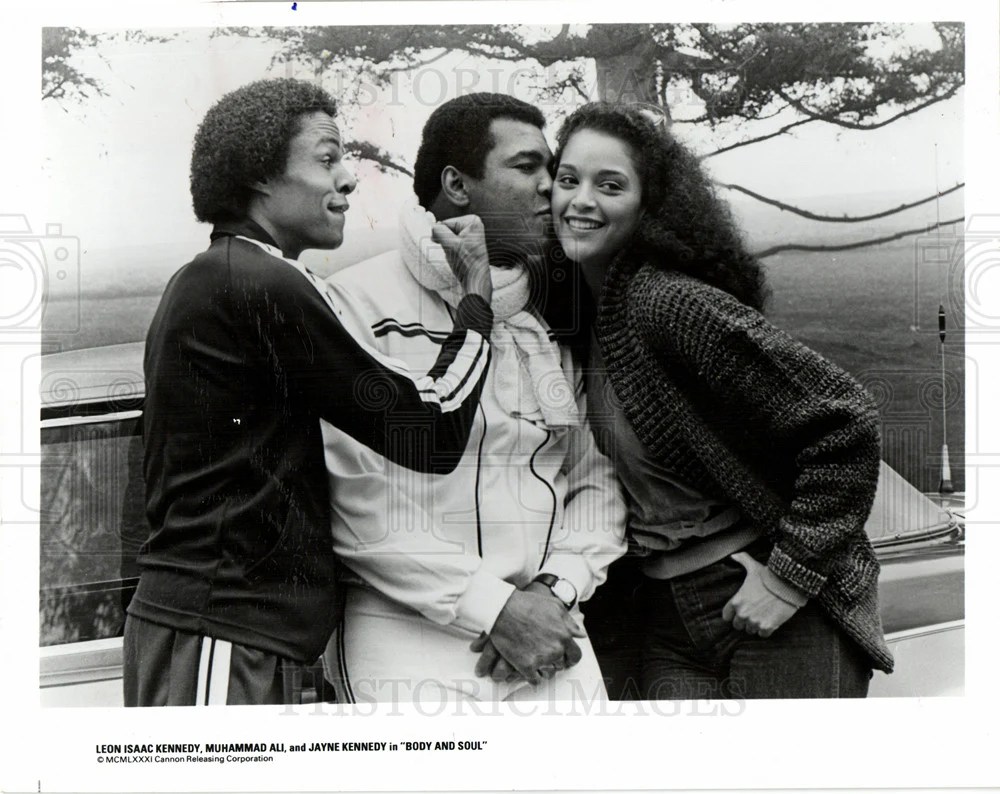
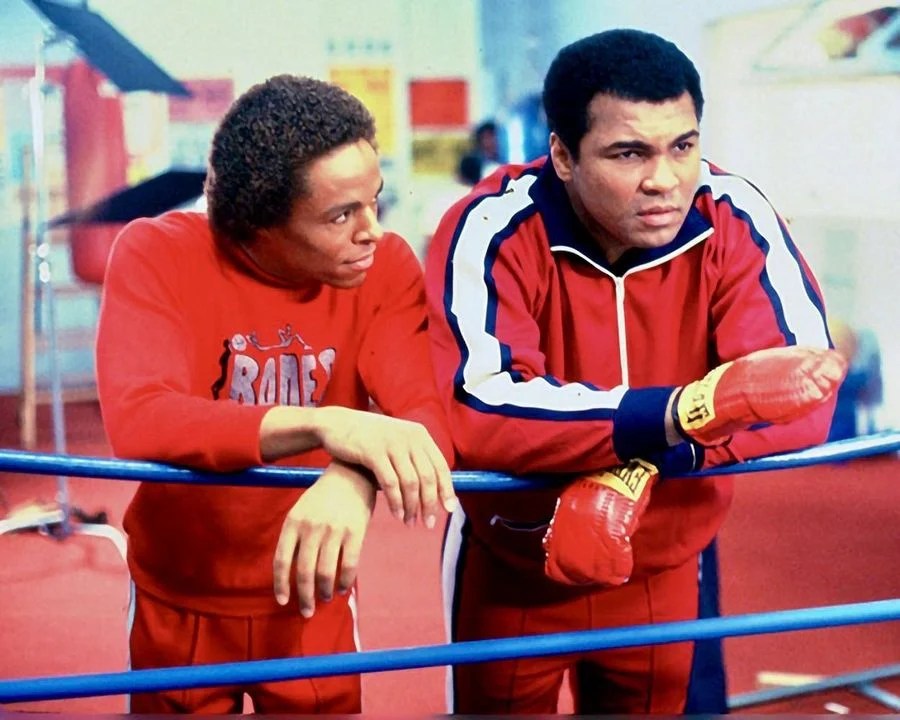
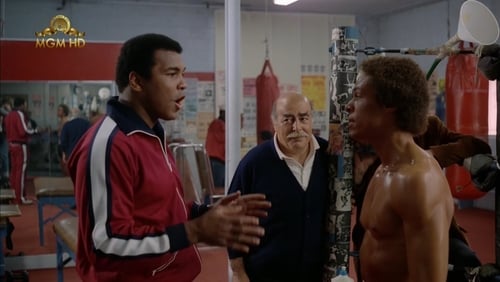
Body and Soul (1981, directed by George Bowers)
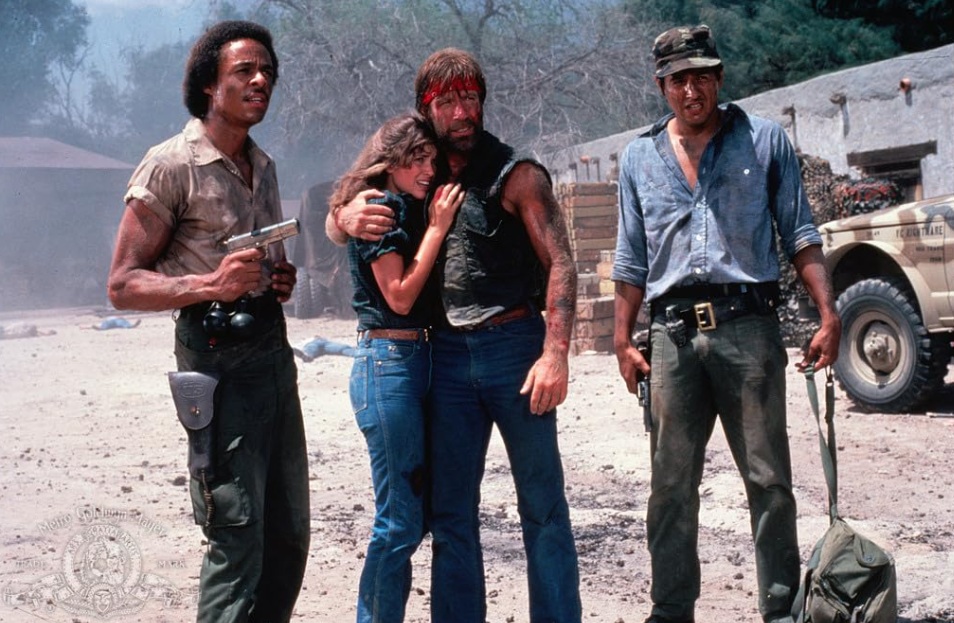
Lone Wolf McQuade (1983, directed by Steve Carver)
4 Or More Shots From 4 Or More Films is just what it says it is, 4 shots from 4 of our favorite films. As opposed to the reviews and recaps that we usually post, 4 Shots From 4 Films lets the visuals do the talking!
139 years ago today, Oscar Micheaux was born in Metropolis, Illinois. After working in several different jobs and writing a few novels, Micheaux would become the first African-American to produce and direct a feature length film and, later, a sound feature length film. He began his directorial career in 1919 and continued it throughout the sound era, often making films that were meant as a response to the films that were coming out of Hollywood. (For example, 1920’s Within Our Gates was meant to answer and condemn the racism of The Birth of a Nation.) At a time when blacks were usually only used for comedic relief and when it wasn’t uncommon for white actors to wear blackface on screen, Micheaux created an alternative film industry and, along the way, he gave early and rare starring roles to black actors like Paul Robeson.
Micheaux distributed the majority of his films himself and, unfortunately, the majority of them have been lost. The ones that survive were often hampered by their low budgets but they still provide a view into African-American life in the early days of the 20th Century. As well, Micheaux was one of the first successful “independent” filmmakers. Working without the support of the major studios, Micheaux still did what he had to do to share his vision with audiences.
It’s time for….
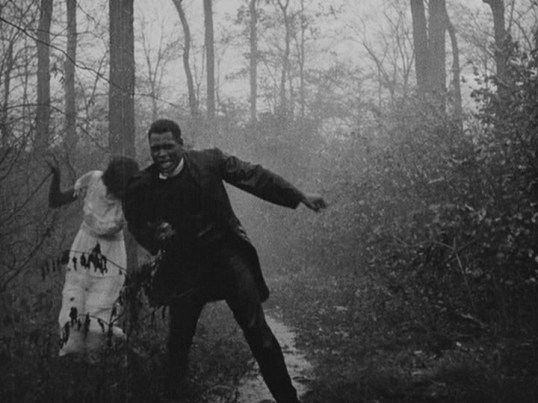
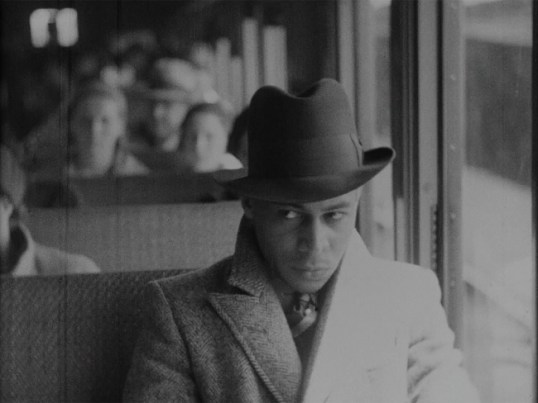
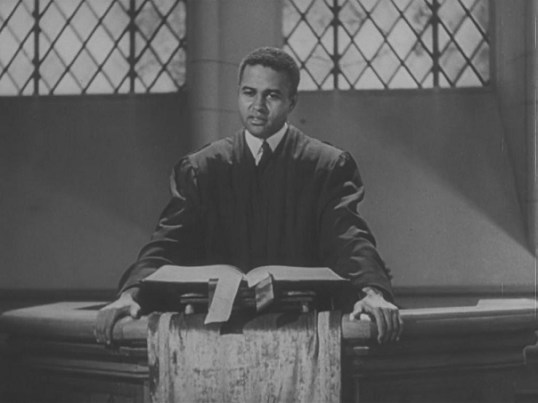
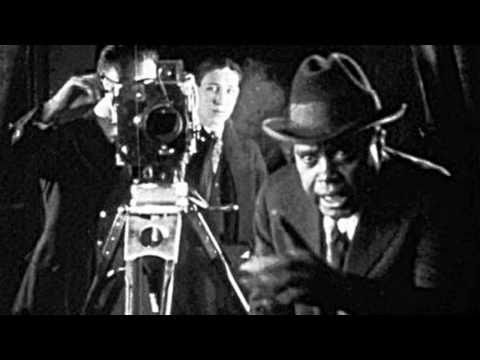
4 Shots From 4 Oscar Micheaux Films
Within Our Gates (1920, dir by Oscar Micheaux)
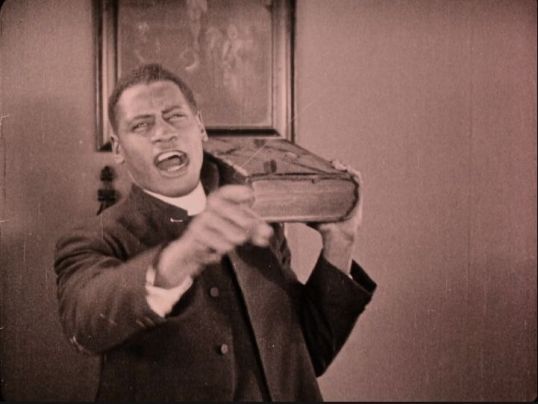
Body and Soul (1925, dir by Oscar Micheaux)
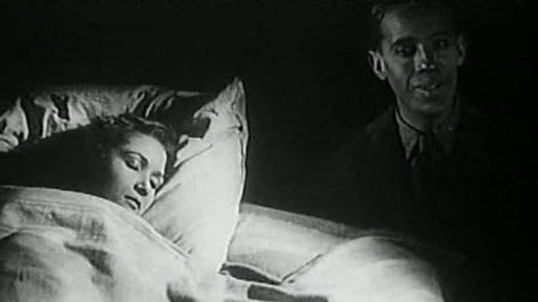
10 Minutes To Live (1932, dir by Oscar Micheaux, DP: Lester Lang)
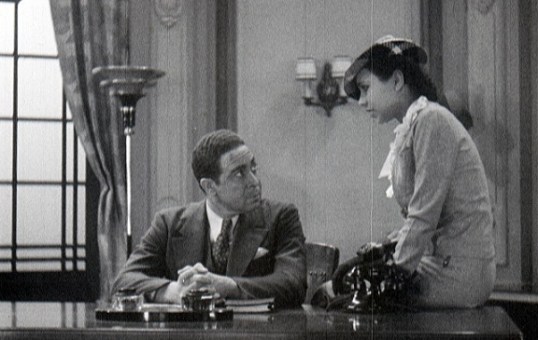
Harlem After Midnight (1935, dir by Oscar Micheaux)
4 Or More Shots From 4 Or More Films is just what it says it is, 4 shots from 4 of our favorite films. As opposed to the reviews and recaps that we usually post, 4 Shots From 4 Films lets the visuals do the talking!
One hundred and thirty-eight years ago, on this date in 1884, Oscar Micheaux was born in Metropolis, Illinois. Starting his career as a writer and an investor, Oscar Micheaux eventually moved into the film industry. At a time when theaters were still segregated and black characters were regularly portrayed by white actors in blackface, the African-American Micheaux founded his own studio, financed his own movies, and distributed them himself. Micheaux’s films dealt directly with themes of systemic racism and the struggle of blacks to get ahead in American society. Many of Micheaux’s early films were designed as an “answer” to D.W. Griffith’s Birth of a Nation while his later films deal with themes of inequality and corruption among both the police and the clergy.
Micheaux gave roles to talented black performers like Paul Robeson, actors who faced limited prospects in Hollywood during the silent and early sound eras. (Even the white characters in Micheaux’s films were played by light-skinned blacks, a reverse of Hollywood’s unofficial policy of using white actors in dark makeup to play black characters.) Unfortunately, many of Micheaux’s films are now lost but the few films that remain present a look at black life in America during the early decades of the 20th century.
In honor of the man and his legacy, Through the Shattered Lens presents….
4 Shots From 4 Oscar Micheaux Films
WIthin Our Gates (1920, dir by Oscar Micheaux)
The Symbol of the Unconquered (1920, dir by Oscar Micheaux)
4 Shots From 4 Films is just what it says it is, 4 shots from 4 of our favorite films. As opposed to the reviews and recaps that we usually post, 4 Shots From 4 Films lets the visuals do the talking.
With today’s edition of 4 Shots From 4 Films, we wish a very happy birthday to the one and only Leon Isaac Kennedy! Born in 1949, Leon Isaac Kennedy was working as a successful disc jockey by the time he turned 17. (He was known as Leon the Lover.) Kennedy went on to achieve cult fame by starring as prison boxer Too Sweet in the Penitentiary films, along with appearing opposite Muhammad Ali in Body and Soul and Chuck Norris in Lone Wolf McQuade. Kennedy, who turns 71 today, is also an evangelist.
When his little sister falls ill with sickle-cell anemia, Leon Johnson (Leon Isaac Kennedy) has to make a decision. He can either finish his education, graduate from medical school, and treat her as a doctor or he can drop out of school, reinvent himself as “Leon the Lover,” and make a fortune as a professional boxer! At first, Leon’s career goes perfectly. He is winning fights. He is making money. He has a foxy new girlfriend (played Leon Isaac Kennedy’s then-wife, Jayne Kennedy.) But then the fame starts to go to Leon’s head. He forgets where he came from. He’s no longer fighting just to help his sister. Now, he’s fighting for his own personal glory. When Leon finally gets a title shot, a crooked boxing promoter known as Big Man (former JFK in-law Peter Lawford, looking coked up) orders Leon to take a dive. Will Leon intentionally lose the biggest fight of his life or will he stay in the ring and battle Ricardo (Al Denava), a boxer so evil that he literally throws children to the ground? More importantly, will he make his trainer (Muhammad Ali, playing himself!) proud?
Leon Isaac Kennedy, Muhammad Ali, and Peter Lawford all in the same movie!? No surprise here, it’s a Cannon film. Leon Isaac Kennedy was best known for playing a jailhouse boxer in the Penitentiary films and he was a good actor with charisma to burn so it probably made perfect sense to not only cast him in a remake of John Garfield’s Body and Soul but to let him write the script too. The end result is a film that is too heavy-handed to be taken seriously but it is still an entertaining movie. Body and Soul leaves not a single sports cliché unused but Kennedy was a convincing fighter and the boxing scenes are well-directed. Muhammad Ali did a better job playing himself here then he did in The Greatest. All in all, Body and Soul is a good movie for fight fans.
Body and Soul was not a box office success and Kennedy ended his film career a few years after it was released. He is now the head of Leon Kennedy Ministries, Inc of Burbank, California.
Let’s continue to embrace the melodrama with the 1925 silent “race” film, Body and Soul.
Body and Soul was directed by Oscar Micheaux, who may not be a household name but who is still a very important figure in the development of American film. Though he may be forgotten today, Micheaux was the first major African-American filmmaker. At a time when the major studios were only willing to use black actors as comic relief, Micheaux made films that attempted to seriously deal with race relations and provide a realistic portrait of black life in America. As a result, Micheaux’s films serve as a historical record of a community that, for most of the 20s, was either ignored or condescended to by the majority of American films. While Micheaux is believed to have directed 26 silent films, only 3 are known to have survived. Of those three, Body and Soul is the best known and the most acclaimed.
In Body and Soul, Paul Robeson plays an escaped prisoner who, upon finding himself in the predominantly black town of Tatesville, Georgia, takes on the false identity of the Rt. Rev. Isaiah T. Jenkins. While the majority of the citizens in town take one look at Jenkins’s collar and assume that he must actually be a man of God, Jenkins spends his private time drinking and coming up with schemes to swindle his congregation out of their money. Jenkins also pursues a member of his congregation, Isabelle (Julia Theresa Russell), despite the fact that Isabelle is in love with the poor but decent Sylvester (who also happens to be Jenkins’ brother and who is also played by Robeson). It all leads to tragedy, death, murder. Indeed, for a film that was made and released in 1925, Body and Soul is surprisingly critical of organized religion. Or, at least, it is until the awkwardly uplifting ending, which is best ignored.
For those of us who were raised on special effects and sweeping camera movements, there’s always a moment of adjustment that comes whenever we start to watch a silent film. We tend to take cinematic magic for granted and, as a result, we are often surprised by the largely stationary camera, the minimal sets, and the overly theatrical style of performance that largely typifies the silent era. All of these elements are present in this film but, once you adjust to the style of a different era, Body and Soul actually hold up fairly well. If nothing else, the film’s portrait of a corrupt and decadent clergy is just as relevant today as it probably was in 1925. But, to be honest, the film is mostly worth watching for Paul Robeson’s wonderful lead performance. While he’s a bit on the dull side as Sylvester (but, then again, Sylvester is a dull character), Robeson turns Rev. Jenkins into a charismatic and magnetic force of corruption. Whereas a lot of other actors (especially in the silent era) would have gone far too overboard with Jenkins’ villainy, Robeson plays up the reverend’s sinister charm. As a result, Body and Soul remains both a valuable piece of cinematic history and a watchable melodrama.
 4 Shots From 4 Films is just what it says it is, 4 shots from 4 of our favorite films. As opposed to the reviews and recaps that we usually post, 4 Shots From 4 Films lets the visuals do the talking.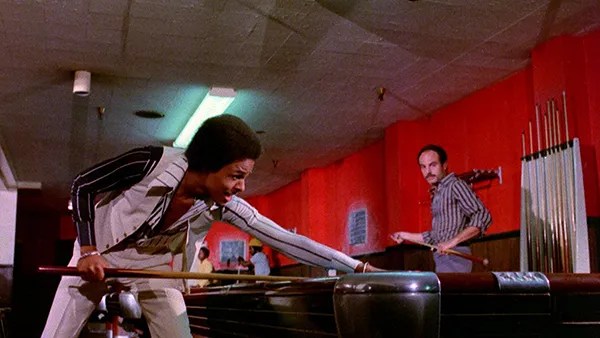





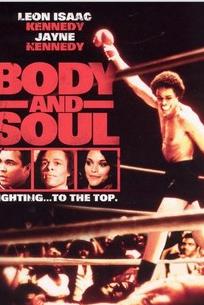 When his little sister falls ill with sickle-cell anemia, Leon Johnson (Leon Isaac Kennedy) has to make a decision. He can either finish his education, graduate from medical school, and treat her as a doctor or he can drop out of school, reinvent himself as “Leon the Lover,” and make a fortune as a professional boxer! At first, Leon’s career goes perfectly. He is winning fights. He is making money. He has a foxy new girlfriend (played Leon Isaac Kennedy’s then-wife, Jayne Kennedy.) But then the fame starts to go to Leon’s head. He forgets where he came from. He’s no longer fighting just to help his sister. Now, he’s fighting for his own personal glory. When Leon finally gets a title shot, a crooked boxing promoter known as Big Man (former JFK in-law Peter Lawford, looking coked up) orders Leon to take a dive. Will Leon intentionally lose the biggest fight of his life or will he stay in the ring and battle Ricardo (Al Denava), a boxer so evil that he literally throws children to the ground? More importantly, will he make his trainer (Muhammad Ali, playing himself!) proud?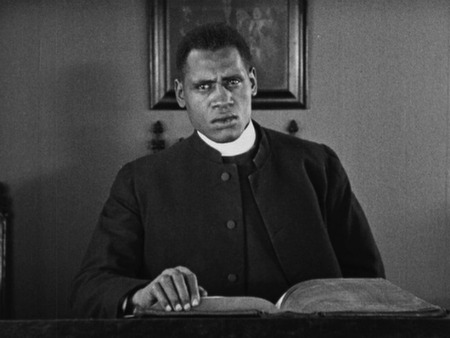
 Through the Shattered Lens