4 Shots From 4 Films: Special Paul Schrader Edition


4 Or More Shots From 4 Or More Films is just what it says it is, 4 shots from 4 of our favorite films. As opposed to the reviews and recaps that we usually post, 4 Shots From 4 Films lets the visuals do the talking!

Today is the birthday of the one and only Paul Schrader!  It’s time for….

4 Shots From 4 Paul Schrader Films

Blue Collar (1978, dir by Paul Schrader, DP: Bobby Byrne)

American Gigolo (1980, dir by Paul Schrader, DP: John Bailey)

Cat People (1982, dir by Paul Schrader, DP: John Bailey)

First Reformed (2018, dir by Paul Schrader, DP: Alexander Dynan)

Celebrate Labor Day With These 14 Films!


I have no idea what this day is supposed to celebrate but I hope everyone has a good one.

There doesn’t seem to be any agreed upon way to celebrate Labor Day.  A few people have the day off and they’re the reason why I decided to hold off on going up to Lake Texoma until this upcoming, holiday-free weekend.  Personally, I think the best way to celebrate any holiday is with a film festival so here are my suggestions for your Labor Day viewing:

  1. Red Menace (1949) — In this wonderfully atmospheric film noir, a former GI named Bill Jones (Robert Rockwell) finds himself seduced by the Communist Party.  After he witnesses the head of the party murder a man who questions the wisdom of Marx, Jones and his lover go on the run.
  2. Big Jim McClain (1951) — John Wayne takes on the commies!  And you better believe that no one is more determined to keep America and its workers safe from communist influence than the Duke!  This film features some lovely Hawaiian scenery and enough over-the-top propaganda to make any American proud.
  3. I Was A Communist For The FBI (1951) — Based (I imagine very loosely) on a true story, I Was A Communist For The FBI is about an agent who spent nine years undercover as a communist.  As a result, he lost his friends and almost his family but he also serves his country.  Featuring a scene where a strike turns violent, there’s nothing subtle about this film but, as with Big Jim McClain, that’s a large part of what makes the movie so watchable.
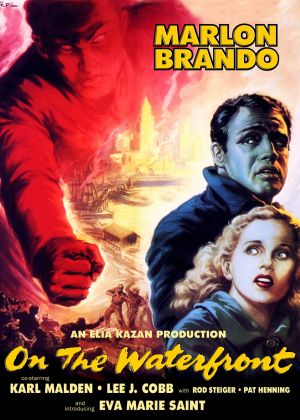
  4. On The Waterfront (1954) — Marlon Brando won his first Oscar for this film about union corruption.
  5. Dr. No (1962) — In his very first film outing, James Bond shows what a good job a true professional can do.
  6. The Godfather (1972) — “It’s strictly business.”
  7. Blue Collar (1978) — In this gritty film from Paul Schrader, three auto-workers (played by Yaphet Kotto, Harvey Keitel, and Richard Pryor) discover that their union is even more corrupt than management.  Consider this film to be an antidote to Norma Rae.
  8. F.I.S.T. (1978) — After the success of Rocky, Sylvester Stallone played a thinly-disguised version of Jimmy Hoffa in this epic historical film.  The film is poorly paced and doesn’t quite work but it’s interesting to see Stallone, post-Rocky, playing a character who isn’t necessarily all-that heroic.
  9. Convoy (1979) — The film celebrate the independent trucker, the hard-working driver who doesn’t want to be tied down by either the unions or the law.  Convoy is infamous for being an out-of-control production and yes, it is a bit self-indulgent.  But who cares?  When that convoy forms, you have to heartless not to cheer a little.
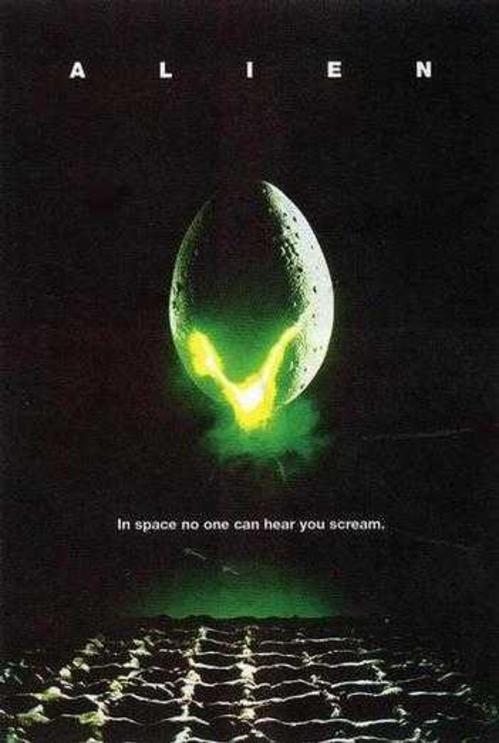
  10. Alien (1979) — One of the best films about how much it sucks to have to work for a living, Alien follows a group of blue-collar workers whose lives are deliberately put in danger by a big, faceless corporation.
  11. Last Exit to Brooklyn (1989) — A labor strike leaves a Brooklyn neighborhood reeling.  This film is not for the faint-hearted.
  12. Hoffa (1991) — Jack Nicholson stars as Jimmy Hoffa in this uneven but watchable film.  This movie is unabashedly pro-Hoffa and therefore, it provides an interesting contrast to films like F.I.S.T. and Blue Collar.
  13. Office Space (1999) — And don’t forget to sing along to the copier scene!
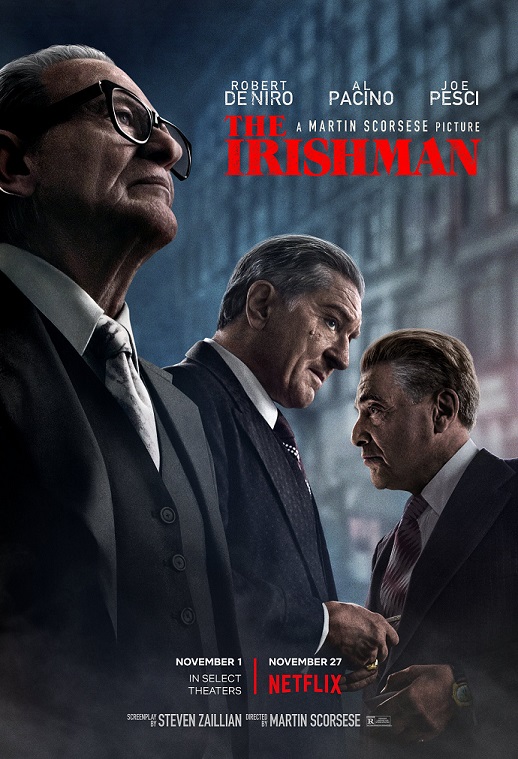
  14. The Irishman (2019) — Despite all the criticism that it received when it was first released, The Irishman is one of Martin Scorsese’s finest films.  It takes a while to get used to the de-aging but Al Pacino’s performance as Jimmy Hoffa was brilliant.  This film is one of the best looks at how the American labor movement lost its way.

4 Shots From 4 Films: Special Paul Schrader Edition


4 Or More Shots From 4 Or More Films is just what it says it is, 4 shots from 4 of our favorite films. As opposed to the reviews and recaps that we usually post, 4 Shots From 4 Films lets the visuals do the talking!

Today is the birthday of the one and only Paul Schrader!  It’s time for….

4 Shots From 4 Paul Schrader Films

Blue Collar (1978, dir by Paul Schrader, DP: Bobby Byrne)

American Gigolo (1980, dir by Paul Schrader, DP: John Bailey)

Cat People (1982, dir by Paul Schrader, DP: John Bailey)

First Reformed (2018, dir by Paul Schrader, DP: Alexander Dynan)

A Movie A Day #153: Blue Collar (1978, directed by Paul Schrader)


Three Detroit auto workers (played by Harvey Keitel, Yaphet Kotto, and Richard Pryor) are fed up.

It’s not just that management is constantly overworking them and trying to cheat them out of their money.  That’s what management does, after all.  What really upsets them is that their union is not doing anything to help.  While the head of the union is getting rich off of their dues and spending time at the White House, Keitel is struggling to pay for his daughter’s braces, Kotto is in debt to a loan shark, and Pryor is lying to the IRS about the number of children that he has.  (When a social worker shows up unexpectedly, Pryor’s wife recruits neighborhood children to pretend to be their’s.)  Kotto, Pryor, and Keitel plot to rob the union but instead, they just discover evidence of the union’s ties to the mob.  The union bosses will do anything to keep that information from being revealed, from trying to turn the friends against one another to committing murder.

Blue Collar was the directorial debut of screenwriter Paul Schrader.  Schrader has said that the three main cast members did not get along during the filming, with Richard Pryor apparently bringing a gun to the set and announcing that there was no way he was going to do more than three takes of any scene.  The tension between the lead actors is visible in the film, with all three of them giving edgy and angry performances.  That anger is appropriate because Blue Collar is one of the few films to try to honestly tackle what it’s like to be a member of the “working class” in America.  While management is presented as being a bunch of clowns, Blue Collar reserves its greatest fury for the corrupt union bosses who claim to represent the workers but who, instead, are just exploiting them.  The characters in Blue Collar are pissed off because they know that nobody’s got their back.  To both management and the union, the workers are worth less than the cars that they spend all day putting together and the money that can be subtracted from all their already meager pay checks.

Since it’s a Paul Schrader film from 1978, the action in Blue Collar does come to a halt, 40 minutes in, for a cocaine-fueled orgy that feels out of place.  While Keitel and especially Kotto give believable performances, Pryor sometimes seems to be struggling to keep up.  Still, flaws and all, Blue Collar has a raw and authentic feel to it, something that few other movies about the working class have been able to capture.  Perhaps because it never sentimentalizes its characters or their situation, Blue Collar was not a box office success but it has stood the test of time better than many of the other films that were released that same year.  Sadly overlooked, Blue Collar is a classic American movie.