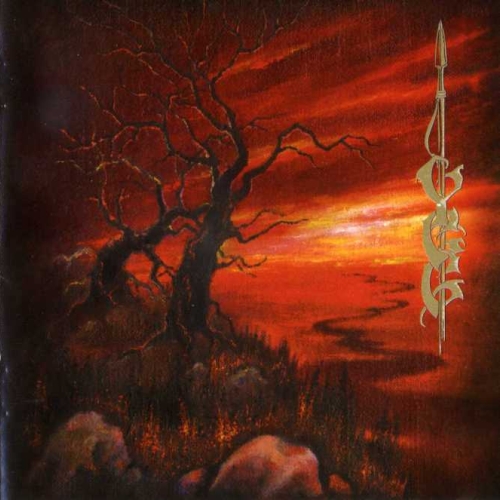
Review: Ygg – Ygg


I don’t know if I’m just a big fan of the Ukrainian metal scene so I’m inclined to notice or if that country really is popping out more bands than anywhere else in the world, but it seems like a year doesn’t go by that I can’t talk about a new band, probably from Kharkiv, releasing an impressive debut album. Ygg is comprised of three musicians from other bands you may have heard of–Nokturnal Mortum, Khors, and Святогор/Svyatogor to name a few–but I wouldn’t call it a side project. Members of that scene collaborate to such an extent that there’s next to no musician you can associate with only one act. The influences are thus a little more engrained, and it would be kind of silly for me to describe Ygg as sounding like a mix of other bands; they sound like Ukrainian metal. And they sound awfully good.

…Знаю, Висел Я В Ветвях На Ветру…(…I know, I hung in the branches in the wind…)

The album kicks off with one of the more effective intros I’ve heard in a while. Alone it might incline you to expect a pretty elementary album. Simple ambient synths, the overlapping sounds of wind blowing and waves crashing (or are those rustling leaves?), and a jew’s harp that they don’t so much play as randomly wank on amounts to something anyone could create in one take given a keyboard and a sufficiently grim, frostbitten basement.

What I’ve come to find over the course of a couple listens though is that the rest of the album is persistently faithful to the mood it sets. I wouldn’t have even noticed the continued presence of that wind and water effect buried beneath the distortion of the first metal track if the intro hadn’t brought it to my attention, and the jew’s harp bleeds into the next song as well. Over the course of the remaining six tracks these effects fade to be replaced by others, but in a way that maintains consistency from song to song.

YGG

So they’re not really switching gears here. They’re presenting the same scene as the intro from a metal perspective. The trance-like mix of tremolo chords and a moderate steady beat certainly maintains that particular ambient feel, and it’s executed in a way that should make any Drudkh fan happy.

The other elements are perhaps a little less accessible though. The kind of wavy, kind of bubbly keyboard sound would seem a bit out of place for me if Nokturnal Mortum hadn’t used the exact same thing so effectively on Weltanschauung. There is already precedence for associating it with paganism, so the sort of futuristic vibe I originally got from it isn’t an issue here. I imagine if I hadn’t listened to specifically Weltanschauung so many times before it might throw me for a loop.

The most obviously distinguishing feature of the album, the vocals, also require a little consideration. It’s a style very seldom used, and I imagine it would inevitably come off as pretty cheesy on first encounter. Previous bands that have employed it have tended to aim for an effect of pure hatred or insanity, for which it’s probably better suited. I don’t really think that fits Ygg’s picture though. Their sound focuses on nature and paganism, at least as I hear it. The track/album/band name is itself one of the many traditional names for Odin, and the introductory track’s title approximates the opening line of the Rúnatal, a 13th century recording of Odin’s self-sacrifice to acquire the wisdom of the runes. No, the vocals aren’t trying to express insanity or hatred.

So I’m inclined to hear the singing as a sort of vocal reproduction of the howling wind in the introduction. I don’t know, maybe that’s a stretch, but it’s an interpretation that works for me. It’s a sound that’s a bit harder to pull off, because a less chaotic theme requires more precision. When his voice occasionally sounds a bit too human it’s more of a brief letdown for me than a poignant reminder of music’s theme. But at this point perhaps I sound so absurdly full of myself that I’m doing the album more harm than good. I’ll just stop. Suffice to say I really like this, and I think a lot more went into its conception than just three guys jamming black metal and landing on something nice. It’s a rewarding work that’s fairly complex in its simplicity, and I highly recommend it.
Review: Kroda – Schwarzpfad


I’ve been listening to this album for months now and I’m still not sure what exactly I want to say about it. The songs are very well written in a format you might come to expect from Ukrainian metal; In some ways I feel like they’re better written than most others in their scene, including Kroda’s past works. But there is a lack of intensity in the execution that leaves me unable to be really moved by it. I don’t know if it’s a matter of performance or production, but something just isn’t there.

First Snow

The result is rather uncharacteristic. I mean, what do most Slavic metal bands have in common if not a degree of savage intensity that puts all other metal scenes to shame? Schwarzpfad goes for a much more mellow approach. It’s got this weird dual effect of highly dynamic song writing and almost monotonal atmospherics. The acoustic breaks, the woodwind solos, the occasional peak into a triumphal chorus, they all just kind of blend together for me. Like on this song, nothing really stands out to mark the switch into the guitar and vocal peak that starts about two minutes in. I sometimes barely notice anything has changed.

Now, I’m not calling this a fault. I don’t know what Eisenslav intended, so I’m in no position to say he missed the mark. But it certainly makes for a difficult listening experience. You just have to force yourself to pay attention, because it can be very inaccessible at times.

Forefather of Hangmen

Any complaints I might have about the sound quality of this album (and these youtube rips actually sound a lot better than the 192 cbr copy I found) shouldn’t overshadow its many positive traits, but what makes Schwarzpfad good I’ve had equal difficulty describing. The songs are just really well written, and I might have to leave it at something as vague as that. Honestly, the juxtaposition of really great songs and what I feel is a really bad recording make both pretty difficult to describe. I can’t hear the good attentively without thinking of the bad, and vice versa. I’ve invested a tremendous amount of time into this album and all I’ve taken out of it is a conviction that there’s something really great here and I’m not hearing it, so I think it’s time I called it quits. If they actually decide to tour the United States for once I’ll be the first in line to find out just how good Schwarzpfad really is, but until then I think I’ll give this one a rest and wait for their next album.

From the deepest pits of hair…


A dark cloud looms over our publishing department. The earth trembles, and the lights grow dim. Arleigh is away, perhaps contemplating what to do for our 1000th post landmark here at Shattered Lens. I scurry to the fridge, concerned as usual with my stomach rather than the task at hand, but as I open the door the pent-up horrors of a thousand cheesy grindhouse films and corpse paint-encrusted metal bands manifest within.


Necrocomiccon – Hot Dog Cart Hunger

What could this be? What have we unleashed upon the world? Many a foul fiend has Through the Shattered Lens bravely reviewed before, but none so vile as this. I tremble in fear at what lies before me… the most vulgar, base, soulless abomination to have ever plagued humanity… The 1980s.


Necrocomiccon – Careless Whisper

Congratulations, fellow authors, on reaching our 1000 post milestone, and thank you to all the readers for sticking it out. Maybe Arleigh will have something more interesting in store for you tonight, but in the meantime I couldn’t resist. Necrocomiccon are a new band from “probably Norway” who write black and melodic death metal parodies of 1980s pop songs. You can check out their album for free on their facebook page: http://www.facebook.com/Necrocomiccon.


Necrocomiccon – (I Just) Died in Your Arms

Review: Funerary Bell – The Coven


Funerary Bell formed in Finland in 2007, and The Coven is their first full-length release. For a week or two now it’s served as that album I put on when I can’t decide what I want to listen to, and I’ve come to like it quite a lot.


Vision of the Undead (World)

It might be the album’s lack of distinguishing features that makes it so appealing to me. It’s not distorted or lo-fi to the point of obscurity. There are no unearthly shrieks, just standard death metal growls and some menacing whispers. It never bombards, never gets all that fast, pays ample homage to black metal’s punk/thrash roots without ever breaking from its plodding, eerie pace for more than a few minutes…

It’s really just standard oldschool black metal. But that’s not something I ever really hear these days. Maybe this sort of music isn’t actually that hard to find. I’m not one of those people with the time and resources to keep up with every new release within any particular genre. Yeah, I wouldn’t be surprised if a lot of material similar to this gets released and promptly forgotten every year without my ever noticing. But this is the one I happened to stumble upon.


Detachment

I think what I like best is the tempo. Their determination to never get too hasty gives the album a high degree of consistency. It’s always either a slow plod or a thrash beat. There’s not much else. So it transitions from track to track without ever changing the vibe, letting you just kind of chill out and enjoy the dark feeling without many highs or lows. And the subtler effects of tremolo picking and occasional keyboard organs stand out a bit more when there’s nothing else competing with them.


Cainian Confessions II

If you’re looking for diversity, this isn’t the place. You’ll end the album without remembering any tracks distinctly, and only nod your head in recollection a few times on a second play through. The Coven doesn’t aim very high, and it’s really unremarkable on a track by track basis, especially the further in you get. But as a whole it’s a very nice background piece–something I’ve enjoyed far more in passing than during this more attentive listen through. There’s a decent chance I’ll forget about it entirely before long, but in the meantime it’s been fun. And maybe it’ll find a spot in my queue again this fall, once I’ve played all the classics to death for the year and still want to feel that early black metal vibe.

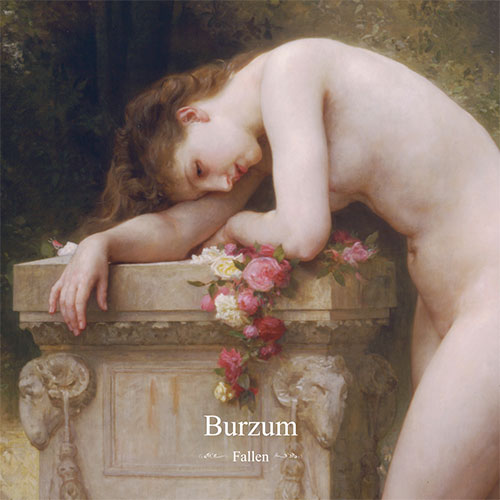
Review: Burzum – Fallen


Varg Vikernes was released from prison on May 24th, 2009, and in less than half a year he was recording a new album. Belus turned out to be everything I could have hoped for and more. It’s hard to describe what makes Varg’s music so enthralling. It has a sort of power to it–a trance-like quality that forces me to never really contemplate what it is he’s playing and just soak in its effects. Whether it’s Han Som Reiste in 1993 or Kaimadalthas’ Nedstigning in 2010, each album reaches a point where I’m completely lost in the music, sucked into his demented little world. Some of the weirdest dreams I ever had have ensued from falling asleep to Det Som Engang Var.

Jeg Faller

Sixteen years in prison didn’t seem to detract from this. Belus felt to me like the perfect continuation to Filosofem, as though his long absence from the metal world did not negatively impact his talents in the slightest. Yet somehow, just a year later, everything has changed.

I want to say straight ahead that Fallen is pretty bad. Not only does it musically lack his long-standing ability to captivate me, it’s pretty obnoxious at times. First of all, the vocals are a train wreck. Maybe in response to criticism that his screaming vocals weren’t as demented on Belus as they used to be, or maybe because he’s just an old man who can’t pull it off anymore, Varg completely abandons screaming on Fallen. Instead he whispers with a mouth full of marbles–the most annoying spoken vocals I have heard since Rhapsody of Fire were visiting the court of king chaos.

And the opening track’s chorus… Well, to quote a friend of mine, “It’s so catchy. I think Varg has an unexplored career in pop music waiting on him. Ahhhhh ahhhhh ah ahhh, jeg faller. Oooo oooo oo ooo, jeg faller.”

Enhver til Sitt

Jeg Faller might be the biggest joke on the album, but a lot of the problems that plague it persist. His new vocal style is completely unconvincing, and that feeling that he’s trying too hard forces me to actually pay attention to the music, not just let it take me like his past works. You’re then left with the realization that he’s really not a very good musician at all. In the absence of any encompassing force, the boring repetitive simplicity of his riffs stand defenseless.

It’s always intrigued me that a guy as batshit insane and colossally egotistical as Varg Vikernes could write such brilliant music. No one but Varg himself honestly expected Belus to be any good, and that made its success all the more startling. Fallen, on the other hand, is pretty much what I expected Belus to be.


Budstikken

That being said, the album has its few sparse moments. Budstikken stands out as my favorite by far, being the only track I actually really like. But its uniqueness is too little, too late. If he’d released Fallen straight out of prison I’d have said “ah well” and not bothered much with it. It’s because he so recently proved himself that Fallen disappoints rather than simply living up to low expectations.

The weird thing is this album seems to have met a generally better reception than Belus. I don’t know if more people actually like it or if the critics aren’t even wasting their breath anymore, but my verdict is that Fallen just isn’t very good. Who knows, maybe his next one will be brilliant. He’s a pretty unpredictable guy. But for now, I’m going to keep listening to Belus and pretend this one never happened. Except for Budstikken. I really like Budstikken.

Review: Waldgeflüster – Femundsmarka: Eine Reise in drei Kapiteln


Here is an album that should appeal first and foremost to fans of Agalloch. Waldgeflüster is a rather recent creation. The one-man project was started by Winterherz in Germany in 2005 and released its second full length this past May. I can’t speak for his first album, but Femundsmarka definitely deserves more attention than it’s bound to get. A product of that marriage of black metal and ambient folk that has become rather common these days, it might not reach the very top but it certainly rises above the status quo.

Interlude II: Night

Unfortunately most of the folk and ambient tracks of the album aren’t available on youtube. This one, as much as I love it, is my least favorite of the four. Just consider that while the vibe this track offers is present throughout the album, the musical styles creating it vary. The intro and outro make use of acoustic guitar, and the first interlude is a beautiful ambient piano piece.

The concept of the album is pretty self explanatory, but requires a bit of German translation. Femundsmarka is a national park situated in the mountain range separating Norway from Sweden, and the album is a musical retelling of the artist’s travels there, translating literally as “Femundsmarka: A Journey in Three Chapters”. The track list, roughly, translates to:

Prologue: Departure
Chapter 1: Lakeland
Interlude: Rest
Chapter 2: Stony Deserts
Interlude: Night
Chapter 3: Spruce Grove
Epilogue: Homecoming

Generally speaking, the main chapters are black metal and the in-betweens are folk, but there is plenty of cross-over both ways.

Chapter 1: Lakeland

So if many of the metal portions of the album are as reminiscent of Drudkh as the folk bits are of Agalloch, it should come as no surprise that all three bands highlight nature as their main theme. I could go about comparing them all, but I don’t think it would be entirely fair. This isn’t some monumental standard-setting album like Swan Road or Pale Folklore, nor does it strive to be.

And any first impressions that Winterherz is just copying other artists’ styles should vanish around the 2:30 mark anyway. It commences the most descriptive movement of the album, as you can hear the traveler begin to comprehend the beauty that surrounds him, exploding in a final triumphal realization around 4:20.

The work certainly isn’t perfect. I struggled at times in Chapters 2 and 3 to remember that Winterherz was trying to show me something and not just writing another metal album. But its high points are pretty great, and the only standard you might say it falls short of at times is its own–it’s consistently good, just not consistently visual. The introduction, interludes, and outro are my favorite moments, and give the album a higher degree of stylistic variance than most metal of its kind. The more subdued entries aren’t sparse, either, filling up nearly half of the album.

In the absence of a full track list on youtube, someone took the effort to compile an eight minute sample of the album that covers a lot of ground without revealing too much. I’ll leave you with this. If you have to buy it to hear the rest, well, your money will be well spent. Not an album of the year contender, but a pleasant surprise from an artist you’ve probably never heard of.

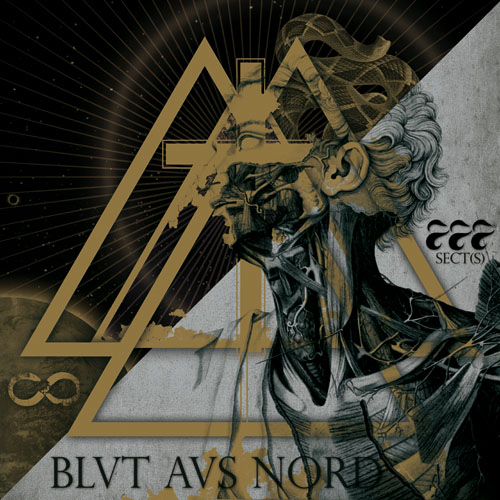
Review: Blut aus Nord – 777 Sect(s)


Blut aus Nord have released eight albums, and prior to this I’d only heard their last one, Dialogue with the Stars. So shame on me for thinking they were a rather chilled out black metal band with space-themed music and a lead guitarist with progressive rock tendencies. Fans of the band might hear a lot of consistencies in 777 Sect(s), but I could barely tell it was the same group. For better or worse.

Epitome 1

Because if Dialogue with the Stars was a pleasant ride, 777 Sect(s) is a chaotic nightmare. “Painful to listen to” is a description few bands acquire by intent, and bravo to them, I guess, for breaking from that norm. 777 Sect(s) tours some astral wasteland–some distant dimension of post-industrial horror that you’d really rather just avoid but can appreciate all the same. After about five and a half minutes of running for your life, just when you can barely stand any more of it, the music finds a safe haven, a place to reflect on the monster you’ve just engaged. It is remarkably effective, with the outro of the first track giving you time to catch your breath before gazing out from your refuge onto Epitome 2.

Epitome 2

The music describes what you’re looking at better than words can–some vast vulgar hell that marries a cyberpunk scene to an installment of the Doom series. Take what you will from this song. It seems to me like the centerpoint around which the rest of the album is designed–a portrait of the world you’ve briefly escaped from and are doomed to dive back into after seven minutes’ repose.

Epitome 5

777 Sect(s) isn’t like some Hollywood action-horror flick though, packed with distracting eye candy and special effects. It has its highs and lows, its moments of intensity and calm, but nothing is ever pleasant. After the second track you are never again permitted to live in the moment or appreciate the vastness of it all. No, it’s more realistic than a movie. You’re there, and it’s a shitty place to be, so there will be no relief. The feeling of dread never goes away, constantly nagging and distressing you. Blut aus Nord see to it through a series of songs that are not only ugly but sometimes downright annoying. The annoyance though–the repetition of unmelodic nonsense no matter how often the songs beg for coherence–can’t be directed at the band. You know that it’s intentional. You know that you’re not supposed to like it. So it manifests instead as anxiety.

Epitome 6

Even the closing song, the only coherent track besides Epitome 2, isn’t something you can really enjoy. Like track 2, it’s more of a grand view of the hell that surrounds you, but unlike that first look, where the recognition that you were a part of it had not quite sunk in, you’re not going to leave this one feeling good about yourself. The fear and disgust are ever present.

The end result is an album I never want to listen to again. You know, a lot of black metal, especially atmospheric scene-setting stuff, is really enjoyable if you aren’t too stubborn to appreciate the darker side of things. But this album, for me at least, doesn’t tap into the dark and vulgar. It harnesses fear and distress as its focal points, and does so not in real-world settings that anyone with a backbone wouldn’t be startled by, but rather within a nightmare. That’s something I’ve not come to sufficient terms with yet to enjoy. Perhaps what I take from 777 Sect(s) isn’t quite what the band intended, but there’s certainly something there for the taking, and it’s not for the meek.

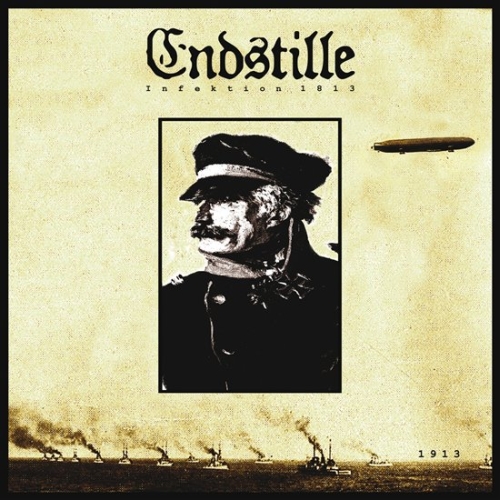
Review: Endstille – Infektion 1813


I’d never heard of Endstille until their 2009 release, Verführer. The album name, coupled with a cover which featured Kaiser Wilhelm II holding a bloody butcher’s knife, was just too delicious to overlook. It turned out to be one of my surprise favorites of the year. I wouldn’t call it original. In a lot of ways it reminded me of Dark Funeral–high production value, a mix that highlights drums over guitar, lyrical themes regulated to war and anti-Christianity. But where I could never get into the latter band, Endstille really impressed me. The same description fits their new album.

Trenchgoat

Endstille achieve their power through brutality and relentless drive, coupled with an acute eye towards German history. Not too many black metal bands emerge out of Germany. It’s a country with more historical precedence for themes of death and violence than anywhere in Scandinavia, serving the style well, but for the same reason there’s a lot more controversy involved in embracing the subjects. Endstille have been accused of right-wing affinities, even mislabeled nsbm by some, but the lyrics are discernible enough to verify the absence of a political stance.

Something that make their lyrics more cutting, and perhaps more controversial in turn, is the deadpan expression they hold throughout both albums that I’ve heard. I can’t help but mention Marduk’s triumph of 1999, perhaps the most brutal black metal album in existence at the time. It was lyrically and musically extreme to such an extent that the band themselves couldn’t fully take it seriously. The cheesy rock and roll finish to Panzer Division Marduk, delicious track titles like Fistfucking God’s Planet and Christraping Black Metal… you knew they were having fun. With the one exception of Verführer’s cover art, Endsille manage to avoid any hint of enjoyment. The effect isn’t better, just different. You never smile with Endstille. The comic appeal is substituted for a more authentic brutality.

But Infektion 1813 does seem to be lacking in catchy moments. Marduk, for all their redundancy, were at their height capable of writing some unforgettable songs. Baptism By Fire probably gets stuck in my head more than any other black metal song out there. Closer to home, Verführer had a number of memorable spots. Suffer in Silence struck me most. It surprised me just now, listening to it again, to realize Iblis only shouts “fuck God’s kingdom” two times. Coming in the midst of a steady plod with nothing obvious to distinguish it, it is yet a line you can’t miss on your first listen to the album or forget afterwards. The track currently playing on the other hand, while good as a whole, possesses nothing with which to really distinguish itself.

Bloody H (The Hurt-Gene)

The other band I want to compare Infektion 1813 to is Carpathian Forest. Now, I am probably alone in thinking that Fuck You All!!!! is the best straight-up black metal album ever recorded, but suffice to say Carpathian Forest are among the most underrated big names in the genre. I didn’t realize my first few listens through Infektion that Endstille got a new vocalist. I thought Iblis just got a lot better. Zingultus, the new singer, sounds strikingly similar. But there is a certain shrillness to his still relatively deep vocals that made me immediately think of Nattefrost, where Iblis never did. Nattefrost is my favorite black metal vocalist, so there you go.

The other comparison to Carpathian Forest really stands out in this current track, Bloody H. It’s got beats you can really bang your head to. The album review I saw on Encyclopaedia Metallum described it as “driving black grooves via Darkthrone”, and that’s more accurate than I can word it, but with Darkthrone’s commitment to low production value the similarity isn’t so obvious. Rather, it made me think first and foremost of Fuck You All!!!. Consider that quite a compliment.

Ok, bear with me for a minute here. Yes, I just linked a Rammstein song. I haven’t listened to them since Sehnsucht came out in what, 1997? There’s really not much I can say about them. I could never get past the whole electronica thing, even when I was some idiot kid worshiping Korn and the like. But there was one song on that album that blew my mind at the time and, much to my surprise, listening to it for perhaps the first time in fourteen years, still does. I’m sticking Klavier in here to draw attention to that special thing about the German language that’s so stereotypical that it tends to be forgotten in practice: It sounds evil as fuck.

Eh, and maybe this song was my first introduction to tremolo picking and I never knew it. But whatever, moving on:

Endstille (Völkerschlächter)

The final track on Infektion 1813 is hands down the most brilliant thing I’ve heard by them, and it would be boring in any other language. I mean, the music consists of a seven second long riff that repeats for eleven minutes. The lyrics consist of Zingultus naming a bunch of historic figures. That’s it. That’s really it. It’s about as minimalistic as a black metal song could ever hope to be. And it’s one of the darkest songs I have ever heard.

Why? Because he names them all with a German accent, and because it’s not called “Mass Murder” or “Slaughter or the People” or anything like that. It’s called Völkerschlächter, and the music is so repetitive that only the words matter. The first time I really paid attention to it I sat in constant anticipation waiting to hear who he’d name next, each figure smashing me in the face with the atrocities they committed.

I’m not saying Infektion 1813 is extraordinary, or even necessarily as good as Verführer, but it’s one of the best black metal albums we’ll hear in 2011. Don’t let this one sneak by you.

My Top 5 Albums of 2011 So Far


Well, it’s June, and as usual I’m getting behind in music. There is a lot more to keep up with this year than the last, and I’ve only downloaded 30 new releases so far. Hopefully that will change over the summer. Allow me to kick off three months of more active music reviews with my top five albums of 2011 thus far.

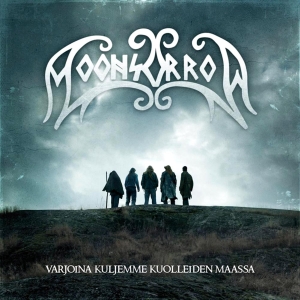
5. Moonsorrow – Varjoina Kuljemme Kuolleiden Maassa

Moonsorrow have a lot of material out there, and suffice to say I haven’t heard enough of it. I am used to really long songs in black metal, but not in folk, and I always find myself treating them like the former, playing their albums for ambient effect and paying close attention only where the music reaches out and demands it. I’ve listened to all 30 minutes of Tulimyrsky 19 times apparently, and I don’t remember it. Likewise, I forgot they’d released an album this year until I was browsing last.fm and discovered that I’d listened to it 13 times.

So take that for what it’s worth. This album has four full songs with a few 1-2 minute tracks in between. The two middle ones of the four are decidedly more catchy, whether you want to call them better or not. Moonsorrow may never move me as successfully as Finsterforst did copying their style on the underrated masterpiece Zum Tode Hin, but nevertheless here is an album I will probably never tire of, even as I never fully embrace it. I want to call it my fifth favorite of the year so far, but it’s so difficult to place.

Their songs are too long for youtube, but this video fits in the vast majority of track 5, Huuto.

.

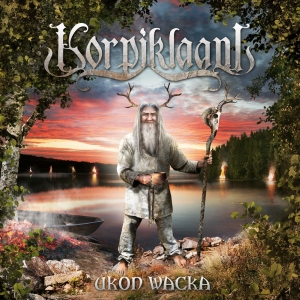
4. Korpiklaani – Ukon Wacka

Another year, another Korpiklaani album. Since 2003 they’ve released seven. That’s 83 songs that all sound pretty much the same and are all either about beer, drinking beer, being out of beer, having a hangover, or killing your hangover by drinking beer. But while they might not be folk metal’s most poetic troupe, they are hands down the most fun of the lot.

Ukon Wacka doesn’t really have any down time. From start to finish it’s a consistently enjoyable, catchy album. Sure, every song could have appeared on every other album without being out of place, but unlike on many of their others you’ll never find yourself skipping tracks. And like on Karkelo, they saved the best track for last, encouraging you to stick around:

.

3. Altar of Plagues – Mammal

I never really talk about White Tomb. I got it the first day it leaked and have listened to it dozens of times since, but it’s not something I feel inclined to sing the praises of. With the exception of the first few minutes of Watchers Restrained, there was never a point where I could tell people wow, you’ve got to hear this. It’s something a bit more personal–the sort of thing I like to play when I’m working late and really need to concentrate. It’s got a slow brooding energy that you can just feed off of. It empowers the listener without ever demanding much attention. Mammal can be described similarly, but should you choose to shut off the lights, sit back, and just soak it in, you’ll find it has a lot more to offer than their first album. I’ve only listened to it five times so far, but I feel confident placing it among the best. Here are the first 15 minutes of the opening track:

.

2. Krallice – Diotima

Here we get into the albums I consider true masterpieces. Krallice have pioneered a sound that few artists are physically capable let alone creatively inclined to emulate. But their last album, Dimensional Bleedthrough, was a bit of a disappointment. Last.fm claims I have listened to it twelve times, and I’m here to tell you I don’t remember the slightest thing about it. While it might have been more technical and refined than their first release, it lacked those standout moments that made songs like Wretched Wisdom and Forgiveness In Rot so unforgettable.

Diotima reclaims the beauty and emotion of their first album, and couples it with the mind-bending technical skill and complexity they have further developed since then. This is easily my second favorite album of 2011 at the moment, and may in time lay claim to the top slot. I highlighted Telluric Rings last week, so allow me to point out my other favorite, the title track. The lead guitar from 5:30 to 7:20 will leave you speechless.

.

1. Falkenbach – Tiurida

I was both shocked and disappointed to see this album go almost entirely unnoticed. I mean, Vratyas Vakyas is the second most important figure in the history of folk and viking metal after Quorthon. Yet even on wikipedia’s quite inclusive article on metal releases in 2011 it goes unmentioned. This would be excusable were it the washed-up product of an artist past his prime, but Tiurida is my favorite album of 2011.

The only complaint I have read is that it’s too repetitive, but that’s exactly what Falkenbach is meant to be. There’s a difference between repetitive and generic, and he has always been far from the latter. Indeed, it was my fear that Tiurida, his first release in six years, might lack that creative genius present in all his prior works and compensate by at last substituting some stylistic variance. But Vakyas never lost his edge, and has here created his best work since En Their Medh Riki Fara fifteen years ago. Let the glorious opening and closing tracks speak for themselves:

Song of the Day: Krallice – Telluric Rings


This is a difficult song to introduce. It is not a gradual build-up to an overwhelming conclusion–an accurate description of my other favorite song by them, Wretched Wisdom. It’s not post-metal in that sense (granted most of their songs aren’t.) No, I want to say it reminds me first and foremost of Opeth circa My Arms Your Hearse. The styles aren’t at all alike, but in a similar manner it flows from movement to movement, each astoundingly memorable and neither oppressively aggressive nor tame, before winding down into a slow, apprehensive timebomb anticipating the final desperate explosion that catches you off guard no matter how convinced you are that it’s coming. And though the Drudkh influence is obvious, it’s much like Opeth in that there’s really very little it can be compared to.

If you are familiar with Krallice, the song should strike you from the get-go for beginning in stride rather than exploding out of a wall of feedback or gradually building into anything.

As a final note, notice how significant the bassist’s role is in this song. It’s a feature rather uncommon to the genre.

If you listen to only one version of this, I recommend the studio cut in spite of the poor sound quality on youtube. If you feel inclined to hear it twice though, this second, live video really lets you grasp what’s going on. It wasn’t until I saw them live that I was compelled to really dive into the studio version of this song and realized what a masterpiece it was.