Review: Arckanum – Helvítismyrkr


I am not overly familiar with Arckanum. I associate the one-man act more with Johan “Shamaatae” Lahger’s peculiarity than with his music. From releasing a music video frequently featured among metal’s cheesiest to releasing an album absurdly titled ÞÞÞÞÞÞÞÞÞÞÞ, his minor exploits will perhaps always incline me to regard Arckanum with an eye towards the ridiculous. ÞÞÞÞÞÞÞÞÞÞÞ did, however, receive some pretty gushing reviews (I never got around to listening to it enough to judge one way or the other), and when I saw that he’d released a new one I thought it due time to give him a shot.


Helvitt

Arckanum has a somewhat odd history musically as well. After releasing three full-length albums between 1995 and 1998, he took a decade long hiatus, not reappearing until 2008 and releasing a full length album every year since. (Sviga Læ, which was never brought to my attention, came out between ÞÞÞÞÞÞÞÞÞÞÞ and Helvítismyrkr.)

In the meantime, Shamaatae has been an active writer on the subjects of “Chaos-Gnosticism” and “Anti-Cosmic Satanism”. A scholar in his field I’m sure. Whatever all that means, it apparently falls into a similar boat as the rituals practiced by fellow Swedes Dissection and Watain. Jon Nödtveidt took his own life in proclaimed accord with such teachings, and though I can never resist a tasteless joke that he had listened to the final studio cut of Reinkaos for the first time moments before his death, suffice to say these guys take themselves seriously.

One might expect that sort of intensity and personal conviction to be reflected in the music.


Nifldreki

Throughout Helvítismyrkr though, I’m not really hearing it. The album is in no sense bad, but it rarely surpasses the generic. Neither the song writing nor the atmosphere in which it is presented conjure for me much beyond a decent musician’s create outlet. He fails to take me beyond himself.

The album does have some catchy feature riffs however, Nifldreki being a prime example, and, the slow grind In Svarta aside, Shamaatae maintains a breakneck pace throughout the majority of each track, giving Helvítismyrkr a particular coherence and consequent appeal. Again, there is absolutely nothing bad about this work, I just had higher hopes.


Svartr ok Þursligr

Helvítismyrkr’s high point almost beyond debate is Svartr ok Þursligr. The breaks in the opening riff come in hard rock fasion that really drive the song, if in a peculiarly fun sort of way. Given the background, I was expecting the best tracks to be more on the esoteric side, but Shamaatae seems to be in his prime on Helvítismyrkr when he’s rocking out.

What propels the song from being merely more fun than the rest to being something really outstanding follows the transition about 3 minutes in. He incorporates a woeful, weeping violin that, aside from completely catching me off my guard, pairs up with the tremolo guitar with astounding success. It’s something I’ve never heard before in black metal, and the effect is a sort of tragedy in the positive sense–maybe not the vibe he intended to deliver, but one that certainly appeals. I can’t imagine it being sustained throughout an album without sounding over the top, so I wouldn’t encourage him to push for more of it in the future, but as a single instance it works exceptionally well.

I am not sufficiently well-versed in Arckanum’s catalog to personally recommend better efforts, but if the sparks of talent you’ve heard in these sample tracks entice you, ÞÞÞÞÞÞÞÞÞÞÞ seems to be popularly regarded as his best work. As for Helvítismyrkr, it is a decent effort but nothing to brag about.

Review: Thantifaxath – Thantifaxath EP


Thantifaxath are a new black metal band out of Toronto. They released their debut ep this year in cassette format on Dark Descent Records, and I think you will like it.


10,000 Years of Failure / Violently Expanding Nothing

The amount of diversity they’ve managed to cram into a five and a half minute long song (excluding the introduction here merged) is pretty amazing. The track, and most of the ep really, isn’t so much moody as thematic. It’s got a sort of sci-fi horror vibe throughout, apparent right from the bass riff introduction, and the ample mingling of melody in between epic black metal explosions almost gives the song a plot line. Even the choice of album cover, Nicéphore Niépce’s La cour du domaine du Gras (supposedly the first photograph ever taken), resembles something of an extra-terrestrial sighting. If the track title is any indication, this was likely their intent, and they pull it off well. Outer space and black metal are an uncommon mix, and one usually attempted through an emphasis on slow-moving, vast atmospherics. Violently Expanding Nothing (the youtube label “Violently Expanding Emptiness” is wrong; I’m taking the track title from the actual packaging) is, in contrast, gritty and abrasive, and all the more effective because of it.


Freedom is Depression

Thantifaxath definitely lay down their best card first, but the album’s other two tracks (both under five minutes long) carry much of the same appeal. Freedom is Depression, peculiar title aside, continues to give me that sort of b-side horror flick vibe, especially with its low production atmospheric guitars. The main riff following the introduction calls to mind recent Enslaved, and that might be the only clear comparison I can make of this album to anything else in particular. It’s among the most unique black metal I’ve heard in a while, and it makes excellent use of relatively low production value to create an eery, unearthly vibe.

Keep an eye out for these guys. They’re brand new, and I suspect their best is yet to come.

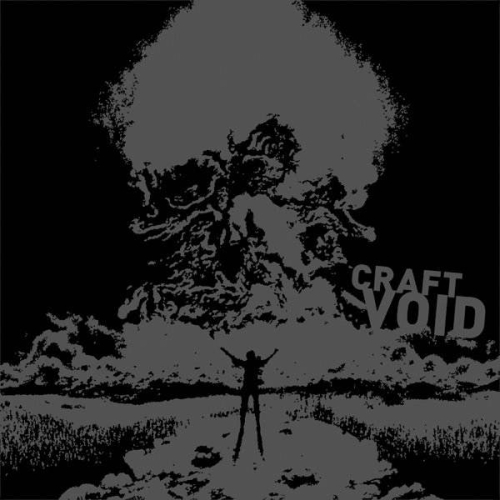
Review: Craft – Void


Here it is five days into October and I haven’t covered a black metal album yet. I ought to be ashamed. Allow me to belatedly kick off my favorite season in good proper satan-worshiping style.


Serpent Soul

Craft’s new album kicks ass. I might go on long analytic rants right and left about modern black metal hybrid bands standing at the forefront of innovative new metal today, but when it comes time to dig out the really sinister shit, tradition still carries the flag. Craft have spent the last ten years proving that corpse paint and spiked bracers still have a legitimate roll in black metal.

Void starts out by punching you in the nuts, then Mikael Nox gets about an inch from your face and compliments your tears with spittle while John Doe plants his foot on your chest and breaks out the tremolo. By the two minute mark they’ve finished chalking a pentagram around you and the ritual begins. If this transition strikes you initially as a disappointment, leaving the opening brutality behind too soon, just give it some time. As the three minute mark approaches, the tremolo guitar invokes a brief vision of awe and terror, soon to be lost in a chaotic haze. If you haven’t moved by now, you’ll probably find your intestines dangling from the ceiling beams.

The only real disappointment in the entire song is the fact that it ends.


The Ground Surrenders

It’s not that Serpent Soul, or any other track on the album for that matter, is aesthetically above standard. As song writers they follow the black metal status quo, and if you don’t like this genre of music they’re not the sort of band you’re likely to make an exception for. Rather, what makes Void as a whole so great is all in the details of delivery. The vocals, guitars, and drums all merge perfectly to create a single solid sound in which nothing seems out of place. It’s all so tight that every dynamic shift delivers; the impact never falls short of their intentions.


Succumb to Sin

Granted plenty of black metal bands have preferred moderate tempos, it’s one of Craft’s great consistencies on Void to always take maximum advantage of the sort of heaviness a slow and steady plod can offer. It’s almost as if the tension of each track is measured, with the opening brutality as the measuring stick. Any time it cuts back you’re practically guaranteed a return. Whatever’s built up is always properly released, whether it be in the form of the explosion at the end of The Ground Surrenders or through the more subtle bursts employed on Succumb to Sin. Add a quick guitar solo at the end to let out the leftovers, and here you’ve got an exceptionally well-formed song.

I’ve talked this album up quite a lot, but let me be clear as to why. It’s not great in any of the ways I usually get fired up about; it’s pretty plain and simple black metal. Like Total Soul Rape and Terror Propaganda (I never actually knew Fuck the Universe existed until I started writing this), it will probably be a fall staple for me when I’m itching for good black metal with no trappings, but the only thing I’m really going to remember is that I liked it. I’ll forget the intricacies of the songs that I’ve picked up on while writing this pretty quickly. But what really struck me when I paid attention to it (and what might subconsciously continue to draw me to their first two albums) is not ingenuity but the quality of their musicianship. This album shines because every member of the band does the right things at the right times every time, feeding off of each other’s performance to create a really tight, unified sound. It’s just really well crafted music, no pun intended.

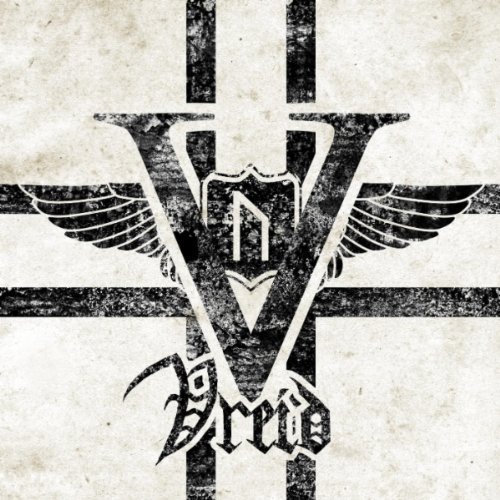
Review: Vreid – V


When Terje Bakken, better known as Valfar, passed away in 2004, one of the most significant bands in black metal passed with him. The remaining members of Windir went their separate ways, forming a number of different groups, and Vreid was one of them. As you might have guessed by the title, they’ve now released five studio albums, and they’ve evolved away from the sounds of their predecessor. I can’t say much for their first four albums, though I’ve listened to them, because I never really paid close attention. So I’ll be approaching this one alone, not as a comparison to their earlier stuff. I just thought I should give a brief history of the band first, since they have a legendary if now distant past.

I can’t heap endless praise on this the way I have a bad habit of doing for most albums. I’ve got pretty mixed feelings about it all in all.


Arche

Though classified as black metal, the driving force behind a lot of V is heavy metal–a perhaps generic term, but fitting in this case. The bulk of the album is very riff-driven. You can get a feel for their multi-styled approach from the very beginning. Though the chords build up into a melodic death sound that eventually breaks into black metal, the song is quick to return to the opening riff. You get a lot of repetition, but also a lot of opportunities for some really awesome solos–something that rarely coexists with blast beats and tremolo. The sound Vreid’s created here opens the doors to a lot of metal elements generally absent in specifically black metal, and the way they take advantage of it–the ample guitar solos first and foremost–are the album’s biggest highlights for me. You’ll hear plenty of death metal and (not exactly foreign to the genre) thrash metal as well.


The Blood Eagle

But there are some major detractors. I’m not always convinced that the sounds they put together really work. The Blood Eagle could be a pretty cool if simplistic heavy metal song, but the singer kind of kills it for me. I love his vocal style. I really do. But if perfect for black metal, it just doesn’t always work laid over a song that just as frequently calls to mind Iced Earth. Actually singing could make this song work. Alternatively, I could see them pulling off some deep, guttural death metal vox here. But the contrast between the tameness of the song and the shrill harshness of black metal vocals doesn’t find a rewarding middle ground. A lot of the album’s lyrics are pretty suspect too, especially, again, on this particular song. The opening lines, “Born out of worlds of fire and ice / The nature of spirits embrace our lives / From the underworld to above / We worship the fertile soil“, cease to be plausibly uplifting and just sound kind of sissy when followed up by a chorus of “Carved in the back / Blood-strained wings are dressed / An image of grotesque / The blood eagle of human flesh“. Pagan spirituality and gore-grind guts-fucking just don’t mix.


The Others and the Look

On some tracks, this one a great case in point, all of the elements Vreid employ come together to create diverse and enjoyable songs that never bore. On others I struggle to pay attention at all. Most of them have rewarding bits here and there with a lot of drag in between–repetitive riffs like in Arche and acoustic/keyboard interludes that don’t amount to much. I suppose it doesn’t help that I’m not fond of death metal, which Vreid seem to incorporate a lot of; someone with opposing tastes may well hear this album from a very different perspective and find it quite the success. But given all the other new material out there, it’s pretty unlikely that anything will move me to keep on listening to this one. I think that’s my final verdict on V: not bad, but too frequently boring for its positive features to really shine.

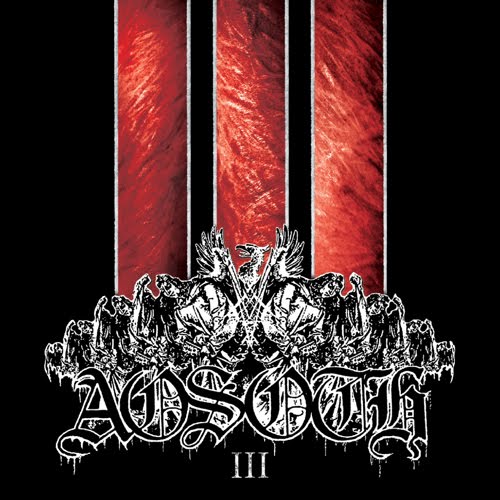
Review: Aosoth – III


French black metal as crushing chaos is something of a novelty to me this year. I think I was sort of envisioning the metal scene there as composed of a dozen Neige side projects and Deathspell Omega. Blut Aus Nord and Aosoth’s new albums have both thus thrown me for a bit of a loop. I didn’t really listen to either band prior to this year, and both have recently released something tormented to the point of being both fascinating and entirely unpleasant to listen to.


II

Unlike 777 Sect(s) though, III doesn’t give me any sort of moving vision. It doesn’t so much take me on a journey through a nightmare I’d rather avoid as confront me head on. There’s a lot less to latch onto beneath the wall of noise, and what does surface isn’t exactly friendly. You can expect an album that’s tormented from start to finish, and unrelenting even in its slow parts. If II is the most frantic song on the album, it’s also perhaps the most direct example of this. At the transition around 1:15, what emerges as the song’s most defining characteristic is something of an instrumental tornado. Here the black metal serves as sort of a portal, a summoning sphere that conjures forth sinister elements from the beyond. On II it might be a tornado ready to rip you limb from limb. More frequently it’s a slow-moving monster with equally ill intentions, and the ritual that invokes it is likewise more of a methodical blood-letting than a butchery.


III

III is a bit more characteristic of what you can expect to hear throughout–a lot of slow, haunting progressions interlaced with blast-beat brutality. Again the song’s most memorable moment fades in. The break around 2 minutes doesn’t explode back into full-throttled black metal. It slowly builds up. A deeper guitar tone takes its sweet time to emerge out of the filth and present, around 3:45, possibly the most crushing, albeit brief, moment on the album, soon to be buried again beneath higher-pitched, haunting sounds and blast beats.

It wasn’t for a while after reviewing 777 Sect(s) that it really grew on me, and likewise Aosoth’s III might take more time than I’m willing to give it to develop in my ears into something not enjoyable, it will never be that, but at least more intriguing than it is unbearable. But then, the two albums don’t really compare as much as I’m making them out to, I just haven’t heard enough music like this to better describe it. There are definitely no good vibes to derive from Aosoth. Like I said, it’s not a journey filled with hidden horrors–it’s direct. What’s there to be heard I think you can take in in one attentive listen. It shares the ability to terrorize without any real relief, and for better or worse that may be its only effect. The songs are fairly diverse, but the bad vibe is consistent. As something I doubt was meant to be enjoyed I think it’s pretty successful. Prepare to walk away feeling a bit less content than when you started.

Review: Peste Noire – L’Ordure à l’état Pur


“The verb troll originates from Old French troller, a hunting term.” I kind of want to end right there. But I’ve read reviews of 2009’s Ballade cuntre lo Anemi francor, one of my favorite albums ever, that basically accused Famine of making something intentionally horrible. To just say no, Ballade was a work of genius, L’Odure is their intentionally horrible album, without any justification, would be a bit naive.

I don’t think I can really say what I want to say about L’Ordure without taking a good look at Ballade though, so let me start with the opening song of their 2009 album.


La Mesniee Mordrissoire (on Ballade cuntre lo Anemi francor)

Following a short introduction track, La Mesniee Mordrissoire kicks off perhaps the most dark and disturbing album I’ve ever heard. Famine’s infamously twisted vocals, the peculiar, unnatural way in which the album is distorted, the unity of all of its seemingly random features, the cackles, the ultra-nationalistic chants, the contrast of all this to riffs and beats that are sometimes happy, sometimes longing in an entirely human sort of way, everything about this album is warped beyond belief. And it just gets “better”. I wish I was a psychopath just so I could have the fulfillment of jabbing my victims with a red-hot poker while dancing to track 3. … Ok well, anyway…

I refuse to believe that this album was a fluke. I refuse to believe that Famine’s real intention was to create something really awful and he just by accident shit out a masterpiece. Sure, it might have vastly exceeded his expectations–works of this caliber often surpass their creators–but it was not a complete accident.

At the same time, a lot of what you hear on Ballade couldn’t have been recorded with a straight face by a normal person, and I have no reason to believe Famine isn’t one. I for one don’t think I could chant “sieg heil! sieg heil!” or sing a chorus of “la la la la lala” without busting out laughing regardless of how well it fit my artistic vision. I typically see Famine being accused of immaturity, not of being a radical, but I fail to see why he couldn’t have taken the album seriously and still gotten a kick out of the elements of it which, when taken out of context, are completely ridiculous.

When I say L’Ordure à l’état Pur, translated to something like Garbage in its Pure Form, is horrible, I’m saying that I think Famine intended it to be horrible. I think it has next to nothing conceptually in common with its predecessor. It’s like he’s saying “No, this is immature. Do you see the difference?”

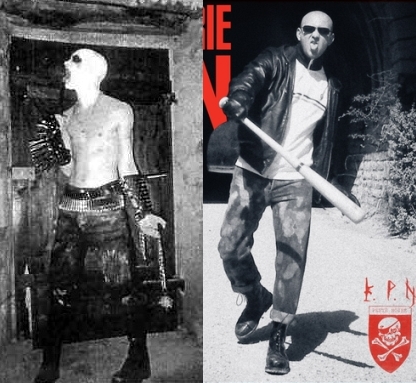
L’Ordure à l’état Pur came packaged with an image change for the band that might clarify the difference.


Cochon Carotte Et Les sœurs Crotte

This is the only song I’m going to sample from L’Ordure à l’état Pur, because I think it’s all you really need to hear to decide whether you want to pick up the whole thing or not. If you can appreciate sound samples from scat pornography, belching noises substituted for drum beats, Famine doing his best impression of an irritated chicken, and really bad techno, maybe this album is for you. Hell, maybe you can kid yourself into thinking the band is making some statement about society. But for me, Famine is just trolling here. Maybe he wanted people to derive some sort of meaning from it all, or maybe he just wanted to sit back and laugh at all the people who try to. I think I’ll not risk falling victim to the latter.

L’Ordure à l’état Pur has a few really great features, but by and large it’s awful. Take the album title literally. You might think there is meaning buried beneath the joke, but that is the joke.

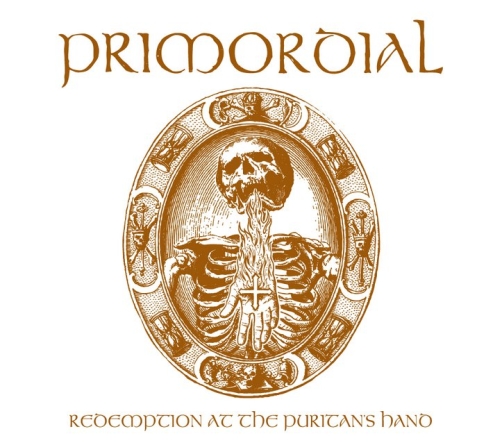
Review: Primordial – Redemption at the Puritan’s Hand


I’ve seen this tagged black metal, and I really have to wonder. I’m not familiar with the band’s history. I haven’t heard any of their earlier releases but To the Nameless Dead, and that only twice back in 2007. So maybe they were black metal once, I don’t know. But calling this anything but Celtic metal would fail to properly describe it. It bleeds green.

No Grave Deep Enough

And like many Irish bands, the lyrics are the focal point. Redemption at the Puritan’s Hand is an album about death. The band stated that much pretty bluntly when they released it. But it doesn’t approach the subject through the music (unless metal or Irish melodies can be said to be connected to it by default), nor does it settle for less mature pseudo-poetic lines about chaos and evil and all that nonsense you hear in metal. It’s an in-your-face, unfanciful confrontation. You might not get the bigger picture of each song every time. I’m not going to pretend I do. But line by line it often hits hard and direct, in a powerful vocal style you can understand without having to look up the lyrics.

To the Nameless Dead must not have immediately impressed me too much, because I never did end up giving it an attentive listen. Redemption at the Puritan’s Hand had me hooked by the opening chorus. “Oh death, where are your teeth that gnaw on the bones of fabled men? Oh death, where are your claws that haul me from the grave?” The album is packed full of lyrics you’ll not soon forget.

Bloodied Yet Unbowed

As such, its highs and lows are related. An album like this can be difficult to pull off, because it gives the listener the feeling that every line sung has to matter in some direct, accessible way. Sometimes they simply don’t. For every moment like No Grave Deep Enough’s chorus, you’re going to find an opportunity lost. The song Bloodied Yet Unbowed is a case in point. When the time comes for a powerful stand-alone statement to conclude the opening lines, they really don’t deliver, settling for “You may say I have lost to a better man . . . yet maybe one who did not dare to be wrong or even to be right.” However much meaning might be intended there, and however much you might accurately read into it, there’s a sense of nonsense about it that leaves me unimpressed.

Don’t get me wrong. If I didn’t think Redemption at the Puritan’s Hand had great lyrics I wouldn’t keep going on about them. But they don’t hit home every single time they’re intended to, and that’s at least a minor, petty disappointment.

I haven’t even mentioned the music yet. As you can tell plainly enough from Bloodied Yet Unbowed, there really is a black metal side to them. It just plays no role in driving or defining the album.

The Puritan’s Hand

The penultimate track, The Puritan’s Hand, is my favorite on the album. I about wrecked my car the first time I heard it. Without following a completely direct path of progression, the music evolves from something slow and fairly formless, to something borderline happy that you can really rock out to, to something powerful and intense.

I’m struck by the relative simplicity of the guitar and drumming throughout, and especially in the middle. I’m not sure what direct effect this has, but the track gives off more of an Irish vibe than any other on the album to me. Also the ending is interesting, because it’s the sort of intensity I’d expect in post-rock or pre-commercial success screamo (What’s the acceptable term for that these days? Emo violence?), certainly not from a band with black metal roots. But then, I get the same impression from their fellow countrymen Altar of Plagues, and they’re black metal. Make what you will of that.

Being pretty much new to Primordial, Redemption at the Puritan’s Hand was a delightful surprise–probably the last thing I ever expected from a band generally tagged “folk black metal.” The vocals, the attitude, the unique guitars and drumming that defy thorough classification, an actual regard for the power of words, it all comes together into something pretty unique and refreshing. This one’s definitely worth picking up.

Review: Moonsorrow – Varjoina Kuljemme Kuolleiden Maassa


A few months ago I placed this album in my top 5 of 2011 so far, but I really didn’t have much to say about it. Despite having listened to ample amounts of this band over the years, I really am still in no position to thoroughly compare it to their past works (though I’ll certainly try). Moonsorrow has always been a band I’ve listened to in passing–something I put on for the mood it sets, not to appreciate its intricacies. In this sense Varjoina Kuljemme Kuolleiden Maassa is no different. But in the span of just, what, six months, I’ve listened to it more than all of their other albums combined since I first heard about them. So it’s got to have something special going for it.

Tähdetön

The first thing that makes Varjoina Kuljemme Kuolleiden Maassa so effective is showcased in the first minute of the opening song. That deep, crushing guitar tone that kicks it off doesn’t lose the spotlight until at least half way through the album, and it’s never abandoned completely. A quick skip through their larger discography tells me this is something fairly new. It’s not their first album to be largely driven by guitar chords, but I’ve found nothing as deep, encompassing, or persistent as this. The result is a fuller sound that keeps me connected as the surrounding styles vary. Tähdetön might move over time from something grim to something sweeping and beautiful, but a thread connects it all. The opening song doesn’t transition in the same sense as their previous works; it follows a steady progression.

Huuto (first 15 minutes)

The folk elements of the album are also worth noting. If a bit less authentic in feel than they used to be, they’re far more in touch with the music that surrounds them. I can’t help but think of Equilibrium’s Sagas throughout Huuto, and to a lesser extent on the other three tracks as well. You’ll find little in the raw here; it’s typically encased in or entirely consistent of dreamy keyboards that feel more fantasy than folk. This isn’t something entirely new for the band. They’ve always been pretty synth-heavy. But I don’t think you’ll find a parallel to Huuto’s intro on their past albums. I think it would have started out with just an acoustic guitar and the keyboards would have entered along with the distortion, or else would have been more of a drone than a dreamy accompaniment. Just like the intro to Tähdetön gives you a distinct example of what has changed on this album metal-wise, the intro to Huuto shows their new approach to folk. The keyboards and traditional sounds are inseparably fused, not two distinct elements of the band.

The third great thing for me is that they’ve returned to writing reasonably short songs. Their last couple releases have been made up predominantly of 30+ minute marathons that are hard to engage from start to finish. The longest song on Varjoina Kuljemme Kuolleiden Maassa is sixteen minutes. I have the option to single out a song once in a while and really get into it from start to finish, making each track a bit easier to appreciate.

Kuolleiden Maa (first 10 minutes)

A lot of what I’ve said about this album doesn’t really apply to the final song, Kuolleiden Maa, which is a fourth of the entire album. It is decidedly darker, and the only track that can really be described as black metal. It’s just as enormous as the rest of Varjoina Kuljemme Kuolleiden Maassa, but the feel is very different. That it’s my least favorite track should be no slight against it; it probably sounds more like what you would have expected on a new Moonsorrow album than any of the others. And it’s well placed to not disrupt the rest of the album. The three generally upbeat tracks come packaged together before the bleak conclusion. It also ends where the first track begins (though this sample doesn’t get that far into it), making the whole album very repeatable. The annoying bit of static you hear on the left in this sample is the product of youtube, by the way, and not something to worry about on the album proper.

In short, everything about Varjoina Kuljemme Kuolleiden Maassa feels bigger, more surreal, and all around more engaging than their past works. It has an incredibly dark ending, but I’d also say it’s all in all more happy and optimistic than their past works–something that certainly appeals to me when I’m in the mood for folk metal. As quintessentially Moonsorrow as it may be, it’s a definite step in a new direction, and the result is my favorite release by them to date. I didn’t actually sample my favorite track here. That would be Muinaiset. But all four feature songs (the rest are short intro/outro/transition tracks) are superb, and you’re definitely missing out if you don’t pick this one up.