Review: Ihsahn – Eremita


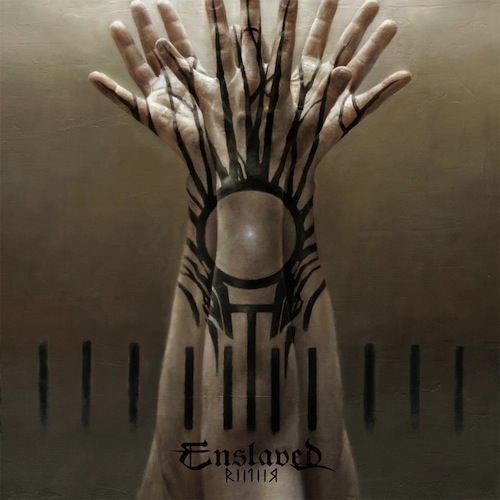
Vegard Tveitan released his fourth solo album this year, giving “Ihsahn” a discography almost as extensive as Emperor’s. Eremita offers the eclectic and exquisitely well-executed sound we’ve come to expect from him in recent years. What it does not offer is very much in the way of black metal. This was a predictable turn, as his sound continued to evolve and incorporate more and more progressive elements. Eremita continues from the major shift taken on After.

Arrival, the album’s opening track, is something of a caricature of everything I don’t really like about Eremita. (Considering the almost total lack of Eremita references on youtube, I have no doubt this video will be removed pretty soon for some copyright nonsense, but the guy who shared it’s account is still active for the time being if you want to go explore the album more thoroughly before buying it.)

The power of the driving opening riff is obviously lost in a youtube sample. Don’t let that be a turn-off. But it’s still a relatively unvaried chug-a-chug, with Ihsahn’s unique distorted vox intermixed with soft, sung breaks. Shortly after the 3 minute mark the song explodes into a pretty wild 30 second guitar solo, and then it’s back to what we started with. I do think Ihsahn’s eclectic guitar doodling is pretty impressive. That’s something I’ve yet to tire of. The getting there, however, is kind of a tedious path for me. Prog bands so often lose focus of the importance of creating an overall vibe, and I fear that “Arrival” too runs the serious risk of amounting to little more than a stereotypical build-up to wankfest. Pretty consistently throughout this album I struggle to get into the moments where not much is going on. I never had any such issue with After, despite its equally drastic break from black metal.

On another note, I loved Ihsahn’s vocals when he was doing black metal. Something about their lack of depth always came off as exceptionally more sinister than the stylistic norm. But when they’re taken out of that context, they just seem to clash with the rest of what’s going on. When he layers them it tends to work, but the single vocal track that characterized a lot of The Adversary does not function as well here. It’s an odd comment coming from a black metal fan, but I really wish there was a lot less screaming and a lot more singing on this one.

That being said, I think Eremita starts off with one of its weakest track. The aspects that make me yawn are somewhat less prevalent further in.

“The Eagle and the Snake” is a good example of what works exceptionally well on this album. The return of jazz saxophonist Jorgen Munkeby is a huge plus, making the breaks between Ihsahn’s outstanding solos valuable in their own right and not merely means to an end. The passage from 2:30 to 3:00 is rescued by the subtle addition of a second distorted vocal track to flush out the screams and avoid the sometimes grating contrast in “Arrival”. The song structure doesn’t feel pre-determined, and the dark, jazzy vibe glues the whole thing together. Ihsahn here offers some of his most imaginative guitar solos to date, in a context appropriately conditioned to present them without feeling forced.

Ihsahn doesn’t forget about black metal altogether, either. There’s nothing on Eremita as wild as “A Grave Inversed” (which, I think, might be the best song of his solo career), but “Something Out There” definitely satisfies any cravings to hear some old school Ihsahn in the mix. Ihsahn also takes frequent dives into the realm of death metal, especially on “Departure”. To me, the really pleasant intro/outro and occasional sax appearance aside, this track runs all the same risks as “Arrival” with no epic solo pay-out at the end to reward you for listening to it. But then, there is a reason I don’t like death metal.

Right now, having listened to Eremita attentively maybe four times, I can honestly say I don’t like it. The sort of mood and atmosphere Ihsahn is attempting to create is just completely lost to me on tracks like “Arrival” and “Introspection”, while “The Eagle and the Snake” is more the exception than the norm. But except where something is exceptionally bad (and nothing on Eremita is), it is always hard to put your finger on exactly what you don’t like about it; it is not as though we are in any position to say “the artist should have done this instead”. Ihsahn is a metal legend deserving of the title, and plenty of other people seem to love this album. For me, the difficulty lies in engaging it; I struggle to sit back and give most of the songs my undivided attention without feeling impatient. Eremita lacks a consistent driving force to hold everything together.

Review: Alcest – Les Voyages De L’Âme


You would be hard-pressed to find an album which more reviews have simultaneously labeled generic and beautiful than Les Voyages De L’Âme. It’s an odd situation. Neige has definitely found his sound. I have to imagine that he personally is more satisfied with his work now than ever. The catch is that a lot of people appreciated his music best when he was still searching for something. Les Voyages De L’Âme is beautiful, no doubt about it. It’s a journey through a mysterious, fanciful world that I have taken for 50 minutes frequently this year; it was released in early January, so it’s technically a year old at this point.

Là Où Naissent Les Couleurs Nouvelles

But such descriptions cannot characterize all of his works. Neige’s music has a bit of a narrative in it, told not so much in a single album as in the scope of his career. His first release, Tristesse Hivernale (2001), was a poorly produced sinister ride not particularly unlike the debuts of the Norwegian legends. It also happened to feature an early appearance by Famine, whose Peste Noire took a drastically different and equally admirable path in the years to follow.

Neige didn’t release an Alcest follow-up until 2005, but “Le Secret” revolutionized metal. The two-track EP was an odd consequence of Neige continuing to play black metal while aspiring towards the atmospheric polar opposite. What you got was something beautiful but perpetually fragile; a glimpse at something angelic in music’s darkest corner, which threatened to fade away at any given moment. It’s the sense that what you’re hearing reveals itself in temporary, fleeting form that really places Le Secret above the rest of Neige’s work for me.

Neige was openly bothered by the reviews Le Secret received. A lot of people just didn’t get it, or more likely did get it but felt some bone-headed sense of masculinity in jeopardy should they admit to getting it. Neige regarded the album as a failure. I think the failure was on the part of the listeners who reviewed it, and I was borderline devastated when Neige re-recorded Le Secret last year. But in any case, the fleeting nature of Le Secret’s sound reflected a real fleeting feature of Neige’s style: It wasn’t what he was ultimately aiming for. It was, rather, the last step on the way to getting there. Souvenirs d’un autre monde was the full realization. We might for stylistic purposes label it shoegaze black metal, but it was really post-black metal in the most literal sense.

Souvenirs d’un autre monde was, to me, all about the triumph. It reached for that light buried within Le Secret and made it through to the other side. Neige’s music finally entered that fanciful world of light and beauty that he had envisioned all along. If Le Secret was all about getting there and Souvenirs d’un autre monde was the overwhelming awe he felt when he reached it, Écailles de Lune might be understood as a more orchestrated exploration of what waited on the other side.

Faiseurs De Mondes

This might seem a very peculiar and abstract way to go about describing a discography, but I think it reveals the reason why Les Voyages De L’Âme feels in some sense generic or repetitive. I don’t think Neige planned out any sort of progression from Tristesse Hivernale through to Écailles de Lune. Rather, he is one of those truly great musicians capable of effectively recreating his thoughts in music, and as Neige the man/musician developed his vision over time, his music progressed to reflect it. In the two years that separate Écailles de Lune from Les Voyages De L’Âme not much appears to have changed, and what Les Voyages De L’Âme lacks has absolutely nothing to do with quality. The music is superb. It’s just that we have come over the years to expect perpetual transition, and Les Voyages De L’Âme instead continues to explore the other-worldly landscape Neige first fully entered on Souvenirs d’un autre monde. Les Voyages De L’Âme is in every way Écailles de Lune Part 2.

Given Neige’s past responses to criticism, who knows how he might react to the labels of “generic” being pasted on Les Voyages De L’Âme in otherwise positive reviews. I think the aspect of his sound that is being criticized in this regard isn’t really something he can help, and anyway the context in which the album may be called “generic” is a major stretch from the normal sense of the word. Better to say that it is a continuation of Écailles de Lune, and outstanding as such.

If there are any further doubts, I should inform you that Sophie loved it. She has impeccable taste.

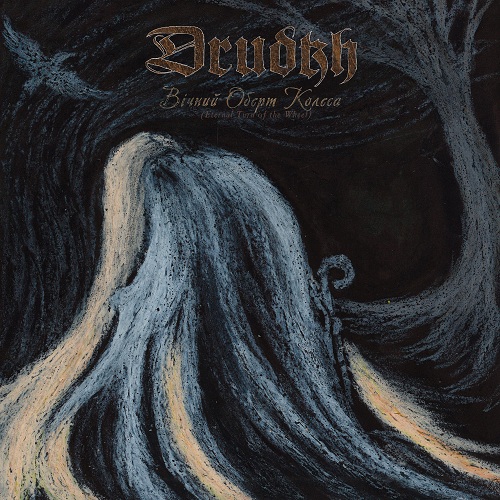
Review: Drudkh – Eternal Turn of the Wheel


Another year, another Drudkh album. It’s something we’ve come to expect from a band that’s pumped out 9 full length albums in the past decade. Their last release, Handful of Stars, was pretty universally denounced as their weakest album to date, and perhaps there is something to be said for the fact that they skipped over 2011 without a new one. Eternal Turn of the Wheel makes a clear shift away from the direction they had been heading in, returning to a style more in keeping with their earlier releases.

Breath of Cold Black Soil

The question is what they gained from that transition. The sound is certainly in touch atmospherically with the old vibe fans have been clamoring for a return to. If you’ve been following Drudkh from the get-go, there is definitely something refreshing about this one. I am instinctively inclined to engage it, whereas Handful of Stars kind of lost me and I never gave it the proper listening time a Drudkh album deserves.

But that’s not to say they’ve gotten better, nor that they were getting progressively worse before. Drudkh have always had their ups and downs. When you come close to releasing an album every year for a decade, it’s bound to happen. It’s difficult as a fan to even keep up with them. If the music doesn’t strike me pretty readily I put it off for a bit, and by the time I do get around to it the next release is already in the mail.

Eternal Turn of the Wheel will gain some attention because it presents at the surface what people have been looking for for a while now. I think if Drudkh had, alternatively, stuck to the same general sound all along, this one would be pretty readily forgotten.

Night Woven of Snow, Winds and Grey-Haired Stars

Beneath the surface, it’s just a little lacking in creative song writing. It’s quite nice by the standard of average atmospheric black metal, but from Drudkh I tend to expect a little bit more. On Swan Road and Blood in Our Wells especially they managed to merge this sound with absolutely superb song writing, and the latter was the selling point that really projected them from just another Ukrainian black metal band to legends of the genre.

I think the Microcosmos haters heard a stylistic watershed and immediately cashed in their opinions. The shift didn’t phase me at the time, because I think the song writing that really propels them was present in full form. The further changes on Handful of Stars were a bit more of an immediate turn-off, but I’ll venture to make the potentially bogus claim that the song-writing, not the style, ultimately accounts for my having never given it a good and thorough listen.

I’d argue that the song-writing on Eternal Turn of the Wheel is really not appreciably better, but in returning to an old school Drudkh sound they at least compelled me to leave it on repeat for a day. Don’t expect any of the tracks to overwhelm you the way Eternity or Solitude do, or Ars Poetica for that matter. It’s pretty cut-and-dry, generic Drudkh, and it’s crucially lacking any sort of subtle Ukrainian folk undertone. I would be lying if I pretended to not appreciate their return to black metal, but all in all this album is nothing special… at least by Drudkh standards. It will still rightfully go down as one of the better releases of 2012.

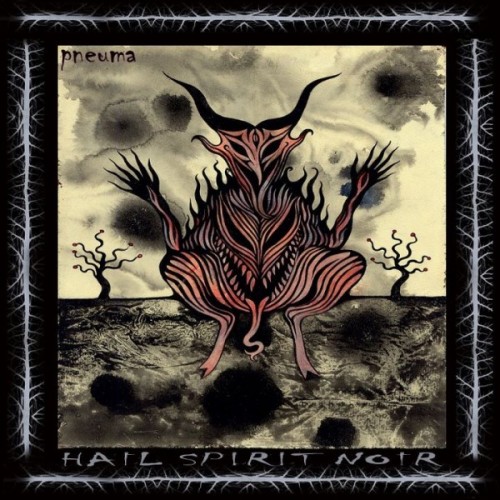
Review: Hail Spirit Noir – Pneuma


Do you know how many albums I’ve reviewed in 2012 so far? One. Comparing that to 2011, when I had pumped out well over 40 by this point in the year, you might say I am a bit behind. It was somewhat inevitable this year, with my video game music project taking up the grand bulk of my free time, but it’s not too late to catch up where I can.

And why not start with the obscure? Hail Spirit Noir is a band from Thessalonika, Greece. The person who introduced me to this album described it as “progressive psychedelic black metal”, which I don’t necessarily agree with but should certainly uh… pique your curiosity.

Mountain of Horror

My apologies for this video. I wanted to include the opening track, and the only copy of it on youtube commits the double idiocy of presenting a fake music video and cutting off the last 30 seconds of the song. While it actually syncs up with the music quite nicely, I have no reason to believe it is anything but a fan project, and it should be duly ignored.

I think there is a general bias among metal fans to label anything black which possesses the slightest traces of the sub-genre. To call Pneuma black metal is a bit of a stretch. The elements of black metal it incorporates are all on the fringe of the genre, and at the end of the day it is far too broad to place any single label on. What you get in “Mountain of Horror” is a combination of that “black and roll” vibe that Peste Noire perfected on Ballade cuntre lo Anemi francor, a heavy dose of 70s prog keyboards, and a progressive black break that falls firmly within the sort of sound Ephel Duath pioneered–more avantgarde than “progressive black” in the sense that recent Enslaved and Ihsahn might call to mind.

Against the Curse, We Dream

And what do you know, another fake music video. Oh well. What you might start to notice as this album progresses is a semblance of stylistic consistency underlining the disorganized madness. Black and roll meets traditional black metal meets psychedelic/70s prog meets avantgarde doodling, mouthful though it may be, is definitely the order of the day.

The Peste Noire vibe is definitely the selling point for me, and in Against the Curse, We Dream it syncs up particularly nicely with the prog synth. The Ephel Duath-esque avantgarde bits leave a lot to be desired, but really, when does avantgarde music ever not leave a lot to be desired? Its presence is at least relatively minimal in the broad range of Pneuma’s sounds. The disorganized nature of the songs is also not particularly problematic, in so far as a standard rock beat sustains to hold the vast majority of it together.

The only thing that kills it a bit for me is the lack of dynamics. From the most break-neck blast beats to the calmest, coolest prog grooves, the album maintains pretty much the exact same level of intensity. It is very much even keel from start to finish. That is more a vice of prog music, which Hail Spirit Noir ultimately choose to place above the metal side of their sound. Much like practically all prog that I have encountered prior to the past ten years, it never opts to overwhelm, feeling relatively dispassionate at the moments where intensity is in highest demand. Consider the staccato break at 5:34 in this video, and how much it could benefit from the level of tension System of a Down applied to similar passages in their early albums. The aggression which follows is somewhat lost to the vibe-killer that the previous passage did not necessarily need to invoke. The avantgarde outro is a disappointing end to a relatively creative song that, enjoyable though it may be, fails to move me to the extent that I feel like it ought to have. This is, of course, to place some unfair stipulations on the band; that the overall atmosphere isn’t what I would have chosen doesn’t mean it fails to capture the vibe Hail Spirit Noir were aiming for.

Haire Pneuma Skoteino

The closing song, Haire Pneuma Skoteino, is by far the most accessible song on the album, and I was pretty surprised by how well I remembered it, having only heard the song one time before, when I first picked up the album half a year ago. I suppose a poppy, catchy outro track is well in keeping with Hail Spirit Noir’s consistent inconsistencies.

At the end of the day, I have mixed feelings about Pneuma. It falls victim to being the first new release I’ve listened to in the better part of a year, and I’m no doubt being a lot more critical than I would have been this time last year, but I just feel like the execution leaves a lot to be desired. On the other hand, it is definitely an impressive and well-informed debut from a band on an obscure label from a country not exactly famous for its metal scene, and the shortcomings I hear suggest I am instinctively holding them to a much higher standard than I would other bands with similar backgrounds. Pneuma isn’t an album I’m likely to revisit, but it has convinced me that this band is a world of potential. I’ll be keeping an eye out for their future releases.

October Music Series: Forgotten Woods – The Principle and The Whip


This is by far the most disturbing song of my series, but what’s wrong with this picture is not remotely obvious from a distant, inattentive listen. On the surface you’ve got a pretty dark, melancholic guitar; soft, soothing female vocals; a love song’s refrain; and a slow transition into a sort of Planet Caravan chill out. Relaxing and mournful. Is that all?

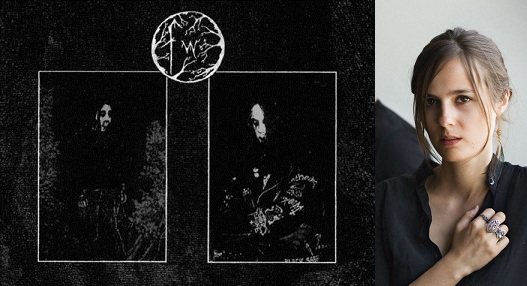
But what’s this business about a whip? And what exactly is Anne Lise Frøkedal, frontwoman for Norwegian indie pop band Harrys Gym, saying? And what the hell is she doing singing with Forgotten Woods?

Let me preface this with something else that shouldn’t be remotely obvious. Forgotten Woods are a lo-fi Norwegian black metal band. Don’t just take my word for it. Pause the song and click. The song I’m linking here appears on the same album. (Race of Cain, released in 2007, is also the source of the avatar I’ve been sporting on most sites for the past year or two.)

I hope you clicked. Just in case you didn’t:

Are we good and thoroughly confused just yet? Go ahead, put the song back on again from the start, and pay close attention now. “Indeed, we’ve seen the serpent rise. Six-legged triumphant reptile”? Is that guitar slide just an effect, or is it simulating a bomb falling through the sky? What exactly is this love song about, really?

Founding member “R” had this to say about the song in a Vampiria magazine interview: “The track itself is about discovering your true self, shedding your former suit of denial and fear and simply embrac[ing] the ultimate ego. Individuality, intolerance, indulgence. That’s what it’s all about in that song.”

They’re juxtaposing humanity at its most brutal to humanity at its most tender and calling attention to the similarities. Make what you will of them. The medium as best I interpret it: A woman reflecting on her experiences in the Third Reich with a sense of nostalgia. She acknowledges that it was the total social upheaval, dehumanization, and mass destruction, not the shallow ideologies used to justify them, from which she derived the highest state of personal fulfillment. But she has no regrets.

Indeed, we’ve seen the serpent rise
Six-legged triumphant reptile
Success! Chakra! I love you like no other
Totalitarian regards
The principle and the whip
Silence the mutant mind
Success! Chakra! I love you like no other
Inside, inside this dormant cyst
Outnumbered, writing in his presence
Reinventing the myths
Reversing the symbols
It is inevitable

October Music Series: Piorun – Nadbuanski Wit


Here’s a song that captures bizarre pagan ritual at its most Dionysian. Barely coherent woodwinds teeter on the brink of madness, spurred on by seductive, primitive drumming and the string drone of what I’m guessing is a hurdy-gurdy. Piorun are a folk and ambient band from Poland, which is not a particularly active country in the pagan metal scene, but it should come as no surprise from the brand of folk they play that the band has ties to Nokturnal Mortum.

It’s not particularly easy to dig up information on these guys. What’s available to me had to be plugged through Google Translator from Polish, but I gather Stajemy Jak Ojce, the 2004 release on which Nadbuanski Wit is the opening track, is their only full-length album.

I’m a bit confused as to just how “Polish” Piorun really is. The references I saw to “ties with Nokturnal Mortum” are a bit of an understatement; Knjaz Varggoth, Saturious, and Munruthel are all a part of the line-up, amounting to half of the band and all of the folk elements. Of the band’s three presumably Polish members, two are only credited with vocals. One, and possibly all three, were members of the now defunct Polish black metal band Archandrja. (I’ve not heard them save a few youtube samples just now.)

At any rate, Stajemy Jak Ojce is an absolutely brilliant album when the folk is allowed to shine. When the ambient takes more primacy it leaves a little to be desired. Nadbuanski Wit falls firmly in the former. Whether you choose to hear it as chilling and demented or as ritualistic and reverent, it’s bound to leave a lasting impression.

October Music Series: Skyforger – Zviegtin’ Zviedza Kara Zirgi


Latvia’s Skyforger have been around for ages. They first formed in 1991 as a folk-leaning death metal band called Grindmaster Dead, but by 1995 they changed their name to Skyforger and turned their attention to black metal. After leaving their mark on both the second generation of black metal and the formative years of pagan metal, they turned their attention to Latvian folk traditions unconditionally. Zobena Dziesma, translated as “Sword Song”, was released in 2003. It left metal at the door, and presented, in coordination with the Culture Capital Foundation of Latvia, an outstanding compilation of songs in traditional Latvian style.

Here is the explanation on Skyforger’s official website for how Zobena Dziesma came to be:

“Skyforger is not a professional Folk group, and we are traditionally known for playing Folk/Pagan Metal. We started playing Folk music as amateur enthusiasts, only for ourselves. However, our friends and fans expressed a desire to hear more of these songs, and that led to the creation of this album. Most of the songs you can hear on this recording are taken from the repertoire of well known local Folk groups. Others are reworked versions of material from our previous albums. Our passion is to play olden songs of the war and mythology of our forefathers. In that respect, this album is no different from those we have recorded in the past. It is our tribute to ancient Latvian history, culture and folklore.”

Skyforger translate Zviegtin’ Zviedza Kara Zirgi as “Neighed the Battle Horses”. It’s the track that has always stood out to me most on the album. It is exceptionally visual. It’s one of those songs that transports you to another place and time, and allows you to engage an ancient world trapped somewhere between history and fantasy.

October Music Series: Kukulcan – Tlamictilia Quixtiani


There’s no good reason for pagan metal to be dormant in Central and South America. Hell, they have more to be pissed off about than anyone. As it stands though, Kukulcan is one of the only bands I have ever heard with a distinctly Aztec/Mayan theme. They come from Tlaxcala and Valle de Chalco, areas in the south of Mexico near the capital.

Apparently they have six demos and splits out now, but still no full-length cds. Tlamictilia Quixtiani is the opening track to Yaotlachinolli, their first demo, released in 2006. Here black metal serves as the backdrop for what sounds like a militant call to arms, amidst war horns, native drumming, and a woodwind that wavers between mourning and madness. That symbol in the four corners of the album cover is actually the Aztec swastika, which I couldn’t find much information on. But just in case such ambiguity fails to offend you, they made sure to plant a good old modern swastika in the middle of it. Ah, that must explain the Gothic font they used for their band logo. Such creative young lads…

But really, this demo is pretty great as pagan black metal goes. It’s an angry reassertion of pre-colonial heritage, noisily representing an indigenous American culture that gets largely ignored in the modern world.

October Music Series: Векша – На Пороге Ночи


I’m not sure how На Пороге Ночи (Na Poroge Nochi) ever found its way to my collection. The 20 minute demo was released back in 1998, and it is to the best of my knowledge the only thing Векша (Veksha) ever released. Perhaps simply being Russian pagan metal in 1998 (they come from Yaroslavl) was enough to preserve them. The recording quality is clearly terrible, verging on the point of comical, but for me this is the selling point. What might have been a fairly average song in a top notch studio sounds here pretty bizarre. The first time you hear the vocals will be a definite “wtf” moment.

The song/album name appears to translate to “Midnight on the Threshold”, at least according to Google. When I first saw it I thought it was saying something about pierogies, but it was not. At least this is the only major disappointment. Good luck finding anything more than track titles out about this obscure band though.