For his first eleven nights in this world, my little buddy Oliver was about as peaceful as they come. Oh, I’d heard the cautionary tales. Men driven mad by blood-curdling screams through endless sleepless nights. But not my Ollie. He’s a happy baby. Maybe his early introduction to classical music helped.
And then came the twelfth night, and stomach cramps, or indigestion, or some god-forsaken gremlin in the bowels. Whatever the malady, it was nothing I could resolve, and four hours of torture later I turned to Google in an act of sheer desperation. The only suggestion I stumbled upon that I had not already tried was white noise. If only I had some! Or did I?
“White noise” turned out to do the trick perfectly. He was sound asleep with a smile on his face within minutes, and I think Ollie has a new favorite band. Thanks Satan; you’re a godsend.
Gimmicks don’t always work out as intended. When I heard that Ghost Bath were not, as they once claimed, Chinamen from Chongqing Municipality, but rather well-mustached American hipsters, I believe my first question was “who?” But if this band’s efforts to fool fans before they actually had any comes off a bit less clever than stupid, my negative points end there. Moonlover is a pretty interesting work from its cover all the way to the closing track. Hailing from the far more obscure and frostbitten wasteland of North Dakota, Ghost Bath have forged a really solid sophomore LP that should stand among the better metal albums we hear this year.
Track: “Golden Number”
After a brief, haunting intro track that definitely lends credence to their name, Moonlover makes an awkward but forgivable transition into a really uplifting number that has everyone on the internet comparing them to Deafheaven. With one of those explosions of emotional, half-heartbroken half-triumphant post-black metal glory that sounds more familiar every year, followed by a kind of punk lick underlined by passionate, poppy drumming straight off Amesoeurs’ Ruines Humaines and unearthly vocal shrieks, “Golden Number” is certainly in line with the trend of the day. It kind of feels like someone drug Woods of Desolation out of their basement and shoved them into a top-notch recording studio, and yes, the comparisons to Sunbather have their merit too. But if Ghost Bath are not necessarily pioneers, they are definitely refining the machine.
Much like post-rock, where you had a whole bunch of totally distinct bands making waves while everyone else ripped off Mono–and we could hardly complain about that–post-black metal is definitely developing a “standard” sound. “Golden Number” is that sound to a T, and I absolutely love the clarity with which Ghost Bath pull it off. This is a genre born of static noise. It was the realization that you could invoke a lot of emotion by hiding something pretty in an aural cesspool that really kicked off the scene, and even Deafheaven’s “Dream House”, for all its ability to swoon foreign audiences, was really heavily distorted. The noise carried the passion, but it was also limiting. Moonlover is a surprisingly clean album, and because of it the band can do subtle things that I don’t often hear. The tremolo at the beginning of “Golden Number”, for instance, is complemented by a second, barely audible guitar that’s tapping instead of picking. Maybe post-bm has gone that route before, but if so I never noticed it. The clarity on this song, at least relative to its genre, allows me to detect these things, and the end product feels so much more full of life for it.
“Ghost Number” ends with two minutes of piano, and “Happyhouse” picks the metal back up with a totally different feel from the song before it. Three minutes of melancholy plodding lead into a fresh vision of that ghostly guitar we heard in the intro track, and Dennis Mikula treats us to more of his otherworldly screams. Amesoeurs again comes to mind, and I have to believe Neige was an inspiration on this band in more ways than one, but to me Mikula’s vocals sound most reminiscent of Ygg, a short-lived but brilliant Ukrainian trio featuring former members of Nokturnal Mortum and Helg from Khors. “Happyhouse” erupts into black metal for only a passing burst of intensity before returning to its moody plod. Post-rock guitar ultimately defines the song’s direction, while Mikula’s outstanding vocal performance brings the depth. “Happyhouse” could be a cookie-cutter bore, but the band’s keen execution and knack for making their short repeated phrases consistently catchy turns it into something I can really embrace.
10 minutes go by before you hear another ounce of metal, but I would hardly call it a wait. “Beneath the Shade Tree” and “The Silver Flower pt. 1” are both dreamy guitar-driven visions of forests and streams, feeling perhaps a cross between Agalloch and Alcest. The nature effects on the latter track especially brought to mind the intro and outro to Alcest’s “Le Secret”, though I’m sure you could name a dozen other bands that might have played an influential hand here. The origins are quite irrelevant; these two songs only beg identification because they are so vivid and beautiful. The sound is ultimately the band’s own.
Track: “The Silver Flower pt. 2”
When Moonlover‘s heavier half does return, it feels infused with the spirit of the instrumental tracks before it. “The Silver Flower pt. 2” floats along with no edge to speak of beyond the first minute, drifting on the dream that came before. If it weren’t for Mikula’s persistently tormented vocals–a bit out of place now, I must admit–it could pass as a moody but up-tempo rock song. The style feels strikingly familiar, yet I can’t put a finger on it. It’s sort of equivalent to how Katatonia were playing around with the metal sounds of their day in the late 90s, and it calls the whole “black metal” label for this band into question. Moonlover incorporates so much more, riding a dozen different stylistic approaches to take us on a journey. We started out with a burst of passion–a sense of fulfillment and life–on “Golden Number”, then road down a path into depression with “Happyhouse”. The commune with nature in “Beneath the Shade Tree” and “The Silver Flower pt. 1” revitalizes, moving the album from positive and negative extremes to an even-keel, smooth ride on “The Silver Flower pt. 2”. The final track, “Death and the Maiden”, sort of brings us around in a circle. The equilibrium of “pt. 2” picks up its pace here, growing in excitement until the return of a black metal sound breaks it. We’re back to highs and lows, and we end on the latter. The album trickles out in a dark depressing grind back into the haunting sounds of the introduction, and that opening melody repeats, now made even more ghostly through a synth whistling tone.
I like it. Moonlover feels like a complete package, flushing out a musical narrative that consistently develops from track to track. It might not match up precisely to the picture it painted in my mind, but a progression is definitely there. Ghost Bath refuse to restrict themselves to one genre, incorporating a wide array of styles into a really coherent whole. The drums are tight, the guitarists can pull off some neat noodling but know when to keep it simple, and the album is book-ended by its two best tracks. I don’t think it would have hurt Dennis Mikula to chill out on the screaming for a bit on “The Silver Flower pt. 2”, but over all I love his vocals. There’s not much I can complain about. And since I want to start making a point to link where you can purchase the albums I ramble about: go adopt a moon on Bandcamp.
Pyramids are four seemingly random Joes from Denton, Texas, who have managed to attract some huge names in the world of music, possibly through their completely ridiculous album covers. Well, maybe not that, but the genre-defying oddity known as Pyramids and their associated acts have shown an uncanny knack for recruiting stars to their projects. Originally signed to Aaron Turner’s (Isis, Old Man Gloom) acclaimed Hydra Head Records, they managed a transition to metal’s newest cutting edge label, Profound Lore, as soon as the former went defunct. Their self-titled debut in 2008 scored Colin Marston (Krallice), Vindsval (Blut Aus Nord), and Justin Broadrick (Godflesh, Jesu), among others, to contribute to a remix album, while band leader R. Loren’s White Moth and Sailors with Wax Wings projects have featured David Tibet (Current 93), Alec Empire (Atari Teenage Riot), Jonas Renkse (Katatonia), John Gossard (Weakling), Simon Scott (Slowdive), Hildur Guðnadóttir (múm), and Aaron Stainthorpe (My Dying Bride), to name… a few? The 2009 follow-up, a collaborative album with Nadja, featured Simon Raymonde (Cocteau Twins), and there’s an Ulver remix of it floating around out there. They also lead some cassette tape project with 49 bands I’ve never heard of and This Will Destroy You.
In spite of the absolutely ridiculous, confounding string of names I just threw out, this band remains pretty damn obscure. A Northern Meadow, their first full-length since 2009, may well change all that, with positive reviews on sites like Pitchfork Media ensuring them a moment in the spotlight. Moreover, Colin Marston and Vindsval are active guest musicians this time, with pretty encompassing roles.
track: “In Perfect Stillness, I’ve Only Found Sorrow”
The opening track, “In Perfect Stillness, I’ve Only Found Sorrow”, kicks off with Marston’s quintessential tremolo and Vindsval’s equally iconic drum programming, while R. Loren’s vocals quickly cue us into the fact that this isn’t going to be a straight metal album. Instead, we face a prolonged melancholy that finds its essence in the vocals and never really resolves into anything. This brooding approach carries throughout the album, but as the minutes tick by you can notice a slight sort of development–little hints at a more complex animal below the surface. “The Earth Melts Into Red Gashes Like The Mouths Of Whales” rises out of the plod for thirty seconds of really catchy guitar before dissolving back into bleak noise. “The Substance Of Grief Is Not Imaginary” feels like a Blut Aus Nord song in slow motion, offering all of their accustomed madness with none of the speed or volume, while Loren briefly confounds the mood with a really beautiful but short lived vocal melody. “Indigo Birds” extends the vocal presence, with Loren singing longer with more effects and range. As the song dissolves out into distorted droning and ultimately three minutes of dissonant synth, the album approaches a modest transition in character. The interlude resets the mood, allowing the remainder of the album to take, I think, a slightly more abrasive or confrontational approach.
Track: “I Am So Sorry, Goodbye”
The second half of the album is more distinct, with more drive in the guitar and a faster rate of transition. “I Have Four Sons, All Named For Men We Lost To War” starts off with the most crushing tones on the album, enhanced in their finality by the still slow pace set by Vindsval’s drums. “I Am So Sorry, Goodbye” has a really memorable industrial groove, with some synth tones that invoke for the first time in me a real vision of something… perhaps ancient, a sort of primordial ruin made all the older by Loren’s forlorn, beautiful vocals. Like “Indigo Birds”, the song dissolves out into low-tuned guitar and synth droning, but the feeling is more complete. The substance of the song gives you more to reflect on in the haze of noise that follows.
On “I Am So Sorry, Goodbye” and growing throughout the remainder of the album, Loren’s vocals start to sound subtly reminiscent of Chino Moreno to me–high-pitch meanderings that feel slightly unstable yet always harmonious. It’s an effect he pulls off well, and it makes the album feel rather back-loaded to me. “Consilience” wraps things up with a turn back to the darker side. More chaotic, and with a new touch of pessimism to the vocals, it concludes an already morbid album on a particularly bleak note. Oppressive synth creeps its way in a bit earlier, and a hard stop takes us to fading noise and silence.
A Northern Meadow leaves me with pretty mixed feelings. R. Loren has a clear aural agenda that he sticks to throughout, yet I can’t escape the feeling that the album’s highest points were those most distant from the overarching theme. The beat-down opening of “I Have Four Sons…”, the synth early in “I Am So Sorry, Goodbye”, Marston’s driving 30-second sweep in “The Earth Melts…”, the short-lived vocal burst at the start of “My Father, Tall as Goliath”… I find myself anticipating these finer moments through a lot of the moody grind, rather than just enjoying the ride and taking the highs as they hit me. That grind has a lot of character at times, especially the further into the album I get, but not enough to match the talent Loren was working with here.
I guess I would say that A Northern Meadow is a very unique album, and I love Loren’s dedication to uniting awesome musicians, but I don’t feel very compelled to keep listening to it as the novelty begins to wear off. If its slightly chaotic morbidity strikes a chord with you, you might love it, but if you can’t connect to that feeling it will inevitably grow tedious at times. Marston’s noodling isn’t extensive enough to keep me constantly engaged the way a Krallice album can–a tall order, considering how equally brilliant that band’s other three members are–nor do I think Vindsval’s drum tones hold up in this sort of mono-tempo drag. It doesn’t help that both musicians inevitably play themselves. Like say, Humphrey Bogart or Morgan Freeman, they are so distinctly themselves that you feel like you’re hearing the actors, not the characters they are meant to portray. There is nothing of the instrumental synergy both produce in their main bands. I don’t hear the chemistry of two great musicians working together here. I just hear two great musicians, like some mash-up with Loren mixing vocals and synth into the pot. There may be some truth to that: if I understood Loren’s recent interview with Decibel Magazine correctly, I’m pretty sure Vindsval and Marston had no direct communication while crafting this.
I’m not saying A Northern Meadow is bad. Not at all. But it does leave me wanting something more. I can’t help but wonder what could come out of Loren, Marston, and Vindsval sitting down in a recording studio together, and I suspect it would be something more substantive than this, with a lot more motion and a lot less gloom. But that meeting might be pretty difficult to arrange, and who knows whether they would see eye to eye if Loren had allowed them less freedom to do their own things. I might yet get into this, if I can get over what it isn’t sufficiently to appreciate what it is.
You know those last thirty seconds or so of a rock concert, when the guitarists start grinding tremolo on the final note while the drummer pummels out a solo? Then the instruments all coalesce and everyone hits two triplets together, declaring “the end” triumphant into your ears? Yeah, then you have a basic idea of what Liturgy sounded like four years ago. Aesthethica reveled defiant on the brink of collapse, a Dionysian exploration of adrenaline that twitched and sputtered in vibrant light. We may still be a long ways from “black metal” conjuring to mind anything but corpse paint and Satan to the average music fan, but the gales of a paradigm shift have tossed this genre into such a frenzy that even the novelties of 2011 can seem ancient today.
(Liturgy’s record label, Thrill Jockey, has rather bizarrely opted to remove all but two tracks from Youtube, as if silence sells an album. You can still listen to The Ark Work on NPR at this link, thankfully, and I recommend checking out the first three tracks/13 minutes–Fanfare, Follow, and Kel Valhaal–followed by Reign Array to get a good feel of the album.)
An assessment of this album could go off on a hundred tangents, and I don’t think that the band would be averse to discussing any one of them. The most standard response seems to be instant revulsion. A lot of big name critics have given it abysmal ratings of 2 or 3 out of 10–slightly lower than Morbid Angel’s Illud Divinum Insanus–following a brief write-off of the album as an attempt to troll us. A few others will point out how the band’s music has managed to ruffle a lot of feathers, and then leave it to the listener to hash out. Both are valid cop-outs that don’t really provide the slightest bit of context for the oddity before your ears.
In a review a few years ago, I wrote off L’Ordure à l’état Pur by Peste Noire as a “troll” album. With its chicken clucks, farts, belch beats, and sound samples of scat pornography, I was not completely off the mark. But I missed the context: a critique of modern-day France that was at once scathing and brimming over with nationalism, embracing and mocking the same things from subtly different angles. The music was actually quite excellent, as Famine’s compositions always are, and it took a special sort of intelligence to bring together revolting sounds into an appealing musical narrative. But the quality was not spoon fed to you. You had to want to find it.
There is nothing quite so blunt in The Ark Work, but the album definitely produces sounds that your ear will not initially be prepared to assimilate. “Fanfare” leads up to “Follow” in a development similar to the introduction to “High Gold” on Aesthethica, but here the sound of a guitar pick scratching above the fretboard has been replaced by an unorthodox merger of MIDI and real trumpets. Visions of Godspeed You! Black Emperor lifting skinny fists like antennas to heaven break to bells, and an electronic power surge suddenly propels you into a brainfuck of noise that seems to streak through your head in a ball of flame, the tremolo guitar and blast beat drums pulsating at light speed as the bells and glitch tones dissolve into nonsense all around you. The drum machine hangs in space above the dashing guitar, accelerating to drive itself back into Greg Fox’s real drums to a roar like a Roman coliseum. The cavalcade of sound is, for better or worse, something you have never heard the likes of before. And as the spectators cull blood into “Kel Valhaal”, the album moves from its raucous birth to the trance of combat. Arguably my favorite song on the album, “Kel Valhaal” is cryptic in its brutality. The perpetually repeating drum and trumpet beat crush you on every note without the slightest sign of distortion, while entrancing you in a wash of bells and glitches and folk instrumentation that I can’t put a finger on–surely that I am not supposed to be able to put a finger on. When Hunter’s vocals come in, trading off “Follow”‘s croons for rap, the album reaches a height of command you won’t hear again until “Reign Array” towards the end. I don’t understand half of what he’s saying, but my brain tricks me into thinking it is surely paramount–some threshold of enlightenment I must reach for with all of my might.
Or you might just hear noise. I did, the first time I listened to it. Jaded is the listener who can take all of The Ark Work in on first encounter. But I wanted to hear it again, and mull it over. What I had that I think a lot of reviewers lacked was proper context. Hunter Hunt-Hendrix earned a world of derision following Aesthethica when he proceeded to discuss his ideas behind the album. The guy appeared to most of the world as a sort of fascinating clown–a feminine child so high on his own farts that he would presume to declare his music its own unique style worthy of genrefication: “transcendental black metal”. He published a brief philosophical treatise on how transcendental black metal offered a higher state of music than its predecessors, and well, you get the idea. Did I mention he looks kind of like a girl? The alternative label of “trap metal” has been thrown around, and his previous band’s name was Birthday Boyz. Liturgy is a metal band, mind you. Their default audience has never been particularly noted for tolerance.
So most people reviewing The Ark Work probably either never heard Liturgy previously or thought of Hunter as an accident waiting to happen. Or maybe a troll. His pre-existing image was pretty hard to swallow. The Ark Work, moreover, claims to enhance “transcendental black metal” with “cross-fertilized hardstyle beats, glitched re-sampling of IDM, and occult-orientated rap”. …yeah… You can imagine why people have struggled on many levels to take The Ark Work seriously. People who aren’t familiar with the band turn to reviews for an explanation of what their ears fail at first to compute, and they’re told “troll” at best, given some metal meathead’s rant about insults to manliness just as likely.
But Aesthethica was not inaccessible in the sense of The Ark Work, and no amount of self-mockery negated the fact that tracks like “Harmonia”, “Sun of Light”, and “High Gold” were delightful on first listen. If you actually bother to read what Hunter wrote about “transcendental” black metal, moreover, you can see a clear connection to the music. It roughly paralleled a lot of thoughts that had been floating around in my own head since at least Alcest’s Le Secret in 2005, and the fact that Hunter Hunt-Hendrix was willing to discuss metal’s new frontier while actually pioneering its exploration told me, if anything, that he had a lot more potential than even Aesthethica let on. That album was a sort of burst of passion. I would wager that the band did not devote particularly excruciating time to its finer details, and the result was still one of my favorite albums of 2011. Through separate mediums, Hunter showed the raw capacity for great song writing and the level of reflection necessary for fine-tuning an album to perfection. Merge the two, and you have, well, The Ark Work.
Within the first few seconds of “Follow”, I was pretty convinced that The Ark Work had the potential to be breathtaking. My context for this album placed Liturgy near the top of a wealth of new bands committed to employing black metal towards post-rock ends. I expected that Hunter had crafted every last second of it with painstaking care to achieve his visions. When you listen to something in that light, it’s a totally different experience. Take the vocals. Hunter delved very little into clean vocals on Aesthethica, and where he did–“Glass Earth” for instance–the results were weak. His voice, like his appearance, came off a bit childish, and I think he just ignored that fact rather than putting it to work for him. In the spirit of that album, I can picture a rebellious attitude of affirmation: “This is what I sound like.” On The Ark Work, there’s a more intelligent design. Hunter commits to not screaming once from start to finish, and the voice he’s left to work with is in not at all appealing in any conventional sort of way. But if a central idea behind the album is to barely yet perpetually hold cohesive on the cusp of nonsense, his voice naturally caters to it. He seems to intentionally integrate that notion, controlling in each instance the extent to which we hear his voice exposed. He employs a lot of rap, and the rhythmic flow of his lyrics provide the glue around which his marshmallow mouth forms another tipping point into that abyss of absurdity. On “Kel Valhaal” he manages to project the rhythm with such force that he sounds downright commanding. On “Reign Array” he starts out reminiscent of Thom Yorke (many elements of that song inexplicably remind me of Radiohead), while as the vocal style changes in the triumphal conclusion he remains careful to continue to layer his voice just enough to avoid spoiling the exhilaration.
On “Vitriol”, easily the most divisive track on the album, Hunter exposes everything. The song merges the Aesthethica style of “Glass Earth” with a chanting rap and a fascinating combination of minimalistic percussion and sub-bass. You can understand every word he says, and a lot of the lines are so awkwardly groomed to feed the trolls that you can’t help but think he’s doing it intentionally. “Soon the ADHD kids will quiet down respectfully,”“All the girls will get into art school,” a reference to “primordial gender”… In a way, the song is a caricature of everything critics have accused Hunter of being, followed by the refrain “I turn your ashes to gold, you repay me with vitriol,” as if to say “look how much I’ve entertained you, and you have the nerve to criticize me. Psssh.” I would really like to think the idea crossed Hunter’s mind with a bit of a devilish grin while he wrote it. Yet that, if intended at all, is only a bit of an Easter egg in a song that has nothing to do with it. “Vitriol” is actually pretty cryptic and compelling. I can’t piece it together into a cohesive whole, yet each individual line seems to find a fitting notch in the puzzle. A part of me wants to believe that that is the extent of it, and the accomplishment is to leave you with this unstable understanding that feels like a cohesive message yet contradicts itself. For me at least, “Vitriol” accomplishes lyrically what the rest of the album does musically.
The attention to detail extends beyond vocals and lyrics, of course. The instrumentation is vast, delving into dozens of different sources effectively. Hunter’s electronic repertoire both destabilizes and enhances the real instruments that it frequently parallels. Greg Fox, one of the greatest drummers of this era, returns to the band to offer his brilliance, and the drum machine ties together with him nicely. I wish Thrill Jockey had not made it so difficult to share tracks, but suffice to say I highly recommend this album. It is easily the most intelligent and compelling collection of songs I have heard since Peste Noire’s 2013 self-titled, and most of the reviewers shitting all over it fully intended to before they ever heard it. Its apparent madness only strengthened their resolve. But if ever you begin to have doubts, switch to “Reign Array” and ask yourself whether a song like this can arise by accident. On The Ark Work, Hunter Hunt-Hendrix proves himself to be the musical genius that Aesthethica hinted at. And like Jimmy Chamberlin to Billy Corgan, Greg Fox completes him. So long as those two stick together, Liturgy will remain among the most elite bands in metal for a long time to come.
I don’t think a New Years rolls by that I don’t say something amounting to “odd-numbered years produce better music”. The trend inexplicably holds true once again. I actually listened to a good bit of new music this year–far more than I did last year at least–but when it came time to recap, my options felt… a bit lacking. The best of the best are still grand indeed, but the quality drifts away rapidly if I dig beyond a top 10. I’m pretty happy with the list I ended up with though, and I hope you’ll find something new and inspiring in the tracks I’ve sampled below:
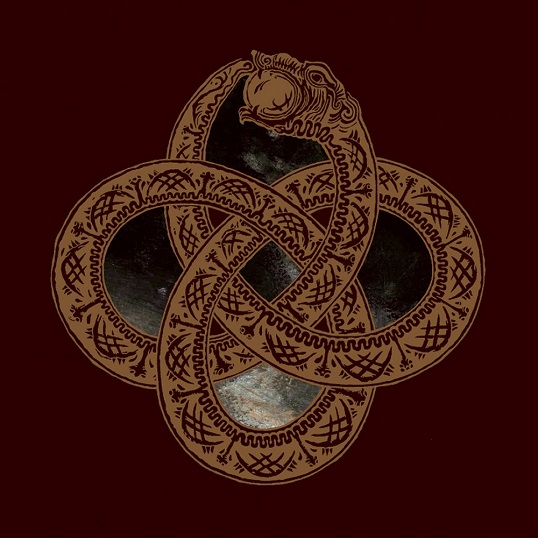
10. Agalloch – The Serpent & the Sphere (track: The Astral Dialogue)
Marrow of the Spirit was a pretty bold divorce from everything we’ve come to expect out of Agalloch over the years, for better or worse. On The Serpent & the Sphere, the band make a return to a more direct evolution of their regular sound. The album offers a nice mix of vintage Agalloch and further dabblings into the post-rock/metal sphere. It didn’t grab me by the balls and thrash me upside the head like say, Pale Folklore or Ashes Against the Grain, but it’s definitely a solid entry in the band’s formidable discography.
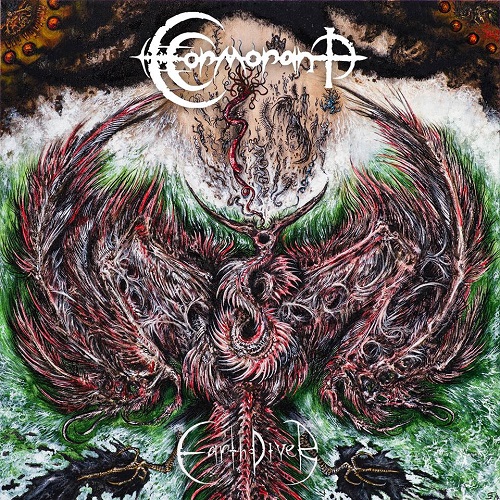
9. Cormorant – Earth Diver (track: Daughter of Void)
I was a bit more critical than complementary of Earth Diver when I reviewed it a few months ago, but that mostly boiled down to the feeling that it could have done with better production. Honestly, if I don’t own the cd proper I have no business speaking of such things, because for all I know my copy is just a bit lossy. The raw songwriting on this album is stellar, and I hope to hear more out of this band in years to come.
8. Bast – Spectres (track: Outside the Circles of Time)
I am not sure where Spectres would have placed on my year-end list had I had a bit more time to listen to it, but it could only have moved up from here. I’ve only had about two weeks to check this out and make a call, but I was dead convinced that it belonged somewhere in my top 10. The freshman album by this dirty doom trio does it all, and better than your band. With ease they develop a post-rock build-up into a bassy doom dirge, bust into a stoner metal rockout, and then fuse it into some pretty sinister black metal sounds. When black metal leaks its way into headbanging rock, really awesome things happen. Case in point: “Outside the Circles of Time”.
7. Blut Aus Nord – Memoria Vetusta III – Saturnian Poetry (track: Clarissima Mundi Lumina)
A bit more down to whatever planet these guys hail from than the 777 trilogy, Saturnian Poetry is still a bizarre journey into another dimension that only Blut Aus Nord can seem to access. Its constant whirlwind of motion blasts us into a haze of celestial chaos, wherein the band’s synth chords and clean vocals command us to stare in awe and reverence. Few black metal bands on the market can claim to have forged as unique a sound within the genre as Blut Aus Nord, and they’re still breaking my brain in 2014.
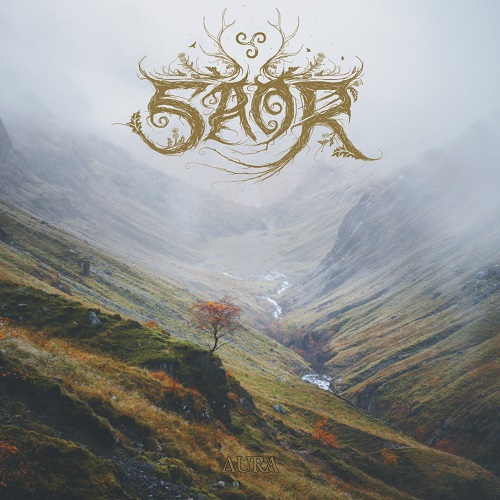
6. Saor – Aura (track: The Awakening)
I tend to think of Aura as a straight-forward album that serves its purpose beautifully. Top-notch woodwinds and string paint a majestic Scottish landscape where the old gods still tread in all their glory, at one with the earth and its people. Without ever really breaching any new territory beyond the tried and true boundaries of pagan metal, Andy Marshall has managed to craft what is probably the most grand Gaelic/Celtic variant of the genre I have ever heard.
5. Boris – Noise (track: Melody)
I fucking love Boris. You know that. They could literally shit on an LP and I’d claim it shear brilliance. But thankfully, they keep pumping out one masterpiece after another instead. Noise is so layered in the band’s two decades of perpetual evolution that I don’t think you could begin to grasp what the hell is going on here if you didn’t already know half their discography by heart. It’s a little bit of everything they’ve done before all crammed together in yet another novel new way. No other band in existence sounds anything like this, and at the same time few bands have borrowed more liberally and diversely from other musical scenes than the bastion of badass that is Boris. Boris Boris. Boris! God damn, this is awesome.
4. Woods of Desolation – As the Stars (track: Unfold)
As the Stars is 2014’s Aesthethica, albeit of more modest proportions. If the obscure Welshman known simply as “D.” could append to his public image anything approaching the epic douchiness of Hunter Hunt-Hendrix, it might even be popular. (Ok, I’m one of the few people who’ve actually read Hunter’s writings and think he makes some valid points, but whatever.) This album is a bloody mess in the least figurative of ways, and it’s exactly the sort of raw sincerity that I love about post-black metal. In a new scene that divorces black metal’s brink-of-the-abyss soundscape from its machismo closet-bound harbingers, the bands that play with their hearts on their sleeves tend to touch closest to home. As the Stars offers neither the epic intensity of Liturgy nor the refined sound quality of Deafheaven, and the metal world is sure to forget it in time, but my brief love affair with Woods of Desolation will be remembered fondly. Its humble reach is part of what makes it endearing.
3. Harakiri for the Sky – Aokigihara (track: Jhator)
I hold my top three choices for 2014 in a league far above the rest. Aokigihara is an absolutely enormous bastion of sound that presses the weight of its world on your shoulders from start to finish. And that world is heavy indeed, because it is firmly rooted in reality. Harakiri for the Sky doesn’t play that tried and true metal game of glorifying violence. It shoves some real modern nightmares in your face and says “this is really, really terrible, and there’s nothing we can honestly do about it.” I can see this album attracting a “DSBM” label, which is typically shorthand for “wallowing in self pity”, but Aokigihara is the real deal. If it doesn’t leave you feeling a little sick inside, you aren’t paying enough attention.
2. Spectral Lore – III (track: The Cold March Towards Eternal Brightness)
At more than a dozen listens through this album, I am still not sure what to make of it. 87 minutes of music crammed into seven tracks is pretty hard to swallow, and to make matters worse, the first two tracks are its weakest by far. I find it next to impossible to commit myself to a full attentive listen from start to finish, and it’s not an album that offers much on the surface. Yet, I can’t escape the feeling that something really special is going on here. My mind may drift away for three or four minutes at a pop, but I am always drawn back into some beautiful synergy that dances on the brink of euphoria. 2014 might be at an end, but I haven’t finished listening to III by a long shot. I am going to keep plugging away until I’ve got it fully within my grasp, and when I do I think I might regret passing it by for the #1 spot.
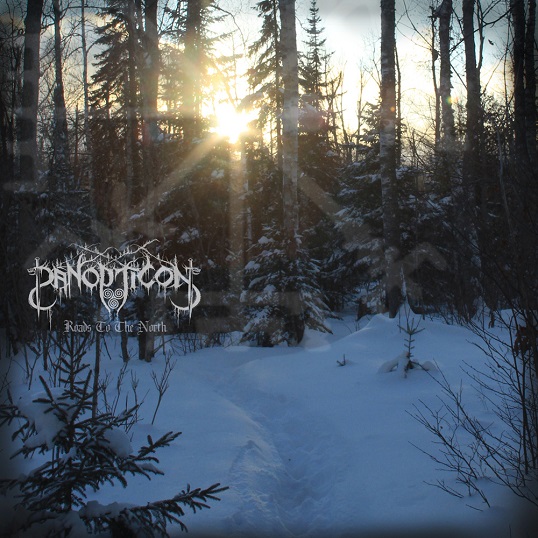
1. Panopticon – Roads to the North (track: The Long Road Part 3: The Sigh of Summer)
The first time I heard Roads to the North, I was routing a rather lossy early leak through my Droid into the particularly horrendous sound system of my wife’s Mazda 6. (My 2006ish Nissan Sentra has godlike audio and the car was half the price. What’s up with that?) I definitely did not think on that initial listen that it would end up my favorite album of the year. With a properly purchased copy through my headphones, it’s easy to tell why an album as subtly mixed as this would translate to crap when pushed through crap. I am absolutely captivated by the melding of sounds on this album. It’s simply beautiful, and you couldn’t ask for a more conscientious artist to craft its folk, post-rock, black metal, and melodic death metal melodies than Austin Lunn. The lyrical and thematic content of Kentucky showed him to be one of the most honest musicians in the metal scene. On Roads to the North, he translated the spirit of Kentucky into sound. Kentucky is the album I think about. This is the one I actually listen to, over and over and over again.
Two years removed, Kentucky has left a unique long-term impression in my mind. For all of the excitement over an authentic and well-crafted mingling of traditional Appalachian folk and black metal–the term “blackgrass” got tossed around a lot–I honestly don’t remember how most of the songs went. This is because Kentucky‘s message managed to trump its sound. I remember the old man talking about organizing strikes against the coal company. I remember Sarah Ogan Gunning’s boldly defiant calls to overthrow capitalism. I think of settlers slaughtering Indians, mountains blown into dust, rivers running black with pollution, grim-faced miners broken in body but never in spirit, a modern generation abandoning everything their ancestors worked so hard to accomplish… That is my memory of Kentucky.
Chase the Grain
I can’t detach myself from Kentucky enough to appreciate Roads to the North as an independent entity. That’s probably fine. I had never heard of Panopticon before Austin Lunn nailed his bloody heart to his sleeve in 2012, and that identity will persist through my perception so long as it remains true. Roads to the North has no explicit message, no lyrics sheet, no spoken tracks or American folk covers. But it has Kentucky, and because of that every song takes on a deeper, more robust meaning than it might have otherwise.
It would be interesting to know what a folk/black metal fan unfamiliar with Panopticon takes from this album. Does the music alone stand far above and beyond the norm? I like to think it does. The album incorporates some entirely unexpected but highly effective melodic death metal moments, especially in the opening track “The Echoes of a Disharmonic Evensong”. This track also gives us perhaps Lunn’s best incorporation of fiddle directly into black metal to date. “The Long Road Part 2: Capricious Miles” transitions out with a long and enthralling jazzy progressive rock chill reminiscent of mid-era Opeth. The whistle in “Where Mountains Pierce the Sky” sounds nothing like what we’re used to out of the European scenes, harkening instead to a western indigenous sound I have only heard from some obscure Mexican folk metal bands. “The Long Road Part 1: One Last Fire” is an unconventional six minute acoustic bluegrass piece that feels more like something straight out of Lunn’s imagination than Appalachia.
The intensity hops around so suddenly that Roads to the North may feel disjointed at first, but the stark contrasts are never forced. Because you don’t always see them coming, they are striking rather than cliche. Lunn performs each of the album’s myriad instruments better than a lot of people who specialize in only one, and there aren’t many producers on the black metal market that can compare to Colin Marston. He has a knack for subtlety that is hard to come by in the scene. I absolutely love the way the tremolo emerges around 30 seconds into “Chase the Grain”, for instance. It’s so soft that you feel its effect on the song as a whole long before your brain consciously recognizes it.
Norwegian Nights
But I suppose I don’t really care about the finer musical details of Roads to the North, and that is why I found this album so difficult to review. This music is only a gateway. Like an engaging book, you never notice that it is well written. Roads to the North is not the guided tour we found on Kentucky. It leaves us be to explore where the feelings take us within the context of the world Lunn has already shown us. Those paths can be rocky. It’s not the glorified past of so many European pagan metallers. The should-be eternal is tainted. The land is marred. It’s the introspective melancholy Americana of Bob Dylan and Tom Waits, and your heart goes out to so many things that you can never hope to save.
“Lie beneath a cold blanket and watch the mountains sleep. The train rolls by every hour, as I wake and dream. The woods and the hills–faces so dear to me. Frozen lakes, flatland snow, where I’m called I’ll go. Such still quiet, then the whistle echoes. My fragile sleep torn from me, as many other things will be.”
If someone asked me what the most significant metal band of the past decade was, I am not entirely sure which name I would ultimately drop, but the elite circle of finalists would definitely include Agalloch. Pale Folklore (1999) and The Mantle (2002) pretty much defined America’s brand of folk metal, influencing countless bands to come as that global musical movement picked up steam. Ashes Against the Grain (2006) gave us one of the earliest incarnations of post-black metal on record. It might not sound much like what that term conjures to mind today, but in its day it was monumental, and time has not lessened the epic weight of tracks like “Limbs”.
But then there was Marrow of the Spirit (2010). This album was ugly. I can’t think of any better word for it. I won’t go so far as to say it was bad, but it was sufficiently displeasing to my senses that I never engaged it long enough to responsibly draw that conclusion. I didn’t want to listen to it, and it left enough of a bad taste in my mouth that I didn’t really want to listen to The Serpent & the Sphere either.
Agalloch – Birth and Death of the Pillars of Creation, from The Serpent & the Sphere
But I did listen to The Serpent & the Sphere. I listened to it quite a lot, actually, in the background as I worked or played games. It was pushing a dozen on my last.fm charts before I got to thinking “Hey, I ought to give that new Agalloch album a spin and review it.” Wait, have I heard this before? “Birth and Death of the Pillars of Creation” had been lulling me into such a passive state that I must have forgotten I was listening to anything at all by the time its ten minutes ran their course.
It’s the antithesis to Marrow of the Spirit‘s “Into the Painted Grey”, in a way. Where that track summoned in me the instant urge to rip my headset off my ears and put on something else, “Birth and Death of the Pillars of Creation” dug its way into the back of my skull and set its roots where I would barely notice them. It didn’t just get tuned out; it etched itself in my subconscious. And it’s no wonder. On my first really attentive play through, with the volume blaring, I find the track completely enthralling. It’s a brooding neofolk masterpiece best experienced without anticipation. If you listen wondering where it might lead, you are bound to grow impatient. If you just embrace it in the moment and let it consume you, you’re in for a treat.
Agalloch – The Astral Dialogue, from The Serpent & the Sphere
The next track, “Serpens Caput”, is a gorgeous and rather brief acoustic instrumental, and then “The Astral Dialogue” kicks off like Pale Folklore was just released a year ago. The many inattentive listens before had engrained the melody in my mind without my knowing, and the familiarity was so strikingly similar to their 1999 debut that I found myself shocked to realize I had only first heard the song a few months ago. A dubious avant-garde interlude at 3:14 aside, “The Astral Dialogue” is old school Agalloch to a T. At least, I should say, the composition is. The feel is a bit different. Where Pale Folklore was as crisp as a cold winter sunrise, The Serpent & the Sphere has a much fuller sound. (Youtube, as usual, can’t hope to capture it all.)
The Serpent & the Sphere feels a bit frontloaded, with the opening 20 minutes being the most compelling, but “Dark Matter Gods” and “Celestial Effigy” carry on the Pale Folklore mid-tempo folk metal tradition. “Cor Serpentis” offers another fabulous acoustic interlude track much like “Serpens Caput”. I think the album loses steam a bit on “Vales Beyond Dimension”. We get a catchy hook at the beginning and near the end, but the plod in between feels a bit contrived.
Agalloch – Plateau of the Ages, from The Serpent & the Sphere
“Plateau of the Ages”, the final track before a brief acoustic outro, more than makes up for any second thoughts about “Vales Beyond Dimension”. It kicks along in the Pale Folklore tradition we are by now thoroughly reacquainted with until 4:20, when we hit a wall of post-rock. It switches back after a two minute taste of things to come, and we get the real grand post-rock exit from 9:30 to the end. It might not be the most breathtaking use of the genre that you have ever heard, but I love the way Agalloch take it and make it their own, masterfully fusing it to the sound that has defined them for years.
I have actually read a lot of comments suggesting that Agalloch lost their touch on The Serpent & the Sphere. It’s hard for me to see any grounds for that. I suppose it is not much like Ashes Against the Grain really, and not at all like Marrow of the Spirit, but I don’t regard those albums as Agalloch at their best. Ashes might have been their most significant work, but my heart was always for Pale Folklore. The Serpent & the Sphere feels like that album, more than anything they’ve released since it. Oh, it might not be quite as catchy, and it’s certainly not as raw or black metal infused, but it’s a pleasant blast back to the Agalloch I loved most.
Cormorant are a 4-piece San Francisco Bay band formed in 2007. They released their third studio album, Earth Diver, back in April of this year. Lacking major ties to any other band I have heard of, it’s probably no surprise that they stayed off my radar until now, but this is a band that definitely deserves some attention. Their well-crafted mix of folk, progressive rock, post-rock, and black metal sets a high standard at the cutting edge of metal today. While Earth Diver may possess a fatal flaw, it offers a world of potential that few bands can hope to realize.
Cormorant – Daughter of Void, from Earth Diver
Earth Diver opens with “Eris”, a two and a half minute instrumental folk guitar track with a bit of a Spanish flare. As nice as the song sounds in and of itself, I am not convinced that it was the ideal choice for their opener. The second track, “Daughter of Void”, kicks off acoustic as well, and with the two tracks combined, the intro just seems a bit overdrawn. Don’t worry though; that’s the last time I’ll be complaining about the album’s structure. The acoustic portion of “Daughter of Void” sets the stage nicely and gets us straight to the point without much delay, kicking the metal side of the song off theatrically. We start with a nice metal groove lacking any of the repetitiveness you might expect from a band with the “black” tag, and at two minutes their prog tendencies start to show. Black metal vocals give way to something reminiscent of Opeth or Mastodon, and the song shifts through a variety of genre norms without really breaking from the overall feel. The song hits a peak at 4:05 with an Amorphis-esque vocal melody and a really catchy rhythmic hook. The bending tremolo behind the vocals starting at 5:35 is sick, and they build on it further at 6:25. The song is just packed with little standout moments that never last long enough to seem like overkill. (The youtube video ends early, but you’re only missing eight seconds.)
This is the sort of track you could easily remember from start to finish, if you could get in to it enough to care. If. The down side to “Daughter of Void” is a fairly mediocre production job that fails to really pull me in. I can hear everything clearly enough, but I can’t really feel it. They are going for classic low-key grit over big, booming sounds, and I get that, but it feels pretty washed out. The sort of sound Agalloch accomplished with Ronn Chick on Pale Folklore could have pushed this song from above average to outstanding.
Funny fact I didn’t realize until I wrote this: Cormorant actually do share some production history with Agalloch. They work with Justin Weis, who did a notoriously shitty job on Marrow of the Spirit. Go figure.
Cormorant – Sold as a Crow, from Earth Diver
“Sold as a Crow” has a very different feel about it. We kick off with some delicious post-black metal. A pretty tremolo melody warps into a desperate cry as the distortion and blast beats kick into gear. The snare does not always feel quite on point with the guitar, but Lev Weinstein might just have me spoiled in that department. This is the kind of black metal I live for. I love the single-beat stop at 1:46 and 2:00. I love the harmony at 1:50 and 2:05. I love the octave shift at 1:52. I love the three seconds of guitar flare at 1:55. This constant barrage of subtle nuances tends to distinguish post-black metal from its ancestor, and it’s the reason I can recall every note of a 15-minute Krallice composition while an Immortal track might fade into the back of my mind in seconds.
At 2:36 the main melody returns with a sort of flowing, jazzy feel, and then the majority of the song repeats. We get some new variation at 4:03 as build-up to a minute of soloing to close out the track. Maybe because the ending doesn’t appeal to me quite as readily, the production of the album starts to eat at me again. It still feels a bit of a wash, lacking depth or crispness without a good reason. I can appreciate “Sold as a Crow”. I can love listening attentively to every note from every instrument, especially in the first two and a half minutes. But I’m left without that desire to hear it again, right goddamn now. I can never listen to a whole Krallice album at once, because I always get stuck on a track and set it to repeat ad nauseam. “Sold as a Crow” could have been a song like that, but its beautiful structure is not matched by compelling tonal quality.
Cormorant – Broken Circle, from Earth Diver
What you’re not going to hear on Earth Diver is more of the same. This isn’t the sort of album where I can describe two or three tracks and feel like I’ve summed the collective up well. Every song is a masterfully complex beast unto its own. With Opeth always on the tip of my tongue, peppered by Amorphis, Agalloch, and Krallice, Cormorant manage to remind me of a lot of the most unique bands in metal without ever paralleling any of them for long or losing its own unique flavor. “Broken Circle” has jazzy acoustic guitar a la My Arms Your Hearse Opeth, straight-up in-your-face black metal, a break to a distinct Orchid-era Opeth sound at 3:29, brief allusions to math rock, and a world in between. When the singer isn’t barking in classic black metal fashion, he might be pulling off his best Pasi Koskinen or Mikael Åkerfeldt impression, letting out a bellowing roar, or even shouting at the top of his lungs (2:04). You can often catch the bass running wild, sounding especially like Johan De Farfalla during the Orchid moment (why oh why did Mikael fire that man?). But as many band references as I can throw out there, the majority of “Broken Circle” sounds like Cormorant’s own unique creation.
And yet. And yet I can’t pull this album in and hold it close for long. What struck me as mediocre production from the start begins to feel like a travesty in the face of such absolutely brilliant compositions. This album was robbed of its well-deserved glory by a quality of sound that totally ostracizes me. I keep cranking the volume up louder and louder, hoping that I am just not experiencing it immersively enough to feel the pull. But it’s never there. Oh, it doesn’t sound half as bad as the transcoded garbage you’re hearing in these youtube samples. It would be fine for an average, run-of-the-mill album. But Earth Diver is not that. It deserved above-average attentiveness–something carefully crafted to showcase their sound in all of its uniqueness. I can’t help but think that if Colin Marston had gotten his hands on this raw potential it would have been molded into the best album of 2014.
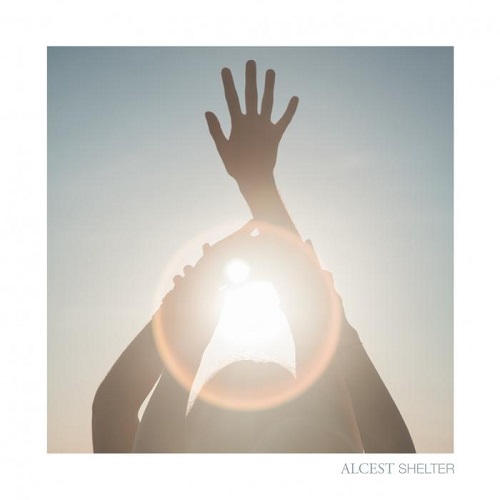
I have a bad habit of failing to keep up with bands in the years after their big breakthrough albums. As a consequence, I tend to be caught off guard when I find an old band doing something drastically different from their old sound. That is not the case with Alcest. I have eagerly gobbled up everything Neige has thrown out there since Le Secret (2005), and I was well aware ahead of time that Shelter was not going to be a metal album. That did not phase me. Neige’s sound has evolved dramatically over the years, and as early as Souvenirs d’un autre monde (2007) you could not detect a residual shred of the style he presented on Tristesse Hivernale (2001). A dream pop/shoegaze/post-rock album was a reasonable thing to expect given the general direction his music had been going. I clicked play on Shelter fully convinced that I would enjoy it.
Alcest – Wings and Opale, from Shelter
If I was going to have doubts, they might have been about the level of external influence surrounding Neige’s music of late. Was it going to show? Would this not quite sound like Alcest? Neige claimed no knowledge of shoegaze music when he recorded Le Secret and Souvenirs d’un autre monde. I remember his publicized surprise when an early release of Souvenirs‘ title track got plastered with the genre label all over the internet. Since then, Neige has developed quite the fondness for those classic bands to which he was compared. Shelter even features a guest appearance by Neil Halstead of Slowdive. If Shelter was not going to be metal, there was certainly a chance we would hear a lot more of that influence in place of Neige’s self-derived affinity to the sound.
I don’t think that is an issue here at all. I can’t say I have heard much classic dream pop or shoegaze outside of Loveless, but if Neige had continued to boast total ignorance of the genres, I think I would have believed him. Shelter sounds deliciously like Alcest, whether the style is a departure or not. The album opens with the angelic, echoed vocal chant that by Les Voyages de l’Âme had become a staple Alcest sound. For the first minute and thirty seconds, there is nothing to distinguish Shelter from another Alcest black metal album. The instant familiarity is a pleasant relief for any fan that had major doubts. You might still wonder whether he could pull off a full 46 minute album of “soft” Neige without ever using metal to vary the dynamics, but that question dissolves into air a minute and a half in, as the first full track, “Opale”, kicks off. It’s so vibrant that your speculation seems a petty distraction in the face of the musical moment.
Alcest – Voix sereine, from Shelter
This feeling definitely persists through the third track, “La nuit marche avec moi”, and on it Neige’s trending toward post-rock, audible on “Opale”, becomes substantially more apparent. “Voix sereine”, 11 minutes into the album, is the first time things really calm down from a pretty jubilee to get your mind wandering again. It kicks off slow and simple, rather dull really, and I for one had a hard time remaining attentive for the first three minutes. Was this the sort of “down time” I ought to have feared could come with a complete abandonment of metal? Perhaps it is, but 3 minutes of bore could be easily forgiven from most musicians. At the three minute mark, the song transforms into something substantially more palpable, and my second thoughts are largely forgotten. Much to my delight, I do find out that Neige fibbed a bit about the album’s contents. We might not encounter any blast beats or gut-wrenching screams on this album, but he did not forget how to turn on the distortion altogether. As the song gets heavier and substantially more… substantive, the boredom of the build-up fails to hold. It becomes a really great song. On a re-listen, knowing that something fairly aggressive will come of it, the lull is easier to swallow.
Alcest – Délivrance, from Shelter
The next song, “L’éveil des muses”, finds a more interesting starting point, but another slow build-up gives me serious doubts for the first time. What holds post-rock in the moment is the knowledge that something earth-shattering will come of it all. Knowing that “Voix sereine” is likely as heavy as the album is going to get, and without the instant gratification of the opening dream pop tunes, I struggle to give the song 100% of my attention. Track six, “Shelter”, is a much needed return to something more upbeat. It opens with the sort of pitch shifting distortion made famous by My Bloody Valentine, and from start to finish it’s an enjoyable ride. “Away”, the track featuring Neil Halstead on vocals, is a beautiful composition that, I think, would have been a thousand times better with Neige singing. Halstead kind of kills it for me–not because of the quality of his singing but because it sounds totally out of place on an Alcest album.
And then we close with “Délivrance”. The longest track by far at 10 minutes, it carried the weight of my overall opinion of the album. Shelter had so far offered a lot of stellar moments, but at its calmest it dangled dangerously on the edge of boredom. “Délivrance” needed to be a pretty epic piece of post-rock. At 3 minutes, a really classic post-rock guitar kicks off to confirm my hopes–at least to a point. It’s where the song heads from here that really disappoints me. We’re building, and we’re building, and it’s definitely a fun ride, but then right when you expect the song to really cast its shell aside and go all-out…. did it just end? Not a ten minute song after all, “Délivrance” concludes with a three and a half minute toned down outro.
It’s not common for me to speak of a song being too short, but “Délivrance” feels so incomplete to me. I accepted the first 3 minutes because I assumed we were going somewhere. I loved the next 4 because we were going somewhere. But we never really got there. Neige is the guy who made post-black metal a reality in the first place. Granted the full-fledged, conscientious post-rock/black metal cross-overs came later, I guess I expected such a hero of modern metal to aim a bit higher when confronting a fairly traditional post-rock sound. I can try to enjoy “Délivrance” for what it does offer, but I can’t help but think that he failed to see how much further he could have taken it. It’s something that would have sounded appealing in the late 90s but seems incomplete to me today, when post-rock bands are a dime a dozen and competition is a bit more formidable. I can’t quite get over that enough to fully enjoy it.
In the end, I guess you might say Shelter disappoints me. Maybe that’s because I came into it with really high expectations, where a lot of fans might have set the bar low when they found out there would be no black metal element. The first three tracks boosted my expectations all the more by offering a really novel sound that grabbed me and held on. But that dream pop vibe did not last, and the more he got back to sounds you might expect from an Alcest album of old, the more they felt depleted of the old energy rather than infused with a new one. Where the post-rock kick would normally give way to a black metal rockout, here it just fizzes away. Tracks like “Opale” set a precedent for how I wanted the entire album to sound. I got half of that, and half something that just makes me hope he goes back to his roots on the next release.
The history of Saor is a bit deceptive. If you’ve heard the name at all, you didn’t until last year, but the man behind it has been around for some time now. Before Scotland’s Andy Marshall chose this name for his solo project, he released Eternity as Askival in 2009. He was also a major factor in Where Distant Spirits Remain by Falloch in 2011. Neither of those albums stuck with me well enough for me to remember how they sound off the top of my head today, but I do have them. That tells me this is a musician with a good bit of experience, who managed to get his name out there well before he changed it to Saor. Aura is apparently his second release as Saor — he released Roots last year, and I’ll have to make a point to go check it out. If it sounds anything like Aura, it will be well worth the trouble.
Saor – Children of the Mist, from Aura
It does not take long for this five song, 57 minute album to convince you that it has something special going on. The opening track, “Children of the Mist”, erupts almost immediately into a graceful, distinctly Gaelic sweep of woodwind, layered atop well-mixed metal that lets the folk melody shine without much intrusion. The piano and string that follow seem to float in the air, painting a vivid landscape that seems to mirror the album’s cover art. The vibe is similar to Waylander of Northern Ireland, and it feels like it could drift on forever without losing any of its opening grandeur. Around 4:20, the metal briefly gives way to a beautiful cloud of strings and traditional drumming, soon to be met by blast beats that, much like on Kentucky by Panopticon, manage imbue the landscape with life rather than darkness. As the song continues on, you hear a wide variety of folk, pagan, and black metal techniques employed towards this same end of adding a feeling of life and spirit to the nature scenes that the traditional instrumentation invokes.
Saor – The Awakening, from Aura
This approach holds true throughout the grand bulk of the album. The melodies always arise from the folk instrumentation, with the metal serving a supplemental role of forcing you to feel directly engaged in the moment–a temporal witness to some eternal tranquility. It is a devout album, alive in reverence for the spirits of the land. From start to finish, it varies relatively little but never disappoints.
I suppose the terms “folk” and “pagan” can get thrown around rather haphazardly at times, without much of a clear distinction. One tends to conjure to mind lighter, “fun” bands like Korpiklaani and Alestorm, the other more serious bands such as Waylander and Drudkh. Sometimes this seriousness generates a sort of militarism or savagery, rendering bands like Arkona and Nokturnal Mortum far more intense than anything traditional black metal has produced on its own (and far too often, in Nokturnal Mortum’s case for instance, this gets vandalized by absurd notions of supremacy). But this does not always have to be the case. On Aura there is never a hint of desperation or brutality. The feeling is purely of peace and reverence boldly denying that the tradition it embraces has been in any way weakened by the modern world. “Folk” and “pagan” both denote music focused on ways of life that are no longer socially acceptable or possible in a modern, technologically advanced, monotheistic world. If folk suggests people, pagan suggests religion, and the religions of old were not based upon some highborn Greek notion of divinity. Their gods took hearth in wood and water and earth. Saor feels like pagan metal in that sort of sense to me. Its folk instrumentation paints the landscape, and the metal imbues it with supernatural life.
Aura is undeniably one of the most beautiful recordings of 2014. Don’t let it pass you by.

 Through the Shattered Lens