Late Night Retro Television Review: CHiPs 4.20 “Dead Man’s Riddle”


Welcome to Late Night Retro Television Reviews, a feature where we review some of our favorite and least favorite shows of the past!  On Mondays, I will be reviewing CHiPs, which ran on NBC from 1977 to 1983.  The entire show is currently streaming on Prime!
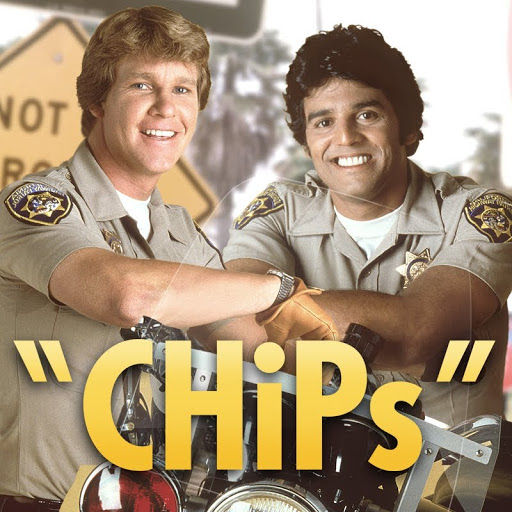
This week, the CHiPs team investigates an accident and a guest star gives a really terrible performance.

Episode 4.20 “Dead Man’s Riddle”

(Dir by Michael Caffey, originally aired on May 10th, 1981)

An accident in the mountains causes three cars to explode and one driver to die.  Since the dead driver was a captain with the Los Angeles fire department, the MAIT Team is sent out to recreate the accident and to try to figure out what happened.  They know that at least three cars were involved in the accident.  One driver died.  One driver is in the hospital.  And the other driver appears to be missing.  Getraer suspects that the accident could be due to people racing each other in the mountains.

What makes this episode odd is the casting of Joanna Kerns as psychiatrist Colleen Jacobs.  She’s assigned to the MAIT Team.  She actually drives through the mountains frequently and she even gets involved in racing sometimes.  In fact, she saw one of the cars right before the accident!  At first, she doesn’t bother to share this with anyone.  Instead, she just sits in the background with a guilty look on her face.  Finally, Jon Baker — in an unmarked car — tricks her into trying to race him.  That’s when she finally confesses….

….and faces absolutely no consequences!  Oh sure, Getraer gets a little annoyed and says that it would have been helpful if Dr. Jacobs had been honest from the start.  But Dr. Jacobs is allowed to continue to work with the MAIT Team.  Even though she intentionally withheld evidence from investigators, she’s not charged with obstruction.  Ponch tells her that she’s getting a chance to redeem herself which I don’t think is police policy.  No one comments on the fact that, even though she was worried that she may have previously caused a fatal accident, she still tried to race Baker.  Does no one care that, at the very least, she appears to have no impulse control?

Making things even stranger is that Joanna Kerns gives one of the worst performances that I have ever seen as Dr. Jacobs, delivering half of her lines as if she’s struggling not to laugh.  Even when she’s admitting her fear that she may have been responsible for the accident, she still seems like she’s on the verge of breaking out into laughter.  It’s very odd.

Speaking of odd,  an eccentric old man named Max (Owen Brooks) claims that he saw a UFO before the crash.  (Dr. Jacobs laughs when she repeats this.)  It turns out that he just saw a hubcap flying through the air.

In the end, it’s proven that the captain was not at fault in the accident.  That’s all that anyone really seems to care about.  I assume that Dr. Jacbos and Baker then proceeded to race each back to Los Angeles.
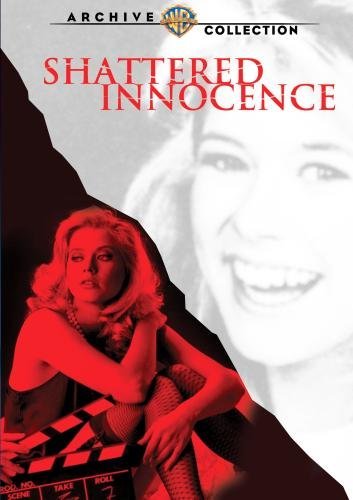
Retro Television Review: Shattered Innocence (dir by Sandor Stern)


Welcome to Retro Television Reviews, a feature where we review some of our favorite and least favorite shows of the past!  On Sundays, I will be reviewing the made-for-television movies that used to be a primetime mainstay.  Today’s film is 1988’s Shattered Innocence!  It  can be viewed on YouTube.

Shattered Innocence starts with a young woman shooting herself in a nice bedroom, while someone on the outside bangs on the door.

The rest of the movie shows the events the led up to the suicide of Pauleen Anderson (Jonna Lee).  On the one hand, starting a film with a literal bang is definitely a way to capture the audience’s attention.  On the other hand, letting us know that the story is going to end with a suicide pretty much robs the story of the element of surprise or the ability to take the viewer by surprise.  We know how the story is going to end and it doesn’t take long for us to figure out why it’s going to end that way.

From the minute we see Pauleen as a naive cheerleader with an overprotective family, we know that she’s going to end up hooking up with Cory (Kris Kamm), the local bad boy.  As soon as she graduates from high school and gets a job as a waitress, we know that Pauleen is not going to be staying in Kansas.  As soon as she and Cory end up in California and Cory suggests that Pauleen is pretty enough to be a model, we know that she’s going to end up modeling topless and that she’s going to deal with her nerves and her weight by snorting cocaine.  We also know that she’s going to end up appearing in adult films and that her concerned mother (Melinda Dillon) is constantly going to be begging her to come back home and forget about Los Angeles and its sinful ways.

Apparently based on a true story, there’s not really anything surprising about Shattered Innocence.  It tells a sordid story but, because it was made-for-TV, the scene usually ends right before anything really explicit happens.  (Ironically, by keeping the sordid stuff off-camera, the film invites the audience to imagine scenarios that are probably a hundred times more trashy than anything that could be recreated on film.)  Shattered Innocence gets by on innuendo, with frequent scenes of people saying stuff like, “Did you see the pictures?” or “You may recognize her from her centerfold.”  Nerdy Mel Erman (John Pleshette), who becomes Pauleen’s business partner, first meets her when he asks her to autograph the cover of Penthouse.  Otherwise, this film is actually pretty tame.

In fact, the one scene that really jumped out and made me go “Agck!” was a scene in which Pauleen’s nose suddenly started bleeding as a result of all the cocaine that she had recently done.  That was frightening, just because I’ve always had to deal with nosebleeds due to my allergies.  I hate them and the taste of blood in the back of my throat.  In that scene, I could relate to Pauleen’s shock and embarrassment.

Shattered Innocence tells a story that’s as old as Hollywood itself, which is a bit of a problem.  Too often, the movie just seems to be going through the expected motions.  Jonna Lee was a bit dull in the lead role but Melinda Dillion and John Pleshette both did well as the only two people who seemed to really care about Pauleen.  For the most part, though, Shattered Innocence was sordid without being memorable.

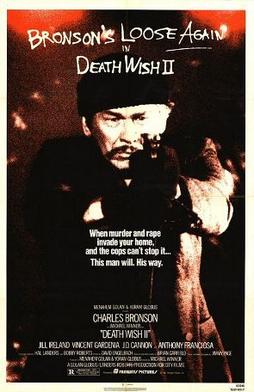
Bronson’s Back!: Death Wish II (1982, directed by Michael Winner)


To quote John McClane, “How can the same shit happen to the same guy twice?”
It has been eight years since Paul Kersey (Charles Bronson) lost his wife and single-handedly cleaned up New York City.  The first Death Wish ended with Paul in Chicago, preparing to gun down a new group of criminals.  I guess Chicago didn’t take because, at the start of Death Wish II, Paul is in Los Angeles and he’s working as an architect again.  He has a new girlfriend, a bleeding heart liberal reporter named Geri (Jill Ireland, Bronson’s real-life wife) who is against the death penalty and who has no idea that Paul used to be New York’s most notorious vigilante.  Having finally been released from the mental institution, Carol (Robin Sherwood) is living with her father but is now mute.

Crime rates are soaring in Los Angeles and why not?  The legal system is more concerned with the rights of the criminals than the victims and Paul has retired from patrolling the streets.  But when a group of cartoonish thugs rape and kill his housekeeper and cause his daughter to fall out of a window while trying to escape them, Paul picks up his gun and sets out for revenge.

Death Wish II was not the first sequel to Death Wish.  Brian Garfield, the author of the novel on which Death Wish was based, never intended for Paul to be seen as a hero and was disgusted by what he saw as being the film’s glorification of violence.  As “penance,” he wrote a sequel called Death Sentence, in which Paul discovered that he had inspired an even more dangerous vigilante.  When Menahem Golan and Yoram Globus bought the rights to produce a second Death Wish film, they decided not to use Garfield’s sequel and instead went with a story that was co-written by Golan.

It’s the same basic story as the first film.  Again, Paul is a mild-mannered architect who is a liberal during the day and a gun-toting reactionary at night.  Again, it’s a home invasion and a death in the family that sets Paul off.  Again, Paul gets help from sympathetic citizens who don’t care that the police commissioner (Anthony Franciosa) wants him off the streets.  Jeff Goldblum played a rapist with a switch blade in the first film.  This time, it’s Laurence Fishburne who fills the role.  (Fishburne also carries a radio, which he eventually learns cannot be used to block bullets.)  Even Detective Ochoa (Vincent Gardenia) returns, coming down to Los Angeles to see if Paul has returned to his old ways.

The main difference between the first two Death Wish films is that Death Wish II is a Cannon film, which means that it is even less concerned with reality than the first film.  In Death Wish II, the criminals are more flamboyant, the violence is more graphic, and Paul is even more of a relentless avenger than in the first film.  In the first Death Wish, Paul threw up after fighting a mugger.  In the second Death Wish, he sees that one of the men who raped his daughter is wearing a cross, leading to the following exchange:

“Do you believe in Jesus?”

“Yes, I do.”

“Well, you’re going to meet him.”

BLAM!

Death Wish II is the best known of the Death Wish sequels.  It made the most money and, when I was a kid, it used to show on TV constantly.  The commercials always featured the “You believe in Jesus?” exchange and, every morning after we saw those commercials, all the kids at school would walk up to each other and say, “You believe in Jesus?  Well, you’re going to meet him.”  It drove the teachers crazy.

Overall, Death Wish II is a lousy film.  Michael Winner, who was always more concerned with getting people into the theaters than anything else, directs in a sledgehammer manner that makes his work on the first film look subtle.  He obscenely lingers over every rape and murder, leaving no doubt that he is more interested in titillating the audience than getting them to share Paul’s outrage.  The script is also weak, with Geri so poorly written that she actually gets more upset about Paul going out at night than she does when she learns that Paul’s daughter has died.  When Paul sets out to track down the gang, his method is to merely wander around Los Angeles until he stumbles across them.  It doesn’t take long for Paul to start taking them out but no one in the gang ever seems to be upset or worried that someone is obviously stalking and killing them.

There are a few good things about the film.  Charles Bronson was always a better actor than he was given credit for and it’s always fun to watch Paul try to balance his normal daily routine with his violent night life.  Whenever Geri demands to know if he’s been shooting people, Paul looks at her like he is personally offended that she could possibly think such a thing.  Also, the criminals themselves are all so cartoonishly evil that there’s never any question that Paul is doing the world a favor by gunning them down.  For many otherwise sensible viewers, a movie like Death Wish II may be bad but it is also cathartic.  It offers up a simple solution to a complex issue.  In real life, a city full of Paul Kerseys would lead to innocent people getting killed for no good reason.  But in the world of Death Wish II, no one out after nightfall is innocent so there’s no need to worry about shooting the wrong person.

Finally, the film’s score was written by the legendary Jimmy Page.  The studio wanted Isaac Hayes to do the score but Winner asked his neighbor, Page.  Page took the film, retreated into his studio, and returned with a bluesy score that would turn out to be the best thing about the movie.  The soundtrack was the only one of Page’s solo projects to be released on Led Zeppelin’s record label, Swan Song Records.

Tomorrow, Bronson returns with Death Wish 3!

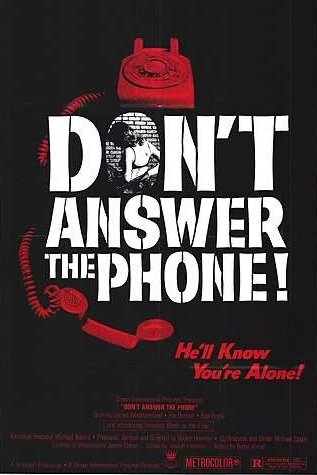
The TSL’s Daily Horror Grindhouse: Don’t Answer The Phone (dir by Robert Hammer)


Nicholas Worth in Don't Answer The Phone

Nicholas Worth in Don’t Answer The Phone

AGCK!

As a self-described lover of grindhouse and exploitation films, I have seen my share of truly icky films.  But Don’t Answer The Phone, a 1980 mix of police procedural and serial killer horror, is in a class all by itself.  It is not only exceptionally icky but it’s distressingly effective as well.

After I watched Don’t Answer The Phone, I actually checked to make sure all the doors were locked.  Before I got into bed, I searched all the closets to make sure there wasn’t anyone hiding in there.  And, as I fell asleep, I found myself thinking that maybe I should follow the advise of both Arleigh and my sister.  Maybe it was time for me to finally get a gun of my own and learn how to use it.

Seriously, Bowman, I thought as I waited for sleep to come, you live in Texas.  It’s totally legal to carry a gun down here so you need to take advantage of the law and make you’re ready to blow any pervert losers away!  Even if you shot the wrong person, you’re cute.  The jury would never convict…

That’s the type of effect that Don’t Answer The Phone had on me.  It’s not necessarily a good film.  With one notable (and important) exception, most of the acting is terrible.  The film’s few attempts at intentional humor largely fall flat.  Even with a running time of only 94 minutes, Don’t Answer The Phone feels overlong and full of unneeded padding.  And yet, this is a very effective film.  It did freak me out, largely because it was so crude and heartless.  It strikes at the most primal fears of the viewer, that feeling that — even within the security of our own home — we may not truly be safe.

As Don’t Answer The Phone opens, Los Angeles is a city being stalked by a madman.  That, in itself, is not surprising.  Just taking a quick look at Wikipedia will reveal that Los Angeles has been home to a large number of serial killers.  In fact, if there is anything shocking about Don’t Answer The Phone, it’s the suggestion that Kirk Smith (played by Nicholas Worth) is the only serial killer in town.

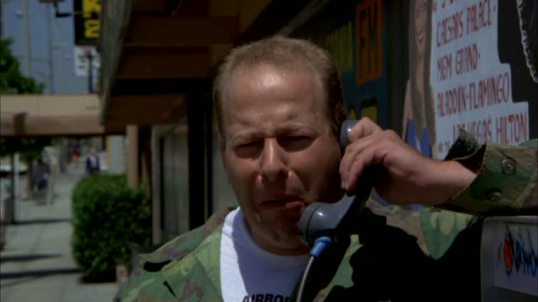
Who is Kirk Smith?  He’s an overweight, bald photographer who always wears an army jacket and is obsessed with candles, body building, and strangulation.  He also enjoys calling up a local talk show host, Dr. Linsday Gale (Flo Gerrish).  (One wonders if Dr. Gale’s name was specifically meant to make the viewer think of The Wizard of Oz.)  “Hello,” he says in an outrageously fake accent, “this Ramon!”  He tells Dr. Gale that he has frequent headaches and bad urges.  When he’s not pretending to be Ramon, Kirk can usually be found staring at himself in a mirror and yelling, “Do I measure up, Dad!?”

Kirk is killing women across Los Angeles and it looks like he might never be caught because Don’t Answer The Phone features some of the most incompetent cops ever!  These are the type of cops who smirk at the victims and shoot anyone who doesn’t get on the ground fast enough.  These are the type of cops who open fire and then say, “Adios, creep.”  Civil liberties!?  BLEH, THESE COPS DON’T HAVE TIME FOR YOUR RIGHTS!  Of course, they do end up shooting and killing the only witness who can identify Kirk Smith as the murderer.  Whoops!

If there’s anything that sets Don’t Answer The Phone apart from all the other serial killer films, it’s the performance of Nicholas Worth.  Far more than the slick and erudite serial killers who dominate contemporary thrillers, Nicholas Worth is a frighteningly believable lunatic.  He’s scary because we’ve all seen his type wandering the streets.  We’ve all felt his stare linger for a few seconds too long and we’ve all had the same feeling of dread when we saw him approaching us.  Reportedly, Worth did a lot of research on actual serial killers before taking on the role of Kirk Smith and his performance is terrifying because it is so real.

It’s icky to watch but, at the same time, it do serve to remind us that there are real life Kirk Smiths out there.

Agck!  Seriously, it makes me shake just thinking about it.

I’m getting a gun…

DAtP