October True Crime: The Chase (dir by Paul Wendkos)


When he died in 1988, Phillip Hutchinson was only 24 years old.

Born in Virginia, Phillip Hutchinson served in the U.S. Marines before he was discharged for desertion.  He went on to become a career criminal and a violent one at that.  By the time he was 24, he already had a long criminal record.  In Texas, he was convicted of aggravated assault and ended up with a life sentence.  He escaped from prison by stealing a truck.  (It was his third escape attempt.)  Fleeing Texas, he eventually ended up in Denver.  He is alleged to have robbed four banks in Denver before holding up the Rio Grande Operating Credit Union.  The 18 year-old teller was able to set off a silent alarm and Hutchinson ended up leading police on a chase through Denver.  Following Hutchinson in the air was a news helicopter.  At one point, Hutchinson crashed into an unmarked police car, killing Detective Bob Wallis.

After crashing his own car, Hutchinson continued to run on foot.  Eventually, he reached a trailer park.  He took John Laurienti as a hostage and forced the 73 year-old man to drive him past the police in his pick-up truck.  When the men in the news helicopter realized that the police didn’t realize that Hutchinson was in the truck, they dived down and blocked the truck from moving forward.  The cops, realizing their mistake, surrounded the truck and opened fire, killing Hutchinson while the cameraman in the helicopter continued to film.  John Laurienti escaped from the truck, uninjured.

Phillip Hutchinson really had no one but himself to be blame.  If he hadn’t robbed the credit union, he would have had the cops chasing him to begin with.  If he hadn’t rammed into the unmarked car and killed Bob Wallis, it’s possible that the police would have been more willing to negotiate before opening fire on him.  You can wonder what led to someone, by the age of 24, becoming a hardened criminal and that is something that should always be investigated.  In the end, actions do have consequences.

Phillip Hutchinson is one of those criminals who would probably be forgotten today if not for the fact that his death was not only captured on camera but also broadcast across the television airwaves.  Hutchinson has gone on to have a significant afterlife in various “documentaries.”  Remember World’s Wildest Police Videos?  (I’ve also read that the shoot-out is a popular video on various “forbidden” and “dark” websites but I’m not going to look to find out.)

1991’s The Chase was a made-for-television movie about Phillip Hutchinson and his final ride.  Casey Siemaszko plays Phillip Hutchinson as being a psycho redneck, which is probably not the far from the truth.  Siemaszko gives a good performance as Hutchinson but the majority of the film deals with the people who came into contact with Hutchinson on the final day of his life.  Ricki Lake plays the teller who set off the silent alarm.  Ben Johnson gives a moving performance as the old man who Hutchinson took hostage.  Barry Corbin plays Bob Wallis.  Megan Follows plays a drug addict who narrowly escapes Hutchinson.  Robert Beltran plays the man in the helicopter.  They all give good performances.  At the same time, for a film called The Chase, the Chase itself doesn’t actually start until we’re 70 minutes into the movie and it’s over pretty quickly.  If you’re watching this film for the action, you’ll probably be disappointed.

This film was written by Guerdon Trueblood, who also directed one of my favorite grindhouse films, The Candy Snatchers.  Trueblood’s script follows the standard disaster formula, in that there are a lot of subplots and filler leading up to the big event.  In other words, The Chase isn’t a film for everyone.  I’ll admit, though, that I teared up a little at the end.  Phillip Hutchinson may have been a violent criminal but his death brought a community together.
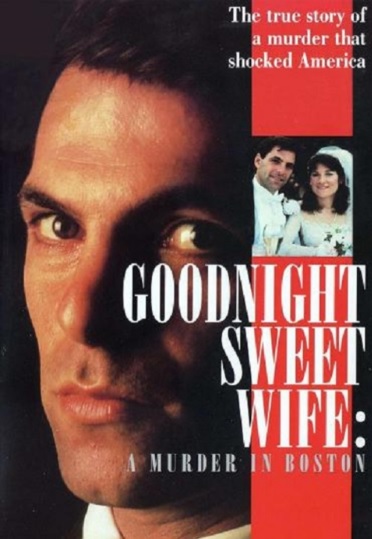
October True Crime: Goodnight Sweet Wife: A Murder In Boston (dir by Jerrold Freedman)


1990’s Goodnight Sweet Wife opens with a frantic 9-11 call.

A man named Charles Stuart (Ken Olin) calls the Boston Police Department and says that he and his pregnant wife have just been shot.  He says that he got lost while trying to drive home and that a black man got in the car, made Charles drive to a remote location, robbed Charles and his wife, and then shot them.  When the police finally manage to track Charles down, he’s nearly dead as a result of having been shot in the stomach.  Carol was shot in the head and is pronounced dead shortly after arriving at the hospital.  Her baby, named Christopher, is delivered via C-section but dies a few days later.

The city of Boston is outraged as the crime makes national news.  The story that thousands hear is that Charles Stuart, a hard-working and financially successful man who has never had any trouble with the police, took one wrong turn, ended up in a “bad” neighborhood, and lost his wife and his son as a result.  As Charles recovers in the hospital, the police make capturing his assailant their number one priority and soon, black men are being stopped and frisked in the streets.

With the entire world mourning the loss of Carol and Christopher Stuart, there are only a few people in Boston who are willing to take a careful look at Charles’s story.  There are quite a few inconsistencies in Charles’s story, not the least of which was his claim that he was shot in a nearly deserted area of town when the neighborhood is actually one of Boston’s busiest.  Some start to suspect that Charles killed his wife and then shot himself to make it look like a robbery and the fact that Charles nearly died from his wound is not proof that Charles was actually the victim but instead just a sign that Charles didn’t know where to shoot himself in order to not nearly die.  However, even with all of the inconsistencies in Charles’s story, the police still announce that they’ve arrested a man for the crime.  Charles even identifies the suspect, William Bennett, as being the murderer.

Of course, as is revealed in flashbacks, Charles Stuart is a murderer and he’s not a particularly clever one.  He’s the type of murderer who openly talked to people about how he was considering committing a murder.  He’s the type who roped his own brother into helping him fake the robbery.  Far from being the successful professional that he presented himself as being, Charles was mediocre broker who depended on his wife’s salary to finance his lifestyle.  With Carol pregnant and planning on quitting her job to be a full-time mother, Charles decided to kill her for the insurance and he also figured that he would be able to get away with it as long as he blamed the crime on a black man.

Tragically, it turned out that Charles Stuart was almost right.  In both the movie and in real life, Charles Stuart was believed because he didn’t look like what most people thought a criminal looked like.  He was a young, handsome, middle class white guy and because he couldn’t face the prospect of having to cut back financially, he killed his wife and his son and he nearly put an innocent black man in prison.  The film does a good job of depicting the consequences of both Stuart’s crime and the rush to judgment on the part of the police.  Ken Olin plays Charles Stuart as being outwardly friendly but empty on the inside, a cold sociopath who is incapable of truly caring about anyone but himself.  In real life, Stuart chose to jump into the Mystic River rather than face the consequences of his actions.  Stuart’s brother, who helped Charles fake the robbery and later turned Charles into the police, died in a homeless shelter 30 years later.  Carol’s family set up a scholarship fund in her name to aid students in Mission Hill, the neighborhood where Charles claimed he had been hijacked.  One of the scholarship’s first recipients was the daughter of William Bennett.