4 Or More Shots From 4 Or More Films is just what it says it is, 4 shots from 4 of our favorite films. As opposed to the reviews and recaps that we usually post, 4 Shots From 4 Films lets the visuals do the talking!
On this date, 94 years ago, Andrei Tarkovsky was born in Russia. Before he was murdered by the communist KGB in 1986, Tarkovsky was responsible for some of the most intriguing and visually stunning films ever made. Today, we pay tribute to Tarkovsky’s art and his legacy. It’s time for….
4 Shots From 4 Andrei Tarkovsky Films
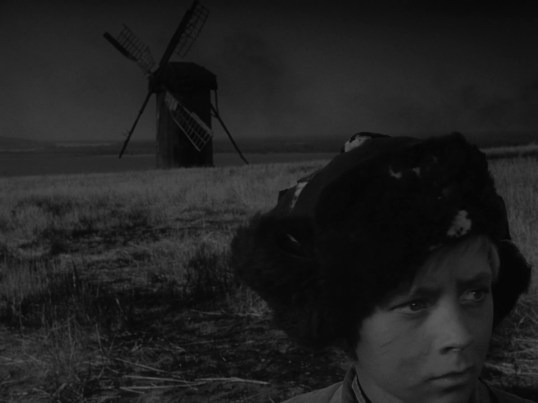
Ivan’s Childhood (1962, dir by Andrei Tarkovsky, DP; Vadim Yusov)
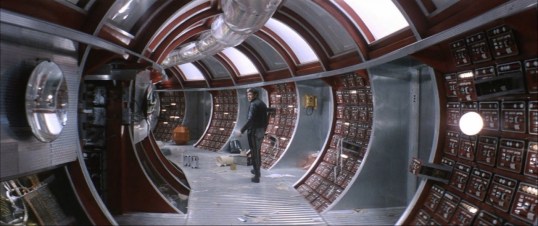
Solaris (1972, dir by Andrei Tarkovsky, DP: Vadim Yusov)
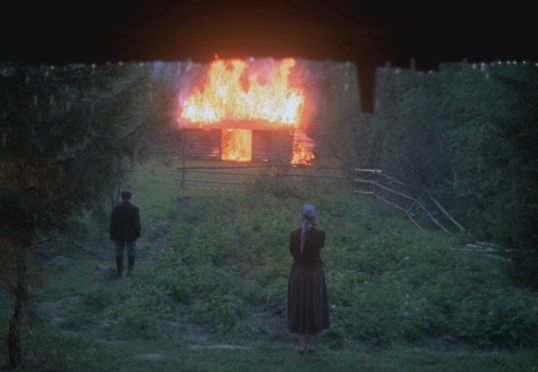
Mirror (1975, dir by Andrei Tarkovsky, DP: Georgy Rerberg)
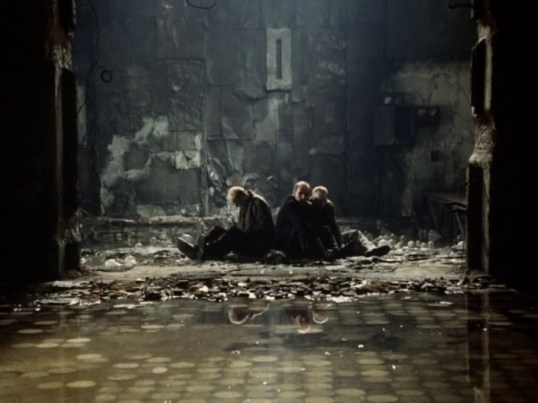
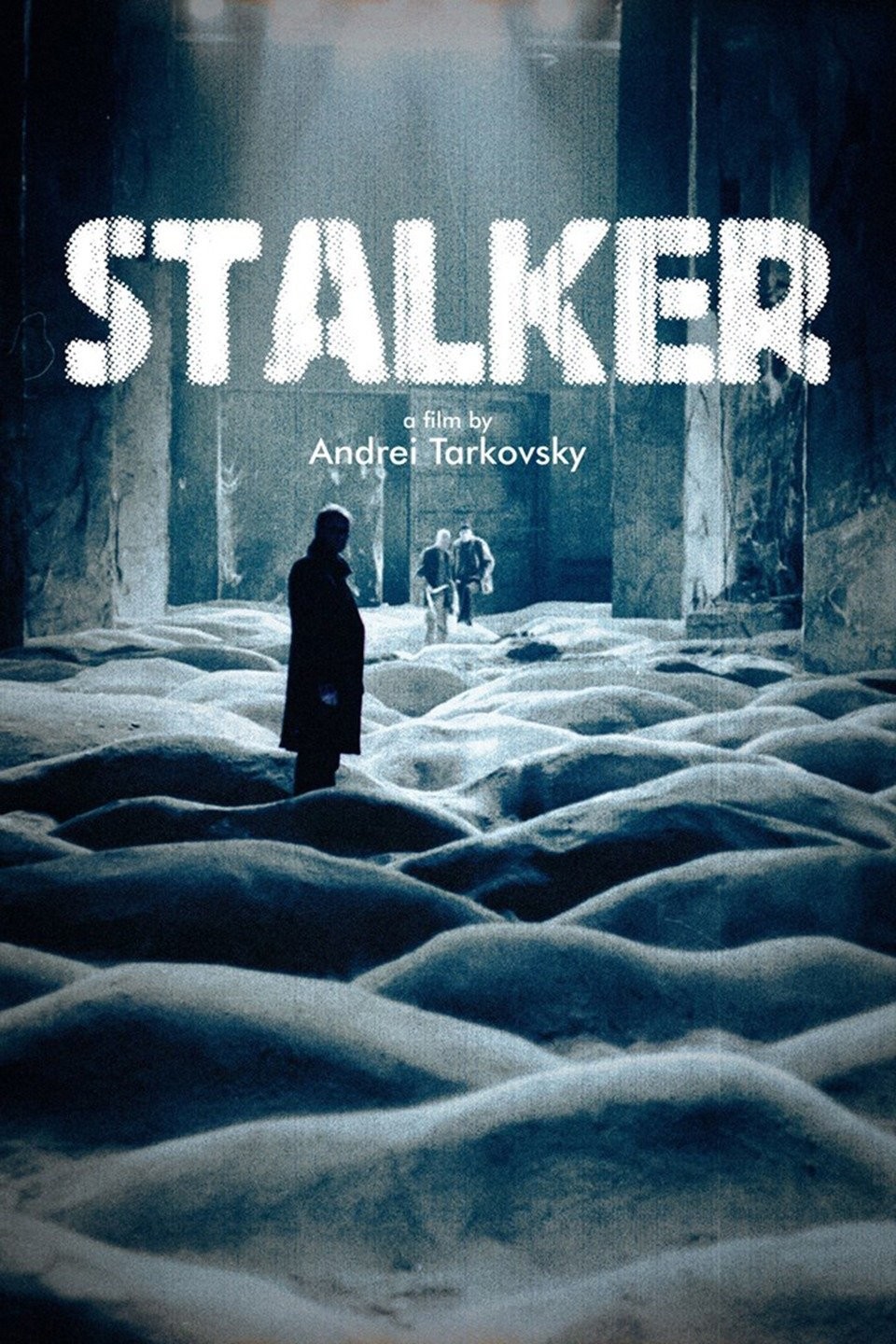
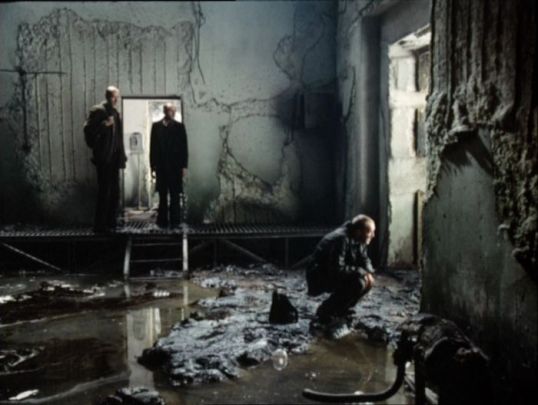
Stalker (1979, dir by Andrei Tarkovsky, DP: Alexander Knyazhinsky)
“May they believe. And may they laugh at their passions. For what they call passion is not really the energy of the soul, but merely friction between the soul and the outside world.” — the Stalker
Stalker is one of those films that feels less like a story you’re watching and more like a place you’re slowly drowning in. Directed by Andrei Tarkovsky in 1979, it’s a slow‑burn sci‑fi parable that spends most of its runtime trudging through damp, ruined spaces while three men argue about faith, desire, and whether any of it really matters. It’s not a movie you “get” on first watch; it’s the kind that lingers in your head for days, nudging you to rethink what you thought you wanted from life, and from cinema itself.
The basic setup sounds like genre bread‑and‑butter: a mysterious forbidden area called “The Zone” is guarded by the state, and only a few people—called “stalkers”—can safely guide visitors through it to a fabled Room that can grant a person’s deepest wish. Our guide is simply called the Stalker, played by Alexander Kaidanovsky with a mixture of haunted reverence and exhausted humility. He leads two men into the Zone: a jaded Writer who’s lost his inspiration and a cynical Scientist, each with their own idea of what they’re hoping to find. The tension in Stalker doesn’t really come from the physical danger of the Zone, though it’s full of traps and inexplicable phenomena; it comes from watching these three slowly peel open their own lies to themselves.
Tarkovsky’s visual strategy is almost perversely patient. He lingers on long, static shots of corroded metal, flooded tunnels, and overgrown railway tracks, while the camera glides in smooth, hypnotic movements that feel both weightless and heavy. The Zone is shot in a washed‑out sepia‑like palette, which makes it look like a half‑remembered dream or a charcoal sketch of a ruined world. The real world outside the Zone, in contrast, is the one that’s actually in sepia, while the Zone itself briefly shifts into color. This flip is a quiet but brutal joke: the thing everyone fears and wants to escape from—the decaying, post‑industrial wasteland—is actually more vivid and alive than the “safe” world, which feels duller, flatter, and spiritually dead. The longer you stay inside Stalker, the more you start to suspect that the Zone is less a physical location and more a mirror for the characters’ inner lives.
The central idea driving the film is the Room: the chamber that supposedly grants desires. The Writer and the Scientist have different theories about what the Room is doing. The Writer thinks it can expose the truth of what people really want, not what they claim to want. The Scientist rattles off more technical explanations, wondering if the Room is some kind of psychic field or natural anomaly. The Stalker, meanwhile, approaches it with a kind of religious awe; he believes the Room is a kind of judgment, a place where the universe reaches inside and shows you the core of your being. The film deliberately keeps the mechanics vague, so the focus stays on the question of human desire itself. It asks, in a very quiet way: what if the thing you want most is the thing that would actually destroy you—or worse, is the thing you’re too afraid to admit?
This is where the echoes of Dune start to creep in, even if Tarkovsky never admits it directly. Frank Herbert’s Dune is built around similar ideas: a mystical, hostile landscape (Arrakis) that tests and reshapes whoever tries to cross it, and a system of belief that promises transcendence if you’re willing to face the full, terrifying complexity of yourself. Both stories center on a guide figure—Stalker in the Zone, Paul Atreides in the Fremen’s desert—who leads outsiders into a place that follows its own rules and punishes arrogance. In Dune, the desert is a kind of crucible for destiny; in Stalker, the Zone is a crucible for the soul. The difference is that Herbert leans into prophecy and chosen‑one narrative, while Tarkovsky keeps the prophecy hazy and even mocks the men who fetishize it. The Zone doesn’t care about “chosen” people; it just quietly reflects what’s already there.
The payoff of Stalker is also the opposite of a heroic fantasy. In Dune, the protagonist’s journey to the heart of the desert culminates in a decisive, mythic confrontation that rewrites the future of an empire. In Stalker, the group actually reaches the Room, but the film refuses a conventional resolution. Instead, they argue about whether they’re even capable of deserving what they desire. The Scientist, who claims he wants to protect humanity from the Room’s power, is exposed as someone who fears losing control of his own fate. The Writer, who thinks he wants “truth” or “inspiration,” is quietly terrified that the Room might reveal how shallow his motives really are. The Stalker, in his idealism, is the closest to pure faith, but that faith is also fragile, constantly battered by the cynicism of the men he’s guiding. The Room doesn’t magically fix anyone; it just sits there, neutral, until the characters decide if they’re willing to confront the consequences of their own hearts.
Another way Stalker feels Dune‑adjacent is in its treatment of desire as a kind of test. Both works suggest that the deepest desires of human beings are not just personal wishes but political and moral statements. In Dune, the messianic fantasies of the Fremen and the machinations of the Empire reveal how easily spiritual yearning can be weaponized. In Stalker, the possibility of the Room is already politicized by the state that tries to seal it off, and by the figures who claim to want to “use” it for the greater good. The film’s closest hint at Herbert‑style mythology is in the legend of Porcupine, the Stalker’s mentor who supposedly used the Room to wish for riches and then hanged himself out of guilt. That story, told by the Writer, suggests that the Room doesn’t just grant desire—it interprets it, exposing the gap between what people say they want and what they secretly crave. It’s a more intimate, less epic version of the Bene Gesserit’s manipulation of destiny.
Philosophically, Stalker is far more pessimistic about human nature than Dune ever is. Herbert’s universe is full of grand schemes, hidden lineages, and cosmic prophecies; Tarkovsky’s world is modest, shabby, and claustrophobic. The film’s conversations are long, meandering, and sometimes self‑indulgent, but they also reveal the quiet desperation of people who feel spiritually stuck. The Writer confesses he’s tired of being celebrated for his work, the Scientist quietly fears being obsolete, and the Stalker agonizes over whether his faith is just a delusion that keeps him from a normal life. Their journey through the Zone is framed as a kind of pilgrimage, but the film undercuts the idea that pilgrimage guarantees enlightenment. The final scenes, returning to the Stalker’s home and his sickly daughter, complicate the idea of “fulfillment” even further. The Zone may have changed them, but it doesn’t heal them in the way a simpler hero’s‑journey narrative would pretend it does.
Tarkovsky’s approach to pacing and atmosphere also feels like a spiritual cousin to the way later sci‑fi filmmakers try to balance spectacle with contemplation. Directors like Denis Villeneuve, who has openly admired Stalker, use long, slow shots and carefully composed landscapes to give weight to inner psychological states. Dune (2021) and Dune: Part Twoborrow from Tarkovsky’s bag of tricks—long silences, oppressive sound design, and an almost religious reverence for the environment—but they still wrap that atmosphere around a more conventional plot and character arc. Stalker, by contrast, barely clings to plot at all. It’s closer to a walking meditation, where the real action is happening in the pauses between lines of dialogue, in the way the camera hovers over a puddle or a rusted pipe as if it’s discovering something sacred in the mundane.
In the end, Stalker feels less like a straightforward sci‑fi film and more like a religious parable wearing the costume of genre. It asks the same questions that Dune subtly raises—what do we truly want, what are we willing to sacrifice for it, and how much do we actually understand ourselves—but it answers them with hesitation, doubt, and a kind of exhausted tenderness. The Zone isn’t a promised land; it’s a confession booth. The Room isn’t a magic button; it’s a mirror. And the Stalker himself isn’t a fearless explorer, but a broken man who keeps leading others into the dark because he can’t stop believing that, somewhere in that darkness, there might be a flicker of grace that could make it all worth it. If Dune is about the myth of destiny, Stalker is about the fragile, uncertain labor of faith in a world that keeps looking more like a ruined factory than a cathedral.
4 Or More Shots From 4 Or More Films is just what it says it is, 4 shots from 4 of our favorite films. As opposed to the reviews and recaps that we usually post, 4 Shots From 4 Films lets the visuals do the talking!
Today, we pay tribute to the year 1975. It’s time for….
4 Shots From 4 1975 Films
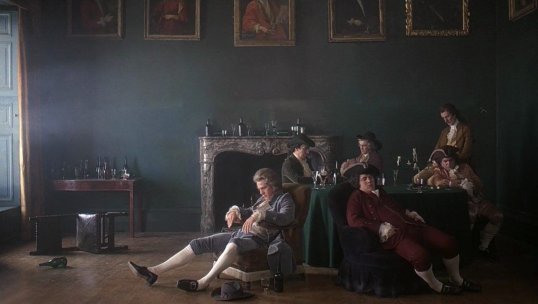
Barry Lyndon (1975, dir by Stanley Kubrick, DP: John Alcott)
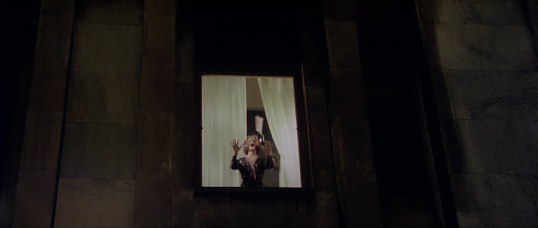
Deep Red (1975, dir by Dario Argento, DP: Luigi Kuveiller)
Mirror (1975, dir by Andrei Tarkovsky, DP: Georgy Rerberg)
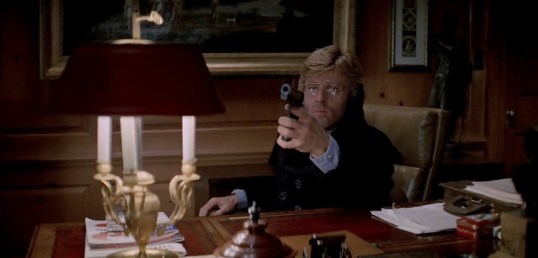
Three Days Of The Condor (1975, dir by Sydney Pollack, DP: Owen Roizman)
4 Or More Shots From 4 Or More Films is just what it says it is, 4 shots from 4 of our favorite films. As opposed to the reviews and recaps that we usually post, 4 Shots From 4 Films lets the visuals do the talking!
On this date, 93 years ago, Andrei Tarkovsky was born in Russia. Before he was murdered by the KGB in 1986, Tarkovsky was responsible for some of the most intriguing and visually stunning films ever made. Today, we pay tribute to Tarkovsky’s art and his legacy. It’s time for….
4 Shots From 4 Andrei Tarkovsky Films
Ivan’s Childhood (1962, dir by Andrei Tarkovsky, DP; Vadim Yusov)
Solaris (1972, dir by Andrei Tarkovsky, DP: Vadim Yusov)
Mirror (1975, dir by Andrei Tarkovsky, DP: Georgy Rerberg)
Stalker (1979, dir by Andrei Tarkovsky, DP: Alexander Knyazhinsky)
4 Or More Shots From 4 Or More Films is just what it says it is, 4 shots from 4 of our favorite films. As opposed to the reviews and recaps that we usually post, 4 Shots From 4 Films lets the visuals do the talking!
On this date, 92 years ago, Andrei Tarkovsky was born in Russia. Before he was murdered by the KGB in 1986, Tarkovsky was responsible for some of the most intriguing and visually stunning films ever made. Today, we pay tribute to Tarkovsky’s art and his legacy. It’s time for….
4 Shots From 4 Andrei Tarkovsky Films
Ivan’s Childhood (1962, dir by Andrei Tarkovsky, DP; Vadim Yusov)
Solaris (1972, dir by Andrei Tarkovsky, DP: Vadim Yusov)
Mirror (1975, dir by Andrei Tarkovsky, DP: Georgy Rerberg)
Stalker (1979, dir by Andrei Tarkovsky, DP: Alexander Knyazhinsky)
The 1979 Russian film, Stalker, takes place in a world that might be our own.
In the middle of a wilderness that we assume, just because of the language that’s spoken in the film, to be in Russia, there is an area known as the Zone. The Zone is a place where the normal laws of physics don’t seem to apply. It’s not an easy place to enter and it’s almost impossible to exit but it’s rumored that there’s a very special room located in one of the Zone’s deserted buildings. If you can find the Room, you’re innermost desires will be granted. It’s said, for instance, that a semi-legendary man known as Porcupine found the Room and became wealthy as a result. Of course, Porcupine also hung himself just a few days later.
Legally, no one is allowed to enter the Zone. Soldiers patrol the perimeter and the gate that leads into the Zone is only opened to allow a train to make it’s way through. However, there are outlaws who specialize in leading expeditions through the Zone. They can get people in and, as long as everyone does as instructed, they can hopefully lead people out. One of these outlaws is known as The Stalker (Alexander Kaidanovsky). The Stalker, a former student of Porcupine, lives in a drab village where everything is filmed in Sepia. (By contrast, the Zone is filmed in color.) The Stalker is married to a woman (Alisa Freindlich) who continually begs him to stop leading expeditions into the Zone but who also says that she married the Stalker because his illegal activities bring a little bit of life to an otherwise drab existence. They have a daughter (Natasha Abramova) who is described as being a “child of the zone.” She may have a physical disability, though we’re never quite sure what the exact details of it may be. The final enigmatic shot of the film belongs to her and it’s a shot that makes us wonder about everything that we’ve just previously seen.
The Stalker’s latest clients are the Writer (Anatoly Solonitsyn) and the Professor (Nikolai Grinko). Both the Writer and the Professor have their own reasons for wanting to see the Zone. The Writer is an alcoholic who has lost his inspiration and hopes to find it again. The Professor says that he’s interest in the Zone is a scientific one, though it turns out that his actual intentions are a bit more complex. The Stalker leads them into the Zone but it’s not an easy journey. The Stalker grows annoyed as he comes to realize that the Writer does not share his nearly spiritual reverence for the powers and the mysteries of the Zone. Meanwhile, the Professor obsesses over his backpack, even when the Stalker tells him to leave it behind. There’s something in that backpack that the Professor definitely doesn’t want to lose.
Stalker is a science fiction film but it’s one that has no elaborate special effects. There are hints that the Zone may have been visited by extraterrestrials but the film deliberately leave ambiguous the true origin of the Zone. Director Andrei Tarkovsky instead emphasizes the barren landscape and the discussions between the three men, each one of whom is desperate in his own way. Though the Zone may be filmed in vibrant color while the village is filmed in Sepia tones, both locations are equally desolate.
Watching this film today, it’s impossible not to compare the film’s Zone to the real-life forbidden zone surrounding Chernobyl. However, Stalker was made 7 years before the disaster at Chernobyl. The film’s Zone probably has more in common with the 1908 Tunguska event, which was when something (an asteroid, a comet, or maybe something else depending on how conspiracy-minded one is willing to be) either crashed into or exploded above Siberia. The explosion was the equivalent of 30 megatons of TNT and, needless to say, you can find all sorts of fanciful stories about strange things happening in the area in the years after the explosion. That said, it’s definitely not a coincidence that the modern-day guides who lead unauthorized tours of the Chernobyl area have taken to calling themselves stalkers.
The film itself is a fascinating one, though definitely not one for everyone. As a director, Tarkovsky’s trademark was the long take and the camera often lingers over each scene, inviting the viewer to look for a deeper meaning that may or may not be there. It’s a film that invites the viewer to think and to wonder who is right and who is wrong about the Zone. It’s a film that asks a lot of questions but never claims to have all the answers. The true meaning of it all is left the individual viewer to determine. It really is a film that probably could have only been made by an artist trying to subtly rebel against a totalitarian society. The Writer has lost his inspiration because society has become so drab and corrupt. The intellectual Professor is forced to be deceptive about his true intentions. And the Stalker looks for a deeper meaning that goes beyond what the State has to offer. For that, he’s willing to risk everything.
Tragically, it’s possible that filming Stalker may have contributed to Tarkovsky’s death in 1986. (Interestingly, he died just a few months after the Chernobyl disaster.) Much of Stalker was filmed near a chemical plant and it’s felt that filming in such a toxic condition may have eventually led to the illnesses that not only killed Tarkovsky but several other members of the film’s cast and crew. By the time of his death, Tarkovsky had escaped from Russia and was living in Paris. Today, incidentally, is his birthday. He would have been 88 years old.

 Through the Shattered Lens