If you’ll cast your mind back to the admittedly dark later days of 2016, you’ll recall that there were two common reactions from the so-called “coastal elites” with regard to the electoral college victory of a certain syphilitic game show host who is now, according to his closest former aides, living in some kind of thick bubble of reality denial (as if he wasn’t back then) : one was to give his voters in the so-called “heartland” the old fly-under-a-magnifying glass treatment, thereby subjecting readers of the New York Times and other outlets to one interminable series of profiles after another, ostensibly designed to provide “insight” into the lives of “the forgotten men and women of middle America,” while the other was to quickly glom onto this supposedly-ascendant subset of Americans and portray Trump’s rather flukey (if we’re being completely honest) win as “the revenge of flyover country.”
Both entirely-manufactured points of view did the REAL men and women of small town and rural America a disservice, of course, in that they forced them to be either curious holdovers of a bygone era or hard-working “salt of the Earth” types fed up with supposedly being talked down to by their self-appointed social “betters,” but they also both had the curious effect of letting the real culprits for the rise of neo-fascism off the hook, in that neither editorially-dictated point of view bothered to look at the simple, oft-repeated precedent of history, to wit : people who have been screwed over by the rich have always been easy prey to do the bidding of those selfsame rich folks as long as you can direct their anger somewhere other than where it belongs. Don’t blame the billionaire class for raising your health insurance premiums astronomically, looting your formerly-secure pension fund, shuttering the factory you used to work at and opening one in Mexico the following week, or gouging you at the grocery store checkout line. Blame, uh — well, whoever else you can, from transgender athletes to starving migrants fleeing war-torn countries to gay school teachers to supposedly “violent” inner-city youths. Yeah, there you go — your problems are their fault.
Lost in the sudden urge to either attack this so-called “real” America, embrace it, or manipulate it for political gain, however, is the simple fact that “these people” are still real people, and not all of them are easily reduced to the role of pawns in a game. Hell, even those who are still have hopes, dreams, and aspirations like anyone else, and while none of this — I repeat, absolutely none of it — excuses the petty prejudices at the heart of Trumpism (to say nothing of the whopping prejudices that animate its virulent offshoot movements such as QAnon, The Proud Boys, The Oath Keepers, and the Three Percenters), there is, I think, a real danger in focusing only on prejudice when talking about how “middle America” came to find itself in the state it’s in.
Is it really that hard to blame greedy rich bastards for the mess they’ve left in their wake? In America, apparently, it is. But I digress —
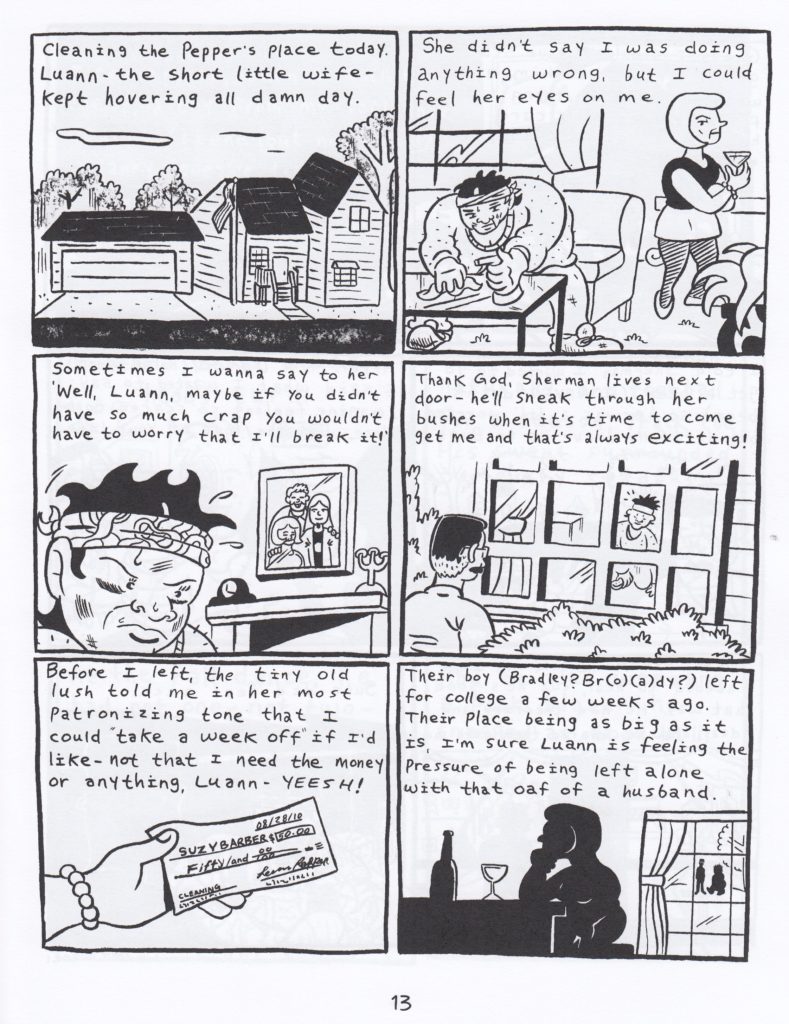
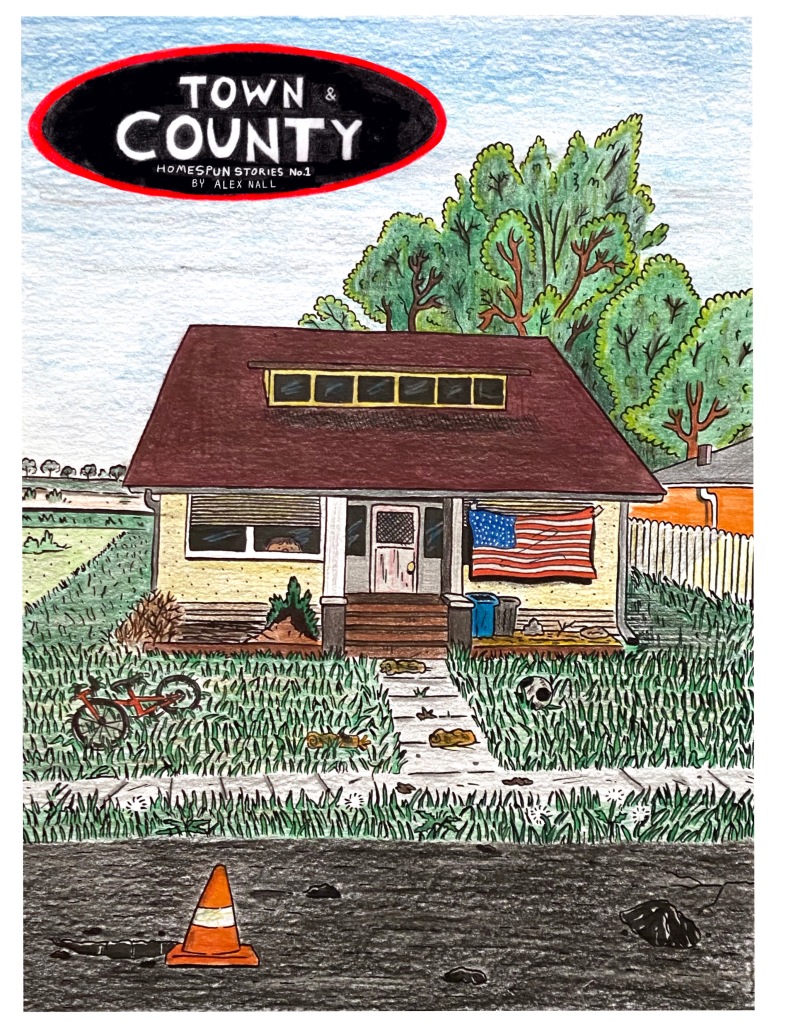
Still, while the journalistic class may have lost sight of much of the richness of small-town life, our cartoonists have not : Sean Knickerbocker and his coterie of contributors are delineating its highs, lows, and in-betweens in the fine Rust Belt Review anthology series, for instance, and Alex Nall has shown an uncanny ability to communicate its quiet idiosyncrasies in the pages of Lawns, Kids With Guns, and the first magazine-sized issue of his new ongoing project, Town & County — which liberally drops references to, and even borrows concepts from, the pair of earlier comics just mentioned, while crafting something new and substantial that requires no intimate knowledge of either of them. In other words, if this is your first step into what we’ll call, with apologies to the author, the “Nall-verse,” you needn’t worry : the welcome mat is rolled out for you.
Which rather strikes me as apropos of the general attitude of the citizenry of the fictitious-in-name-only Clydesdale, Illinois, the “everyday America” setting of the four interconnected vignettes that comprise this debut issue. Longing for something better — or at least for something else — is something all of our protagonists (a lonely widower, a nosey housecleaner, a tortured insomniac, and a low-rent drug dealer) have in common, and while I have no practical experience with “rural Americana” myself, being a lifelong (and, for the record, damn proud) inner city resident, I found all these folks easy to identify with because that tug that exists in the space between wishing for a return to the familiar and yearning for even modestly new vistas of experience is pretty well universal in nature.
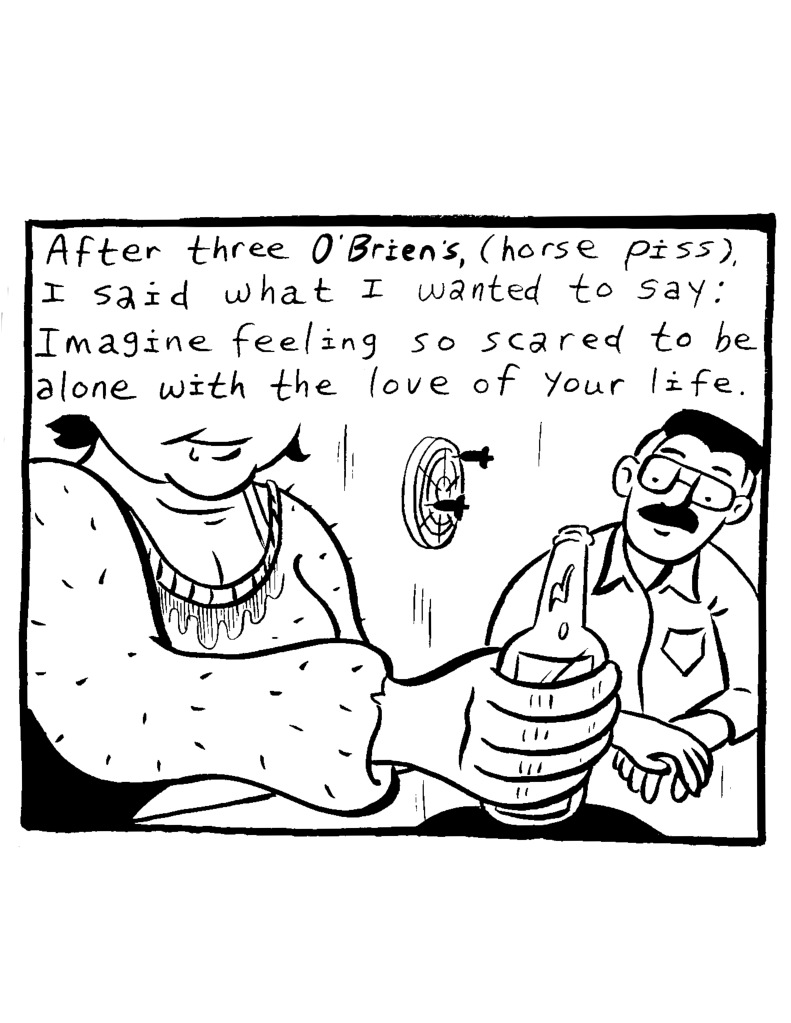
Nall, for his part, just so happens to be able to put that dichotomy into words and images better than most — hell, better than almost any of his contemporaries, and he’s got a project here that plays to all his strengths : authentic dialogue paired with rich inner monologue, clean expressive figure lines paired with rough-hewn, entirely unglamorous backgrounds/locales. There’s a push and pull sub rosa tension that animates both writing and art here, and why the hell wouldn’t there be? That pretty much sums up the lives of his characters in a nutshell, whether they consciously realize it or not.
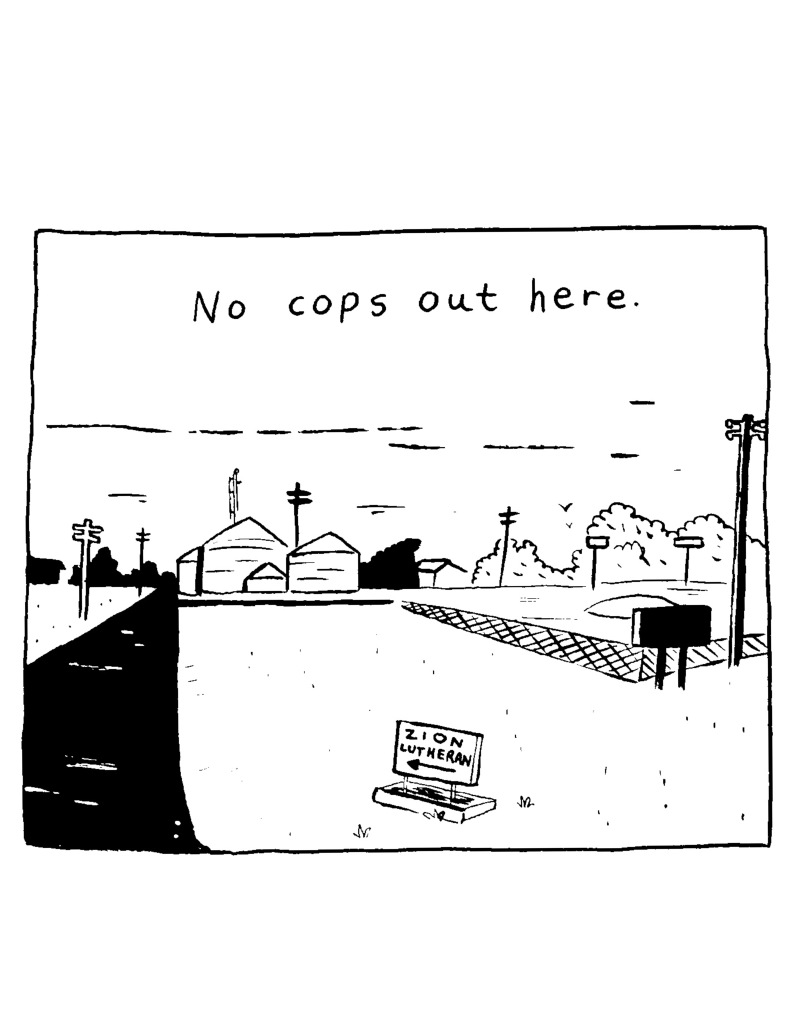
This, then, really is what you think it is going in : a comic about a town and its people — one that eschews the easy trappings of both Norman Rockwell cliche and anti-Rockwell “darkness on the edge of town.” This is a place where bathtub meth slingers and broken-hearted oldsters coexist while inhabiting entirely different personal realities. Where 2nd Amendment militia nuts fill their gas tanks at the same place as frightened mothers who would do anything to protect their kids from the next school shooter. Where the John Deere plant that was the source of everyone’s employment, either directly or indirectly, has shut its doors and left whatever survivors stuck around scrambling to find a new way forward. Where the end of the world has already happened and any promise — no matter how ephemeral and/or fraudulent — to bring back the “good old days” is better than nothing. It’s a place like thousands of others, sure — but that doesn’t mean it’s anything other than utterly unique.
***********************************************************************
Town & County #1 is self-published by Alex Nall under the auspices of his Ivy Terrace Press imprint and is available for $8.00 from his Storenvy site at https://alexnallcomics.storenvy.com/products/35138617-town-county-no-1
Also, this review is “brought to you” by my Patreon site, where I serve up exclusive thrice-weekly rants and ramblings on the worlds of comics, films, television, literature, and politics for as little as a dollar a month. Subscribing is the best way to support my continuing work, so I’d be very appreciative if you’d take a moment to give it a look by directing your kind attention to https://www.patreon.com/fourcolorapocalypse


 Through the Shattered Lens