Anime You Should Be Watching: Akira


“The future is not a straight line. It is filled with many crossroads. There must be a future that we can choose for ourselves.” — Kiyoko

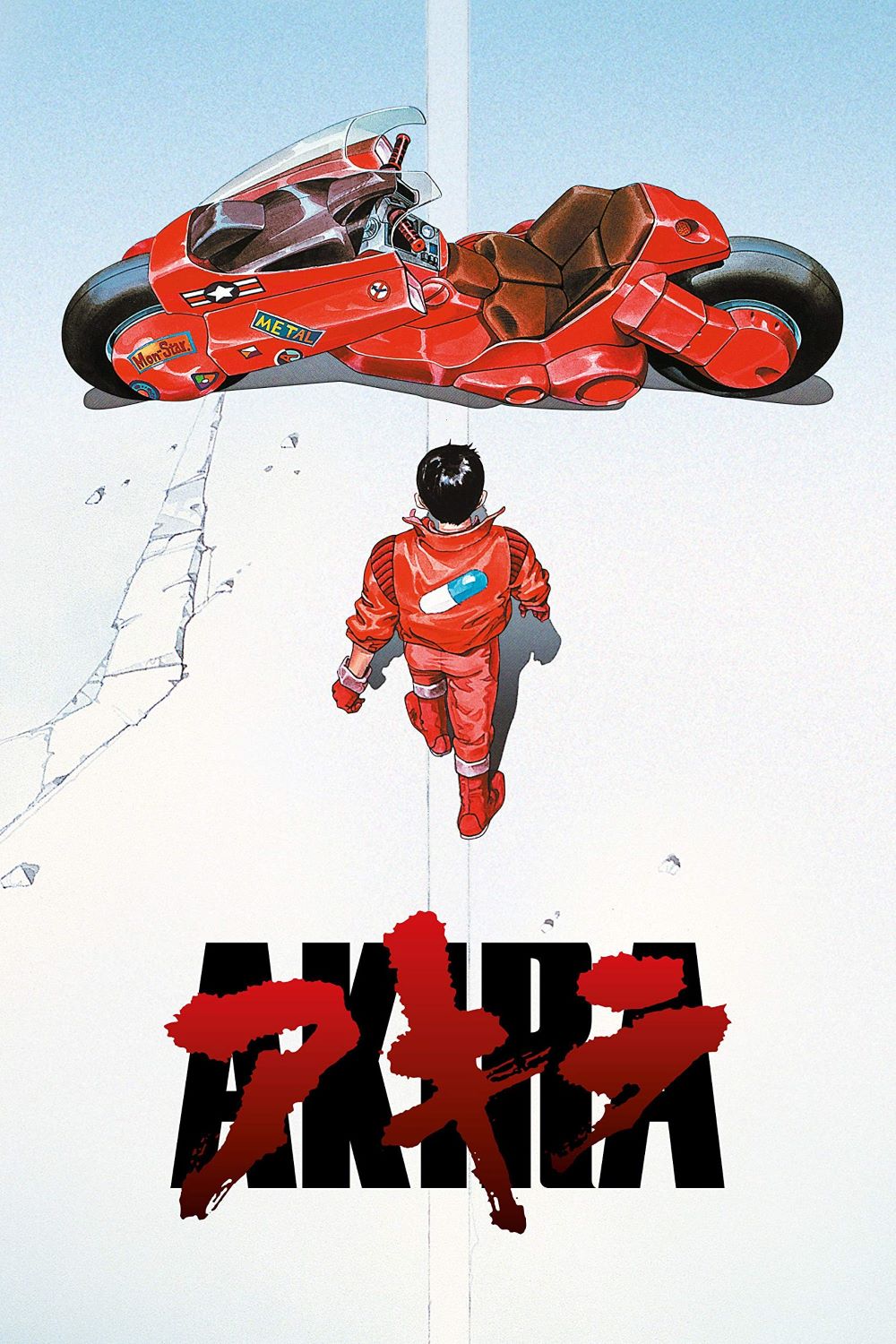
Akira is a landmark anime film that has left an indelible mark on both the medium and popular culture, widely regarded as a masterpiece blending dystopian cyberpunk aesthetics with potent social and political themes. Directed by Katsuhiro Otomo and released in 1988, it is an adaptation of Otomo’s own manga of the same name, adding layers of depth from its source material. The film remains a touchstone for its groundbreaking animation, complex narrative, and deep thematic explorations that resonate decades after its release.

At its surface, Akira tells the story of a post-apocalyptic Neo-Tokyo, a city ravaged by past destruction and on the brink of chaos again due to psychic powers unleashed unexpectedly on its streets. The narrative centers around two childhood friends caught in this upheaval: Kaneda, a rebellious gang leader, and Tetsuo, whose sudden acquisition of devastating psychic abilities leads to uncontrollable transformation and societal breakdown. This conflict draws viewers into a gripping tale of friendship, power, and loss.

Beneath the action-packed plot lies a rich tapestry of themes. One of the most striking is the exploration of loss of humanity through power. Tetsuo’s descent into madness as his psychic abilities spiral beyond his control serves as a visceral metaphor for how absolute power corrupts and alienates. The transformation he undergoes, from a troubled youth into a monstrous entity, dramatizes the fear of losing oneself when faced with forces that cannot be tamed. Meanwhile, the other characters and factions, including the military and resistance groups, depict varying responses to such disruptive power, from authoritarian control to emergent heroism among society’s outcasts and delinquents, emphasizing resilience in adversity.

Akira’s setting is crucial to understanding its impact. Unlike other dystopian sci-fi that glamorizes technology, Neo-Tokyo is raw and unpolished—a place of grime, corruption, and social decay. This lack of fetishization makes the depicted world more relatable and unsettling, reflecting post-World War II anxieties in Japan. The narrative draws clear analogies between the trauma of nuclear devastation and the cyclic nature of destruction and rebirth. The film and manga respectively underline how societies can be dehumanized by catastrophe yet still harbor hope for renewal and change.

The adolescent characters also embody a universal coming-of-age struggle, where uncertainties of identity, power, and responsibility mirror Japan’s own postwar societal shifts. Tetsuo’s monstrous growth and Kaneda’s protective yet rebellious nature capture the complex emotions of fear, resentment, and desire for control, making the story as much about internal battles as external ones. This allegorical layer brings timeless relevance, inviting viewers to reflect on personal and collective growth in times of turmoil.

From a technical and artistic standpoint, Akira set new standards for animation. The film’s fluid motion, attention to detail, and atmospheric world-building were revolutionary for the time and still hold up remarkably well. Otomo’s insistence on lip-syncing dialogue and meticulous frames elevated the cinematic experience far beyond typical anime productions of the 1980s. Its high-budget production values and painstaking artistry make every scene visually immersive, from frenetic gang fights to apocalyptic psychic battles.

One of the film’s most iconic and influential moments is the “Akira slide”—the flawless and stylish maneuver where Kaneda slides his motorcycle to a perfect stop amidst a high-speed chase. This scene has become emblematic not only of Akira’s kinetic energy and visual prowess but also of the potential for animation to convey dynamic motion with a sense of weight, style, and personality. The technique has been endlessly referenced and homaged in both anime and live-action works worldwide, shaping how filmmakers portray fast-paced chase and action scenes. Its balance of fluid animation, camera angles, and character flair set a new benchmark for kinetic storytelling, inspiring generations of animators and directors to capture similar moments of cool, precise motion.

Moreover, Akira’s soundtrack and sound design contribute significantly to its gritty and intense atmosphere, reinforcing the emotional beats and tension throughout the film. The score blends pulsating electronic music with haunting melodies, capturing the film’s blend of futuristic dread and human vulnerability.

Critically, Akira is celebrated not just for its technical achievements but also for its complex storytelling and thematic depth. It does not offer neat resolutions or clear heroes; instead, it portrays a morally ambiguous world where power is both destructive and transformative. The lack of easy answers enhances its emotional and intellectual resonance, making it a powerful narrative of destruction, evolution, and hope.

Akira stands among the most influential works in animation and film, a piece that’s carved its place indelibly in cultural history. Its influence isn’t just in the stunning visuals or the groundbreaking animation techniques; it’s also in how it expanded the horizons of what anime could achieve on a global scale. Otomo’s dystopian vision challenged viewers to confront uncomfortable truths about power, chaos, and societal resilience. Years after its debut, the film continues to inspire and provoke new generations of creators—each eager to capture some fragment of its raw energy and layered storytelling. Akira’s legacy is not just that of a cinematic masterpiece but as a catalyst that reshaped the possibilities for animated storytelling, making it a timeless beacon for artists and audiences alike.


4 Shots From 4 Films: Akira, Perfect Blue, Madoka Magica Rebellion, Spirited Away


This column was a great idea since I’m a man of few words.

4 SHOTS FROM 4 FILMS

Akira (dir. by Katsuhiro Otomo - 1988)

Akira (dir. by Katsuhiro Otomo – 1988)

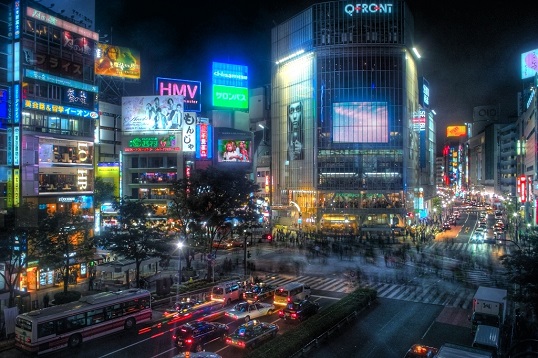
Perfect Blue (dir. by Satoshi Kon - 1998)

Perfect Blue (dir. by Satoshi Kon – 1998)

Puella Magi Madoka Magica Rebellion (dir. by Akiyuki Shinbo, Yukihiro Miyamoto - 2013)

Puella Magi Madoka Magica Rebellion (dir. by Akiyuki Shinbo, Yukihiro Miyamoto – 2013)

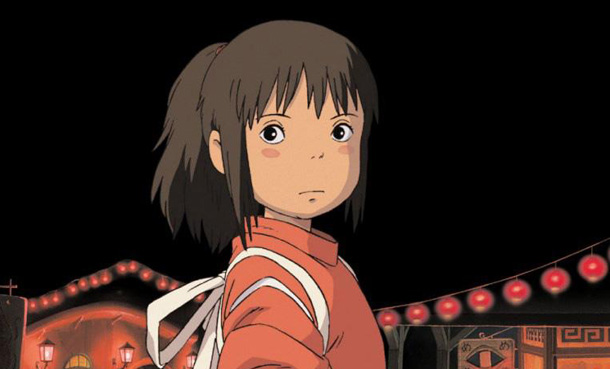
Spirited Away (dir. by Hayao Miyazaki - 2001)

Spirited Away (dir. by Hayao Miyazaki – 2001)


Neon Dream #12: 芸能山城組 – Kaneda


https://www.youtube.com/watch?v=at37zb6Oixc

If you are looking for a careful plot showcasing the new challenges of a technologically advanced, post-apocalyptic earth, then Katsuhiro Otomo’s 1988 classic Akira is not a great option. The film does not try to raise any questions, the story is vague, and it revolves around characters who are empowered supernaturally, not enhanced through technology. Akira‘s legacy lies in its music, art, and shock value.

Set in a dystopian Neo-Tokyo in 2019, 31 years after the ubiquitous cataclysm uproots every tenet of modern society, Akira displays a violent, futuristic world where law and order amounts to little more than brute force. The military police force is ruthless. Suspects are executed in public spaces with no concern for who might get caught in the cross-fire. When protests turn to riots, machine guns and tanks bulldoze down all opposition to the state. In one memorable scene, a group of protesters is bombarded with tear gas, and a choking helpless civilian staggers into an unclouded space that happens to be occupied by a policeman. After a moment’s pause, he blasts him in the stomach with a smoke grenade at point blank range. The incessant violence permeates everything. Within the first ten minutes, the hero, Kaneda, has murdered a half dozen members of a rival gang for entering his turf. The antagonist, Tetsuo, while certainly not evil, does not think twice about slaughtering the millenarian following attracted to his psychic powers.

Akira keeps you attentive with an endless escalation of weirdness and destruction. At every turn, events outpace your expectations, culminating in a transformation sequence that is not even worth trying to explain. I suppose it does raise one question, and only one: “What the fuck did I just watch?” It only works, though, because the art is so distinct that it leaves little to the imagination. Akira is a visual tour through everything that the most dystopian, vulgar cyberpunk city is supposed to be.

The soundtrack, composed by Tsutomu Ōhashi of Geinoh Yamashirogumi (芸能山城組), is inescapable throughout the film. It’s a bit of a counterbalance to the grim, futuristic visuals, relying heavily on Japanese and Indonesian traditional instrumentation and avant-garde vocals. It focuses more on capturing Akira‘s supernatural side, both in style and in strangeness. The opening track, “Kaneda”, does this while racing full speed into the heart of a towering metropolis.

Neon Dream #1: Maserati – Inventions


On a bit of a lark, I posted an article last week about some of my odd experiences as a kid on the internet in the 90s. That got me listening to a bunch of music that has no obvious connection to the things I wrote about. My metal choices became more industrial. I fired up the Lost in Translation soundtrack for the first time in ages. I fell in love with vaporwave’s sardonic spin on muzak and smooth jazz… Hey, this sounds like an excuse to post a music series!

90s internet was obsessed with fantasy and science fiction. “Nerds” were more likely to be online. (My family got dial-up because my mother was a computer programmer.) Free online gaming was dominated by MUDs and forum RPGs, as they were well suited for text-based environments and stemmed from a long tradition. Most of all, it was the easiest place for that demographic to congregate. (Why do we have Sports Bars but not Dungeon Masters’ Taverns?) If you came to the internet enjoying console RPGs, you might well leave loving anime and Dungeons & Dragons, too, and sharing an odd obsession with that island off the east coast of Asia that gave us so much of it. Japan was an exotic world full of technologically advanced cities, as I imagined it, and its number one export for me was high-tech fiction.

That is how I came to engage futuristic universes like Akira and Ghost in the Shell. Japan brought cyberpunk into the mainstream for my generation. (It was years before I watched Blade Runner.) The internet was the new frontier of technology, so the genre sort of resonated with the medium through which I encountered it. Ghost in the Shell in particular asked a lot of relevant questions regarding how technology impacted identity. On the internet, anonymity was a sort of virtue, and that always fascinated me. I also saw, as time went by, a lot of commonalities between the internet and cyberpunk’s dystopian societies. Corporate monopolies replaced niche vendors. Advertising expanded wildly, still all in-your-face pop-up adds pushing pornography and all-you-can-eat, 0%-down, free trial chances to become an instant winner. Forums became overcrowded, scaling up from hundreds of active users to tens of thousands. Screen names ceased to provide even temporary identification as people no longer bothered looking at them. Copycat conformity and superficial cheap thrills dominated where people had once engaged each other with thought and imagination.

In both cyberpunk and the internet, you had an acknowledged gap between the corporate world and the masses. In Final Fantasy VII, for instance, Midgar’s dark, towering inner city emitted a filth of neon commercial sleaze and ill-earned luxury that opposed the sunshine and suffering warmth of its dilapidated ghettos. This disparity was clear, both to the player and to Midgar’s fictional inhabitants. The antagonists were balding, broad-wasted businessmen and corporate gangsters. The heroes toppled the system through sabotage, creating a ripple effect that rocked the masses and–not so much in FF7, but definitely elsewhere–turned them against their corporate overlords. The fact that capitalism felt evil or sleazy, both online and in the fiction, proved awareness of the gap. If the system was working properly, the masses would willingly accept their position and not eye commercialism warily or respond to tremors beneath. There would be no vulnerability–no means to revolution–and subsequently, in a lot of these stories, nothing to drive the plot forward.

The gap emerged in fiction because it made for an interesting story. It emerged in real life because the internet simply hadn’t been reigned in yet. Corporations were still scrambling to keep up with rapidly changing demands emanating from an unregulated hive mind. In both cases, the appeal was a sense of empowerment. Anonymity within an unstable system enabled anyone, theoretically, to mastermind changes in behavior of the masses and then slip back into the shadows. It was a utopian dystopia. It was too easy.

Today’s social media, integrated subliminal advertising, and tailor-made instant-gratification entertainment indicate a highly functional, invulnerable corporate society. The internet is a bleak, soulless place where people narrate their artificial lives to the wind, proudly displaying every ounce of their shallow identities. You might grasp the banality for a moment and try to spread the word, but open ears are hard to come by, and before you seek them you just have to watch this Youtube video about the 10 craziest moments in… something. C’est la vie.

But that is why internet and the 90s makes me reflect nostalgically on sweaty used car dealers in crooked toupees; Tokyo as an exotic, futuristic world; Groomed corporate elites snorting cocaine on their private jets; Sleazy, shameless advertising; Revolutions begun by untraceable, nameless figures in archaic chatrooms; The machine consuming itself and collapsing into anarchy; Most of all, the freedom to roam a vast, incomprehensible urban landscape without consequence.

Maserati are a post-rock band from the music capital of the southeast: Athens, Georgia. “Inventions” appears on their 2007 release, Inventions for the New Season (which I always thought was a really awkward title). Their line-up at the time included the late Jerry Fuchs, who was involved in a lot of significant acts before his tragic death: !!!, MSTRKRFT, LCD Soundsystem.

This song found its way into my mix as a result of my brief foray into RPGMaker. I got it in my head to make a cyberpunk RPG based loosely around a collaborative story that I took part in back on the Nintendo.com forums in ’98. Futuristic tile sets were pretty hard to come by, and I turned to music to set the tone of the game. I put “Inventions” to work when the player finished up the introduction sequence and became free to explore. The song captured for me the feeling of walking along the massive streets of a futuristic city in the dead of night.