Horror Music


http://www.youtube.com/watch?v=AFSDR1iJrZ4

I suppose if I asked most people what music they identified with horror, John Carpenter’s “Halloween Theme” and Mike Oldfield’s “Tubular Bells” (The Exorcist) would come up first. After that, you’d get a lot of Rob Zombie and Glenn Danzig. So right off the bat, you’re looking at an enormous variety of sounds and styles connected mainly by association. While John Carpenter’s work was intentionally composed for the film in which it appeared, “Tubular Bells” was originally a 50 minute progressive rock opus that was anything but sinister or foreboding in its full form. Misfits was a goth punk band that happened to favor horror themes. White Zombie’s horror imagery was more a matter of crudeness and vulgarity in the spirit of GWAR; their sound was a frontrunner in the emergence of industrial groove metal, and the greatest “horror” associated with Rob was the countless terrible nu metal spinoffs. A couple of “top ten horror songs” lists I stumbled upon even list Bobby Boris Pickett’s “Monster Mash” and Richard O’Brien’s “Time Warp”. I mean, “Monster Mash” is a fun Halloween song, sure, but horror? Really? And the Rocky Horror Picture Show does make me want to vomit, but we have to draw the line somewhere.

Suffice to say, “horror” music is not a genre at all. Simply associating a song with a scene or theme is enough to relate them; Huey Lewis and the News will probably make me smile and think of Christian Bale chopping people to bits in his apartment for the rest of my life. But there are definitely certain musical attributes that conjure in us a less glitzy feeling of dread than Hellbilly Deluxe. That skittering cockroach beat in the background of Halloween is completely unnerving; Carnival music is way creepier than Stephen King’s It; Black Sabbath’s appreciation for diabolus in musica virtually invented heavy metal; and it took a firm dose of the blues in 1988 for Danzig to capture a sense of the sinister that Misfits could never convey.

I don’t believe that any particular musical formula is the coalescence of evil. The music we find most haunting is derived from association too, but it connects in more subtle ways than say, the fact that a particular song appears in a horror film or mentions witches in the chorus. The real deal distorts what comforts us, denies our sense of order, and pries upon our innocence. Through a musical medium as through any other, horror focuses on shattering the lens through which we perceive reality as an ordered, logical construct. It reminds us of the real nightmares in life while nullifying our means to counteract them. It takes us to the world of the child, where emotional extremes enhance our senses of comfort and terror alike.

The carnival tune and music box are prime targets, conjuring in our minds a time when fear was more potent. The brief piano loop, the simple hum, the monotone drone–these bring us to solitude and isolation through minimalism. Effective horror themes offer no comforting symphony or rock ensemble to encase us in a nuanced world. They surround us with something singular and far from warm, or with nothing at all. The wind chimes warn of a storm; when none is coming, the darkness is all the more unnatural. The cathedral bell, a sign of fellowship on a Sunday morning, also tolls for death. A twitch, a buzz, a repeated knocking, a bit of static–things that would otherwise annoy us–exploit the close connection between discomfort and tension.

Or else we can completely overwhelm the senses with noise that strips away the familiarity which typically diminishes extreme music’s effect, leaving us a nervous wreck. When Blut Aus Nord chose to employ programmed, industrial blast beats in their 777 trilogy, they effectively eliminated the one element of the music that would have sounded too familiar to disturb. Instead, the epileptic guitar finds companionship in a persistent, unnatural clatter designed to place us permanently on edge.

Other bands have found other means to the same end. Peste Noire’s unique “black ‘n’ roll” sound enlivens a standard formula for “evil” music with a pep and a grin, giving the brutalizer a human face in the spirit of medieval sadism. Sunn O))) are inclined to drone on for ages, developing a false sense of comfort before infusing their deep buzz with a caterwaul of shrill pitches and clattering chimes. (I actually had a guy start freaking out on me at work one day when “Cry For The Weeper”, which he didn’t even notice playing, hit the 3:55 mark.)

http://www.youtube.com/watch?v=CTsj5Bz2hPY

And lastly, we can’t forget the power of lyrics to render a song gruesome. The stereotypical lines of a black metal song–nonsense about necromoonyetis and an appeal to Satanism far less disturbing than the average Christian commentator on Fox News–are pure cheese, and they entertain us in a manner similar to your typical zombie flick. But when you first heard Smashing Pumpkin’s “x.y.u.”, you probably got a feeling more akin to Henry: Portrait of a Serial Killer.

Horror in lyrics is something a bit the opposite of horror in sound; it strikes us most deeply when we can be convinced that there is absolutely nothing supernatural about it. There are certainly a few exceptions–Townes Van Zandt’s tall tale in “Our Mother the Mountain” chills me to the bone–but generally speaking, the real atrocities committed throughout human history far exceed the limits of our imaginations. Vlad Tepes was worse than any vampire, and from Elizabeth Bathory and Ariel Castro to Hernando Cortes and Adolf Hitler, we are flooded by examples of direct personal cruelty and dehumanized mass slaughter. When a song manages to make us think of these individuals and events beyond the safety blanket of historical narrative, an authentic feeling or horror is hard to deny.
My Top 15 Metal Albums of 2011


The years I most actively indulge my musical interests are the ones I find most difficult to wrap up in any sort of nice cohesive summary. December always begins with a feeling that I’ve really built up a solid basis on which to rate the best albums of the year, and it tends to end with the realization that I’ve really only heard a minute fraction of what’s out there. I’m going to limit this to my top 15. Anything beyond that is just too arbitrary–the long list of new albums I’ve still yet to hear will ultimately reconfigure it beyond recognition.

15. Thantifaxath – Thantifaxath EP
Thantifaxath’s debut EP might only be 15 minutes long, but that was more than enough to place it high on my charts. The whole emerging post/prog-bm sound has been largely a product of bands with the resources to refine it, and it’s quite refreshing to hear sounds reminiscent of recent Enslaved without any of the studio gloss. That, and I get a sort of B-side outer space horror vibe from it that’s not so easy to come by. (Recommended track: Violently Expanding Nothing)

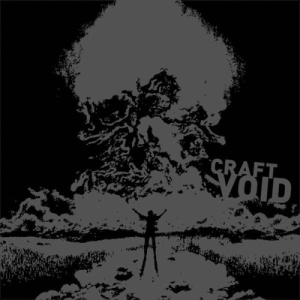
14. Craft – Void
This is the straight-up, no bullshit black metal album of the year. It doesn’t try anything fancy or original. It’s just good solid mid-tempo bm–brutal, evil, conjuring, and unforgiving. Hail Satan etc. (Recommended track: any of them)

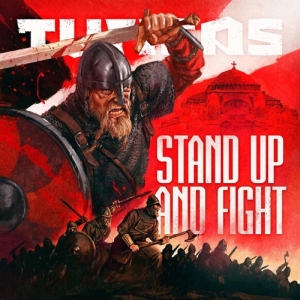
13. Turisas – Stand Up and Fight
Stand Up and Fight doesn’t hold a candle to The Varangian Way, but I never really expected it to. As a follow-up to one of my all-time favorite albums, it does a solid job of maintaining that immensely epic, triumphal sound they landed on in 2007. It lacks their previous work’s continuity, both in quality and in theme, but it’s still packed with astoundingly vivid imagery and exciting theatrics that render it almost more of a movie than an album. (Recommended tracks: Venetoi! Prasinoi!, Hunting Pirates)

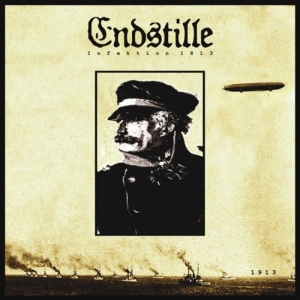
12. Endstille – Infektion 1813
Swedish-style black metal seldom does much for me, and it’s hard to describe just what appeals to me so much about Germany’s Endstille. But just as Verführer caught me by pleasant surprise two years ago, Infektion 1813 managed to captivate me in spite of all expectations to the contrary. Like Marduk (the only other band of the sort that occasionally impresses me), they stick to themes of modern warfare, but Endstille’s musical artillery bombardments carry a sense of something sinister that Marduk lacks. The dark side of human nature Endstille explores isn’t shrouded in enticing mystery–it’s something so thoroughly historically validated that we’d rather just pretend it doesn’t exist at all. The final track, Völkerschlächter, is one of the best songs of the year. Stylistically subdued, it pummels the listener instead with a long list of political and military leaders responsible for mass murder, named in a thick German accent over a seven second riff that’s repeated for 11 minutes. It’s a brutal realization that the sensations black metal tends to arouse are quite real and quite deplorable, and it will leave you feeling a little sick inside.

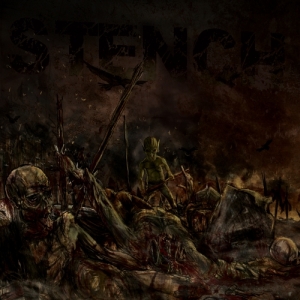
11. Nekrogoblikon – Stench
Nekrogoblikon released a folk metal parody album in 2006 that was good for laughs and really nothing else. The music was pretty awful, but that was intentional. It was a joke, with no presumption to be any good as anything but a joke. They’re the last band on earth I ever expected, a full six years after the fact, to pop back up with a really fucking solid sound. But Stench is good. I mean, Stench is really good. It’s still comical in theme, but the music has been refined beyond measure. Quirky, cheesy guitar and keyboard doodles have become vivid images of little flesh-eating gremlins dancing around your feet, whiny mock-vocals have taken the shape of pretty solid Elvenking-esque power metal, pretty much everything about them has grown into a legitimate melo-death and power infused folk metal sound. Don’t get me wrong, it’s still not meant to be taken seriously, but they’re now of Finntroll caliber. (Recommended tracks: Goblin Box, Gallows & Graves, A Feast)

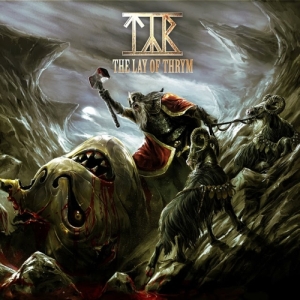
10. Týr – The Lay of Thrym
I thought By the Light of the Northern Star was a fairly weak album, and because The Lay of Thrym maintains some of the stylistic changes they underwent then, a part of me keeps wanting to say it can’t be as good as say, Land or Eric the Red. But of all the albums I acquired in 2011, I’ve probably listened to this one the most. Týr have one of the most unique sounds on the market, and it’s thoroughly incapable of ever boring me or growing old. Heri Joensen’s consistently excellent vocal performance alone is enough to make them perpetual year-end contenders. (Recommended track: Hall of Freedom)

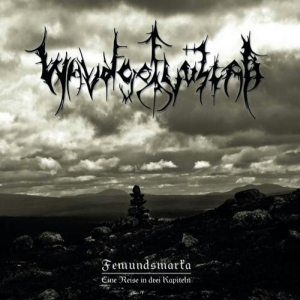
9. Waldgeflüster – Femundsmarka – Eine Reise in drei Kapiteln
This is some of the most endearing black metal I’ve heard in a while. Intended as a musical reminiscence of Winterherz’ journey through Femundsmarka National Park in Scandinavia, it’s a beautiful glorification of nature that takes some of the best accomplishments of Drudkh and Agalloch and adds to them a very uplifting vibe. Someone made an 8 minute compilation of the album on youtube which does a good job at previewing without revealing all of its finest moments. (Recommended track: Kapitel I: Seenland)

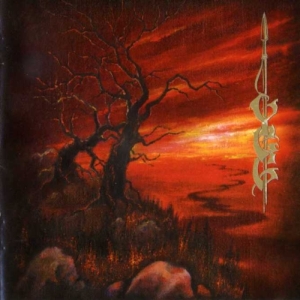
8. Ygg – Ygg
Ygg is an hour-long trance, evoking ancient gods in a way that only Slavic metal can. You could probably pick apart the music and discover plenty of flaws, but that would miss the point. I think that a lot of these Ukrainian and Russian bands are true believers, and that the purpose of music like this is more to create an experience in the listener than to be good for its own sake. This is a spiritual journey, and if it fails to move you as such it will probably come off as rather repetitive and generic, but I find it impressively effective. (Recommended track: Ygg)

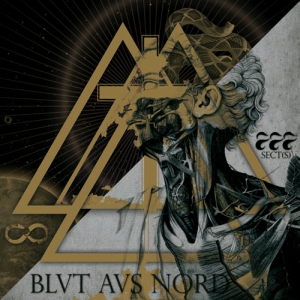
7. Blut aus Nord – 777: Sect(s)
I don’t know where to put this really. I could just as easily have labeled it second best album of the year. Dropping it down to 7th might seem a little unjustified, but eh, this is a list of my top albums, not of the “best” albums of the year. There’s no denying Sect(s) credit as a brilliant masterpiece, but it’s an ode to madness. I mean, this music scares the shit out of me, and if that means it’s accomplished something no other album has, that also means I don’t particularly “enjoy” listening to it. (Recommended track: Epitome I)

6. Altar of Plagues – Mammal
I never did listen to Mammal as actively as I would have liked. I never sat down and gave it my undivided attention from start to finish. But it’s served as a background piece for many late nights at work. It zones me in–stimulates my senses without ever distracting them from the task at hand. I don’t feel like I can really say much about what makes it great, because that’s not the sort of thing I’ve considered while listening to it, but I absolutely love it. It’s a big improvement from White Tomb, which was itself an excellent album, and more so than most other releases of 2011 I will probably continue to listen to it frequently in years to come. (Recommended track: Neptune is Dead)

5. Primordial – Redemption at the Puritan’s Hand (track: No Grave Deep Enough)
Redemption at the Puritan’s Hand is by no means perfect. It’s got a few sub-par tracks detracting from the full start to finish experience, but when it’s at its best all else can be easily forgiven. Call it folk metal or call it black metal, whichever you prefer, but first and foremost call it Irish, with every good thing that might entail. The vocals are outstanding, the music rocks out in folk fashion without ever relenting from its metal force, and while the lyrics don’t always make sense, they always hit like a fucking truck. Where they do all come together, delivered with Nemtheanga’s vast and desperate bellows, the result is overwhelming. O Death, where are your teeth that gnaw on the bones of fabled men? O Death, where are your claws that haul me from the grave? (Other recommended tracks: The Puritan’s Hand, Death of the Gods)

4. Falconer – Armod (track: Griftefrid)
Prior to 2011 I’d largely written Falconer off as one of those power metal acts that were just a little too cheesy to ever excite me. Maybe it was bad timing. Maybe I just happened to hear them for the first time while Kristoffer Göbel was filling in on vocals. Or maybe Armod is just their magnum opus–a spark of genius they’ve never neared before. Flawless if we ignore the “bonus tracks”, Armod takes that early folk metal sound Vintersorg pioneered with Otyg, merges it perfectly with power metal, and offers up 11 of the most well-written and excellently produced songs of the year. Mathias Blad’s vocals are absolutely phenomenal. (Other recommended tracks: Herr Peder Och Hans Syster)

3. Falkenbach – Tiurida (track: Sunnavend)
A lot of people might voice the legitimate complaint that Tiurida, Vratyas Vakyas’s first studio album in six years, sounds absolutely indistinguishable from his prior four. For me, that’s exactly why it ranks so high. Vakyas landed on a completely unique, instantly recognizable sound which, alongside Bathory, defined viking metal as a genre, and he’s refused to change it one bit. I fell in love with this album ten years ago. (Other recommended tracks: Where His Ravens Fly…)

2. Liturgy – Aesthethica (track: Harmonia)
Yes, Liturgy. It’s immature, childish, and imperfect, but it’s uplifting in a completely new way. No matter how far Hunt-Hendrix might go to embarrass himself and his band mates, behind all of his pompous babble there just might be some truth to it. (Other recommended tracks: True Will)

1. Krallice – Diotima (track: Dust and Light)
More than the album of the year, Diotima is one of the greatest albums ever made. I can’t fathom the amount of skill it must take to perform with the speed and precision that these guys do, but if they battered down a physical barrier to metal in 2008, they finally grasped hold of what lies beyond it in 2011. They claim that the songs on their first three albums were all written at the same time by Mick Barr and Colin Marston, before their self-titled debut. If that’s the case, then it must be the experience of performing together and the creative contributions of Lev Weinstein and Nick McMaster that raised Diotima to a higher level. It’s not just that they’ve improved in every way imaginable; the songs themselves are overwhelming, breathtaking, and chaotic to a degree they’d never before accomplished. Krallice perform an unwieldy monster that took a few albums to thoroughly overcome. Now they’re in complete control, and their absolutely brilliant song-writing can shine through. With the exception of the dubious Litany of Regrets, this is possibly the greatest album I have ever heard. (Other recommended tracks: Inhume, Diotima, Telluric Rings)