There haven’t been many trailers to share, lately. That’s largely due to the uncertainty that’s surrounding COVID-19 and when — if ever — certain films are going to be able to get a theatrical release. That said, there is a new trailer out and I think that a lot of our readers are going to be interested in it.
So, without further ado….
Inmate #1 is a documentary about how all-around badass Danny Trejo went from being a convict to being a cultural icon. As anyone who has ever seen Trejo interviewed can tell you, he’s got an inspiring life story and he’s also a wonderful storyteller. I’m looking forward to seeing this documentary, which will be released in the United States on July 7th.
Tonight, as I continued my viewing of all the SXSW films that are currently available on Prime, I watched three short documentaries. Each one of them dealt with real people seeking their own artistic truth.
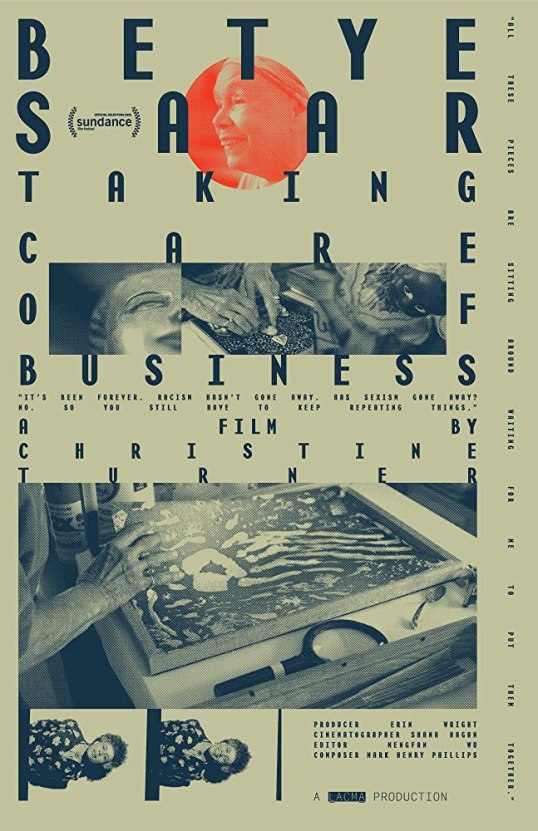
Betye Saar: Taking Care of Business (dir by Christine Turner)
Betye Saar: Taking Care of Business is essentially an interview with the legendary artist Betye Saar, with some archival footage worked in and, of course, some footage of her artwork. It’s a simple format but that’s okay. It’s a fascinating documentary because Betye Saar is a fascinating artist. Saar has been creating art for over 70 years and, at the age of 93, she’s still working in her Los Angeles studio, creating works that can make people angry and that can make them think.
The film delves into Saar’s civil right activism and how, through her artwork, she has taken the stereotypical images that were once used to demean African-Americans and has weaponized them in the fight for equal rights. As we see in the documentary, one of Saar’s most acclaimed pieces features Aunt Jemima with a rifle and a grenade.
It’s a short documentary. Betye Saar is such a lively and outspoken subject that you find yourself wishing that the documentary was a bit longer. You also wish that the documentary had spent more time on the briefly mentioned “occult” influences on Saar’s work. Still, by the end of the film, you’re happy for the time that the filmmaker did have with Saar. She’s a fascinating artist.
Hiplet: Because We Can (dir by Addison Wright)
This likable 8 minute film is about the Hiplet Ballerinas. (Hiplet is a mix of classical ballet and hip hop. It’s pronounced Hip-lay.) Though there is a black-and-white sequence where the dancers talk about themselves and what hiplet means to them, the majority of the film is just made up of footage of the Hiplet Ballerinas performing. They are amazing dancers and exciting to watch. If you love dance, as I do, you’ll not only enjoy this documentary but you’ll also be excited about it. This is a documentary that reminds us that dance is for every one. As many of the dancers point out, they may not be stereotypical ballerinas but it doesn’t matter because stereotypes were made to be destroyed. As this documentary shows, dancing is beautiful and dancing is for all.
Quilt Fever (dir by Oliva Merrion)
Quilt Fever was a real surprise. This documentary deals with a subject (quilting) that I don’t know much about and it’s almost exclusively populated by people with whom I don’t have much in common but I still found it be enthralling and ultimately, rather touching.
Quilt Fever follows an annual quilting competition that takes place in the town of Paducah, Kentcuky. It’s known as the Academy Awards of Quilting and it attracts quilters from all over the country. The film not only shows us the competition but it also features profiles of a few of the people who are competing. As you might guess, they’re all a bit eccentric. For the most part, they’re all older women, the type of people who living in “fly over country” and who are usually looked down upon by the coastal elitists. They may not be celebrities but they’ve found fame in the quilting world and they’ve also found a welcoming (if competitive) community. Quilt Fever is an even-handed and nonjudgmental look at that community, one that never indulges in the type of condescension that we far too often see in documentaries about people in the middle of the country. It’s a sweet-natured documentary and definitely a treat to watch.
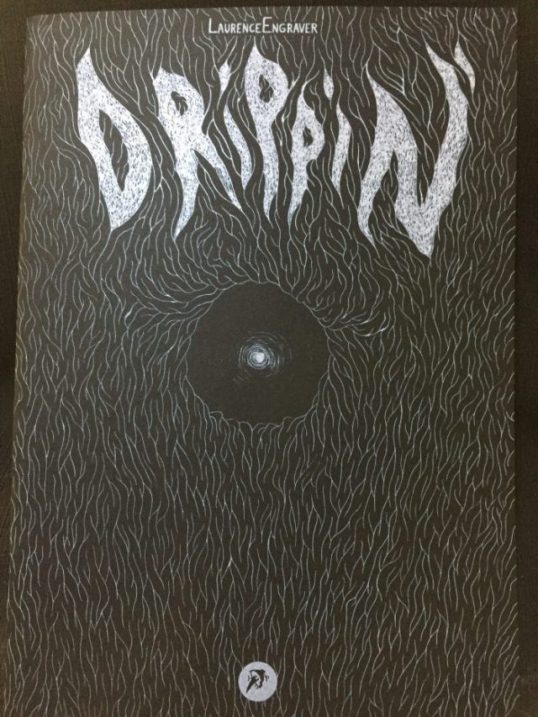
Somewhere in the inky depths of a dark, dank, foreboding dungeon, a fish head quite literally out of water finds itself trapped, and in desperate need of escape — will he/she/it make it?
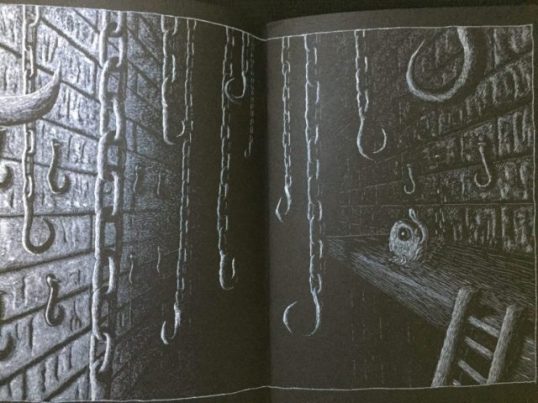
This is the basic question at the heart of cartoonist Laurence Engraver’s 2018 Hollow Press-published Drippin’, a comic that takes absolutely full advantage of its format (obsidian-toned thick paper, dense white inks) and the sheer, enviable skill of its creator to tell a largely-wordless (barring the occasional animal sound effect) and exceptionally harrowing tale of survival against insurmountable odds. You think you know horror comics? This is a horror comic.
And by that I mean horrific to its core — from its dangling hooks to its murky passageways to its creaky wooden stairs to its vaguely Lovecraftian denizens, this book conjures an atmopshere — forgive me, but I’m going there again — dripping with a kind…
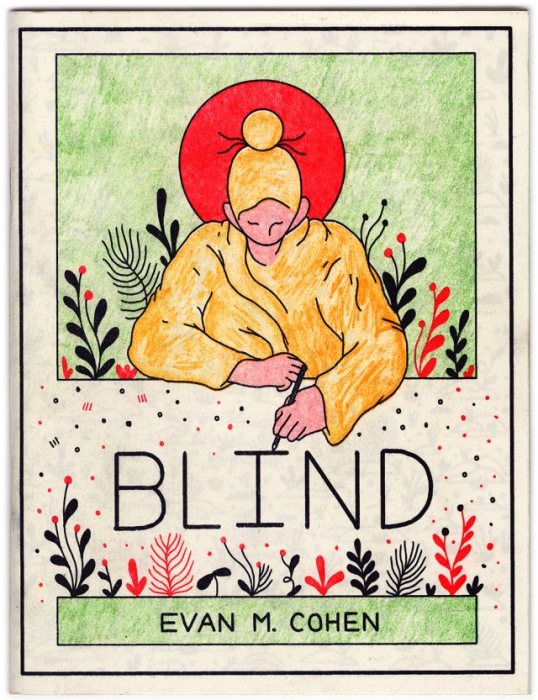
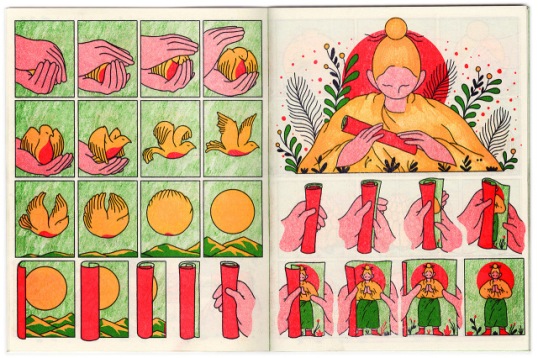
The name Evan M. Cohen is one that is unknown to me — but if his new Perfectly Acceptable booklet/’zine, Blind, is any indication, that’s my loss, because title aside, this thing is (sorry in advance) a real eye-opener. And surely this review can only go uphill from here —
Billed by its publisher as a “meditation on corporeality and creation, recollections recounted and reformed,” trust me when I say that only sounds oblique and borderline-esoteric — in truth, if you’re willing to absorb and fully consider these sequences of illustrations with an open mind and heart, what you’ll find here is one of the most disarmingly straightforward, unpretentious comics (a term that probably applies quite loosely in this instance) you’ll have been privileged to enjoy in quite some time. And that word is key — enjoy.
I needn’t tell you that the production values of this book…
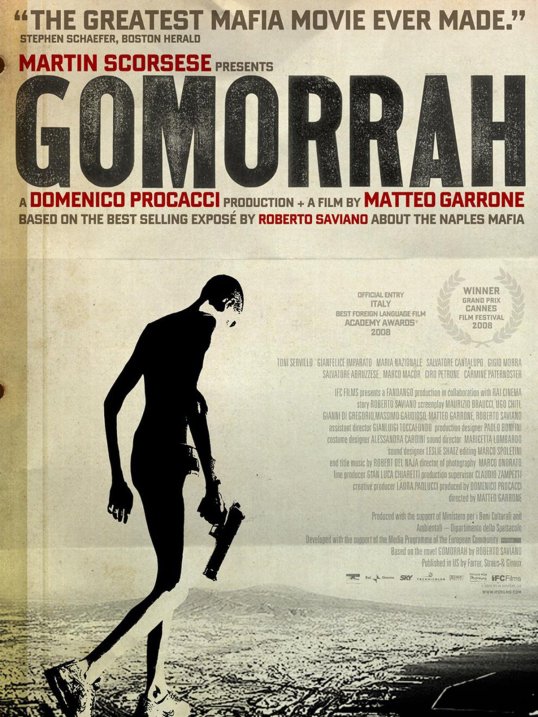
In the suburbs of Naples, a group of middle aged men are gunned down while relaxing at a tanning salon. The 2008 Italian film, Gomorrah, opens with that shocking act of violence and, though we don’t ever learn much about the men who have just been killed or even why they were killed, we spend the next 137 minutes watching the ramifications of those murders.
The poorest neighborhoods of Naples have been plunged into violence as two rival clans of the Camorra go to war. (The Camorra is like the Mafia but even more violent.) We’re never quite sure who has gone to war with who or who is winning the war. For the most part, we’re usually not even sure who is allied with who. The details of the war are not as important as the people who are caught up in it.
For instance, there’s a 13 year-old boy named Toto (Salvatore Abruzzese) who desperately wants to join one the clan-affiliated gangs. Toto has a job delivering groceries and, after he proves that he can be trusted by delivering a package of misplaced drugs to the gang, he allowed to join. Of course, he also has to help his new friends murder one of the people to whom he delivers groceries.
And then there’s Don Ciro (Gianfelice Imparato), who looks like quiet accountant but who has one of the most dangerous jobs around. He’s the guy who has to deliver money to the families of all of the clan members who have been arrested or killed. Having that money is dangerous, even for someone who doesn’t appear to have a violent bone in his body. One thing that Gomorrah quickly establishes is that, when it comes to the Camorra, there is no honor. Everything that we’ve been led to believe about organized crime having any sort of code is a lie. Everyone is a target, even the ones who appear to just be timid bankers.
Pasquale (Salvatore Cantalupo)) is a tailor who takes a job training Chinese garment workers. Because the Chinese workers are directly competing with the Camorra-owned factories, Pasquale soon discovers that his life is in danger. He even has to hide in the trunk of a car so that he can be safely smuggled into work each night. It’s a dangerous world but Pasquale’s story does conclude with one of the film’s best and most darkly humorous moments.
Franco (Toni Servillo) works in waste management, hauling away people’s garbage and then secretly dumping it where it won’t be discovered until long after it’s poisoned the soil. Franco’s business may be funded by criminals and he may be destroying the Earth but Franco still very proud of himself. He’s the type of hard worker who built Italy’s economy. Without him, Italy would be dependent upon other countries for its survival. Franco is the type of man who makes Italy and therefore Europe great.
And finally, there’s Marco (Marco Macor) and Ciro (Ciro Petrone), two teenage morons who love Scarface and who think that they’re destined to become master criminals just like Tony Montana. Hoping to impress the clans, they commit a series of progressively violent crimes. Even as the Camorra plots a violent retribution for the two of them, the two teens are too busy playing on the beach, stripping down to their underwear and firing off rifles, to understand. It’s easy to dismiss these two as just being idiots who are in over their heads but what else is there for them? They live in one of the poorest neighborhoods in all of Europe, There are no economic opportunities. There’s no chance for any sort of advancement. They’re trapped, prisoners of both their birth and their circumstances. They can either try to be gangsters or they can just be passive observers. Either way, there’s a good chance they’ll get caught in the crossfire. When the choice is between being a victim and victimizer, is it such a shock that the two of them would want to be the latter?
Gomorrah is a gritty crime film, shot in a documentary-style with a largely nonprofessional cast and featuring scenes of sudden and shocking violence. Unlike most mafia movies (though the Camorra is not the same as the Mafia that we know here in the United States), Gomorrah is barely concerned with the mobsters. Instead, its focus is on those who have to live around them, the indirect victims of their nonstop vendettas. The film understands that its audience is probably full of people like Marco and Ciro, people who can quote Scarface but who have no understanding of the actual damage that has been done by organized crime. Gomorrah sets out to correct the record and it does a pretty good job of it.
Gomorrah is a harrowing but effective film, one that shows how poverty breeds crime and crime, for the most part, just breeds more poverty. To its credit, the film doesn’t offer up any easy solutions. Instead, it just asks us to acknowledge the reality of what’s happening all around.
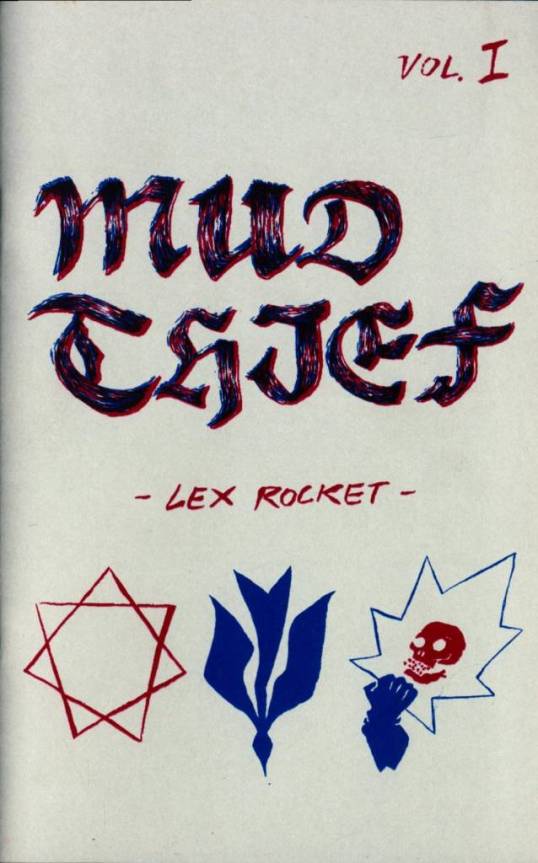
Originally conceived of and published back in 2015 but only recently making the rounds through some of the better “alternative” distros now, cartoonist Lex Rocket’s sturdy, riso-printed (although the cover may be offset?) mini, Mud Thief Vol. 1, is at first glance an exercise in strict formalism, apportioned into three roughly equal-length segments — and while that’s not an inaccurate perception, it only scratches the surface. And if there’s one thing the erstwhile Mr. Rocket has crafted here, it’s a ‘zine of tremendous depth and complexity.
About the only thing I can think to compare it to is the early-days Chris Ware strip “I Guess” that ran in Volume 2, issue 3 of Art Spiegelman’s Raw, but even that head-to-head comes up short given that Ware was juxtaposing non-congruent, and trauma-based, text with deliberately-ironic superhero visuals, while Rocket is engaged in nothing so straightforward. Yeah, that’s right…
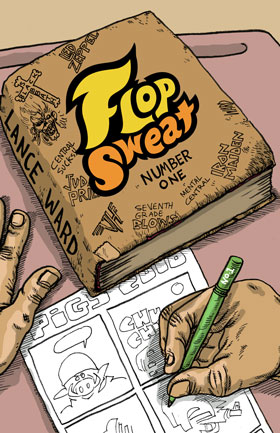
For his third release from Birdcage Bottom Books in under a year, Twin Cities cartoonist Lance Ward is once again going the autobio/memoir route, but taking more of a “long view” than he did with his tightly-focused graphic novel Blood And Drugs and it short companion/epilogue publication, The Truth Behind Blood And Drugs. Specifically, he’s going back to his childhood, beginning his ruminations at age 11 when he lived with his soon-to-splintered family in the soul-dead “exurb” of Forest Lake, Minnesota — a place that, trust me, anyone is lucky to make it out of in one piece, mentally speaking.
It’s debatable whether or not Ward managed to actually do that, of course, although he seems stable, amicable, and definitely on a creative “hot streak” in recent months, a fact for which we should all be grateful — but getting to “here” from “there” has been no easy task…
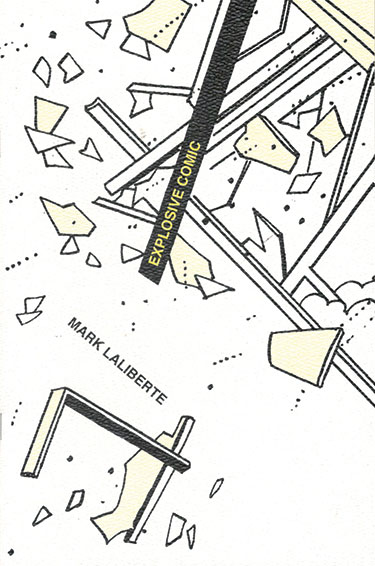
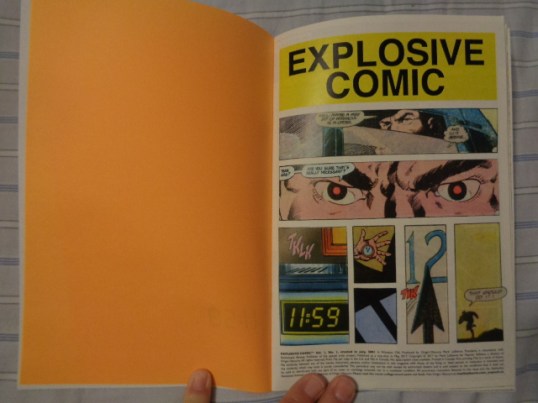
A curious and idiosyncratic exercise in collage that predates vaguely similar works by Samplerman by nearly two decades, Mark Liberte’s Explosive Comic remained mothballed after its production and assemblage in 2001 for reasons I really can’t fathom — then briefly popped its head up above ground to see publication via Swimmers Group in 2017 before disappearing again — and has now briefly re-emerged in 2020 thanks to John Porcellino. As someone once said, “what a long, strange trip it’s been —”
That being said, you know that you’re in “grab it while you can” territory with this one, and now it’s incumbent upon me to tell you why you should. Which, all things considered, is a pretty easy gig, because the work speaks for itself.
Arranged and assembled one panel at a time, the intention behind Laliberte’s meticulous and no doubt time-consuming labors is clear from the outset :…
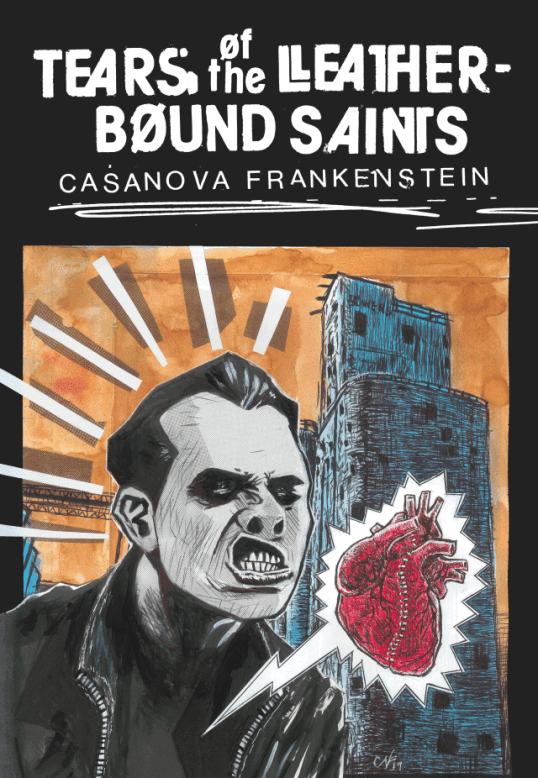
I’ve often remarked — no, I swear, I have! — that the best cartoonists are those with no fucks left to give, but leave it to Casanova Frankenstein (or, if you’re old-fashioned, Al Frank) to prove me wrong : you see, he’s living proof that the best cartoonists are those who never had any fucks to give in the first place.
Long-time fans and admirers of Cassie’s Tad Martin work have suffered from an embarrassment of riches in recent years, beginning with Profanity Hill/Teenager Dinosaur issuing The Adventures Of Tad Martin #sicksicksix after nearly a two-decade publishing hiatus for the title, continuing through the artist self-publishing The Adventures Of Tad Martin Super-Secret Special #1 and, later, The Adventures Of Tad Martin Omnibus hardcover through Lulu, and culminating in Austin English’s Domino Books releasing the dreadfully gorgeous Tad Martin #7. In between all that, however, Gary Groth’s “street cred” imprint, Fantagraphics…




 Through the Shattered Lens